In Challenging Times, Flint Offers Hope
The hard-won victory to secure clean water is a reminder of why preserving American democracy is so essential—and what’s possible when we stand up to powerful forces.

A national march to highlight the push for clean water in Flint, Michigan, on February 19, 2016
Bill Pugliano/Getty Images

For many advocates, these are hard times. Over the last six months, we have watched decades of progress get clawed back. We are seeing the rights of so many people nationwide being threatened. Some days, it’s easy to feel powerless—even as we fight back with everything we have.
In those moments, the story of Flint, Michigan, is a shining beacon of hope. It is a reminder of the power that we the people of this country hold. It’s a reminder of why preserving American democracy is so essential. It’s a reminder of what’s possible when we stand up to powerful forces and refuse to back down.
Because, in the midst of the chaos, turmoil, and pain that the White House is sowing across the country, there is reason to celebrate in Flint.
After more than a decade of fighting in and out of courts, the battle to get rid of the city’s lead water pipes is finally over. The city has replaced every single pipe that was required to be replaced by a court-ordered settlement.
This victory was hard-fought. There were surely many times when the people of Flint felt hopeless along the way.
After all, thousands of children in Flint were exposed to lead after officials switched the city’s drinking water supply to the Flint River in 2014 and failed to treat the corrosive new water properly, causing lead to leach from aging pipes into people’s homes.
Residents were suddenly living with dark-colored, foul-tasting, smelly water coming from their taps. They were experiencing skin rashes and hair loss. Children in the city were showing elevated lead levels in their blood.
It was cause for major concern. There is no safe level of lead exposure, and the damage it can cause to developing brains—from learning disabilities to behavior problems—is irreversible, making it especially dangerous for children and pregnant women, even in small doses. In adults, it can cause heart disease that can lead to death.
Yet, as more and more citizens voiced their concerns, state officials were “callous and dismissive,” according to a report by the independent Flint Water Advisory Task Force in March 2016. For more than 10 years, Flint residents endured broken promises as the city repeatedly failed to meet court deadlines to remove wrecked lead water pipes. Government officials acknowledged a problem only after residents elevated public awareness and garnered national attention. All the while, unfiltered tap water remained unsafe to drink, and not enough was being done to ensure that all Flint residents had safe drinking water at home.
How helpless, overwhelmed, and alone parents must have felt when bathing their children and filling their sippy cups at the kitchen sink. How many times it might have felt easier to give up.
But the people of Flint persisted. They were united in their fight for a basic right—the right to safe drinking water for their families, for their neighbors, and for people nationwide.
It wasn’t about politics—it was about community. They worked together to stand up for what’s right. They educated themselves and each other on the dangers of lead, collected water samples, and helped each other get their water tested. They used their voices to speak truth to power at town hall events, in the courts, and on Capitol Hill. They took care of each other when the government failed them, sharing information and delivering bottled water and filters to their neighbors.
And they stuck with it—for years.
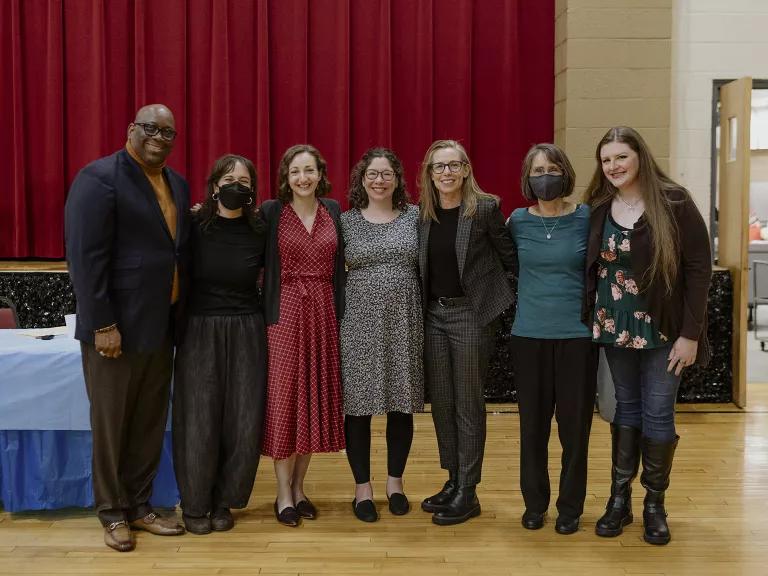
A group portrait at a NRDC-organized event celebrating the Flint community members who played a critical role in our safe drinking water lawsuit, held at Christ Fellowship Missionary Baptist Church in Flint, Michigan, on May 20, 2025. People included, from left: Pastor Allen C. Overton; Nicole Vandal, NRDC litigation paralegal; Addie Rolnick, NRDC attorney; Sarah Tallman, NRDC attorney; Margie Kelly, NRDC strategic communications manager; Abby Clark, NRDC Midwest campaign manager; Melissa Mays, Flint resident, activist, and lawsuit plaintiff.
Kate English for NRDC
NRDC was with the people of Flint every step of the way. We were one of the first organizations on the ground. And our staff worked side by side with residents from the start. We brought our deep knowledge and history of the Safe Drinking Water Act and our powerhouse lawyers to represent members of the Flint community.
NRDC had champions like senior strategic director for Health Erik Olson, senior litigating counsel Sarah Tallman, Michigan advocate Cyndi Roper, senior director of Air & Water Steve Fleischli, Safe Water Initiative director Angela Guyadeen and Strategic Communications director Margie Kelly, who were there from beginning to end, as well as a team of advocates who have played critical roles over the years, like attorney Addie Rolnick and NRDC alum attorney Dimple Chaudhary. Countless others pitched in along the way.
And we had tireless partners in our clients, Flint resident Melissa Mays and Pastor Allen C. Overton of the Flint-based Concerned Pastors for Social Action, and in our co-counsel, the ACLU of Michigan, all working together to hold the city accountable in the courts.
It was a major team effort that paid off in a big way. In 2017, we won a $97 million legal settlement that required the city of Flint to replace its lead water service lines.
This happened because NRDC and the people of Flint stayed the course—for as long as it took. It required an incredible amount of persistence, with NRDC and our partners returning to court six times in six years to ensure the city properly managed the program.
It was a magical combination of people power and the very best of NRDC that made this victory possible. Together, we changed their city, and we changed America.
A decade after the fight began, nearly every lead pipe in Flint has been replaced, and any property damaged in the process has been restored. The experience there led the federal government to agree that no other community in America should ever face what the people of Flint faced and lived with for so long. Now—after years of advocacy in Washington, D.C., from NRDC and others—it is federal law that every lead pipe in the country will get replaced in the next decade.
It didn’t happen overnight, and it took us using every tool in our toolbox to get here, from the courts to the media, and unrelenting advocacy at the city, state, and national levels.
So, this month, we celebrate a victory for health and a victory for basic fairness. Access to safe drinking water should not be based on your income or zip code—yet too often it is. Flint is a city of predominantly low-income people and people of color. Communities like this live with the highest levels of lead contamination in their drinking water. But Flint shows that we do not have to accept that.
The fight isn’t over. Millions of people nationwide are still drinking from lead water pipes—and the Trump administration has not committed to honoring the law requiring all lead pipes to be replaced in the next decade.
But NRDC will be ready to hold them accountable. We will continue to push for all people nationwide to have access to safe drinking water. And—like the people of Flint—we will not give up.
Related Blogs

New York State Legislative Session Wraps Up: What’s In and What’s Out?

Now Is the Time to Advocate for Safe Drinking Water