
Global Leaders Hit Major Milestones at U.N. Ocean Conference
UNOC delivers big wins for the ocean, including the launch of the High Ambition Coalition for a Quiet Ocean and new high seas treaty ratification announcements.

A humpback whale off the coast of Port Stephens, Australia

Currently, in Nice, France, thousands of representatives—including global leaders, scientists, advocates, Indigenous voices, businesses, and nonprofits like NRDC—have come together for the third United Nations Ocean Conference (UNOC), from June 9–13.
What’s happening at the U.N. Ocean Conference and why it matters
This major global event, co-chaired by France and Costa Rica, takes place approximately every three years and serves as a critical moment to shape the future of our ocean. This year’s conference focuses on accelerating action toward U.N. Sustainable Development Goal 14: Life Below Water, with key priorities around protecting ocean ecosystems, advancing sustainable blue economies, and ramping up global collaboration.
And the stakes couldn’t be higher. Our oceans are facing mounting biodiversity and climate crises, from overfishing and deep-sea mining to warming waters and the deafening rise of underwater noise from global shipping and other sources of industrial activity.
This week, countries have made new commitments, launched ambitious initiatives, and joined forces to find real solutions to tackle these cross-border threats.
NRDC’s global Oceans team is proud to play a key role in this year’s conference, from helping to support the launch of the High Ambition Coalition for a Quiet Ocean to cohosting a high-level event to accelerate ratifications of the high seas treaty.

Common dolphins hunting sardines in South Africa
A new coalition for a healthier, quieter ocean
In a landmark announcement on June 10, 37 countries, led by Panama and Canada, launched the High Ambition Coalition for a Quiet Ocean—the first high-level political initiative to tackle ocean noise pollution on a global scale.
For decades, the volume of human activity in the ocean has risen steadily. Global shipping, industrial development, and resource extraction have filled the ocean with noise at levels that disrupt the very rhythms of marine life. Whales, dolphins, fish, and countless other species rely on sound to communicate, migrate, feed, and survive. Yet today, their calls are routinely drowned out. Excessive ocean noise isn’t just disruptive—it’s destructive.
The coalition marks a turning point in the quest for a quieter ocean.
At the coalition launch, ministers came together to sign the coalition’s declaration—an expression of shared political will to tackle the escalating threat of underwater noise.
The declaration lays out an ambitious road map, including:
- Advancing quieter ship design and operations through new policies at the International Maritime Organization (IMO)
- Integrating noise reduction strategies into the planning and management of marine protected areas (MPAs)
- Implementing targeted measures to reduce vessel noise and other shipping-related disturbances to vulnerable marine species
- Enhancing global capacity through the sharing of tools, technology, and expertise, such as those developed under the IMO’s GloNoise Partnership
Leaders from Indigenous communities, international organizations, environmental groups, and the maritime sector joined the launch, demonstrating the broad and growing recognition that addressing ocean noise is critical to advancing global biodiversity and climate objectives.
The coalition brings new urgency and political will to addressing ocean noise across the world, and NRDC is proud to stand with and support the global leaders making this landmark new commitment.

Canada Ambassador to France and Monaco & Special Envoy to the EU Stéphane Dion (center) shaking hands after signing the coalition's declaration

From left: International Maritime Organization Secretary-general Arsenio Dominguez; Belgium Special Envoy for Climate and Environment Willem van de Voorde; Panama Minister of Environment Juan Carlos Navarro; Canada Ambassador to France and Monaco & Special Envoy to the EU Stéphane Dion; EU Commissioner for Sustainable Transport and Tourism Apostolos Tzitzikostas; Chile Minister of the Environment Maisa Rojas Corradi; Uruguay Minister of the Environment Edgardo Ortuño

Uruguay Minister of the Environment Edgardo Ortuño signing the High Ambition Coalition for a Quiet Ocean
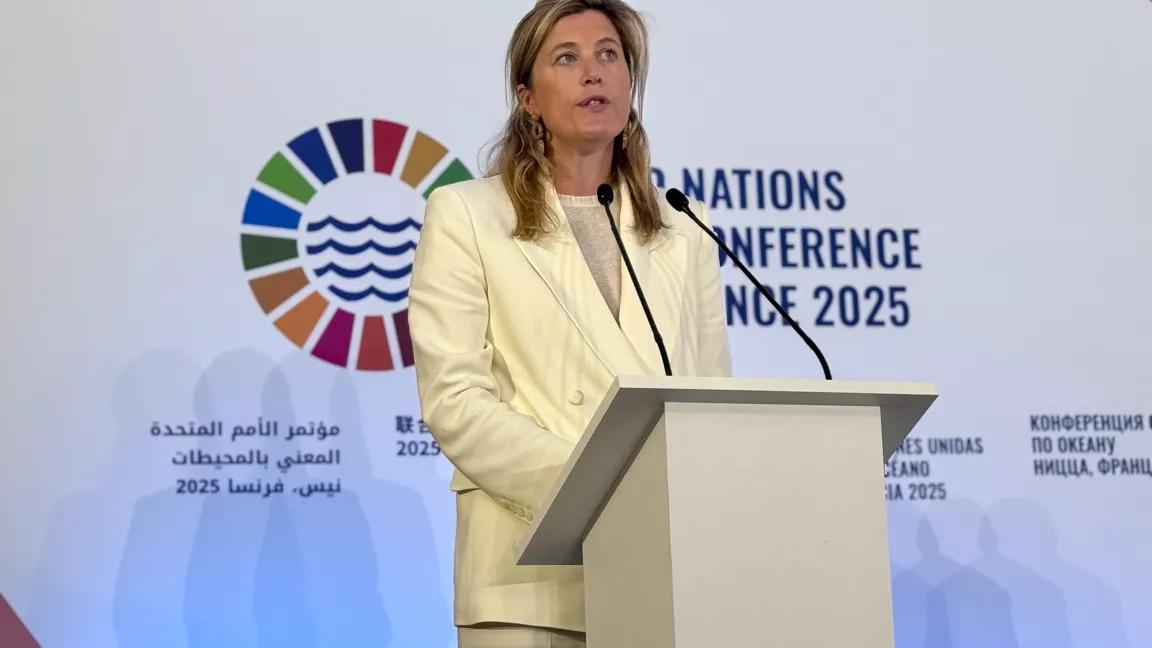
Belgium Minister of Justice H.E. Annelies Verlinden, who is in charge of the North Sea
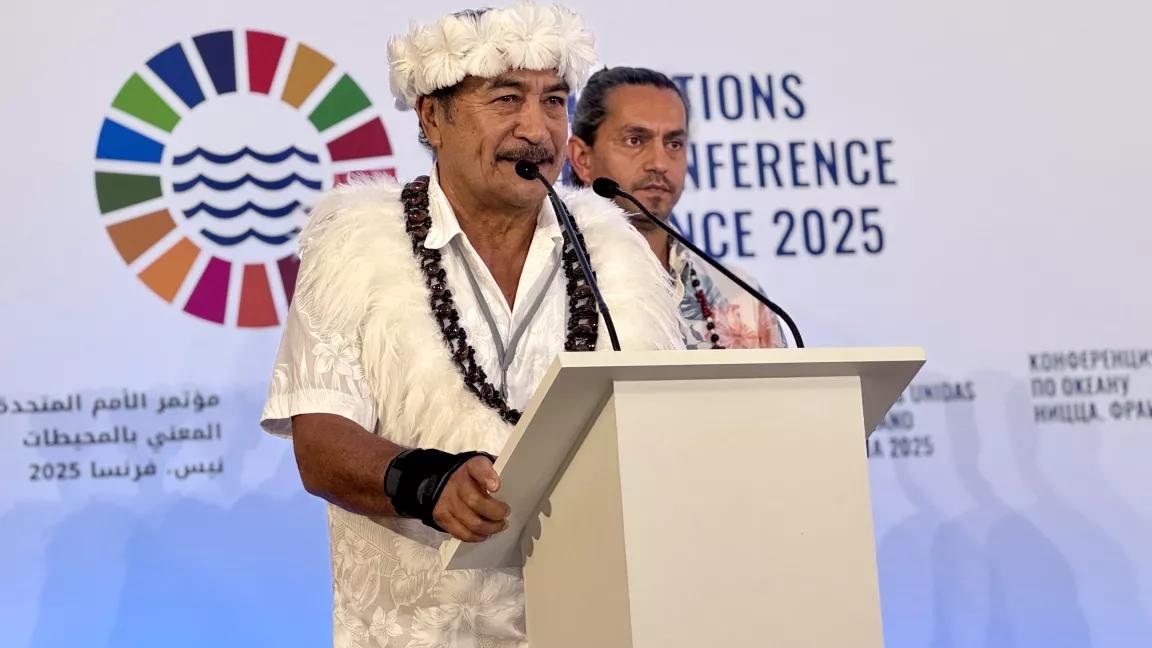
Koro Felipe, head of the Koro Nui o te Vaikava o Rapa Nui
Accelerating progress for the high seas treaty’s entry into force
For months, the global ocean community has been watching closely: Would the third U.N. Ocean Conference mark the moment that the high seas treaty reached the crucial threshold for entry into force?
Not quite, but it’s closer than ever. While the treaty still needs 60 countries to complete the formal process of ratification—the formal step where governments legally agree to be bound by an international treaty—this week brought a powerful new wave of progress.
NRDC and our partners have been deeply engaged in propelling the high seas treaty forward, from helping to shape treaty text during years of negotiations to supporting countries in their ratification journeys.
We were proud to cohost a high-level event on June 9, in partnership with the governments of Belgium, Chile, Costa Rica, the European Union, France, Germany, the Republic of Korea, Nigeria, the Maldives, Palau, the Philippines, and Seychelles, along with our NGO colleagues.
The event brought together more than 30 heads of state and ministers to generate momentum to get to 60 ratifications and to begin laying the groundwork for the first generation of high seas MPAs.
Later that day, 19 countries officially deposited their instruments of ratification, which brought the total number of ratifying countries to 50. In addition, 18 more countries signed the treaty, expressing their intent for future ratification and raising the total number of treaty signatories to 134.
The treaty’s promises—including new protections, enhanced oversight, and a framework to establish large-scale high seas MPAs—can only be realized once it officially enters into force.
We urge countries to continue ratifying and help turn this vision into reality.
Where we go from here
UNOC 2025 was a major step forward in the global effort to combat harmful ocean noise. The launch of the High Ambition Coalition for a Quiet Ocean highlights the strength of multilateralism and underscores what is possible when countries unite across borders to protect marine biodiversity.
The conference also reinforced a renewed commitment to bring the high seas treaty into force as the ratification process continued to pick up steam. Supporters believe that it is realistic that the necessary 60 ratifications will be achieved by the annual meeting of the U.N. General Assembly, which will take place in New York City this September. And this momentous step could not happen too soon. With nearly half of the world’s oceans still lacking adequate protection, this treaty remains the strongest tool to creating meaningful, enforceable safeguards for the high seas.
We can and should celebrate progress—but we must also maintain our resolve. The road ahead demands even greater cooperation, sustained commitment, and an unwavering sense of urgency.
Related Blogs

The Trump Administration Is Racing to Launch the Deep-Sea Mining Industry, Despite Huge Risks and Broad Opposition

Making CITES Great Again?
