The People Behind Climate-Friendly Cooling
On the 10th anniversary of the Kigali Amendment, here is a reminder of why the service workforce matters more than ever.
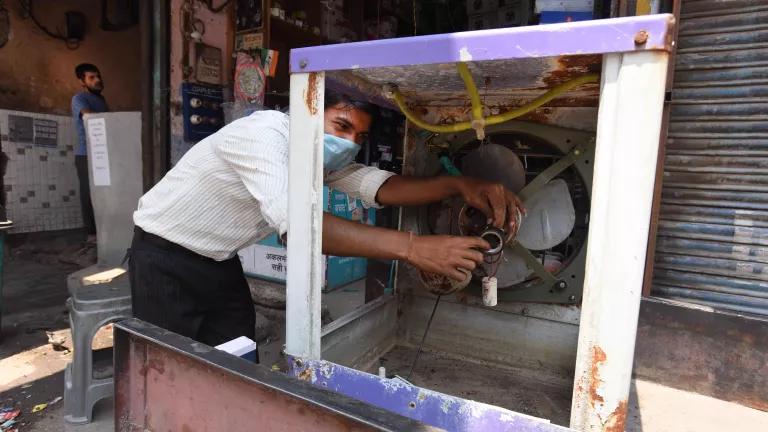
Electrician Arjun Kumar repairs an air cooler at Shakarpur School Block in New Delhi, India.

Coauthored with Gerry George and Akash Goenka, NRDC India
The transition to climate-friendly air-conditioning and refrigeration is often framed as a story of technology—less harmful refrigerants, more energy-efficient equipment, cleaner power—and the stronger policies to back it. Yet it is becoming increasingly clear that the success of the Kigali Amendment (2016) to the Montreal Protocol, a global agreement to phase down a class of climate-warming gases called hydrofluorocarbons (HFCs) used in air conditioners and refrigerators, will depend on something far more fundamental: the people behind the installing, servicing, maintaining, and disposing of cooling equipment. Setting up the people behind climate-friendly cooling for success will be the key lever in the effective implementation of the Kigali Amendment, which is expected to avoid more than 80 billion metric tons of CO2 emissions by 2050 and limit global warming by up to 0.5 degrees Celsius by the end of the century. This was a key message that resonated with experts who gathered at an event cohosted by NRDC and the Climate & Clean Air Coalition (CCAC) during the 48th Open-Ended Working Group (OEWG48) meeting of the Parties to the Montreal Protocol in Bangkok on July 15, 2026.
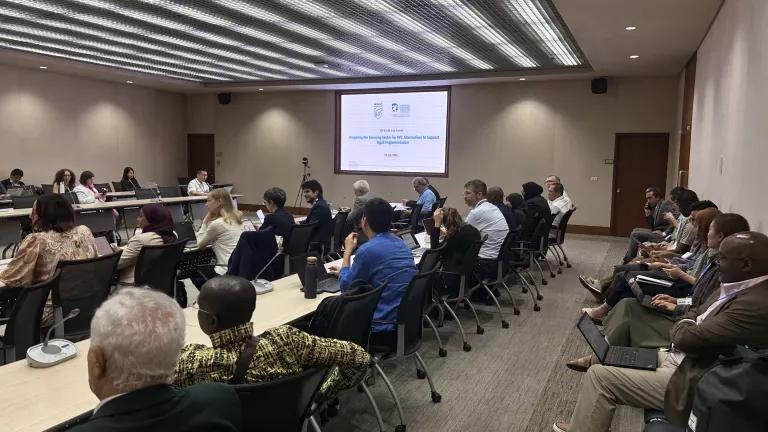
NRDC and CCAC hosted a side event at OEWG48 in Bangkok in July 2026 to discuss strengthening the service technician workforce for HFC alternatives.
Increasing focus on workforce development at the Montreal Protocol
Many HFC alternatives with a low global warming potential (GWP) are still flammable and/or toxic, making the safe handling, installation, and servicing of these refrigerants a priority. Proper installation of cooling equipment, safe refrigerant handling, refrigerant leak detection, and refrigerant recovery at the end-of-life of equipment require skills that go beyond traditional servicing practices. There is thus a recognition of the need to refresh and strengthen existing training and certification systems across countries, which was discussed at the Montreal Protocol.
The Multilateral Fund (MLF), the funding arm of the Montreal Protocol, is working to understand servicing needs, particularly of developing countries in the context of low-GWP alternatives, and it will be preparing guidelines to assist these countries to incorporate the servicing aspects in its funding proposals for Kigali Amendment implementation. Relatedly, workforce development is central to Lifecycle Refrigerant Management (LRM), an approach that keeps these harmful gases from leaking into the atmosphere throughout their lifetime. An additional funding modality being considered by the MLF could make funding available to support countries in strengthening the workforce development needed for LRM.
Common workforce development challenges across countries can have common solutions
Looking closely at India, its rapidly growing cooling demand is changing the nature of the challenge. Today, India is estimated to have around 300,000 service technicians in the room air conditioner sector. By 2037, that number could grow by six to seven times as the country’s stock of room air conditioners continues to increase rapidly. Over the years, government programs implemented under the aegis of the Montreal Protocol, vocational training, and manufacturer-led initiatives have invested significantly in technician training, creating a strong foundation for the transition to HFC alternatives. However, these efforts are fragmented and need to become more coordinated to ensure uniformity in terms of the quality and relevance of training programs, especially in light of the transition to flammable or toxic HFC alternatives. Alongside flammable refrigerants, training programs must also evolve to prepare technicians to work effectively with inverter-driven equipment, embedded electronics, digital controls, and advanced diagnostic tools.
Much of the workforce is informal; work is often seasonal and concentrated during pre-summer and summer seasons, forcing many technicians to move in and out of the profession. Stronger career pathways, better wages, professional recognition, and incentives for certification are essential to retaining skilled workers. Greater consumer awareness can also help create demand for certified technicians and high-quality servicing, reinforcing higher standards across the sector.
Globally, while countries are at various levels of implementing the Kigali Amendment, many of the underlying workforce challenges are remarkably similar. Geography, market conditions, and institutional capacity shape national approaches to preparing the servicing workforce, but the need for skilled technicians and effective training systems is universal.
In the Maldives, technicians often travel long distances between islands to attend training or transport refrigerant recovery cylinders. Australia has responded to its vast geography by taking practical learning directly to technicians through mobile training facilities. Across Europe, certification systems increasingly recognize different competency levels while encouraging investment in servicing workshops, specialized tools, and refrigerant recovery equipment. Other countries are using recognition of prior learning to help experienced technicians transition into formal certification systems while recognizing their years of practical experience.
These examples show that workforce development should be tailored to national circumstances, with training and certification systems reflecting national labor markets, consumer needs, and institutional arrangements. Strong partnerships between governments, training institutions, and manufacturers can help ensure that workforce development keeps pace with technological changes and evolving market needs. Ultimately, investment in people must keep pace with investment in technology so that innovation is matched by the capacity to safely install, service, and maintain next-generation cooling equipment.
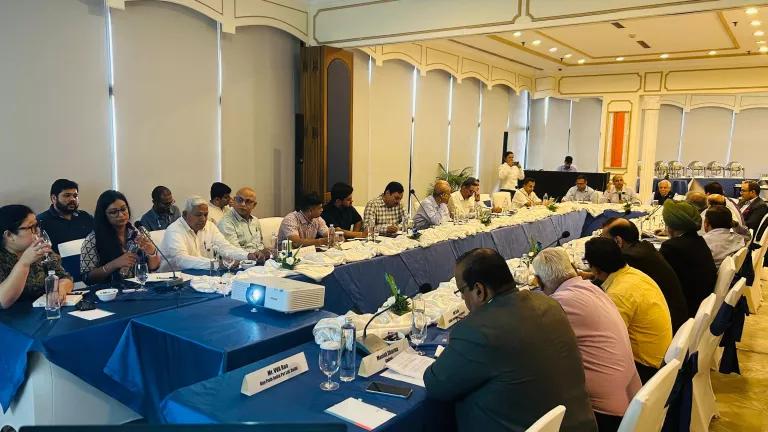
Preparing the servicing workforce is an issue that cuts across developing and developed countries. Ahead of a global conversation on the topic, NRDC convened policymakers, industry associations, and other experts in June 2026 in New Delhi to get a developing country perspective on challenges and solutions to a stronger servicing regime. It was encouraging to witness that the conversation at OEWG46 in Bangkok reiterated the message from the New Delhi roundtable: The transition to climate-friendly cooling will require more than just new technologies and refrigerants; it will require sustained investment in the servicing ecosystem and the people who support it.
Looking ahead
Through several conversations over the past few months, it has become clear that a skilled and resilient servicing workforce requires more than technician training. It requires action across five areas:
- Strengthen competency-based training and certification: Focus on practical skills and regularly update training to reflect new refrigerants, technologies, and safety requirements.
- Invest in the enabling ecosystem: Expand access to qualified trainers, modern training facilities, and servicing and refrigerant recovery equipment.
- Create stronger incentives for certification: Implement professional recognition, clearer career pathways, and better employment opportunities to encourage more technicians to pursue certification.
- Improve coordination across the servicing ecosystem: Strengthen collaboration among governments, industry, manufacturers, training institutions, and certification bodies to help align training, certification, and workforce development.
- Build on existing experience: Adapt proven approaches to national circumstances while continuing to share knowledge and best practices across countries.
As the Kigali Amendment marks its 10th anniversary this year, it’s an important moment to reflect on the human aspect of the amendment and strengthen the focus on ensuring that countries have the workforce and institutional capacity necessary to support effective implementation. Ultimately, the success of the Kigali Amendment will depend not only on the technologies that countries adopt but also on the people whose skills and expertise make those technologies work safely and effectively.
This NRDC.org blog is available for online republication by news media outlets or nonprofits under these conditions: The writer(s) must be credited with a byline; you must note prominently that the blog was originally published by NRDC.org and link to the original; the blog cannot be edited (beyond simple things such as grammar); you can’t resell the blog in any form or grant republishing rights to other outlets; you can’t republish our material wholesale or automatically—you need to select blogs individually; you can’t republish the photos or graphics on our site without specific permission; you should drop us a note to let us know when you’ve used one of our blogs.
Related Blogs

From Planning to Action: How Two Indian Cities Are Building Resilience to Extreme Heat
Women’s Leadership in India’s Equitable Energy Transition