
Forcing Michigan’s Coal Plant to Stay Open Was Just the Beginning
The Trump administration’s so-called emergency orders to keep burning dirty coal comes at a huge cost to ratepayers across the country.
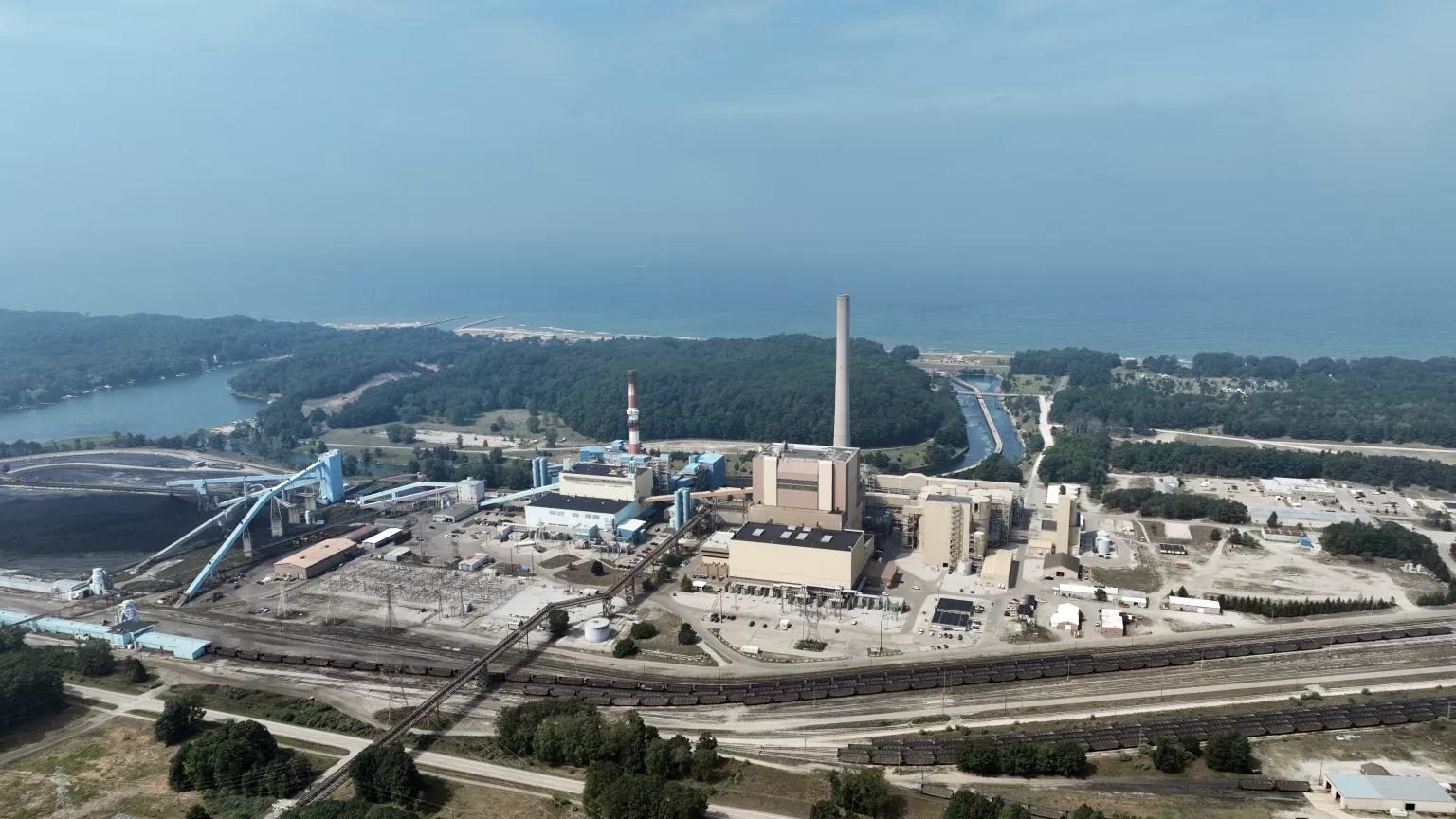
The J.H. Campbell generating plant, in West Olive, Michigan, which was scheduled to close May 31, 2025, but has stayed open due to the U.S. Department of Energy's emergency order requiring the coal plant to remain available for operation
UPDATE: On September 11, 2026, the U.S. Court of Appeals for the District of Columbia Circuit rejected the Trump administration’s reasoning for preventing Michigan’s J.H. Campbell power plant from shutting down. The ruling is among the first legal wins against these dubious “energy emergencies,” and several other lawsuits continue to play out in the courts regarding other coal-burning power plants forced to operate, and pollute, beyond their planned retirement dates.
Mark Oppenhuizen had been counting down the days to May 31, 2025. That’s when an old and loud coal-fired power plant, located a third of a mile from his home in southwestern Michigan, was supposed to close down. Oppenhuizen and his wife, Kathy, raised their two children there. The couple can still recall the days when black dust from the plant would settle on deck chairs in their front yard, before stronger pollution regulations went into effect.
Even afterward, the J.H. Campbell Complex, owned by Consumers Energy, remained one of the largest and most polluting power plants in the state. In the distance, the Oppenhuizens could see plumes of gases spewing from its smokestacks.
“Given the nature of the pollutants that come out of it, and the fact that it’s well documented that that’s a dirty power plant, being downwind of it is not a great place to be,” Oppenhuizen says.
Campbell’s plumes spread as far as Vermont, more than 800 miles away. Each year, the Campbell plant releases millions of pounds of air pollution, causing up to $879 million in health-related impacts. Kathy suffers from the lung disease COPD, and the couple had been looking forward to breathing cleaner air and seeing the plant’s grounds turned into park space. But the Oppenhuizens’ wait has so far been in vain.
The U.S. Department of Energy (DOE) is demanding that the J.H. Campbell Complex stay open.
NRDC’s director of policy analysis, Amanda Levin, explains how coal plant pollution surged across the country last year, thanks to Trump’s presidential exemptions, and how that has subsequently created billions of dollars in public health costs for local communities.
Clean air and lower energy bills delayed
A week before Consumers Energy had planned to close its 63-year-old plant, the DOE sent an emergency order to keep Campbell open for another 90 days. Then came two more emergency orders—which are directives the DOE typically issues only after natural disasters or extreme weather events. Altogether, the DOE demanded the power plant remain in operation until mid-February 2026. The reason given? To meet electrical demand, but this claim doesn’t add up.
The orders came as quite a surprise to Consumers Energy, which had worked with dozens of stakeholders over the preceding two years to ensure that other energy sources, such as gas, wind, and solar could replace the 1,450 megawatts of electricity that Campbell supplied. Along with the Michigan Public Service Commission (MPSC), which regulates public utilities, the company had bought a natural gas plant about 50 miles away to provide the electricity needed for the area.
“We currently produce more energy in Michigan than needed,” MPSC Chair Dan Scripps said in a commission meeting shortly after the federal government issued its first order. “The unnecessary recent order from the U.S. Department of Energy will increase the cost of power for homes and businesses in Michigan and across the Midwest.”
When Consumers Energy announced its plan to close Campbell in 2021, it predicted that by 2040, the transition would save ratepayers $650 million, collectively. In contrast, keeping the inefficient plant open costs the company $615,000 per day.
It also undermines the community’s own efforts to move forward. Campbell’s employees have gotten new jobs. Neighbors have attended public meetings to discuss what should become of the property. And to help start the cleanup of Campbell’s contaminated grounds, Consumers signed an 18-year contract with another company to haul away the plant’s toxic coal ash.
“All of that work—it wasn’t really taken into consideration when the order was given to extend the life of the plant,” says Oppenhuizen. “It’s just a political thing.”
And the Trump administration’s push to force power plants to keep burning fossil fuels didn’t stop at Campbell.
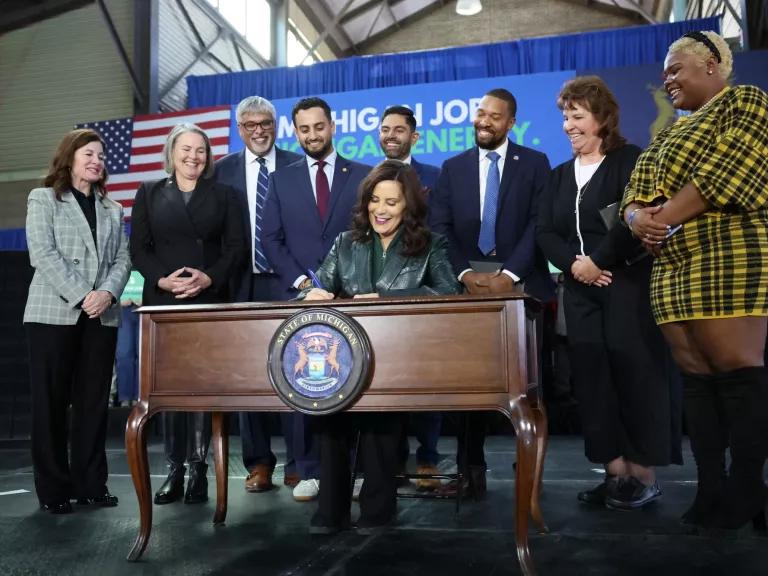
Governor Gretchen Whitmer signing a clean energy and climate action package, November 28, 2023
Let coal die
Over the past two decades, as natural gas, solar, and wind power became more and more affordable energy sources, coal provided an increasingly smaller portion of the country’s electricity. At its peak in 2007, coal generated more than 50 percent of U.S. electricity. Last year, it produced just 15 percent.
President Trump’s latest efforts to prop up the industry mirror his first administration’s attempt to bail it out, and they began anew after he took office last January. That’s when he signed an executive order declaring the country to be in a so-called energy emergency over his concerns about the transition to renewable power sources. The order promoted the production of fossil fuels while also ending many policies that sought to address their profound effect on the planet's climate.
Then came the first emergency orders, followed by the spending bill passed by Congress in July, which sought to incentivize coal mining on public lands. The law lowers the percentage that mining companies must pay to extract coal from federal property from 12.5 percent to 7 percent through 2034. States get that money, too, and Wyoming’s principal economist Dylan Bainer said that the change could cost the country’s number one coal-producing state $50 million a year.
Additional emergency orders trying to resuscitate the dying industry came in August, and more recently, the DOE ordered the continued operation of five other coal-fired power plant units across the country: a total of three units in Indiana between the R.M. Schahfer and F.B. Culley power plants, the Craig Generating Station in Colorado, and the Centralia plant in Washington State. The oil- and gas-fired Eddystone plant outside of Philadelphia also received an order to stay open.
“The plant owners themselves have said that they essentially expect these 90-day orders to continue for the foreseeable future, for as long as the Trump administration remains in power, or any kind of similarly thinking administration remains in power,” says Caroline Reiser, senior attorney for climate and energy at NRDC.
Despite coal being the world’s most polluting source of energy, causing great harm to both public health and global climate, Energy Secretary Chris Wright said earlier this year that the Trump administration’s goal is to stop “the political closure” of coal plants. Taking it a step further, the administration announced this month that it will fund upgrades to five other coal plants in West Virginia, Ohio, North Carolina, and Kentucky, and issue an executive order that directs the U.S. Department of Defense to buy electricity generated from coal.
Administration officials point to the proliferation of data centers as a reason to keep coal plants online. According to the Lawrence Berkeley National Laboratory, energy demand from data centers could triple by 2030 and account for up to 12 percent of the nation’s electricity use. In most cases, however, energy companies and regional grid operators—the organizations responsible for transporting electricity in a region—account for such potential increases in demand when making transition plans.
Energy and utility companies could also decide to develop more affordable sources of electricity, such as wind and solar. Legislators in at least five states have already proposed bills that would require or incentivize data center owners to get a certain amount of electricity from renewable sources.
Meanwhile, the fossil plants slated to close over the next two years generate a mere 27 gigawatts of electricity—2 percent of total U.S. electricity output. And just as with Campbell, keeping them open raises consumers’ electric bills. According to an August report published by Grid Strategies, forcing the continued operation of the fossil fuel–burning plants slated to close between now and 2028 could cost ratepayers a total of more than $3 billion a year.
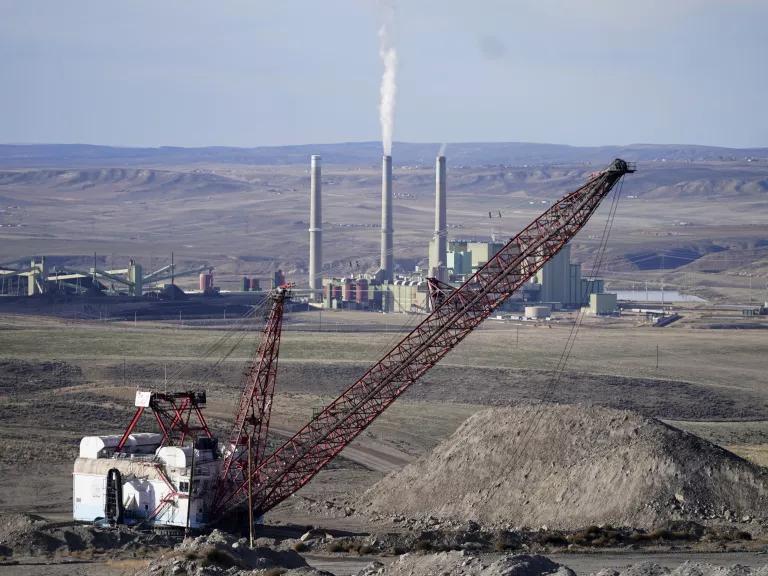
The coal-fired Craig Station power plant and adjacent Trapper Mine in Craig, Colorado
Coal plants: Taking power from communities
Keeping the coal electric power plants running does more than raise utility bills—it also prolongs a legacy of environmental racism, says the Grand Rapids, Michigan, chapter of the NAACP, a group that worked to transition the Campbell plant to cleaner energy sources. The pollution from the plant often blows west to east, covering the entire state.
This emergency order “is just counterproductive to all the work and sacrifice that’s been done for decades now to protect our communities that are most overburdened,” says Kareem Scales, the chapter’s environmental justice committee chair. “This is the last coal plant that Consumers Energy owns, and so by closing this plant, it was a huge step forward.”
The same goes for communities living near other extended coal-burning operations. For Coloradans, closing the Craig plant’s coal unit would reduce haze—a soup of fine particulate matter, ozone, nitrogen oxides and volatile organic compounds. Had the R.M. Schahfer plant closed, its owner, the Northern Indiana Public Service Company, would have had to seal the coal ash pits that leak toxins like arsenic and uranium into groundwater. (The EPA had previously planned to require companies to clean up coal ash ponds by 2028, but the agency is now allowing them to continue dumping waste in unlined pits at 11 coal-powered plants, including R.M. Schahfer, until 2031.)
The emergency orders, says Scales, also prevent Michiganders, and others, from taking control of their energy future. For instance, Michigan currently has a mandate to get 50 percent of its electricity from renewable sources by 2030, and Colorado state law requires utilities to reduce their emissions by 80 percent by the same year. These climate goals will be far more difficult to achieve if plants like Campbell and Craig keep chugging.
Legal action
As the emergency orders pile up, states, along with environmental and community groups and even plant operators, are pushing back. The attorney general for Washington State has asked the DOE to revoke its December order for the Centralia plant, which had already stopped burning coal earlier that month. The Craig plant in Colorado has also already stopped operating due to a valve failure. In January, the operators of the plant—Tri-State Generation and Transmission Association and the Platte River Power Authority—requested a rehearing and clarification of the order, arguing that it violated federal law and the U.S. Constitution. In addition, the Colorado attorney general petitioned the DOE, requesting that it rescind the emergency order, and environmental groups formally challenged the order to keep the Craig plant running past its planned closing date of March 30.
Meanwhile, in Michigan, NRDC and a number of other organizations, represented by Earthjustice, are suing the DOE in regard to the Campbell plant. They filed a lawsuit last fall arguing that the string of emergency orders issued for the plant are unnecessary and unlawful. The case is expected to go to court this spring.
Until then, residents like Oppenhuizen and millions of other Midwesterners are on the hook for the costs to keep Campbell polluting. “It’s ridiculous,” he says.
This NRDC.org story is available for online republication by news media outlets or nonprofits under these conditions: The writer(s) must be credited with a byline; you must note prominently that the story was originally published by NRDC.org and link to the original; the story cannot be edited (beyond simple things such as grammar); you can’t resell the story in any form or grant republishing rights to other outlets; you can’t republish our material wholesale or automatically—you need to select stories individually; you can’t republish the photos or graphics on our site without specific permission; you should drop us a note to let us know when you’ve used one of our stories.
How EPA Rollbacks Will Cost Us—in Dollars and Lives
The Pollution That Causes Acid Rain Is Back on the Rise
Mercury’s Journey from Coal-Burning Power Plants to Your Plate