Turning Pavement into Electric Truck Charging Stations
California prioritizes 500 new truck charging ports, providing a model for other states.

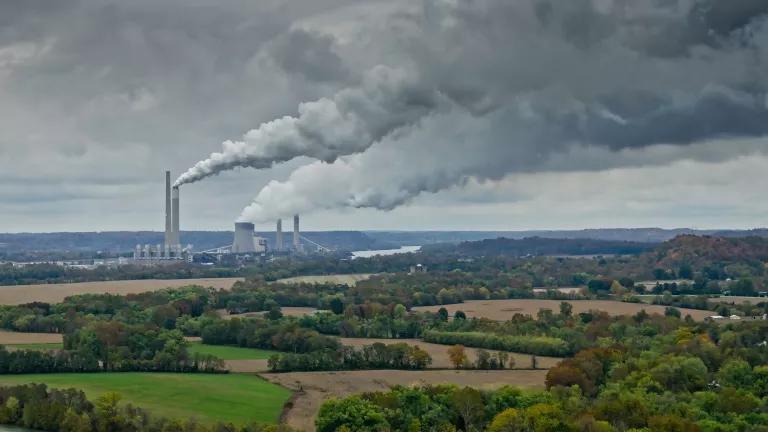
A heavy-duty truck charging station at the Port of Long Beach, California

Just as more Americans than ever are enjoying the convenience, affordability, and fun of electric vehicles (EVs), the Trump administration is trying to halt progress by rolling back federal clean vehicle standards and charging infrastructure investments.
That’s why it was a breath of fresh air when, last month, the California Transportation Commission (CTC) approved $94 million to build more than 500 new truck charging ports along California’s busiest trade corridors; those expanses of highways are currently plied by diesel trucks pumping lung-searing smog while carrying goods to market. This investment may seem modest relative to the state’s $20 billion annual transportation infrastructure budget, but it will increase the number of truck chargers by a whopping 25 percent.
The CTC’s approach can point the way toward how states across the country can redouble efforts to zero out tailpipe pollution. Governors have unprecedented levels of flexible federal and state funding at their disposal to shift from paving over neighborhoods to cleaning up communities.
Federal funding at all-time highs
In 2021, President Biden signed into law the Bipartisan Infrastructure Act, the largest federal investment in transportation in decades, which ramped up funding for roads, public transit, rail corridors, and EV charging. While federal law sets the overall framework for spending, the overwhelming majority of funding discretion is left to the states, giving elected state leaders and transportation agencies wide latitude over how the money is spent.
Learn More

Unfortunately, NRDC found that far too many of those states spend excessively on highway expansion projects that put more cars on the roads while underinvesting in buses, trains, sidewalks, bike trails, and yes, EV charging. That means we’re moving in the wrong direction when it comes to giving Americans more travel options to get out of traffic and cut climate-warming tailpipe pollution.
Turning pavement into chargers
Leading governors can shift some of their funding to support a more balanced clean mobility approach, away from counterproductive and ineffective highway expansion and toward investments that deliver clean air and community benefits. With our coalitions, we sponsored a California bill in 2024 to require the CTC to increase funding for transportation electrification and curb its highway expansion investments, which original NRDC research found to be heavily concentrated in a single funding program. While the bill did not pass, it laid the groundwork for this effort.this effort.
This year, we advocated, along with 35 coalition partners, for the CTC to fund truck charging stations through the Trade Corridor Enhancement Program (TCEP), a pot of money from federal and state sources that the CTC allocates to projects that improve goods movement. In 2021, the CTC allocated 90 percent of TCEP funding to highway expansion projects. But thanks to our advocacy, CTC cut that amount in half and instead made a $94 million investment in truck charging stations, in addition to investments in State –of –Good –Repair buses, freight rail projects, and more.
Rolling out chargers from coast to coast
There’s nothing stopping other states from following California’s lead. State leaders already have the tools—they just need to use them. NRDC is working to scale this approach to other states by focusing on the flexible funding tools that governors, state legislatures, and state secretaries of transportation can use to direct investments toward vehicle electrification and other beneficial clean transportation projects.
Advocates can tailor this strategy to fit their state’s transportation funding context by mapping where electrification needs overlap with flexible pots of money. Local mayors and businesses can also make sure that priority EV charging infrastructure projects are included in regional and state transportation project pipelines to ensure eligibility for state and federal funds.
Georgetown Climate Center outlines in an issue brief that a significant portion of the $554 billion of the Bipartisan Infrastructure Law funding going to state transportation agencies over five years can support clean transportation projects, including public “transit capital projects, installation of electric vehicle charging infrastructure, [and] active transportation…”
By advocating for state-specific executive directives and legislation, coalitions across the country can help keep the United States in the fight to clean our air and accelerate clean mobility. Even if the Trump administration slams the breaks on federal momentum, states can—and must—keep driving progress.
Related Blogs
The EPA Continues Pushing a Gas Guzzler Mandate
States, NGOs Ask Court to Restore State Clean Car Standards