Groups in Court to Protect Communities from Hydrogen Fluoride Use in Refineries
Around 40 refineries are still using dangerous chemicals, although safer alternatives exist.

Media Contact
A toxic cloud that hugs the ground and travels for miles: That is the danger posed by hydrogen fluoride (HF), an extremely dangerous chemical that is still used to make gasoline at around 40 U.S. refineries. If released into the air, HF threatens to put nearby communities in harm’s way. Some 19 million people live close enough to an HF refinery to be caught in such a cloud.
There is no reason to accept that risk. Most U.S. refineries already use safer alternatives, and some that once relied on HF have made the switch. Yet when NRDC, Clean Air Council, and Communities for a Better Environment asked the U.S. Environmental Protection Agency (EPA) to eliminate the unreasonable risk, the agency refused. We are now in federal court to make it act, and on November 18, the U.S. District Court for the Central District of California will hear arguments on whether our case moves forward.
Why we’re in court
Refineries use HF to boost gasoline octane, and each refinery typically stores tens of thousands—or even hundreds of thousands—of pounds of it on-site. HF destroys skin, tissue, and bone. Exposing as little as 1 percent of a person’s skin, about the size of a hand, to HF can be deadly. Inhaled, it can fatally damage the lungs and trigger cardiac arrest.
The danger is not hypothetical. In 1987, a Texas refinery released at least 30,000 pounds of HF and sent more than 1,000 people to the hospital. Since then, U.S. refineries have had more than 80 smaller HF releases, in the last decade alone, as well as multiple near misses in which explosions nearly released significant amounts of the chemical.
In February 2025, we petitioned the EPA under the Toxic Substances Control Act (TSCA), the federal law for addressing dangerous chemicals, to eliminate these unreasonable risks. The Trump EPA refused to act. The TSCA lets the public take that refusal to federal court—and we did. Our case asks the court to find that refinery use of HF presents unreasonable risks and to order the EPA to address it. The Western States Petroleum Association, an oil industry trade group, has joined the EPA in fighting the case.
Who is at risk
About 19 million people live close enough to an HF refinery to be caught in a toxic cloud. By the refineries’ own estimates, the Trainer Refinery near Philadelphia and ExxonMobil’s Joliet refinery in Illinois each put more than a million people in danger. Refineries in Torrance and Wilmington, in Los Angeles County, leave hundreds of thousands more in harm’s way.
The threat doesn’t end at the refinery fence. It appears that HF is made for refinery use at a single facility in Louisiana and shipped by truck and rail across the country. As our complaint documents, one railcar can carry more than 172,000 pounds of the chemical, and HF shipments have already forced evacuations at a Memphis railyard in 1997 and after a 2012 derailment near Louisville.
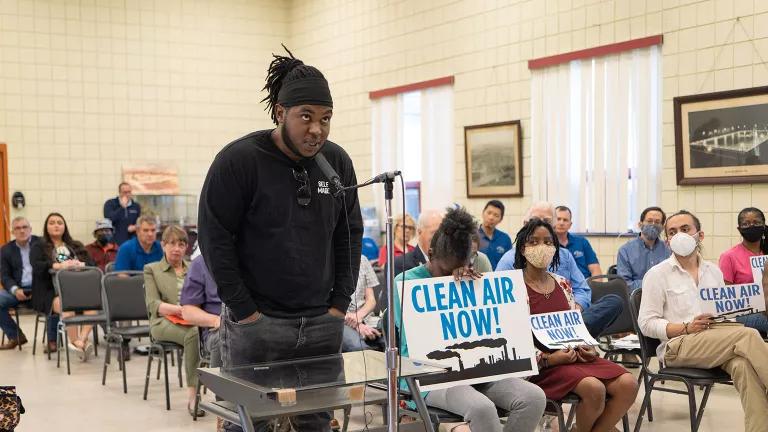
Our filings identify young children, older adults, and people with asthma, heart disease, or lung conditions as especially vulnerable, along with the workers at these refineries. Neighbors of refineries like those in Torrance and Wilmington have spent years pressing regulators to end HF use. They should not have to wait for a disaster to be heard.
Where the case stands
We sued in July 2025. In June 2026, the court dismissed an earlier version of our complaint but let us revise it, and we filed a Second Amended Complaint on July 22. The EPA and the Western States Petroleum Association have again asked the court to throw the case out. That briefing closed at the end of October, and oral argument is set for November 18.
What comes next
After the hearing, the court will decide whether our case can proceed. If we ultimately prevail, the court would direct the EPA to begin rulemaking on refinery HF use, and the agency would decide whether refineries must switch to safer alternatives or adopt other safeguards.
Safer technology is already in wide use. Every day that the EPA refuses to act, millions of people remain one accident away from a toxic cloud.
Resources

Hydrogen Fluoride at Refineries
Community Groups Seek Legal Action on Flesh-Dissolving Chemical at Oil Refineries
Groups Sue EPA Over Toxic, Flesh-Dissolving Refinery Chemical that Threatens Fenceline Communities
Related Content
Centering on Communities to Drive Speed and Scale

The Data Is Clear