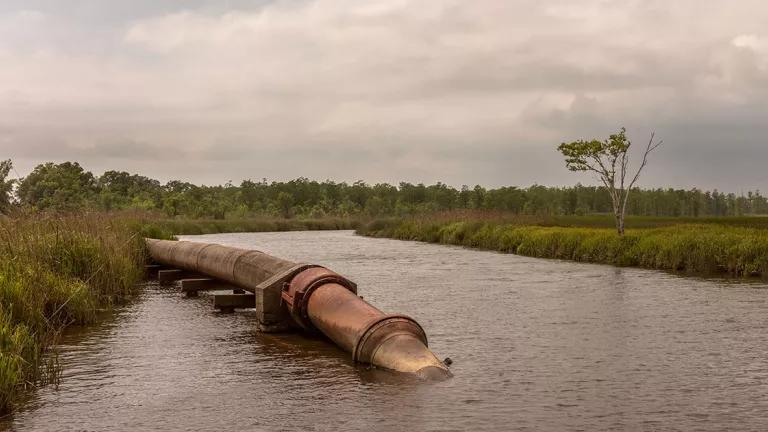
History of PFAS Contamination in North Carolina
State leaders have considered several proposals to protect drinking water from PFAS pollution, but none have been successfully implemented.
Author


Media Contact
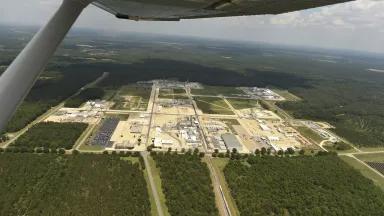
It was discovered in 2017 that the chemical manufacturer DuPont had been dumping toxic PFAS “forever chemicals” from its Cumberland County facility into the Cape Fear River for more than 40 years. High levels of these pervasive PFAS chemicals have been detected in drinking water systems and wells servicing more than 3.5 million people across the state.
PFAS are man-made toxic chemicals, used in nonstick, stain- and water-resistant consumer products, and they have been linked to myriad health harms, including cancer, infertility, and hormone dysfunction. In North Carolina, the scale and severity of the PFAS pollution in drinking water and other water sources are so bad that the U.N. Human Rights Council found DuPont and its spin-off fluorochemical company Chemours guilty of human rights abuses.
North Carolina’s remediation efforts
Under Governor Roy Cooper’s leadership, the North Carolina Department of Environmental Quality (DEQ) took legal action in 2017 to stop DuPont and Chemours’s discharges into the water. Then, in 2019, a North Carolina Superior Court issued a consent order between DEQ, Cape Fear River Watch (represented by the Southern Environmental Law Center), and Chemours that required the company to:
- Fund millions in fines and investigative costs
- Provide affected residents with replacement drinking water
- Address and remove PFAS contamination from the Cape Fear River region
- Report its PFAS air emissions to the state DEQ
Learn More
Despite that necessary legal action, further and immediate action is needed and overdue to protect North Carolinians from exposure to PFAS-contaminated water, food, and air: from the water where PFAS is dumped to the fields where food is grown and the air, which is further contaminated. The North Carolina Environmental Management Commission (EMC) has delayed issuing PFAS regulations on polluting industries for years at the behest of the NC Chamber.
EPA actions on PFAS regulations
The U.S. Environmental Protection Agency (EPA) released new data, collected between 2023 and the first quarter of 2025, showing PFAS as a nationwide health crisis, with more than 200 drinking water systems—serving more than 172 million people—being affected. Cities in North Carolina that are impacted include Cary, Durham, Fayetteville, and Wilmington.
Timeline of EPA federal actions on PFAS
The EPA’s proposed rescinding of PFAS standards would be unlawful under the Safe Drinking Water Act (SDWA). NRDC issued this analysis, which shows:
- The SDWA states that the EPA cannot legally weaken drinking water standards and must provide water systems five years maximum to comply with drinking water standards, which the EPA’s April 2024 rule provided.
- SDWA has limitations for restricting PFAS. The law applies only to drinking water and drinking water sources and does not protect the public from exposure to PFAS in lakes, rivers, streams, or private wells, nor from the local fish or shellfish they eat.
State of state actions
Independent of federal action, state and local leaders, including those in North Carolina, have been investing in looking at solutions and taking on the significant costs of PFAS cleanup by installing drinking water filtration systems, including:
- Cape Fear Public Utility Authority: $43 million to install new water treatment system
-
Fayetteville Public Works Commission: $81 million to install new water treatment system
- Orange Water and Sewer Authority: $75 million for planned treatment system
These facilities are filtering out PFAS, but experts agree that preventing PFAS pollution at the source and holding polluters accountable is common sense and more cost-effective. And there are many polluters that need to be held accountable in addition to those manufacturing PFAS; the Environmental Working Group identified 736 suspected industrial dischargers of PFAS in North Carolina.
North Carolina state leaders have considered several proposals to protect drinking water from PFAS pollution, but none have been successfully implemented. The DEQ has developed proposals to limit PFAS levels in waterways, but the EMC has been reluctant to act on them; delaying the issuance of restrictions that would hold polluters accountable, under political pressure from the North Carolina Chamber of Commerce in 2024.
Latest obstacle to PFAS cleanup
Any viable action to restrict the poisoning of North Carolina’s drinking water with PFAS is now up to a high bar of the near unanimous consent of state lawmakers. The DEQ and EMC proposals to solve the costly cleanup of PFAS at the commission level are now moot, given the passage of House Bill 402, which requires two-thirds of the General Assembly to approve any new rules that state boards and commissions propose that would cost the state more than $1 million over five years to implement. The bar is even higher for any rule that would cost $10 million or more over five years.
Safe, clean drinking water shouldn’t be a partisan issue, and fortunately, some lawmakers have shown some signs of earnest support for reining in PFAS pollution. The PFAS Pollution and Polluter Liability bill—sponsored by Democrat Robert Reives and House Republicans Ted Davis, Frank Iler, and Diane Wheatley—is the first of its kind to see any traction that would lead to holding polluters accountable for the cost of cleanup and protecting drinking water. The bill received near unanimous support in the state House this session but hasn’t moved through Senate committees. Senate Majority Leader Michael Lee, along with Republican Danny Britt and Democrat Val Applewhite, filed the 2025 Water Safety Act this session, which directs the DEQ to adopt PFAS discharge limits for industrial polluters, and NRDC will continue tracking it.
Related Content
North Carolina Regulators Approve Self-Policing Policy for PFAS Polluters
North Carolina’s Delays on PFAS Limits in Drinking Water Pose Health and Economic Risks