Counting on Canada’s Commitments
To halt and reverse forest degradation by 2030, Canada must first admit that it has a problem.

Coauthored with Rachel Plotkin, David Suzuki Foundation
A new report by NRDC and the David Suzuki Foundation shows that, despite Canada’s claims that its laws protect the ecological integrity of its forests, forest degradation has occurred across Canada with insufficient government acknowledgement, scrutiny, or recourse.
Addressing forest degradation is essential for Canada to fulfill its commitments to the Paris Agreement (2015), Kunming-Montreal Global Biodiversity Framework (2022), and the Global Stocktake (2023). However, Canada, like many other Global North nations, has not publicly recognized that forest degradation is an issue within its own borders. Instead, government agencies and the forestry industry largely focus on deforestation—the conversion of forests to non-forested areas like cities or farmland—and claim victory for the limited amount of deforestation occurring under their watch. This approach essentially gives credit just for maintaining designated forest lands as “forest” and largely ignores the quality of those forest ecosystems. Many global commitments—including halting biodiversity loss, reversing land degradation, and limiting climate change—depend upon retaining forests with high ecological integrity, yet the scale and degree of forest degradation remain poorly quantified and mapped.
Without fundamental changes in forest management practices, incentives, and policy structures, forest degradation will continue to occur unchecked and largely unmonitored, leaving forests far less resilient and biodiverse for future generations. This will undermine Canada’s ability to meet its biodiversity and climate change commitments.
Learn More


Studies across Canada have shown the loss of structure, function, and/or composition in various forest ecosystems, as evidenced by many indicators:
According to CBC News, Canada has more than 1.5 million kilometers of logging and resource access roads. That’s enough to circle the earth more than 36 times. Logging and resource access roads increase predation risks and predator success rates, increase mortality due to road collisions, and increase forest accessibility, which can open the doors to the overexploitation of fish and wildlife.
Industrial logging has led to a higher proportion of younger forest stands than would be expected in natural forests, leading to less suitable habitats for species such as boreal caribou, American marten, flying squirrels, and boreal chickadees.
Eight percent of the native bird species usually observed in Ontario in young stands and 34 percent of the native bird species usually observed in mid-regenerating stands were found less often after logging than after wildfire. Logging in British Columbia’s old-growth forests has also driven the local extinction of wild populations of the spotted owl.
When compared to forests under natural succession, silvicultural practices to regenerate trees after logging have, in many places, shifted forest composition toward significantly more conifer or significantly more deciduous tree dominance at the landscape level.
Research in northwestern Quebec on mixed-wood boreal forests (which include both conifer and deciduous trees) found that shifts from mixed-wood to deciduous forests in human-disturbed landscapes were the main cause of declines in mature-forest bird communities.
In 2020, British Columbia’s Forest Practices Board found that while forestry licensees were largely meeting or exceeding legal requirements for riparian buffers (e.g., vegetated areas alongside waterways designed, in part, to help to reduce erosion), sediment from logging roads was still negatively impacting fish habitats.
Research has found that harvesting intensity is an important driver of carbon loss, with up to 60 percent of soil carbon in a forest stand released after clearcutting.
Boreal caribou are threatened with extinction in Canada; their population declines are directly linked to industrial disturbance within their ranges. In 2017, for example, a report on the Recovery Strategy for the Woodland Caribou’s implementation found total habitat disturbance had actually increased in 30 caribou ranges while decreasing in 14 and remaining stable in 7. The majority of the caribou ranges in Canada did not provide enough undisturbed habitat to sustain their populations. The 2024 progress report further revealed that anthropogenic disturbance had increased in more than two-thirds of boreal caribou ranges since the previous reporting period.
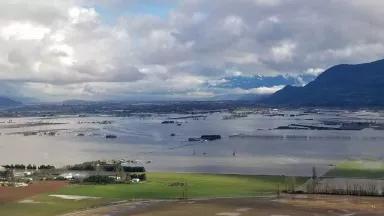
The link between logging and extreme flooding is also demonstrated in numerous Canadian studies. Clearcut logging has increased the risk of extreme flooding. Research also shows that industrial logging practices can exacerbate wildfire risk, particularly in the near term. Wildfires were shown to start more often in forests that had more area recently harvested.
What can Canada do?
There are solutions: Canada can address forest degradation in the following ways:
- Define, monitor, and report on activities that are likely to degrade forest ecosystems.
- Assess cumulative impacts and establish limits.
- Transparently acknowledge risks and uncertainties of climate change.
- Elevate Indigenous rights, knowledge, and governance systems.
- Shift scale and purpose of forest planning and management.
Canada has aligned itself with the globally recognized need to halt and reverse forest degradation, deforestation, and biodiversity loss by 2030 as part of its efforts to address the global climate and biodiversity crises. To achieve these targets, however, Canada must meaningfully address degradation in its forests, especially primary, old-growth, unfragmented, and other high-integrity forests.
Related Resources

What Will It Take for Ambition to Become Action? Delivering on Canada’s Nature Strategy

Eagles, Ancestors, and Allies Join Frontline and Indigenous Community Protection Efforts for the Farabout Peninsula