Getting Transportation Right
This report ranks how state transportation spending will help—or hinder—the shift to a climate-friendly and equitable transportation system.


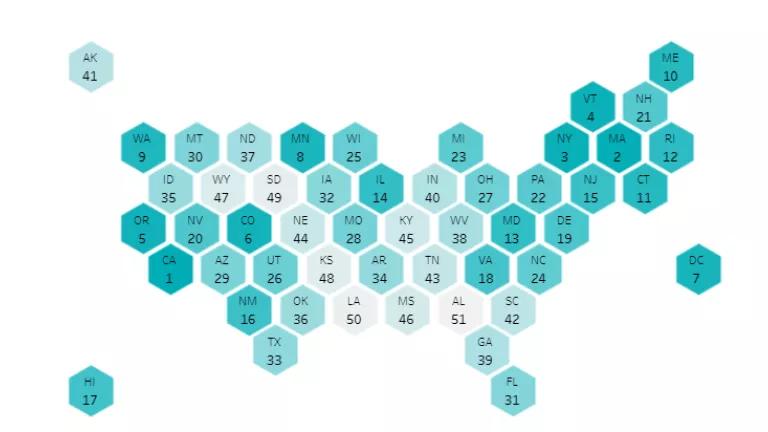
In 2023, NRDC published Getting Transportation Right: Ranking the States in Light of New Federal Funding, a scorecard that rated all 50 states based on the policy and spending context that would influence and direct historic levels of funding via the Bipartisan Infrastructure Law and Inflation Reduction Act.
The stakes are high: Transportation is currently the largest source of greenhouse gas emissions in the United States. How transportation funding is spent will help—or hinder—the shift to a climate-friendly and equitable transportation system.
In 2025, NRDC will be releasing Getting Transportation Right: Second Edition. The data were collected as of 2024, under an administration that had committed to making progress on clean transportation. The current administration is pursuing sweeping changes at the federal level with unforeseen consequences, making it even more crucial for states to establish policies that support and direct investments toward clean and equitable transportation options for their residents.
Learn More: Federal Investments in Transportation

This scorecard endeavors to assess state policies and implementation related to eliminating transportation greenhouse gas pollution and improving access to clean transportation by ranking all 50 states and Washington, D.C., across 21 policy and outcome metrics. These metrics have been updated since 2023 to reflect feedback from in-state stakeholders and the availability of new data and research. The updates include raising the bar on how states earn points for existing metrics. This assessment identifies leading states and best practices, highlighting opportunities for elected and appointed leaders in every state to go further and faster to equitably deliver climate and public health benefits to their constituents.
As negotiations for the next transportation infrastructure bill kick off, this scorecard will also help to identify the key policies, programs, and guidance that the federal government can use to further shape state transportation investment decisions. There has never been a more important time for states to adopt policies and target spending to achieve greater equity and sustainability.

Read the detailed reports
Coauthored with Dave Grossman, principal at Green Light Consulting and senior consultant at David Gardiner and Associates on November 8, 2023
The recently passed Infrastructure Investment and Jobs Act and Inflation Reduction Act will result in historic levels of federal funding for infrastructure projects. States will be at the forefront of spending these funds, and the decisions they make will shape the nature of the transportation system in the United States for decades to come. The stakes are high; transportation is currently the largest source of greenhouse gas emissions in the United States. Analyses show that this unprecedented new funding could significantly help—or hinder—the shift to a climate-friendly and equitable transportation system, depending on how the money is spent.
NRDC and David Gardiner and Associates (DGA) have evaluated all 50 states to gauge the general policy and spending context that will influence and direct this federal funding, with the aim of identifying the degree to which states have adopted policies and directed dollars toward improving equity, public health, and climate outcomes. The landscape into which these funds will be invested is decidedly mixed. While some states have already adopted policies and programs conducive to meeting equity and climate goals, other states must rapidly realign their priorities in order to achieve these outcomes. Even the states currently leading the pack, while they are to be commended for their actions thus far, have areas that are in need of improvement.
NRDC and DGA encourage all states to use this scorecard to help inform future policy and investment decisions.
According to the metrics used in this analysis, the 10 states currently doing the most to improve equity and climate outcomes from the transportation sector are:
1. California
2. Massachusetts
3. Vermont
4. Oregon
5. Washington
6. New York
7. Colorado
8. New Jersey
9. Connecticut
10. Minnesota
Conversely, 10 states currently doing the least to improve equity and climate outcomes from the transportation sector are:
50. Kentucky
48. Louisiana
48. Nebraska
47. Alabama
46. South Carolina
45. Arizona
44. Idaho
43. Alaska
42. Montana
41. Mississippi
Related Resources
What Is Congestion Pricing?
Climate Money Is Flowing, but Are States Ready for the Greenhouse Gas Reduction Fund?