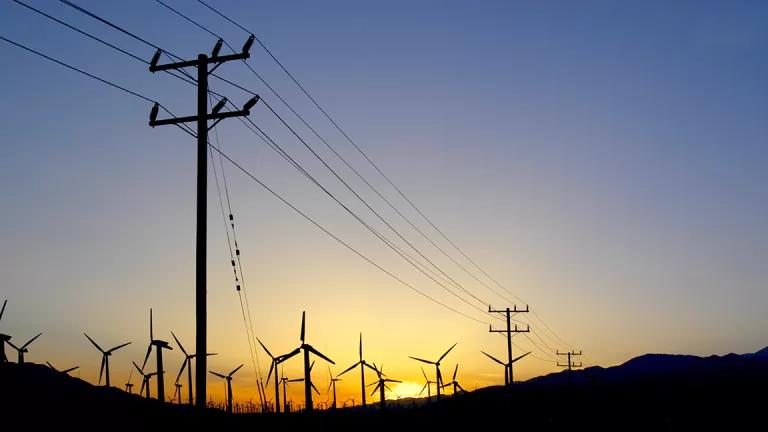
High Risk, High Inconsistency
Investors should reconsider Sempra's LNG project in the Gulf of California.


As investors intensify scrutiny of climate, biodiversity, and governance risk, Sempra’s proposed Vista Pacifico liquefied natural gas (LNG) export terminal in the Gulf of California raises questions about the alignment between the company’s stated commitments and its capital allocation strategy. Sempra has pledged net zero emissions by 2050 and adopted biodiversity policies, and it operates regulated utilities in states advancing clean energy mandates. Yet at the same time, through its subsidiary, the company is pursuing long-lived LNG infrastructure in a globally significant marine region.
NRDC’s investor brief examines how this combination may expose investors to elevated financial, regulatory, governance, and reputational risk.
Learn More

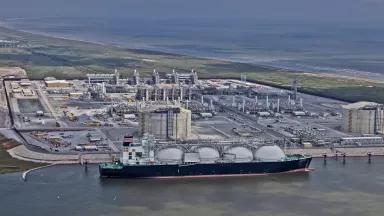

Market volatility and stranded-asset exposure
Global LNG markets are facing rising supply, shifting contracting practices, and accelerating electrification in key demand centers. Vista Pacifico LNG would require multi-decade capital commitments in a market characterized by tightening methane regulations and demand uncertainty. Under widely referenced energy transition scenarios, additional long-lived LNG capacity may face increased underutilization risk. These dynamics warrant careful evaluation of long-term return assumptions.
Utility governance and ratepayer scrutiny
Unlike most LNG developers, Sempra is also a regulated U.S. utility serving millions of customers. Regulated utility revenues contribute to the company’s consolidated credit profile, while LNG expansion increases its exposure to global market and transition risk. As California advances 100 percent clean electricity goals, Sempra’s international fossil expansion may draw additional scrutiny regarding capital allocation and risk management at the parent-company level. Regulatory mechanisms, such as prudency review and cost-recovery evaluation, provide safeguards for utility customers, but heightened oversight of the company’s LNG exports activity could affect its overall risk profile.
Methane regulation and market access risk
Methane—the primary component of natural gas—is subject to expanding regulatory and disclosure requirements in the United States and internationally. For LNG projects dependent on Permian Basin gas, methane performance may increasingly influence compliance costs, buyer preferences, and long-term competitiveness. Investors may wish to assess how methane intensity and supply-chain verification are incorporated into corporate risk management.
Biodiversity and disclosure considerations
Vista Pacifico LNG is being proposed for the Gulf of California, a UNESCO World Heritage site and globally significant marine ecosystem. International conservation bodies have raised concerns about LNG industrialization in the region. Projects located in ecologically sensitive areas may face additional permitting complexity, stakeholder scrutiny, and disclosure considerations as nature-related financial frameworks evolve. These factors may influence governance assessments and project timelines.
Call to action: Aligning Sempra’s power with its purpose
Sempra stands at a crossroads between two futures. One path extends its legacy as a fossil fuel exporter, locking in volatile global markets, stranded asset risks, and regulatory and reputational scrutiny. The other builds on Sempra’s position as a regulated utility, creating an opportunity to advance clean electrification, grid resilience, and energy innovation that can deliver durable value to customers while aligning with long-term decarbonization trends.
As a company balancing rate-regulated utility obligations with global infrastructure investment, Sempra’s capital allocation choices carry consequences well beyond its balance sheet. This is not merely a siting question; it is a choice between safeguarding a globally significant marine sanctuary and locking in decades of expanded fossil fuel dependence. Long-term viability depends on aligning operations with an electrified, conservation-compatible future.
Sempra’s investors and regulators can help ensure the company’s strategy reflects the realities of a decarbonizing, electrifying world. Key actions include:
- Reassessing LNG exposure: Evaluate the near- and long-term risks of Gulf of California projects under tightening methane rules, biodiversity constraints, and uncertain global demand.
- Demanding transparency: Require full disclosure of climate, methane, and community impacts aligned with emerging global reporting standards.
- Refocusing investment: Encourage capital shifts toward electrification, storage, and grid modernization to support the next phase of electricity demand growth.
- Protecting ratepayers: Ensure regulated utility revenues and credit capacity are not used to underwrite speculative fossil fuel projects abroad.
- Engaging on governance: Press Sempra’s board to reconcile its net zero 2050 pledge with current capital spending and to adopt Paris Agreement–aligned infrastructure criteria.
These steps will safeguard shareholder value, consumer trust, and environmental stability. For a company with large, regulated utility operations, long-term success will be measured not by gas exports but by the company’s ability to power an affordable, resilient clean energy future for American consumers.
Related Resources
Congress Responds to the Biden Administration’s Commonsense LNG Decision
Stories from the Frontlines of Global LNG Build-Out at COP28