
Increasing Public Awareness About Food Waste Prevention Guide
Given the magnitude of consumer household food waste, cities can play an important role in both raising awareness and providing action-oriented strategies that consumers can implement in their homes to prevent food from being wasted in the first place.

Households collectively generate more than one-third of all food waste in the United States. And yet, people don’t believe they waste much food: 75 percent of surveyed Americans say they waste less food than average, a statistical impossibility. Businesses and institutions are also major generators of food waste. Many of the reasons for waste in food businesses are related to perceived consumer attitudes about presentation and abundance. If consumers deliver a different message about how they value preventing food waste, this can help motivate businesses to implement food waste prevention strategies in their operations.
Given the magnitude of consumer household food waste, cities can play an important role in both raising awareness and providing action-oriented strategies that consumers can implement in their homes to prevent food from being wasted in the first place.
ReFED’s “Roadmap to 2030: Reducing U.S. Food Waste by 50% ” found that consumer education ranks in the top three of all food waste reduction strategies reviewed for both net financial benefit and and avoided greenhouse gas emissions. However, despite their proven effectiveness, public education campaigns are expensive to develop and deliver.
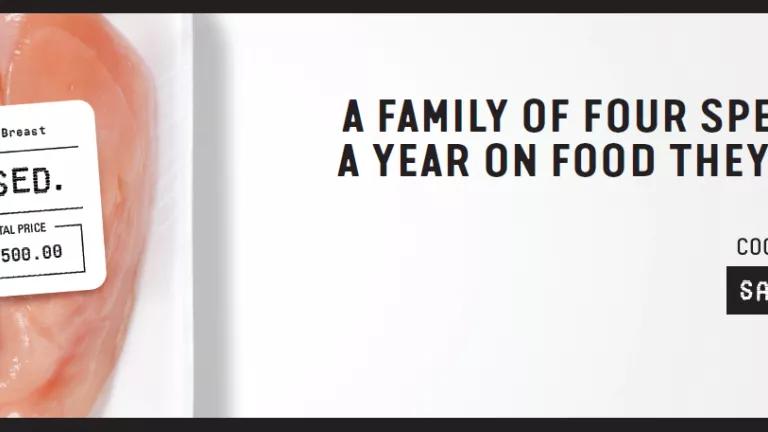
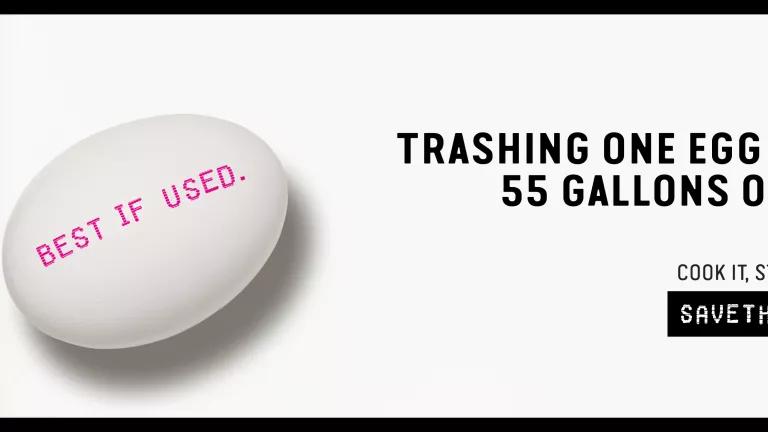
NRDC has produced Save the Food to be an open source–like public education campaign that raises awareness about the impact of household food waste and helps arm consumers with the tools to prevent food from going to waste at home. Many of the assets can be downloaded directly from the Partner Kit. With well-researched and eye-catching multimedia advertisements, the campaign was developed by a prominent advertising agency and is based on extensive marketing research. The foundation of the campaign is a “Best if Used” series in which a common food item is stamped with the phrase and is paired with a shocking statistic about the economic or environmental consequences of wasting food; the series plays on consumer’s general misunderstanding of the dates printed on our food, often mischaracterized as “expiration dates.”
All advertisements point back to SavetheFood.com, a website stocked with interactive education and narrative making it easy and fun to prevent food from going to waste. A storage guide details the optimal way to store food in order to prolong freshness. The Guest-imator helps plan portions for complicated large gatherings like Thanksgiving or summer barbecues, which often lead hosts to overprepare in order to ensure that their guests are satisfied. A Meal Prep Mate tool helps portion for weekly meal planning. SavetheFood.com also has recipes designed to repurpose food scraps like potato peels or herb stems; use up food past its prime, like stale bread or milk that is turning sour; and rejuvenate leftovers into appetizing new concoctions.
It is our hope that cities will use Save the Food and the other resources outlined in strategy #5 in Tackling Food Waste in Cities: A Policy and Program Toolkit to advance their goals for public education on food waste prevention. In this way, limited resources can be used for maximum distribution rather than to design a new campaign from scratch. The assets can be used on public bulletin boards or in city-owned properties. Some cities have contracted time on private billboards or bus shelters to display the ads. By promoting a national campaign, participating cities’ education efforts will be backed and boosted by the campaign’s reach in other cities, nationally, and across the Internet.
By promoting a national campaign, participating cities’ education efforts will be backed and boosted by the campaign’s reach in other cities, nationally, and across the internet.
We cannot adequately address food waste without changing consumers’ attitudes and behaviors on a societal scale. And yet, behavioral change is hard. The drivers of food waste are rooted in good intentions and long-held habits. Change takes time and tenacity. Therefore, efforts with continuity, longevity, and repetition will be the most successful.

Grocery cart in Denver
Ad Council

Bus in Bellevue and Redmond, WA
City of Bellevue and City of Redmond


Chicago bus
Ad Council


Dakota County Fair 2017
Jenny Kedward

Flagstaff waste truck
Flagstaff Sustainability Program

University café poster
Andrea Collins

University cafeteria buffet line
Andrea Collins

Bus shelter in Oakland, CA
Andrea Collins


Orange County, NY farmers market
Ermin Slijkovic


Santa Monica waste truck
Chanel Kincaid

University cafeteria napkin holder
Andrea Collins
Related Content
Denver Solid Waste Management Helps Denverites Save the Food

Turning My Meal Prep Fails Into a Food Waste Prevention Tool
California Launches Food Waste Prevention Week
Related Resources
Comparative Cost Analysis for Residential Curbside Organics Collection Programs

Food Waste Diversion Can Deliver Billions in Economic Benefits
