Mapping Destruction
GIS modeling reveals the disastrous impacts of Sackett v. EPA on America’s wetlands.

A Wilson's snipe in a wetland in Minnesota's Sherburne National Wildlife Refuge


Wetlands improve water quality, curb the growing risk of floods, recharge groundwater, and store a vast amount of carbon. And non-perennial streams supply the bulk of water to larger rivers and provide numerous benefits to other waterways, including moving nutrients downstream and providing habitat for many species. Because of these critical environmental functions, waterbodies of all types had long been protected from pollution and destruction by the federal Clean Water Act, the nation’s principal law governing the management of waterbodies.
All of that changed in May 2023, when the U.S. Supreme Court ruled, in a case called Sackett v. EPA, that non-wetland waterbodies like rivers, lakes, and streams must be “relatively permanent” in order to be protected; it then concluded that wetlands (i.e., marshes, bogs, swamps, and other similar features where water can be found above the soil or near the top of the soil at least during the time of year when vegetation grows) can only be protected when they have a “continuous surface connection” with such “relatively permanent” waters.
Learn More

Although policy experts immediately understood that this decision would pose extreme threats to our waterways, there has not yet been a detailed analysis of how the ruling could play out on the ground. NRDC used Geographic Information System (GIS) modeling to analyze federal geospatial databases of water resources across the continental United States and produced estimates of the number and extent of continental U.S. wetlands and streams that would lack protection under the Clean Water Act, depending on how the Court’s decision is interpreted.
The results are sobering. NRDC developed three scenarios—which we refer to as Damaging, More Damaging, and Most Damaging because there’s no version of Sackett that won’t cause major harm—using our understanding of different interpretations of the decision put forward by the federal government and industry organizations.
Under any of the three scenarios we modeled, tens of millions of acres of wetlands previously eligible for protection under the Clean Water Act will be left at risk of pollution and destruction without federal safeguards. Even using our least restrictive assumptions, wetlands covering an area about the size of South Carolina would be without Clean Water Act protections. In the worst case we modeled, more than 70 million acres of wetlands, or 84 percent of the total area potentially protected prior to Sackett, would now lack protection.
NRDC also developed a mapping tool to depict these scenarios at a localized level, which can be explored below.
NOTE: This map is best viewed on a desktop/laptop/tablet; on mobile, the map is best viewed in Chrome.
Finally, our report contains state-by-state fact sheets that identify the counties in the state where wetlands at risk are most concentrated and then provide some additional information about those counties, including demographic information, the number of endangered/threatened species present, and the number of properties facing “major” flood risks over the next 30 years.
Our analysis confirms the worst fears about the Supreme Court’s Sackett ruling. Even if polluting industries’ favored interpretations are rejected, the decision will still strip protections from many millions of acres of wetlands and millions of miles of streams across the country. And if the Court’s ruling is interpreted in the way that some polluters have advocated, the effects will be even worse. Because the diminishment of Clean Water Act protections will make it easier to pollute or destroy waterbodies and because these wetlands and streams provide multiple ecosystem benefits, the decision is likely to intensify flooding, water pollution, wildlife habitat loss, and climate change.
As wrongheaded and dispiriting as the Sackett decision was, it is not the last word on protecting clean water and the functions that healthy freshwater ecosystems provide. The Supreme Court may have hobbled the Clean Water Act, but there are actions that can be taken now to respond to the decision. We believe that the situation calls for a long-term strategy that relies on three principal components: (1) ensuring that—wherever possible and consistent with their legal authority—federal agencies with the power to prevent harm to wetlands and other critical waters fully use that power; (2) securing strengthened protections at the state, local, and Tribal levels to fill some of the gaps created by the Court’s decision, as Colorado did in 2024; and (3) working with leaders in Congress to restore comprehensive protections in the Clean Water Act.
Most of the nation's waterways may soon be without critical Clean Water Act protections
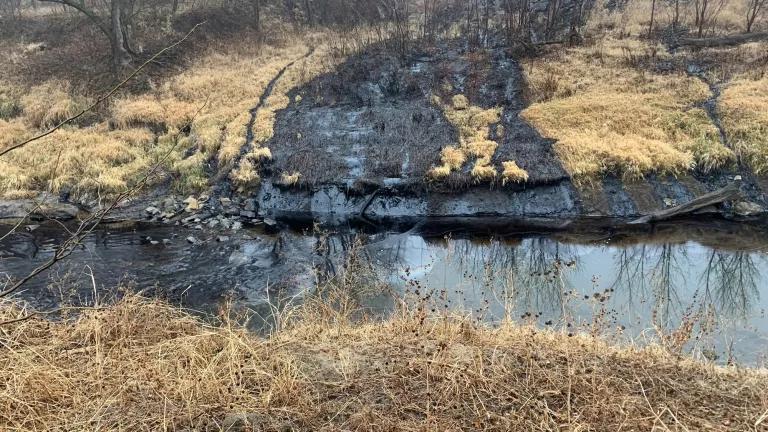
Before the Clean Water Act, sewage, oil, chemical wastes, and heavy metals were dumped into our rivers, streams, and wetlands. Don't let. the EPA bring those days back.
Reject the EPA’s plan to hand waterways to polluters!
The EPA has proposed a rule that would leave at least 94 percent of the nation's wetlands and 79 percent of its streams without critical Clean Water Act protections, jeopardizing clean drinking water for millions of Americans. Make your voice heard by October 9 to stop any attempts to gut clean water protections!
Related Resources

Trump Administration Readies the Axe for Nearly 45 Million Acres of Public Forests

The Nitrogen Pollution Crisis