
Planned Relocation Policies and Practices
As climate risks make some places unlivable, lessons from Bangladesh, Fiji, and Peru show how governments can relocate communities in ways that protect people, human rights, and livelihoods.


Coauthored with Moushumi Chaudhury (independent climate adaptation specialist)
As climate change intensifies floods, storms, sea level rise, and extreme heat, more people are being forced from their homes. Governments around the world are increasingly turning to planned relocation, a formal process to move communities away from high-risk areas. But when does relocation work, who does it work for, and under what conditions?
This report examines how policies are being developed and implemented in Bangladesh, Fiji, and Peru, three countries at the forefront of climate-related planned relocation. Drawing on policy analysis and real-world case studies, the report identifies what has helped communities thrive after relocation and what has fallen short.
Why this matters
Climate change could drive more than 216 million people to relocate within their own countries by 2050. As relocation becomes more common, poorly designed or inadequately implemented policies risk deepening inequality, disrupting livelihoods, and undermining human rights. However, well-designed approaches can reduce climate risk while supporting dignity, equity, and long-term well-being.
This brief offers actionable lessons for policymakers, practitioners, and advocates seeking to design equitable, durable, and rights-based planned relocation frameworks.
Learn More
What this report covers
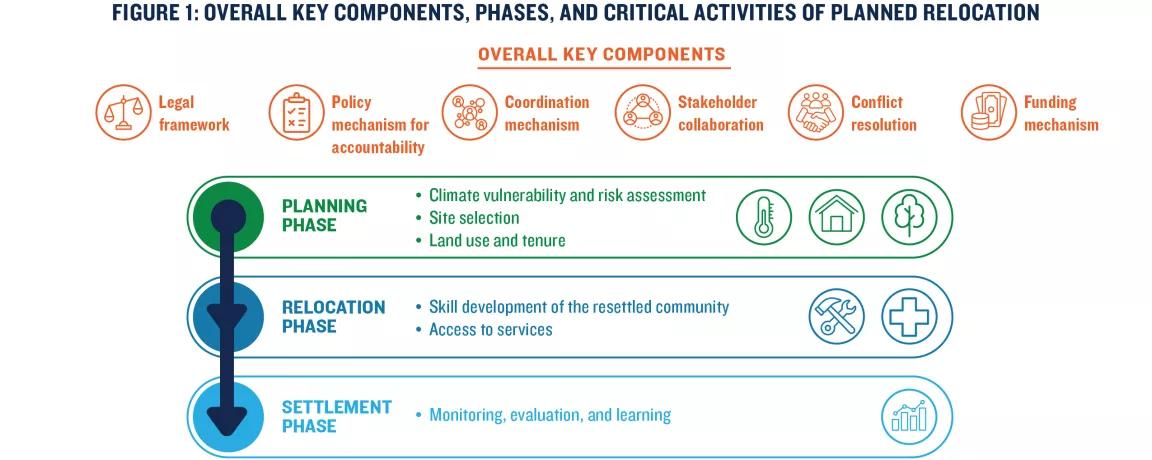
The report analyzes the planned relocation process across planning, relocation, and settlement and identifies the policy and governance components that matter most for success.
Key topics include:
- Legal frameworks that define rights, responsibilities, and safeguards for relocated communities
- Accountability, coordination, and funding mechanisms that enable effective implementation
- The role of community participation, especially for marginalized groups
- Land tenure and land use policies that shape access to services and livelihoods
- Livelihood support and access to essential services such as health care, education, water, and sanitation
- Monitoring, evaluating, and learning to track outcomes over time
Through comparative case studies from Bangladesh, Fiji, and Peru, the report highlights where national frameworks have delivered positive outcomes and where gaps in implementation have left communities vulnerable.
Key findings
The analysis points to three overarching lessons for governments considering planned relocation:
- Deep and sustained engagement with affected communities is essential for equitable outcomes, particularly for marginalized groups.
- Clear land tenure and land use policies are critical to securing livelihoods, accessing government support, and ensuring long-term stability after relocation.
- Livelihood support and access to services determine whether relocated communities can adapt and thrive in new locations.
Related Resources

NRDC at Climate Week NYC 2026: Meeting the Moment

To Speed Up Climate Progress, Support for Developing Countries Is Key
