Pump Up the Market
A new report outlines how to accelerate heat pump adoption in California’s residential sector by making heat pumps the obvious choice for households.
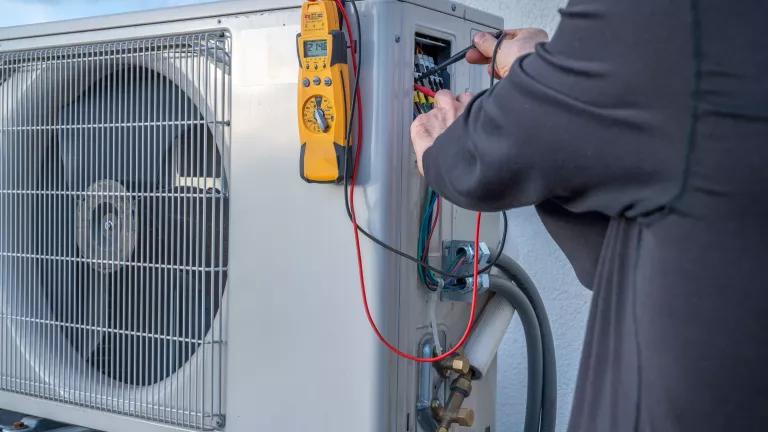

California cannot achieve carbon neutrality by 2045 without transforming how existing buildings are heated. Gas use in buildings accounts for 12 percent of the state’s greenhouse gas emissions and produces four times as much nitrogen oxide pollution as the state’s gas power plants. While California’s building electrification policies have successfully transformed the new construction market, existing homes and buildings remain a challenge. When replacing existing gas appliances, homeowners today choose to install a heat pump less than 5 percent of the time. At this pace, California will fall short of its climate and air quality goals.
This is primarily a result of cost; without up-front incentives, the total cost to own and operate a heat pump can exceed that of a gas appliance in many existing homes. Luckily, our model shows that the right combination of state policies and incentives—specifically electricity rate reform, programs that get households to upgrade air conditioners with heat, and workforce development—can make heat pumps cost competitive for most households by the mid-2030s.
RELATED RESOURCES
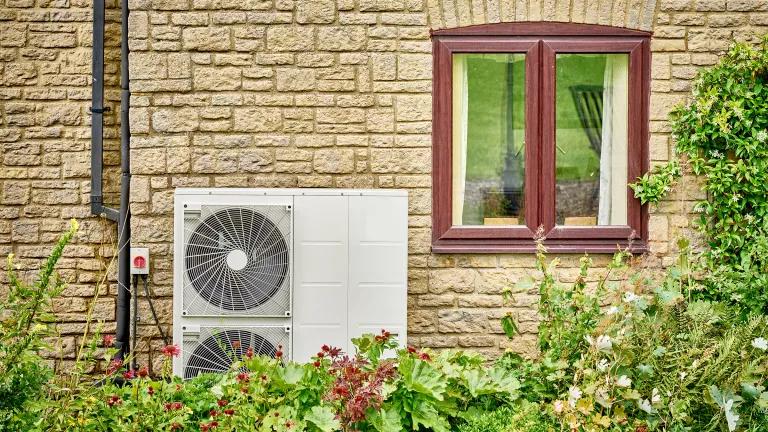
Heat Pumps Are Coming to New CA Homes. What About Existing Homes?

Powering Change: Understanding California’s Electric Rate Challenges and Affordability Solutions