
What Are Heat Pump Air Conditioners?
They’re way more efficient and cost-effective than standard ACs. Even better, they double as carbon-slashing heating systems.


Jessica Russo/NRDC
As climate change fuels increasingly routine heat waves across the map, keeping cool is a matter of health and safety like never before.
Shoppers considering buying a new air conditioner—whether that’s a window unit, central air, or another type of equipment—can take advantage of a better, more environmentally friendly type of product on the market, which doubles as a space heater: a heat pump. And given that gas-powered heating and cooling systems are the main source of carbon emissions in most U.S. homes, switching to electric heat pumps is an easy way to join the fight against climate change.
How heat pump ACs work
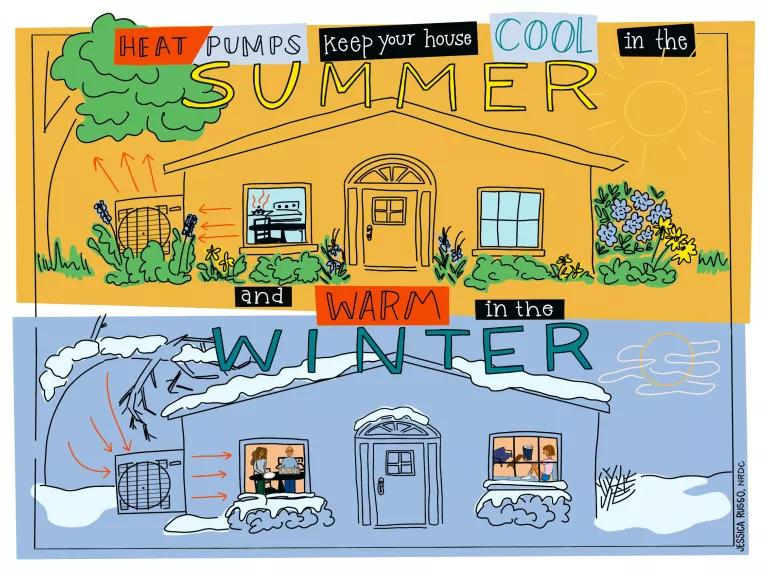
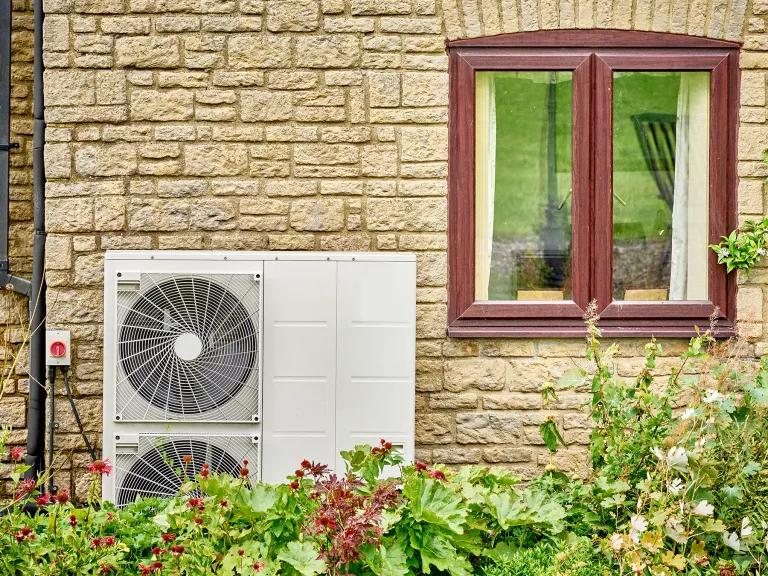
Heat pumps are a special type of air conditioner. Just like the regular type, heat pumps keep things cool when it’s hot outside by removing unwanted heat from your home and “pumping” it outdoors.
Unlike regular ACs, however, heat pumps can work their magic not just to provide cooling when it’s hot out but also to provide heating when it’s cold out. It’s the same process, just reversed: Heat pumps can pick up heat from outside (even when it’s cold) and pump it into your house to keep it warm.
This magic happens by way of refrigerant gases that are expanded and compressed inside the heat pump system. Refrigerant gases are found in conventional ACs, too, and have their own environmental impact, so experts are working to replace them with climate-friendlier ones. But even considering these impacts, heat pumps have a significantly lower climate impact than traditional equipment. And models with lower “global warming potential” refrigerants will soon be hitting shelves.
Getty Images
Why heat pumps are more efficient
Heat pumps provide heating far more cleanly than furnaces, which burn large amounts of fossil fuels. In fact, an NRDC-supported study showed that gas-fired furnaces produce 45 to 70 percent more emissions than heat pumps.
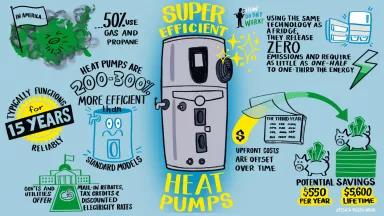
The heat pump’s carbon savings come from the fact that these appliances don’t create heat by burning fuels—rather, they pull heat in from the outdoors. Per unit of energy, moving heat with electricity is several times more efficient (by two to five times or better, depending on the conditions) than producing it by burning fuel. In most cases, that improvement will result in savings on heating bills.
Modern heat pumps are superefficient and can deliver heat down to -15 degrees Fahrenheit, and they can use electric resistance backup below that temperature, so they work in all U.S. climates. In fact, one of the leading states in heat pump adoption in the United States is Maine, where winters can be brutally cold.
Learn More: Energy Efficiency at Home


Incentives for making the switch to heat pumps
While home cooling is now a matter of life or death in more areas of the country, many families still cannot afford any AC equipment at all. As advocates continue to fight for programs that make the healthiest and most climate-friendly technologies available to all, a number of state-led programs aim to make heat pumps more affordable for their residents. These include California’s long-standing Low Income Weatherization Program and utility debt forgiveness law; Maine’s trailblazing effort to put a heat pump in every home; and similar programs in Colorado and Washington.
The best time to switch to a heat pump? When you need a new AC.
One final tip for getting the best value for a new heat pump: Think about heating and cooling all at once. A central heat pump, for example, takes the place of a central AC; it sits in the same spot, uses the same air ducts and thermostats, and more. So, too, for other types of ACs and heat pumps. And heat pumps only cost a few hundred dollars more than equivalent-size air conditioners, so buying a heat pump instead of an air conditioner means getting a brand-new heating system on the cheap.
If you wait to think about your next heating system until your gas furnace or boiler goes out, you’ll face the prospect of either replacing the old gas heater with a new one or ripping out a perfectly serviceable AC.
This story was originally published August 25, 2023, and was updated on June 3, 2026 with new information and links.
This NRDC.org story is available for online republication by news media outlets or nonprofits under these conditions: The writer(s) must be credited with a byline; you must note prominently that the story was originally published by NRDC.org and link to the original; the story cannot be edited (beyond simple things such as grammar); you can’t resell the story in any form or grant republishing rights to other outlets; you can’t republish our material wholesale or automatically—you need to select stories individually; you can’t republish the photos or graphics on our site without specific permission; you should drop us a note to let us know when you’ve used one of our stories.
How to Ditch the Biggest Fossil Fuel Offenders in Your Life
What Are the Causes of Climate Change?
What Are the Solutions to Climate Change?