
The Attacks on Science Continue—This Time at the USGS
From sea level rise to bee populations, the agency’s wildlife and climate programs shed light on the world around us.

A USGS scientist with a bag full of green algae and insects sampled from Glen Canyon National Biology Recreational Area
When you think of the U.S. Geological Survey (USGS), your mind may go straight to maps—maps of topography, coastlines, groundwater, mineral deposits, fault lines, etc. But over its nearly 150-year history, the USGS’s main gig has always been science—the science behind maps, of course, but also data collection on everything from water resources to conservation. This critical information informs policy decisions that affect how we interact with the world and wildlife around us.
But through a massive budget slashing proposal, the Trump administration is threatening this scientific legacy by defunding the agency’s biology programs. With a 90 percent cut to its budget, the Ecosystems Mission Area (EMA) would have a mere $29 million to spend next year. The move would be disastrous to this biological research arm of the Interior Department, where scientists monitor the changes to plants and animal populations occurring across the country.
This would leave the scientists who research matters like drought, disease, pollinator health, human-wildlife conflicts, and endangered species unable to finish projects already in the works. It would also result in other government agencies and local authorities lacking the scientific data they need to make crucial management decisions.
“The whole spectrum of what USGS does…there’s a reason why those programs are there today. It was through careful thought, planning, and legislative activity,” says Steve Williams, who served as the U.S. Fish & Wildlife Service director from 2002 to 2005. The idea of ending the EMA, he says, makes him heartsick. “I hope they see the folly in doing that.”
Negotiations are ongoing but if Congress passes the administration’s proposed budget as is by October, seven programs within EMA would likely end. Here’s what we’d be losing with just two of them: the Cooperative Fish and Wildlife Research Units (CRUs) and the Climate Adaptation Science Centers.

Researchers with the Interagency Grizzly Bear Study Team measuring the bear's girth as part of body fitness data collection
A conservation workforce benched
Founded in 1935 to deepen scientific knowledge on populations of wild game, such as mallards and other waterfowl, the Cooperative Fish and Wildlife Research Units later expanded their focus to species of all kinds that benefit the public good, anything from bison to bees.
Today, 43 CRUs provide funding for about 120 research scientists in 41 states— basically a conservation workforce that is active in every region of the country. How to best monitor the spread of bird flu or track grizzly bear numbers are just a few of the more than 800 projects currently taking place at participating universities.
State land and wildlife managers then use this data to inform policies that can have huge impacts on the public. For instance, they can help determine when to issue advisories for chronic wasting disease, a contagious brain disease that affects deer, elk, and moose—and one that hunters must take precautions around. Or where to build road infrastructure such as wildlife crossings, which are critical safety measures for motorists and animals alike.
"Any program focused on monitoring and assessing how the environment is doing is considered suspect.”
Bobby McEnaney, director of land conservation at NRDC
Indeed, every year, as many as 2 million vehicle collisions with large wildlife occur, tragically killing around 200 people. Animal fatalities are much higher in number and include members of at least 21 threatened and endangered species, such as desert tortoises and San Joaquin kit foxes. Wildlife crossings, however, can help prevent both types of fatalities, along with connecting vital habitat and migration corridors.
USGS researchers “provided a good chunk of the science underpinning migration ecology,” says Ed Arnett, CEO of the nonprofit Wildlife Society, which advocated for the initiative to build wildlife crossings.
“In a broad sense, those science centers are vital for providing the scientific knowledge to make management decisions for everyone to enjoy wildlife, whether you’re a bird-watcher or a hunter or an angler,” says Arnett.
The CRUs are also pivotal in the development of the country’s conservation scientists. Every year, an estimated 360 peer-reviewed scientific studies result from research supported by the USGS CRU program. This provides opportunities for early-career wildlife managers: Graduate students can participate in fieldwork and publish their findings.
“We have had a long history of partnering with the co-op unit here,” says Laura Conlee, deputy director for resource management at the Missouri Department of Conservation. “Part of the unit program’s mission is to build the next generation of applied researchers and managers.”
Yet this public science career incubator may soon vanish. Over the summer, reports surfaced that nearly 1,000 USGS employees could be laid off, and the jobs to be cut would target the Ecosystems Mission Area.
The work to establish and run this kind of research is more than a century in the making, says John Organ, scientist emeritus for the USGS Co-op Units—and now, it’s “going down the drain in weeks. It’s a crime.”
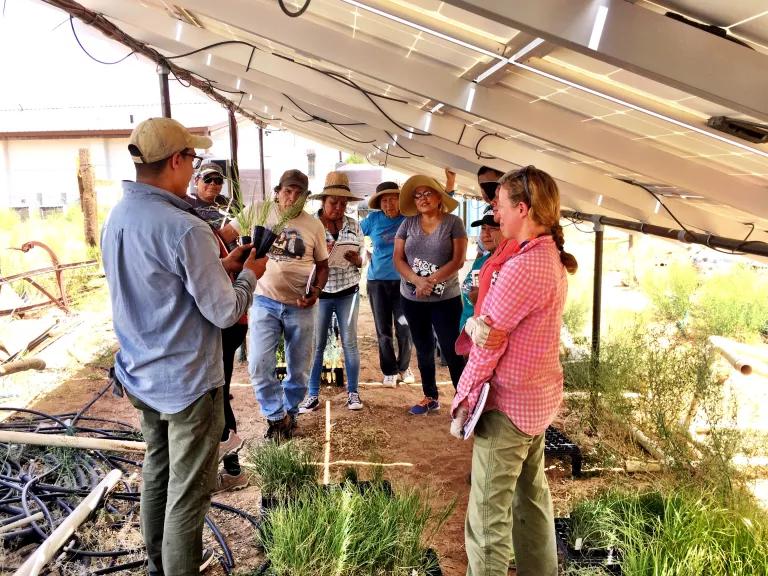
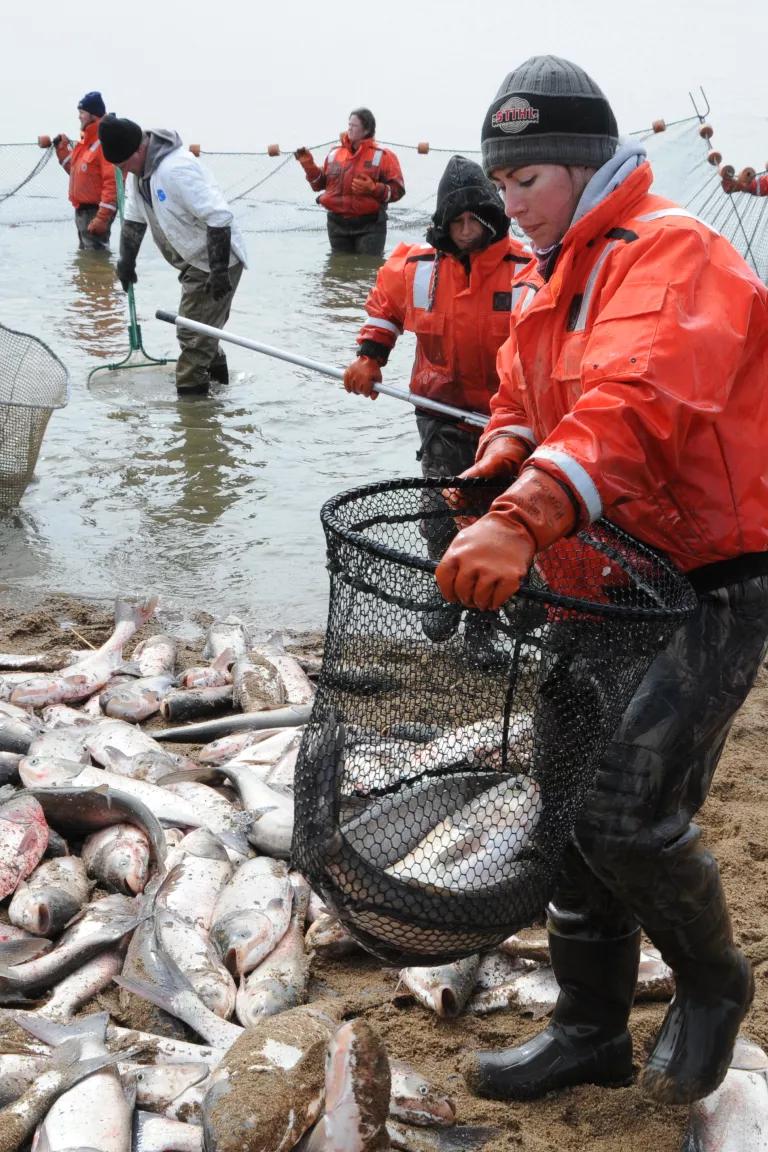

Clockwise from top left: The USGS Restoration Assessment and Monitoring Program for the Southwest is helping to build capacity in ecosystem restoration on the Navajo Nation; USGS and partners completed an incredible feat against a harmful aquatic invasive species when more than 240,000 pounds of invasive silver carp and bighead carp were removed from Creve Coeur Lake in Maryland Heights, Missouri; Upper Mississippi River restoration program partners meet in the field to discuss a backwater habitat rehabilitation project.
A climate workforce slashed
Through the national Climate Adaptation Science Center and its nine regional branches, the Ecosystems Mission Area also helps inform communities on how to best manage natural resources in a warming world. Each of the CASCs fund university researchers, Tribes, and nonprofit organizations to carry out this critical work on the ground.
Current projects include developing methods to conserve increasingly drought- and disease-prone midwestern forests, monitoring ballooning tick populations (another consequence of climate change), and tracking how trout respond to warming streams.
CASC scientists also partner with local resource managers, with whom they provide datasets and tools, such as climate projections and updated maps of wildlife distributions during the winter. In addition, they assess risks from invasive species and sea level rise, and evaluate the different ways that communities prepare for flooding. Due in part to their regional focus, the centers have enjoyed a long history of bipartisan support from members of Congress.
“It's recognized on both sides of the aisle, the value that we bring to supporting their constituencies in preparing for climate change,” says Meade Krosby, a senior scientist at the University of Washington and the university director of the Northwest CASC. “That really hasn’t been controversial in any way.”
And similar to the CRUs, the CASCs create opportunities for young scientists to gain experience. “We are actually creating this pipeline of the climate-ready workforce that we need,” says Meade. “At all the centers across the nation, that’s hundreds or thousands of people who have been put out there into the world to do this work.”

A USGS scientist preparing a soil monitoring station for winter, with a view of Mount Baldy in the Elk Mountains of Colorado
What lies ahead
The fate of these programs and so many others is still unknown as lawmakers continue to negotiate the 2026 budget. But even if Congress does vote to keep funding the EMA at sufficient levels, recent comments from federal officials cast doubt on whether the Trump administration would release the allocated funds.
At a June appropriations hearing, Russell Vought, who directs the Office of Management and Budget, a federal office that evaluates the efficacy of agency programs, said the Trump administration could hold back funds if projects do not align with its priorities—an issue still working its way through the courts.
“You have an administration that has decided what its priorities are,” says Bobby McEnaney, director of land conservation at NRDC. “The only thing they’re transparent about is that they want to get rid of the federal government infrastructure that’s dedicated to protecting the environment. Whether it’s the Environmental Protection Agency or Department of the Interior, Department of Agriculture, or even the State Department, any program focused on monitoring and assessing how the environment is doing is considered suspect.”
In the meantime, universities and researchers continue to express support for EMA. More than 70 organizations described in an April letter to Interior Secretary Doug Burgum how the Ecosystems Mission Area is critical to the nation. EMA employees have also participated in rallies and written articles on the mission area’s value to the public.
Those who work in the EMA programs are solving real world problems, says Williams, and every American could feel the effects if EMA ceases to exist. “They may not know it,” he says, “but it's relevant.”
This NRDC.org story is available for online republication by news media outlets or nonprofits under these conditions: The writer(s) must be credited with a byline; you must note prominently that the story was originally published by NRDC.org and link to the original; the story cannot be edited (beyond simple things such as grammar); you can’t resell the story in any form or grant republishing rights to other outlets; you can’t republish our material wholesale or automatically—you need to select stories individually; you can’t republish the photos or graphics on our site without specific permission; you should drop us a note to let us know when you’ve used one of our stories.
Biodiversity 101
Another Alarm Call from the Arctic: Its Rivers Are Turning Orange
The Uinta Basin Railway Would Be a Bigger Carbon Bomb Than Willow