
Senate Vote Will Decide Fate of the Boundary Waters
The U.S. Senate will vote this week on whether to allow dangerous sulfide-ore copper mining on the edges of Minnesota’s Boundary Waters Canoe Area Wilderness—a place where my family’s roots go back more than a century.
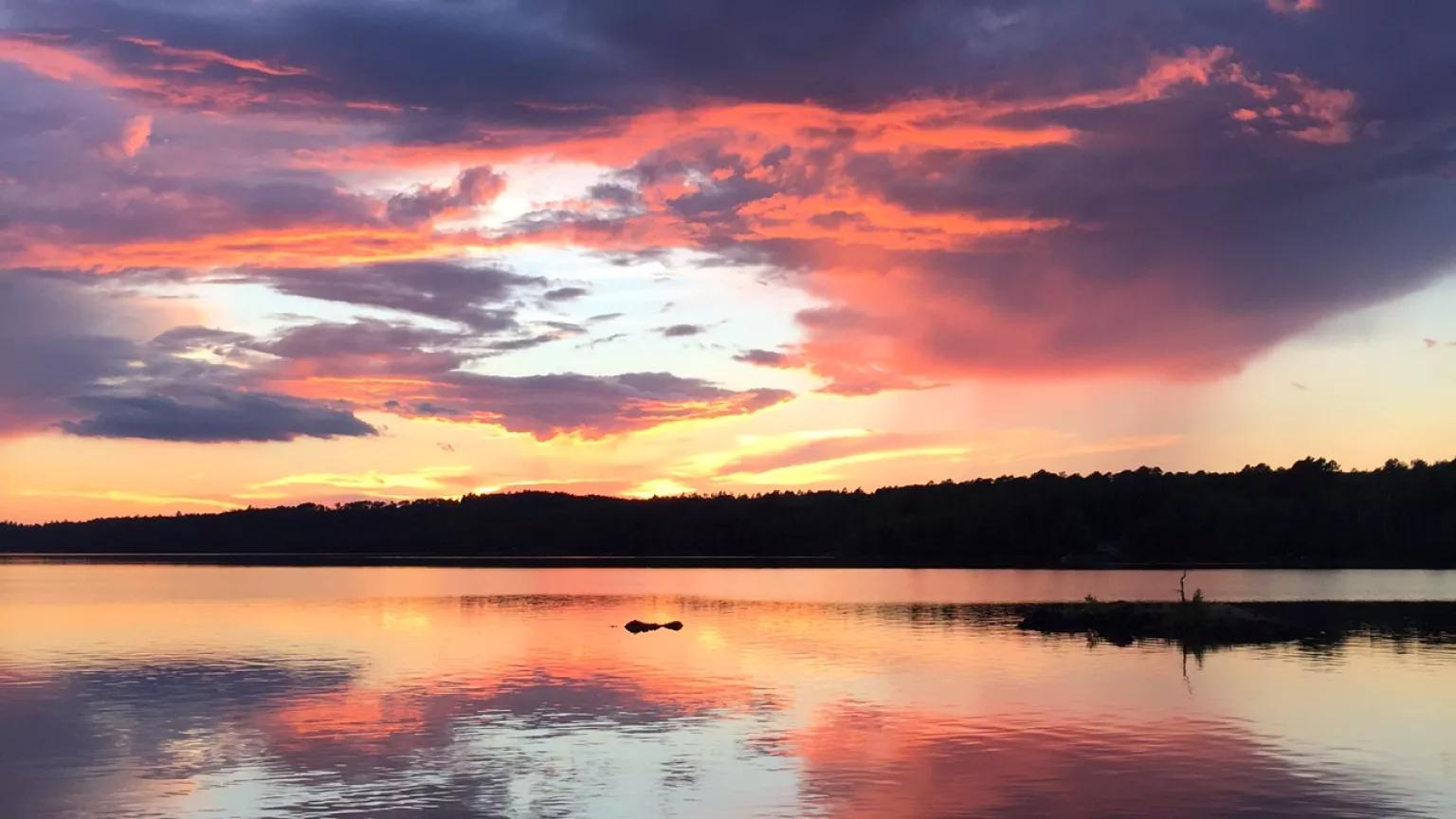
Shagawa Lake
William Doniger

The U.S. Senate’s vote this week on whether to allow sulfide-ore copper mining near the Boundary Waters Canoe Area (BWCA) Wilderness is intensely personal to me and my family. These forests and waterways are intertwined with our family’s history; ties that countless other families share.
At stake is an irreplaceable national treasure—America’s most visited wilderness—and the thriving economy of northern Minnesota. We’ll lose them both if the Senate votes to allow a Chilean company to mine at the region’s edge.
My wife’s grandparents, immigrants from Finland, settled in Ely, Minnesota, more than a century ago. Her grandfather worked in the iron ore mine until he was nearly killed in a cave-in. Her grandmother raised their family of seven children. They had a house in town, but together, they homesteaded a place on the north side of Shagawa Lake, across from Ely. There—a long wagon ride or rowboat trip to town—they built a cabin, planted and harvested hay and potatoes, and sent all seven kids to school across the lake and then on to college.
That three-room cabin, called the “Big Shack,” and the surrounding property remain in the family today, shared between my wife, her brother and sister, and her cousins, who’ve built other cabins. I proposed to my wife on the frozen lake 46 winters ago. My son took the picture above from the lakeside. Here’s a picture (below) of the Big Shack that was taken when my eldest daughter was two.

The author's Big Shack cabin when his eldest daughter was 2 years old
My other children spend lots of time up there, too, with their spouses and my two grandsons. Today, we can all work remotely when we visit, thanks to high-speed Internet that’s now available from the town’s water tower.
My wife and I go up there every summer. Like millions of others who enjoy America’s most visited wilderness, we’ve canoed in the BWCA and experienced its quiet, profound beauty. We’ve observed black bears, wolves, beavers, eagles, mink, moose, and more, both within the BWCA and in the surrounding region, including on our family’s land. The fishing is sublime. The beaver dam on our property is an engineering marvel, creating its own lake that can be seen from space.
The BWCA saved Ely. The iron ore mine played out and closed long ago, and a recreation-based economy now sustains the town and the surrounding region.
To put the dollars on it, like thousands of others, our family spends money and pays taxes that help keep the new “Iron Range” thriving.
Opening a sulfide-ore copper mine on the BWCA’s edge, within the same watershed, is an unacceptable threat to both the natural beauty and integrity of this ecosystem and the viability of the town’s new economy. The mine wouldn’t employ many people, and even fewer local people. And if the mining advocates’ lofty assurances don’t quite work out, the mine could pollute the Boundary Waters permanently and irreparably.
As Becky Rom, leader of Save the Boundary Waters, says: “You don’t allow America’s most toxic industry next to America’s most popular wilderness.” After all, heavy metal mining generates massive waste piles, which leach sulfuric acid, heavy metals, and sulfate pollution into the ecosystem—a risk that factored into the Forest Service’s 2022 environmental assessment of the project.
The Obama and Biden administrations stepped in to save the BWCA and block the mine. For the second time, President Trump is cynically pushing for mining.
The latest gambit is the bill now pending in the Senate to reverse the existing protections on a majority vote, misusing a law called the Congressional Review Act. The House narrowly passed the bill last month.
This is a place not just for Minnesotans but for all Americans. I know of senators who have canoed the Boundary Waters in their youth, as Boy Scouts or with their moms and dads. If a majority of senators say no to this bill, their kids and grandkids will have the same chance.
Let’s save this treasured place for all of us—forever.
This NRDC.org story is available for online republication by news media outlets or nonprofits under these conditions: The writer(s) must be credited with a byline; you must note prominently that the story was originally published by NRDC.org and link to the original; the story cannot be edited (beyond simple things such as grammar); you can’t resell the story in any form or grant republishing rights to other outlets; you can’t republish our material wholesale or automatically—you need to select stories individually; you can’t republish the photos or graphics on our site without specific permission; you should drop us a note to let us know when you’ve used one of our stories.
Our Favorite National Parks
Another Alarm Call from the Arctic: Its Rivers Are Turning Orange
The Attacks on Science Continue—This Time at the USGS