
Toilet Paper Shouldn’t Come with Human Rights Abuses
The legacy of mercury poisoning in the Grassy Narrows community within the Canadian boreal is just one egregious example of the tissue industry harming Indigenous People.
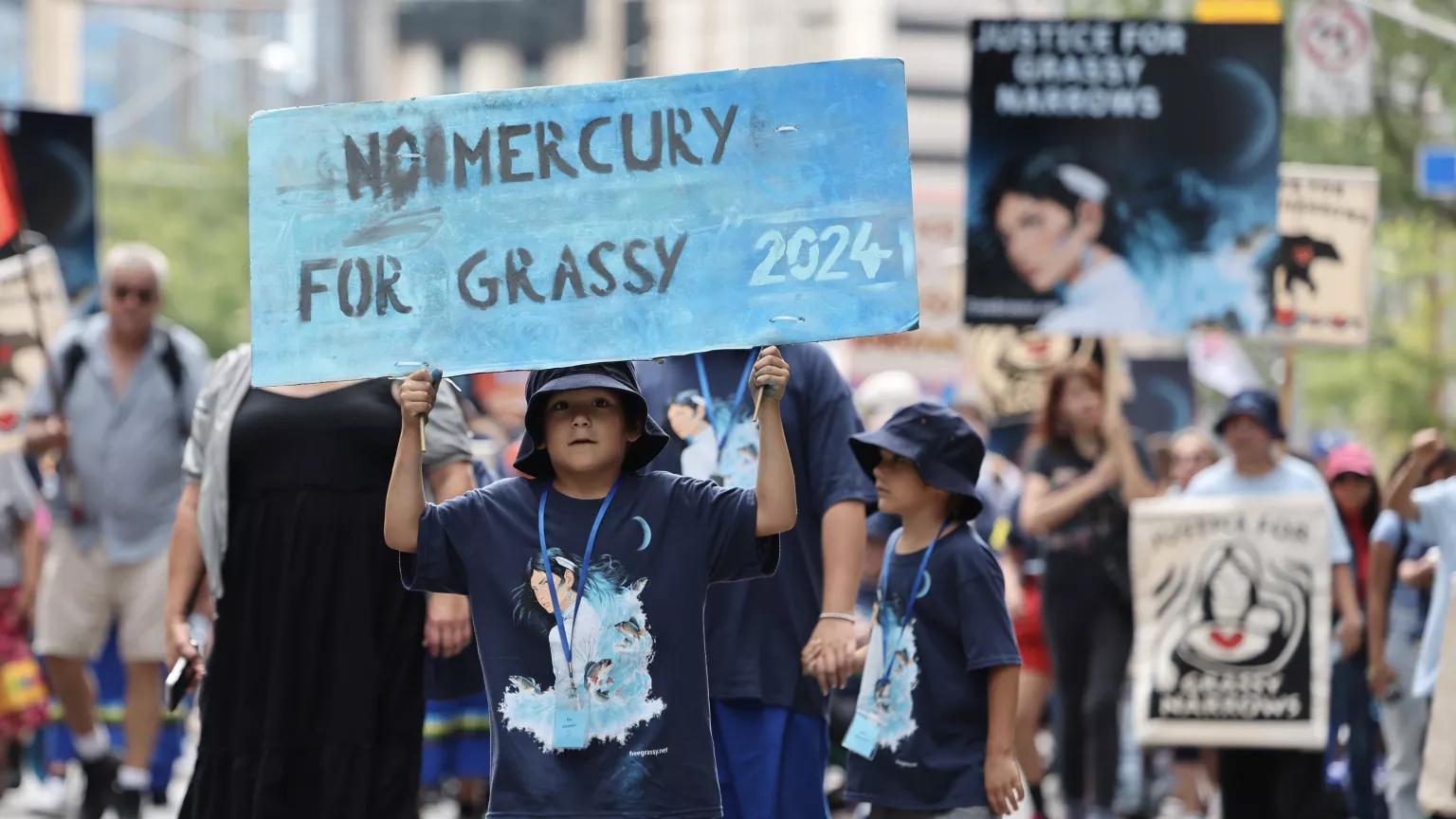
Thousands of people in Toronto marched for the Grassy Narrows Indigenous community, which is demanding fair compensation; an end to industrial threats to Grassy Narrows lands, water, and people; and support to restore their way of life and well being.

Trumpeter swans make their presence known—honking their hoos and oh-OHs from northern skies and lake shores like a brass section warming up before band practice. They’re also huge. As North America’s largest bird, some clock in at more than 30 pounds and stand nearly five and a half feet tall. But these giants fell silent in Ontario for nearly a century after being hunted to near extinction in the 1880s.
In 2002, after a program to reintroduce the swans had taken root, their recovering population got a serendipitous boost from the Grassy Narrows community in the province’s northwest. One cold winter night, these members of the Asubpeeschoseewagong Anishinabek First Nation formed a blockade to stop the logging trucks and feller bunchers—a type of industrial tree harvester—from destroying the forests of their traditional territory.
“All of a sudden, these trumpeter swans started having their babies down the lake where the blockade was,” remembers Grassy Narrows Elder Judy Da Silva. “What the trumpeter swans need is a really quiet space to have their babies; they need that space to thrive. And they’ve been coming back every year.” This summer, residents could still see—and hear, of course—a pair of these swans gliding over Slant Lake at dusk, returning to their nest along the shoreline.
CHECK OUT THE SCORECARD
The blockade, too, persists to this day, nearly a quarter century later. Long before taking matters into their own hands and putting themselves physically between the trucks and trees, Grassy Narrows had appealed, to no avail, to the Ontario Ministry of Natural Resources to halt the logging industry’s growing footprint.
The destruction, stemming from a seemingly insatiable quest for wood products like toilet paper, encompasses about a million acres of cleared forest across the Canadian boreal each year. But in the case of Grassy Narrows, it also comes in the form of legacy mercury contamination from a paper mill upstream that has devastated the community’s fishing industry and, tragically, been poisoning generation after generation of its residents.
“We want to restore a healthy future and our way of life for the next generation,” writes Chief Sherry Ackabee in a recent op-ed. “We want our children to have hope again, and a bright future, just like anyone else would.”
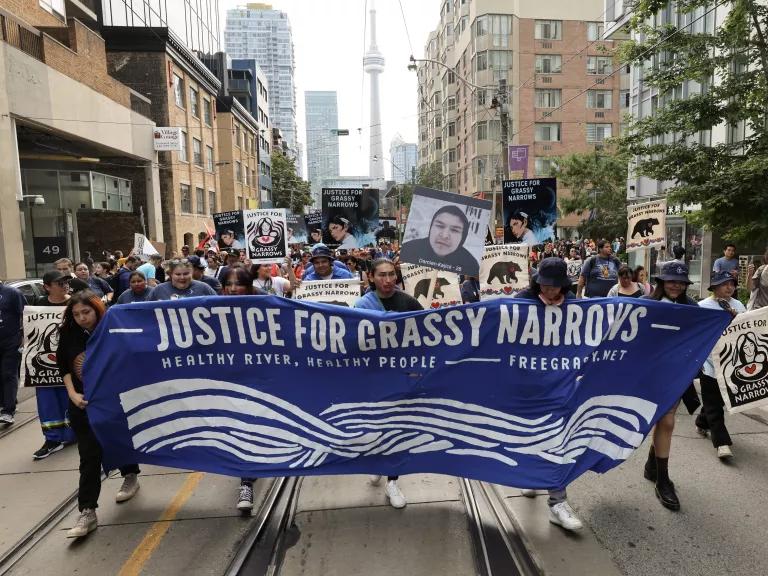
Protestors in Toronto marched from Grange Park to Queen's Park calling for justice for Grassy Narrows.
A legacy of facing down environmental racism
Every other September in Toronto, thousands march alongside members of the Grassy Narrows community—which numbers about 1,000 people—in the annual River Run, demanding action from the Ontario government. Da Silva, Grassy Narrows’s environmental health coordinator, is one of the event’s leaders. Like many of the Elders, she participates from a wheelchair. Da Silva has dealt with the effects of mercury poisoning for years, including numbness in her hands and feet and poor balance.
About 90 miles upstream from Grassy Narrows, the Dryden mill processes wood into pulp for the North American tissue industry. Between 1962 and 1970, the previous mill owners dumped approximately 20,000 pounds of untreated mercury, a neurotoxin, into the English-Wabigoon River system. These waters are a life force for the Grassy Narrows people, who fish the river and surrounding lakes for walleye, pike, and bass—which are dietary staples and a part of cultural traditions.
“The fish, we know, are contaminated, but it’s part of our culture to have fish,” Da Silva says, when asked why people would continue to ply the local waterways. “It’s not just a food product; it’s part of who we are.” And you don’t need to eat a lot of the fish to become afflicted by mercury either. “Even if you have 20 fillets over 10 years,” she adds. “There’s no safe level.”
Once released into a watershed, mercury accumulates in the bodies of fish and other aquatic life, creating severe, long-term health risks for anyone who eats these animals. And because the neurotoxin not only crosses freely through the placenta but also becomes more concentrated as it does, exposed mothers lead to children being exposed even before they’re born. Common outcomes of mercury poisoning include tremors, neuromuscular difficulties, cognitive and motor dysfunction, conditions impacting learning and overall childhood development, and premature death.
“It’s part of our culture to have fish. It’s not just a food product; it’s part of who we are.”
Judy Da Silva, Grassy Narrows environmental health coordinator
While the mill hasn’t discharged mercury into the river since 1970, concentrations of the neurotoxin in Wabigoon River fish remain among the highest present in Canada. Participants at the annual rally carry signs reading “Water Is Life,” “Justice for Grassy Narrows,” and simply, “Shut It Down.”
“We as Indigenous people always have to face environmental racism when we’re trying to defend the land and water,” Da Silva says. She describes having to present reams of evidence, in partnership with scientists, to assert that the government owes the First Nation both compensation and environmental rehabilitation. “We did contaminant studies, community health surveys; we found umbilical cord data in the archives of Health Canada that showed high levels of mercury were in Grassy Narrows babies. But it’s always a denial that there’s anything wrong.”
Despite years of criticism and multiple ownership changes, Dryden has kept up business as usual. Making matters worse, a 2024 study from the University of Western Ontario found that the high levels of sulfate and organic material within the mill’s current wastewater is interacting with the previously dumped mercury, converting it to methylmercury, its most toxic form. The researchers estimate that mercury levels in fish in the Wabigoon River are effectively doubled due to the ongoing mill effluent.
“For Grassy Narrows, the harm is not just historical—it’s ongoing,” says report author Ashley Jordan, a global forest risk analyst at NRDC. “Each new discharge from the mill continues a complex cycle of pollution with intergenerational impact, and it’s why we’ve stood alongside the community to demand justice.”
After 50 years, there has been no cleanup of the river. In 2017, the government of Ontario established an $85 million trust to fund remediation activities, with a panel of representatives from Grassy Narrows, Wabaseemoong Independent Nations, and the provincial government to direct the spending. To help guide those decisions, an independent team of mercury experts has begun modeling how mercury likely moves through the river system. In the meantime, however, the contamination remains while the Dryden mill’s wastewater continues to feed the formation of methylmercury.
Currently, the Grassy Narrows community is awaiting a trial date in the legal challenge it filed against the province of Ontario and Canada in June 2024. The lawsuit argues that the provincial and federal governments violated its treaty rights by failing to protect against or adequately address the mercury contamination in the English-Wabigoon river system, one of Canada’s most severe environmental and human rights disasters.
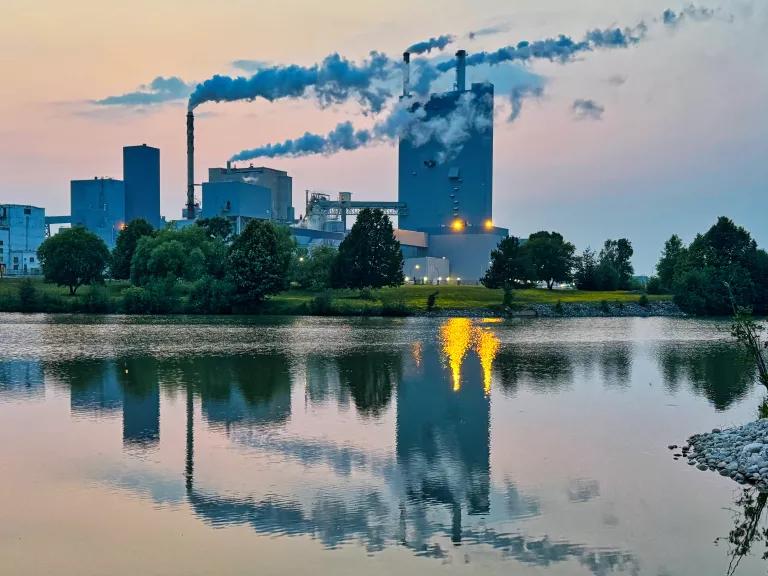
The Dryden paper mill in Dryden, northwestern Ontario, Canada, mill produces northern bleached softwood kraft pulp from trees cut from the nearby boreal forest.
The tissue business’s responsibility to human rights
This year’s River Run coincides with the release of NRDC’s eighth annual Issue with Tissue report, which holds companies accountable for unsustainable tissue products, including those connected to the Dryden mill.
The mill is no small player in the tissue paper industry. Now operating as Dryden Fibre Canada, it’s a privately held subsidiary of the New York–based company First Quality Enterprises, a leading U.S. manufacturer of personal and household care products. New research conducted by NRDC uncovered that the pulp from this mill likely goes into branded goods, like Panda toilet paper and Plenty paper towels, and the private-label products that First Quality produces for major retailers like Costco and Walmart (all of which received failing grades in NRDC’s tissue paper scorecard).
In May, Jordan and her colleagues reached out to these retailers to see how willing they might be to investigate and disclose their sourcing practices. The responses were lukewarm, at best. Costco and Walmart failed to engage in any substantive way, despite the evidence presented.
“Many companies, including Costco and Walmart, have committed to respecting Indigenous rights and upholding Free, Prior, and Informed Consent,” Jordan says, pointing to the United Nations’ principles for upholding Indigenous Peoples’ rights. “But what those commitments mean in practice is often less clear.”
The people of Grassy Narrows, for instance, do not consent to the industrial operations harming their community, raising serious doubt over the integrity of some brands’ support of Indigenous rights. Vague corporate replies to inquiries regarding the origins of their products are never a good look, and in fact, “undermine pathways to accountability and remedy,” states the NRDC report. Customers who care about human rights and sustainability also rely on corporate transparency to make good decisions.
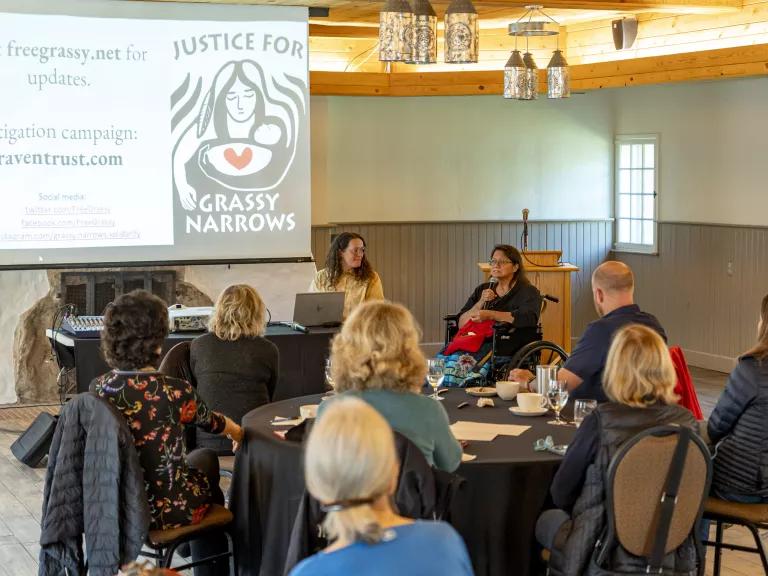
Judy Da Silva, a Grassy Narrows elder, activist, and community leader, speaks to guests from NRDC's boreal forest excursion at Old Fort William Historical Park in Thunder Bay, Ontario.
The power of consumers and retailers
Grassy Narrows is just one glaring example of human rights violations embedded within the tissue industry’s supply chain, and changing dynamics within the pulp industry in places like Canada are helping to drive destructive forestry practices elsewhere.
The ultimate result risks spreading environmental and human rights harms from one sourcing region to another. In Brazil, for one, companies are replacing native vegetation and natural ecosystems with eucalyptus plantations that require massive amounts of water, leading to the potential displacement of Indigenous communities, who face losing their home forests and traditional ways of life to the industry.
Several brands affiliated with APP (Asia Pulp & Paper) also got F’s on NRDC’s tissue scorecard due to poor environmental practices and persistent human rights abuses taking place in Indonesia. Such offenses include land grabbing, harassment, forced evictions, and violent suppression of community resistance.
These actions contradict companies’ supposed commitments to responsible business practices, but some major toilet paper retailers have started to live up to their word by removing APP products from their shelves and online offerings. Such successes offer proof of how consumer pressure can ultimately help steer the marketplace toward better values.
As can allyship, Da Silva emphasizes. She draws resilience from “the people who stand with us and work with us,” and says it’s one of the reasons why she’s dedicated herself to sharing her community’s story far and wide. “People know of Grassy, and it’s because of our supporters and our helpers who are out there, sharing real information, real facts.”
This NRDC.org story is available for online republication by news media outlets or nonprofits under these conditions: The writer(s) must be credited with a byline; you must note prominently that the story was originally published by NRDC.org and link to the original; the story cannot be edited (beyond simple things such as grammar); you can’t resell the story in any form or grant republishing rights to other outlets; you can’t republish our material wholesale or automatically—you need to select stories individually; you can’t republish the photos or graphics on our site without specific permission; you should drop us a note to let us know when you’ve used one of our stories.
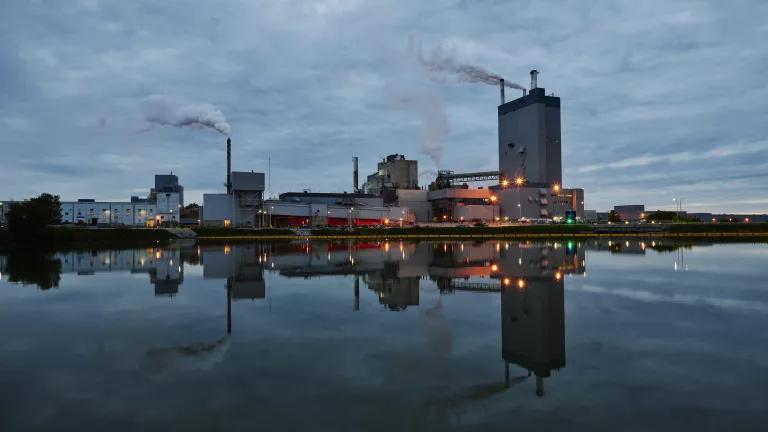
Tell Costco and Walmart to come clean on toilet paper
Two of Costco's and Walmart's paper products earned an F on NRDC's sustainability scorecard. But on top of that, the retailers refuse to say whether they profit from using a Canadian pulp mill that relies on the clearcutting of wildlife-rich, climate-critical forests, and that is actively worsening a mercury poisoning crisis.
When Customers and Investors Demand Corporate Sustainability
In Planning for Climate Change, Native Americans Draw on the Past
Remembering Eeyou Pimatseewin, the Cree Life