
The Trump Administration Wants to Take Away Protections for Endangered Species Look-Alikes
Here’s why the move risks bringing bog turtles, Miami blue butterflies, pallid sturgeons, and Florida panthers closer to extinction.
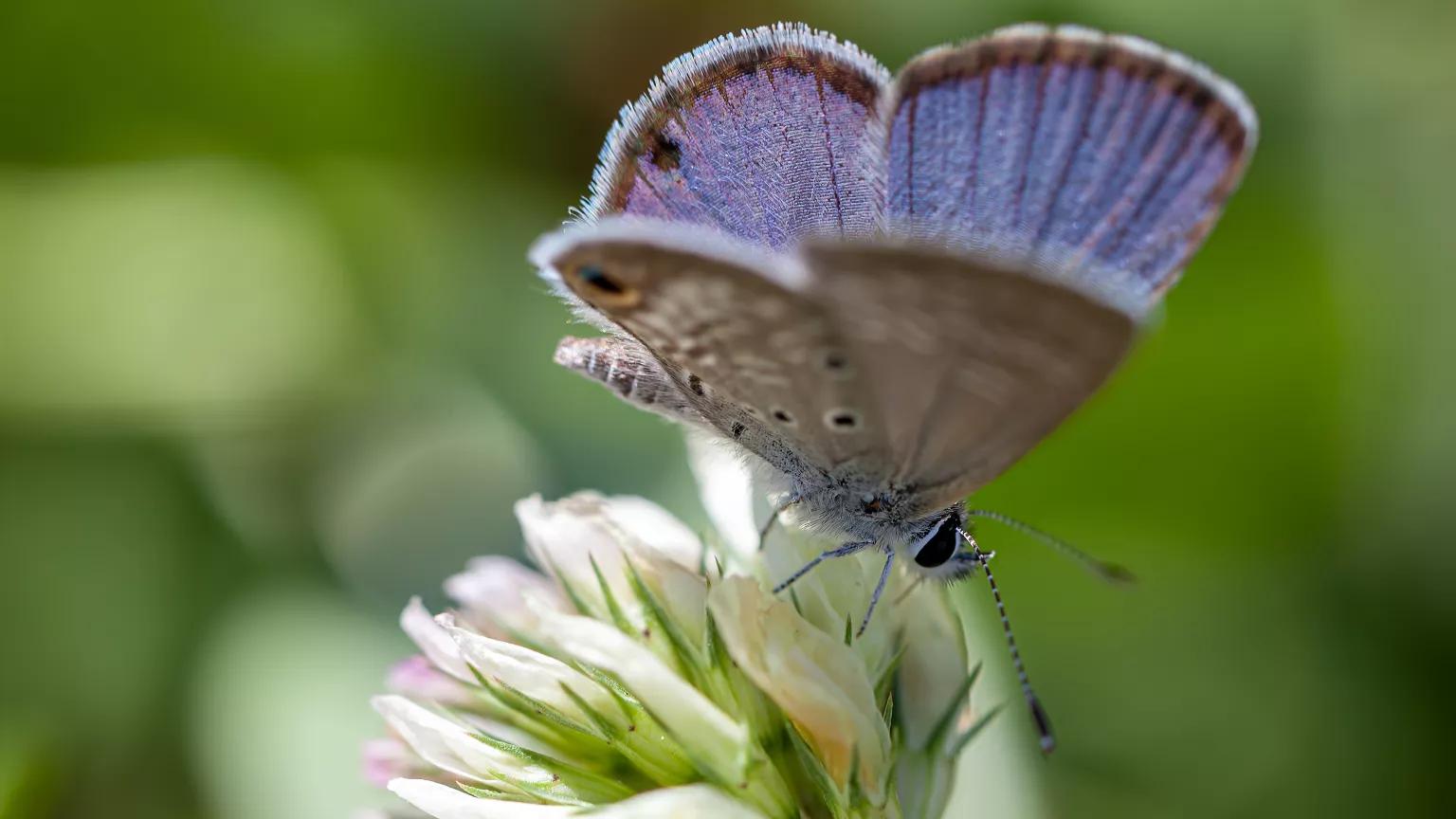
Could you tell the difference between a Miami blue butterfly and a ceraunus blue butterfly? What about a cassius blue and a nickerbean blue?
They’re all blue-hued cousins of relatively the same size with similar markings that flutter around in Florida, among other subtropical areas. But one big difference between them is that the Miami blue butterfly is on the Endangered Species List.
So, to help save the Miami blue, the U.S. Fish and Wildlife Service (FWS) also protects its look-alikes when they live in the same historic range as their imperiled relative. This helps prevent tragic cases of mistaken identity that could end in extinction.
Except the Trump administration now wants to get rid of those protections. If finalized, the proposal would apply to 11 species, ranging from big cats to ancient fish to tiny turtles.
LEARN MORE

“Trump has instructed the Fish and Wildlife Service to repeal 10 regulations for every new regulation they promulgate, which is extremely aggressive,” says Rebecca Riley, an attorney for NRDC who has worked on legal issues surrounding the Endangered Species Act for more than a decade. “Removing these protections is one way they’re trying to achieve that. But the reality is, what they’re doing doesn’t make any sense.”
Deregulation for deregulation’s sake is certainly not a scientific reason for removing wildlife protections, which could have real-world, permanent consequences. Here’s how.
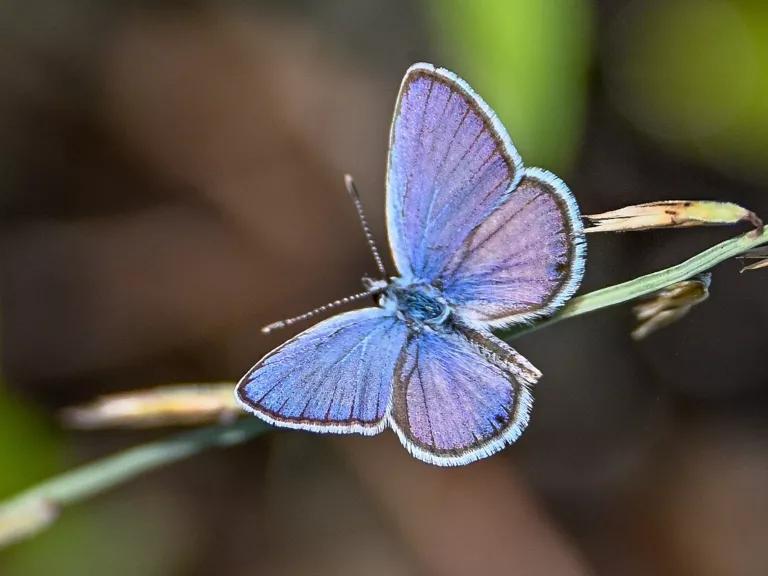
A Ceraunus blue butterfly
Robert Doyal via iNaturalist, CC BY-NC 4.0
Land of confusion
For starters, we don’t give look-alikes the exact same federal protections that pertain to the endangered species they resemble. The law simply prevents people from collecting, killing, or harvesting those species in areas where their endangered cousins have historically occurred.
And taking these protections away offers no benefits for people who might claim the law was restricting their abilities to manage their lawns, apply pesticides, or remove exotic plants, says Kevin Burls, an endangered species conservation biologist with the Xerces Society for Invertebrate Conservation. This is because those sorts of safeguards never applied to look-alike species in the first place.
The repeal also wouldn’t, to Burls’s knowledge, pave the way for resource extraction or industry in any meaningful way.
“I am not entirely sure that anything major is gained by the people by losing this restriction,” says Burls. “I think it just simply harms the Miami blue butterfly,” putting it at a heightened risk of accidental collection.
After all, most people—experts included—can’t tell the difference between these small, blazing-blue insects. And, because some of them, such as the nickerbean blue, are also relatively rare, people don’t see these butterflies often enough to even learn the differences.
Both scientists and hobbyists catch insects in the wild, either for research or to add to their insect collections. If even a small number of Miami blues are accidentally taken as a result of the Trump administration’s move, the impact to the remaining wild population, which numbers only in the hundreds, could be devastating.
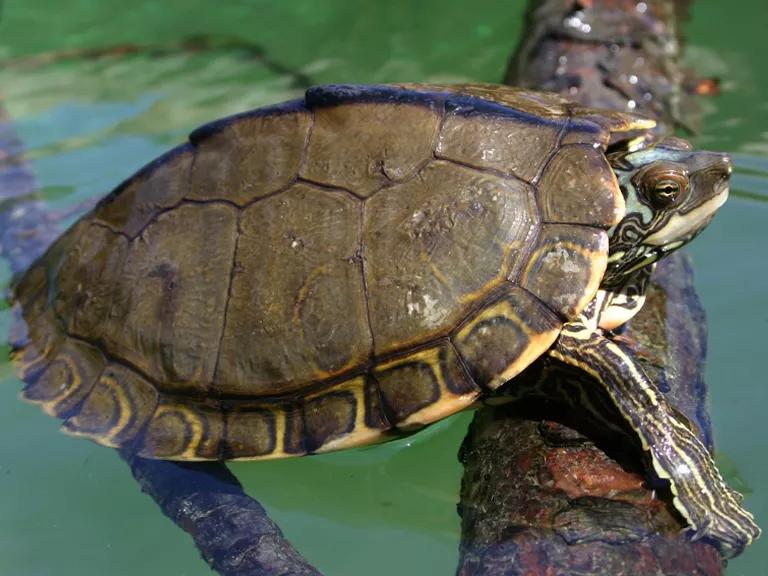


Clockwise from top left: A Pearl River map turtle and three of its "twins": the Barbour’s, Pascagoula, and Alabama map turtles
Cris Hagen/University of Georgia
; 2)Caleb Krueger via iNaturalist, CC BY 4.0
; 3)Grover J. Brown via iNaturalist, CC BY-NC 4.0
; 4)Grover J. Brown via iNaturalist, CC BY-NC 4.0
Let’s not do the illegal wildlife trade any favors
Like the Miami blue butterfly, the Pearl River map turtle has several twins: the Alabama, Barbour’s, Escambia, and Pascagoula map turtles. All of them are closely related, all of them have neat, map-like markings on their shells, and all of the species live only in rivers and creeks along the Pearl River in Mississippi and Louisiana.
“The process to get a species listed under the Endangered Species Act is lengthy,” says Jordan Gray, external relations manager for the Turtle Survival Alliance. “From that first petition to becoming a listed species is a process that can take decades.”
So for these turtles to gain protections just last year and already face losing them “ was not something that was on our radar,” says Gray.
LEARN MORE
As the biodiversity crisis intensifies, these rollbacks also couldn’t be happening at a worse time, and turtles need all the help they can get.
The international trade of turtles for pets, food, jewelry, or traditional medicine is big business, and the United States is the planet’s leading source of, destination for, and trader of turtles. And it is not all on the up-and-up.
“The trafficking of U.S. turtles has reached a level that is significantly impacting wild populations,” Gray adds. “And state and federal law enforcement officials, alongside conservation biologists and organizations like the Turtle Survival Alliance, consider the illegal collection and trade of turtles as a national conservation crisis.”
Between 1998 and 2021, U.S. enforcement agencies confiscated at least 24,000 protected turtles and tortoises. However, it’s tough to estimate how many of those animals came from the wild or how many more turtles are successfully smuggled each year. Even so, to put that figure in perspective, it’s more turtles than are thought to exist in the entire Pearl River map turtle population.
What’s more, not protecting look-alike species makes things much more difficult and costly for law enforcement—and could lead officers to give traffickers the benefit of the doubt.
“The accurate identification of the listed species often requires species experts, and/or genetic analysis, which can hinder or prevent law enforcement officers from seizing illegally trafficked turtles,” says Gray.

A biologist measuring a juvenile bog turtle in western North Carolina
Making matters even more confusing is that one so-called look-alike is genetically identical to its protected counterpart. Meet the bog turtle, one of the smallest turtles in the world.
Facing threats such as the illegal pet trade and habitat loss, these tiny turtles live in mountain wetlands in two regions of the eastern United States. The International Union for Conservation of Nature (IUCN) Species Survival Commission’s Tortoise and Freshwater Turtle Specialist Group, in conjunction with the Turtle Conservation Fund, recently included bog turtles on its most endangered turtles and tortoises list for 2025.
Yet the FWS, which manages the populations separately, designates only the northern bog turtle as threatened. In 2024, the Center for Biological Diversity sued the FWS for failing to respond to a petition years earlier to add the southern bog turtle to the Endangered Species List.
The petition demonstrated how “the southern bog turtle population has collapsed,” existing only in 14 sites across its range in Georgia, Tennessee, Virginia, and North and South Carolina. Now, the turtle faces losing all its federal protections under the FWS’s new proposal.

A Florida panther in the Florida Panther National Wildlife Refuge
Making the road to species recovery longer and harder
Whether we’re discussing pumas and Florida panthers or shovelnose and pallid sturgeon, the move to take away look-alike protections has the potential to do real harm—not only in hastening the disappearance of species but also in preventing their rebound.
“One of the most important points is that this look-alike type [of] protection can lead to a species’ recovery because these protections cover the historical ranges of the organism,” says Burls. “So, not just where it is found today but also where it used to be.”
This is incredibly important because, for a species to bounce back, its population will need to return to the areas it once lived. But if a Miami blue butterfly gets plucked unwittingly by a collector once it ventures somewhere it hasn’t been seen in a while, that population’s chance at habitat expansion takes a hit.
“The Endangered Species Act is our nation's gold standard, and it is one of the things that allows us to protect our nation’s amazing biodiversity heritage,” says Burls. “I don't think there's a reason, right now more than ever, to take those protections away,” he says.
The good news is that this proposal is just that—a proposal. While the FWS has the authority to add and remove species from the Endangered Species List without additional approval from Congress, it must do so in a way that’s consistent with the standards and procedures of the Endangered Species Act itself, says NRDC’s Riley. For now, it’s a question of how quickly the service moves to finalize its proposal.
“So far, every action of the Trump administration has been to weaken species protections rather than strengthen them, and this series of decisions is more of the same,” says Riley. “I just don’t think that is something the American people want.”
This NRDC.org story is available for online republication by news media outlets or nonprofits under these conditions: The writer(s) must be credited with a byline; you must note prominently that the story was originally published by NRDC.org and link to the original; the story cannot be edited (beyond simple things such as grammar); you can’t resell the story in any form or grant republishing rights to other outlets; you can’t republish our material wholesale or automatically—you need to select stories individually; you can’t republish the photos or graphics on our site without specific permission; you should drop us a note to let us know when you’ve used one of our stories.
Our Public Lands Are on the Chopping Block Again
The Endangered Species Act Under Attack
What the Supreme Court’s Sackett v. EPA Ruling Means for Wetlands and Other Waterways