
The Endangered Species Act Under Attack
The Trump administration takes aim at imperiled wildlife and the public servants who help protect them.
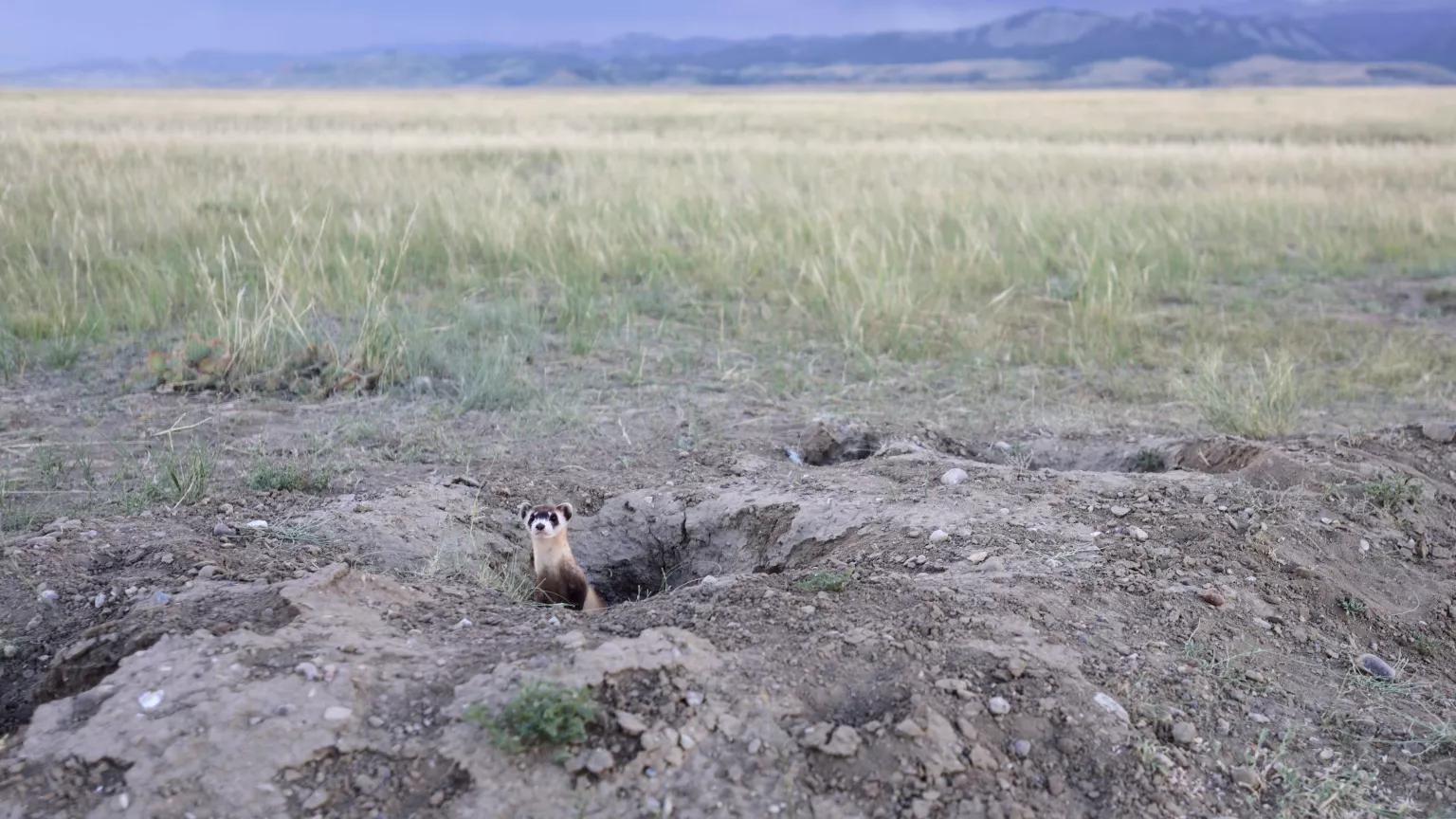
A black-footed ferret that was released near Meeteeetse, Wyoming, where the species once thought extinct was rediscovered in 1981. Black-footed ferrets are the focus of a broad recovery effort by the U.S. Fish & Wildlife Service.
UPDATE: On March 31, 2026, the God Squad—which convened for the first time in more than 30 years—voted to grant a sweeping exemption for federal Gulf of Mexico oil and gas activities, allowing those companies to bypass critical safeguards for some of the most at-risk wildlife in U.S. waters.
The fates of California condors, red wolves, black-footed ferrets, several sea turtle species and countless other imperiled wildlife are now murkier than ever. Over the past year and change, the Trump administration has been carrying out a laundry list of attacks against the Endangered Species Act (ESA) and the U.S. Fish & Wildlife Service (FWS), one of the two federal agencies that manage the foundational conservation law.
Most recently, the administration announced it would convene the so-called God Squad—a rarely used committee that has the power to condemn an endangered species to extinction—in an attempt to permanently exempt the federal oil and gas program from crucial ESA protections in the Gulf. Granting such an extreme exemption would jeopardize the futures of federally listed species, including the critically imperiled Rice's whale, sperm whales, and Gulf sturgeons, along with hawksbill, Kemp’s ridley, leatherback, loggerhead, and green sea turtles.
And that’s only the latest. Last fall, the Trump administration proposed four new rules that strike at the heart of the ESA (while giving the public a mere 30 days to comment). If finalized, these rules would allow potentially unreliable economic analyses to bias listing decisions, make it harder to list new protected species, and make it easier to remove those now on the federal endangered or threatened list. It would also be more difficult to designate and protect critical habitats for these species, and reduce voluntary conservation incentives.
Members of Congress, meanwhile, are also taking aim at the nation’s plants and animals. Representative Bruce Westerman, a Republican from Arkansas, recently introduced the ESA Amendments Act, which proposes dozens of detrimental changes to how the country addresses the extinction crisis. Other bills are targeting protections for individual species, such as the gray wolf and the lesser prairie-chicken.
The Endangered Species Act “is probably the strongest environmental law worldwide,” says Reed Noss, an ecologist and conservation biologist at Conservation Science, Inc. “[It] has a few problems that need to be fixed, but in general, it is one of the greatest accomplishments in conservation history. It’s something I think people really need to be proud of and to be very protective of.”
NRDC’s director of marine mammal protection, Michael Jasny, talks about the God Squad and the power this committee has to condemn an endangered species to extinction.
Do no harm to endangered animals and plants
For many species, the future may well rest on the definition of a single four-letter word: harm.
The Trump administration has proposed changing the protections under the Endangered Species Act that would rescind the current, and science-based, definition of harm.
Since its passing in 1973, the act has stated that it is illegal “to harass, harm, pursue, hunt, shoot, wound, kill, trap, capture, or collect” an endangered species. Regulations implementing the ESA further define harm to include “habitat modification or degradation where it actually kills or injures wildlife by significantly impairing essential behavioral patterns, including breeding, feeding or sheltering.”
So, you can’t mess with endangered species themselves. And you also can’t mess with the things that endangered species require for their survival—essentials like food, nesting sites, and other important habitats. It’s this part of the definition of harm that the Trump administration is looking to obliterate. Eliminating protections for habitat would make it easier for developers to clearcut forests, bulldoze over important habitats, and mine, drill, and pollute the places that endangered wildlife call home.

Northern Tallgrass Prairie National Wildlife Refuge in Minnesota
Want to prevent extinction? Save habitats.
For most endangered species across the globe, existential peril doesn’t come in the form of a person with a gun or set of traps. It lies in the destruction of their home.
“The primary threat to species is habitat loss, fragmentation, and modification,” says Noss, who is also the chief science advisor with the Southeastern Grasslands Institute. “All biologists agree with that. There is no debate.”
"...[T]he vast majority of people in the service are doing those jobs because they love wildlife, and they want to protect endangered species. It’s the politicians who ride to the top of the agency and direct the agency that are causing the problem.”
Reed Noss, ecologist and conservation biologist, Conservation Science
Take habitat protections away and there’s little left to safeguard the more than 1,300 species that the ESA currently protects. But the ecological consequences wouldn’t end there. Those listed species have innumerable neighbors who also benefit from healthier and more intact ecosystems. Humans, of course, belong in that category, as do the plants and animals we depend upon for medicines and food and the natural spaces we retreat to for peace of mind.
Rebecca Riley, managing director for NRDC’s Food & Agriculture program, points to bees, butterflies, and other insects as examples of small animals that have big ecological and agricultural impacts. “One out of every three bites of food we eat depends on pollination,” she says.


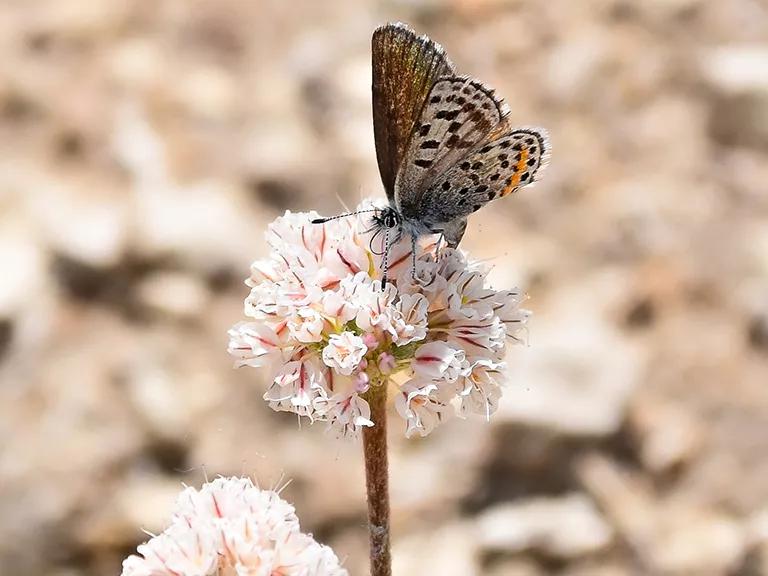
Clockwise from top left: A monarch butterfly caterpillar feeding on a milkweed leaf in Curlew National Grassland; a rusty patched bumblebee gathering pollen from spotted Joe Pye weed; an endangered steamboat buckwheat flower providing food for a butterfly in Nevada
When the U.S. Environmental Protection Agency approves a new pesticide, the ESA requires the agency to first look at the impact that the pesticide would have on protected species. “If they bypass that Endangered Species Act review, they will fail to stop the torrent of pesticides flooding our environment, which will lead to more species declines and, potentially, to extinctions,” says Riley.
Other changes to the ESA proposed by Congress include making it easier to approve destructive development projects without assessing their full impact to endangered species; making it harder to challenge delayed listings of species in court; and eliminating the protections for critical habitat altogether. (Similarly, the new rules proposed by the Trump administration complicate efforts to both designate critical habitats and to protect species impacted by changing environmental conditions.)
As if these assaults on wildlife are not enough, they come on yet another front: sabotaging the ability of agencies to carry out their work. In other words, firing the people who evaluate species populations and enforce the conservation law.
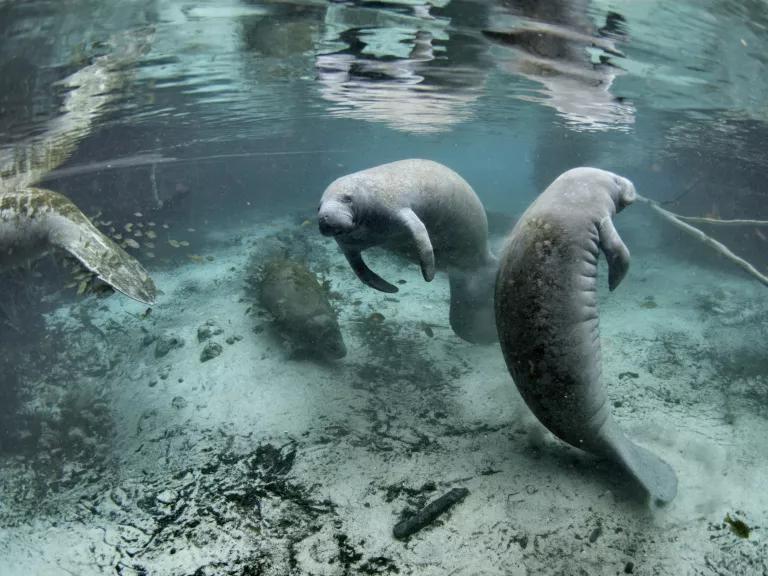
Manatees in a spring at Crystal River National Wildlife Refuge, Florida
DOGE cuts to the Fish & Wildlife Service
On the Gulf Coast of Florida, the Crystal River National Wildlife Refuge protects the last remaining undeveloped natural spring in Kings Bay. During the winter, more than 600 manatees migrate here to congregate in the spring’s warm turquoise waters. Currently listed as threatened under the ESA, the Florida manatee faces numerous threats to its survival, including boat strikes and, in recent years, starvation, due to habitat degradation in the form of water pollution.
Last winter, however, the Department of Government Efficiency (DOGE), under the direction of Elon Musk, fired many of the staff who work to protect these marine mammals.
On a Friday in February 2025, Brier Ryver stared at a laptop on a dock in the refuge, which is accessible only by boat. A half hour earlier, they’d received an email invite to a Microsoft Teams meeting from the FWS. “Update for probationary employees,” the invite read. Ryver remembers thinking, That doesn’t sound good.
It wasn’t. With their manager and supervisor sitting nearby for support, Ryver learned that they wouldn’t have a job by the end of the day.
“I was running education and outreach. I was running the permit program. I was running social media,” says Ryver, who’d been hired in April 2024.
All that energy hadn’t gone unnoticed. Ryver received a Special Thanks for Achieving Results (STAR) Award, which the FWS uses to “recognize noteworthy accomplishments.” In just the first six months of employment, they assisted a team that hustled, bustled, and worked many overtime hours to secure federal assets, such as boats and equipment, and prepare the refuge for Hurricanes Debby, Helene, and Milton, which struck Florida last year in rapid succession.
Yet the cuts to that team were deep. Ryver’s coworker, Emily Jung, who oversaw visitor services, also lost her job on the same day. Overall, the layoffs effectively cut the refuge’s workforce by a quarter. A workforce that, by Ryver’s estimation, was already understaffed as it managed a complex of refuges that spans 32,000 acres of wetlands along Florida’s Gulf Coast.
In total, DOGE had laid off around 2,300 other Interior Department employees, including around 400 FWS workers.
But for Ryver, a strange turn of events ensued. After five weeks of unemployment and applying for more than 100 jobs, Ryver got their job back when a U.S. district judge deemed the mass layoffs illegal.
“No ‘oopsie, our bad!’ Nothing,” says Ryver. “Just a message saying we needed to go pick up a new [personal identity verification card] and go back to work, like nothing happened.”
Unsurprisingly, however, Ryver no longer felt secure in the position—a feeling shared by many other probationary employees (several of whom responded to calls for an interview but ultimately decided against it out of fear of professional retribution).
Ryver has since taken another outreach position with Purdue University and thinks many early-career wildlife professionals will start to look elsewhere for work too.
“I planned on being with the Fish & Wildlife Service for another 40 years,” they say. “I’m still kind of struggling with that. It’s like I lost my whole career in that moment.”
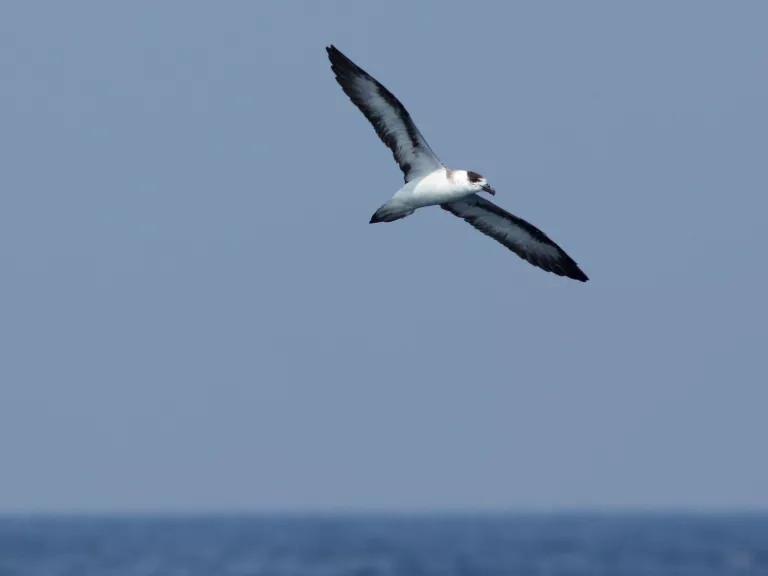
A black-capped petrel above Oregon Inlet in North Carolina's Outer Banks
FWS work is important, flaws and all
That sort of fierce loyalty is common within the ranks of the FWS. “A lot of my environmentalist colleagues love to bash the Fish & Wildlife Service,” says Noss. “But the vast majority of people in the service are doing those jobs because they love wildlife, and they want to protect endangered species. It’s the politicians who ride to the top of the agency and direct the agency that are causing the problem.”
Neither the FWS nor the ESA have ever been perfect. For example, FWS scientists often agree that a plant or animal should be given protections, but the agency lacks enough human capital or political will to make it happen. The latter can lead to unfortunate FWS decisions known as “warranted, but precluded.” In other words, the science says a species needs our help, but preventing its further decline is not high enough on the priorities list.
Still, some species squeak through. Petrels, ptarmigans, and pimpleback mussels, for example, earned ESA protections in 2024. Still, according to the FWS, there are currently more than 500 species waiting to be reviewed for ESA protections. And the logjam is likely to only get worse if President Trump’s executive order to establish a “sunset rule” succeeds, says Riley. Under the order, both the FWS and the National Marine Fisheries Service would have to establish end dates for all new and pre-existing regulations under the Endangered Species and Marine Mammal Protection Acts.
“The Trump administration is attacking the Endangered Species Act in every way that it can,” says Riley.
Without the ESA and its enforcement over the past half century, many of the United States’ iconic wildlife would have likely died out. As in no bald eagles, grizzly bears, gray wolves, nor Florida panthers, just to name a few species that have been saved from oblivion by the act. If the Trump administration succeeds in its attempts to gut protections for habitat, the Florida manatee may not be so lucky.
“If you bulldoze over their habitat or ruin their springs, they have nowhere to go during the winter,” says Ryver. “They will actually die. They will freeze to death over the winter.”
This story was originally published June 3, 2025, and was updated with new information and links on March 19, 2026.
This NRDC.org story is available for online republication by news media outlets or nonprofits under these conditions: The writer(s) must be credited with a byline; you must note prominently that the story was originally published by NRDC.org and link to the original; the story cannot be edited (beyond simple things such as grammar); you can’t resell the story in any form or grant republishing rights to other outlets; you can’t republish our material wholesale or automatically—you need to select stories individually; you can’t republish the photos or graphics on our site without specific permission; you should drop us a note to let us know when you’ve used one of our stories.
If the God Squad is successful, federally listed species will be driven further to extinction.
Tell your members of Congress to stop allowing fossil fuel companies to harm wildlife just to advance the Trump administration's drill, baby, drill agenda.

Protect endangered wildlife from the outrageous God Squad exemption!
The Trump administration’s God Squad unanimously voted to sacrifice endangered marine species—manatees, sea turtles, and whales—that are getting in the way of its plans for expanding oil and gas drilling in the Gulf of Mexico. NRDC sued, but we also need your help to keep up a massive public outcry to so that endangered species aren't pushed to extinction.
Alaska’s Tongass National Forest at Risk Once Again
Biodiversity 101
Five Indigenous Poets Explore Loss and Love of their Native Lands