What It’ll Take to Save Cities like New Orleans from Climate Disaster
These insights from around the globe hold lessons in planning a just relocation.
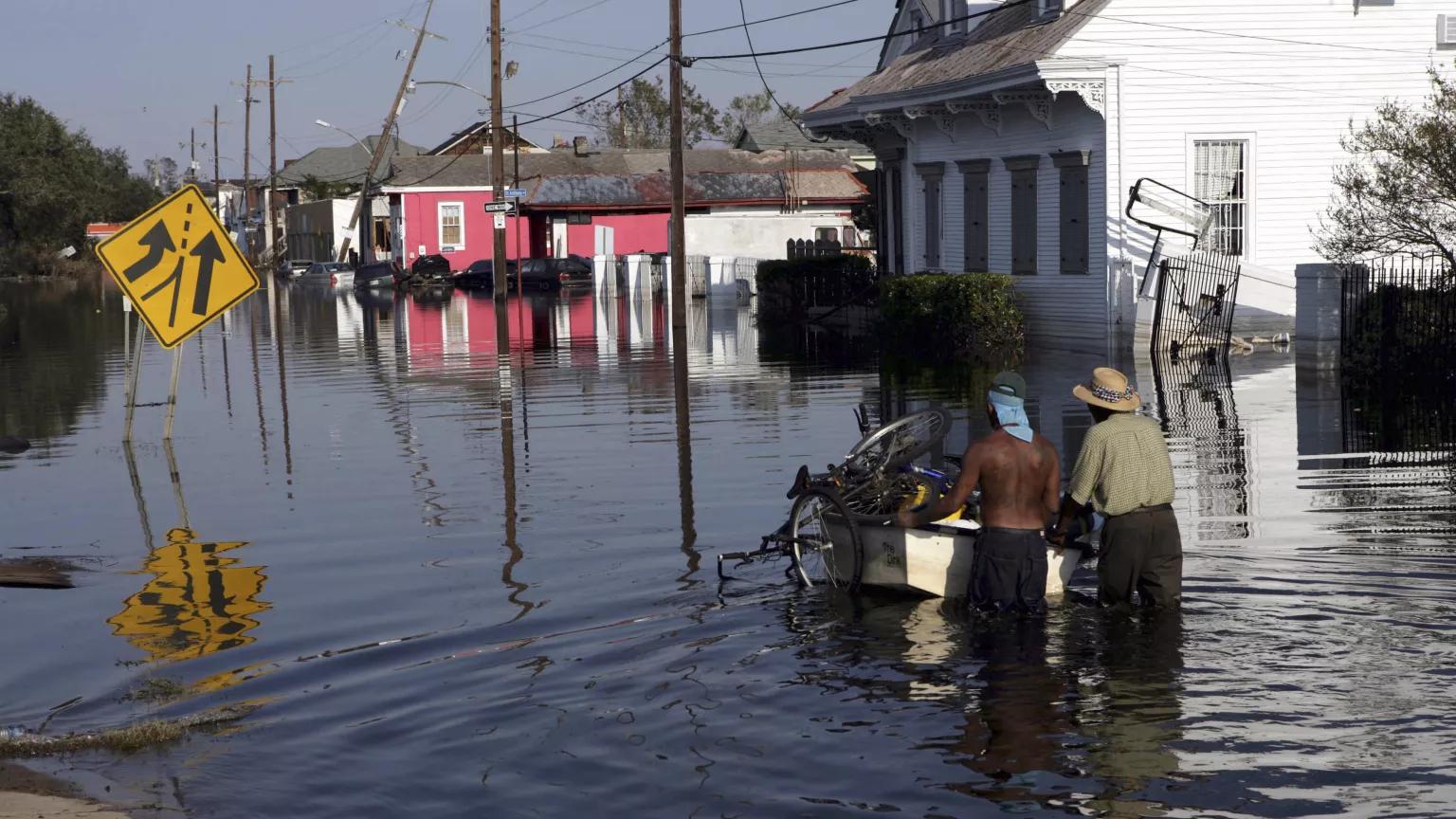
Floodwaters along a residential street of New Orleans following Hurricane Katrina
It’s hardly news to New Orleanians that their city is among the world’s most threatened by rising seas. For many, this shared truth—despite always looming, especially during hurricane season—feels like a problem so big, or so far off, you can’t do anything about it. But a recent study in the journal Nature Sustainability is calling for immediate action to address the inevitable: New Orleans must move to safer ground.
“While climate mitigation should remain the first step to prevent the worst outcomes, coastal Louisiana has evidently already crossed the point of no return,” the authors write.
Due to a combination of sea level rise and land subsidence (both exacerbated by the fossil fuel industry), the study suggests that by the end of the century, New Orleans will be surrounded, if not completely inundated, by the Gulf of Mexico.
With a million lives potentially at stake in the region, along with the close-knit communities and vibrant culture they embody, the study suggests that government officials should begin planning a relocation as soon as possible.
“Change is sometimes thrust upon us…but I think we still yet have a moment where we can choose change.”
Khalil Shahyd, senior strategy for environmental equity, green finance, and economic development, NRDC
“We can't just use ‘people have been here forever, they want to be here forever, and they’re not going anywhere’ as an excuse to avoid facing the realities of climate change,” says Dr. Adelle Thomas, NRDC’s senior director for climate adaptation and environmental health. “Just because it's complex and hard doesn't mean that we don't need to start working on this.”
But how do you move an entire city, realizing a city isn’t merely a collection of physical structures but a society with myriad moving parts, relationships, and power imbalances? With that in mind, how do you ensure a relocation is equitable and humane, from the very onset of planning to the ongoing support that people will need when rebuilding their lives somewhere new?
Thomas coauthored a recent NRDC report that explores such dynamics. Through its examination of relocations of other communities on the frontlines of climate change that took place in three different areas of the world in recent decades, the report offers important insights for future planners to consider.
While every place is unique, none can afford to wait until the last minute, especially in a city like New Orleans, where systemic racism runs deep and many residents express reluctance to move. Slapdash approaches, after all, could not only prove disorganized and deadly but also amplify existing racial and economic injustices.
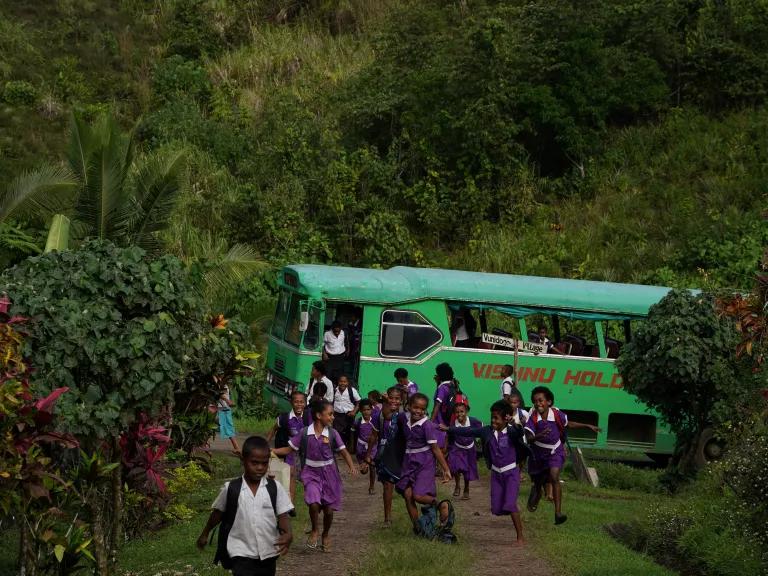
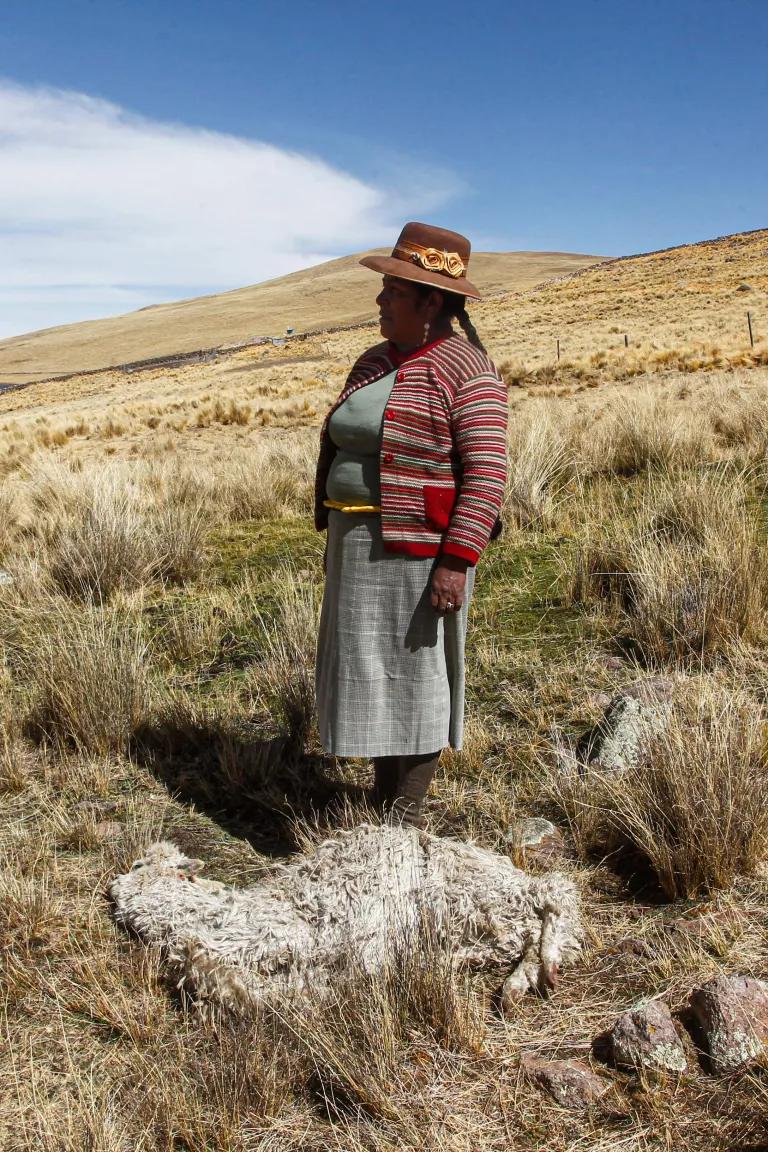
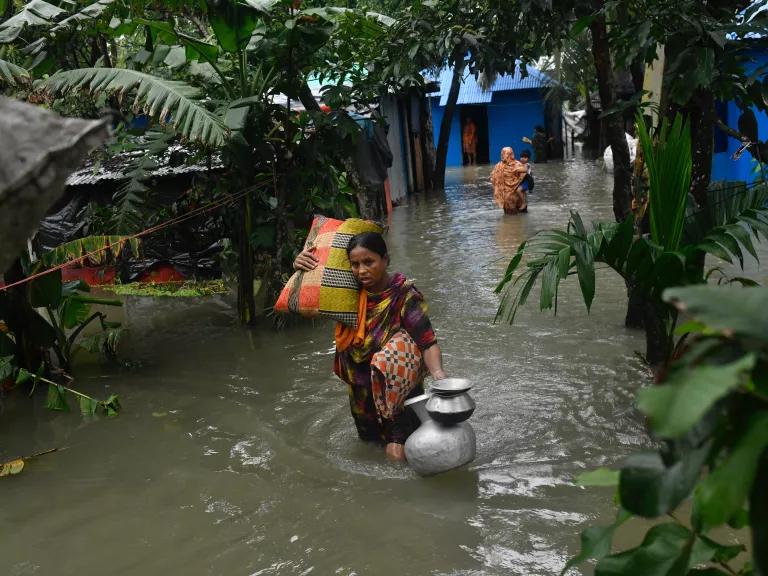
Clockwise from top left: Children returning home from school to their new relocated site of Vunidogoloa Village, Vanua Levu, Fiji, July 2022; an Andean woman next to a dead alpaca in the Quechua community of Lagunillas in Puno, southern Peru in December 2022, where a harsh drought caused the death of animals as well as affected crops and the economy of local communities; local residents shifting to temporary shelters as floodwater rises in their homes in Feni, Chittagong, Bangladesh, August 2024
Climate migration: Choosing order over chaos
Approximately 110 million people worldwide live below the high tide line. If global greenhouse gas emissions do not decrease significantly, this figure could balloon to 630 million by 2100. And sea level rise, of course, isn’t the only climate effect that is making survival in places where people have lived for millennia increasingly untenable. In the Andes, for instance, shrinking glaciers are diminishing supplies of clean drinking water and disrupting farming practices. Across many East African nations, below-average rainfall is also desiccating crops and leaving some rural communities facing starvation.
Globally, climate change impacts could lead 216 million people to relocate within their own countries by 2050. The forecasts are troubling, given that migrations based on individual or family-level decisions—often in response to an extreme weather event—are chaotic by nature. People make such moves out of desperation as they flee, leaving their homes, possessions, and support systems behind. In contrast, a planned relocation has the potential to help populations navigate this transition in a more orderly fashion while offering more stable footing in their new home.
Planned relocation efforts are already underway across the globe. Sri Lanka has embarked on resettlement initiatives for communities at risk from increasing flooding and landslide activity. Bangladesh has incorporated relocation efforts into its national climate adaptation strategy, with plans to move millions of people away from areas at high risk of erosion, flooding, and sea level rise. Meanwhile, in the United States, melting permafrost has already caused the remote Alaskan community of Newtok to relocate, though the process has been fraught with challenges, due in part to poor planning and gaps in funding at the federal level.
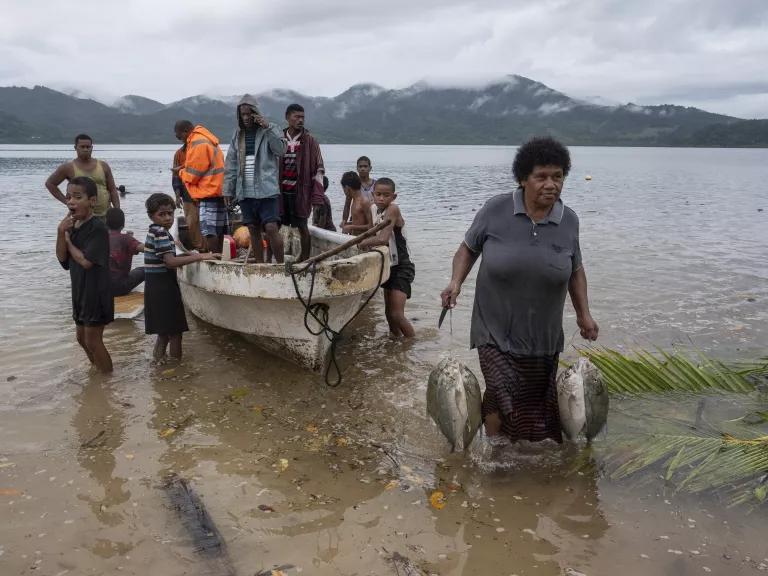
Muani, a coastal community in Fiji that relies heavily on fishing, faces risks of storm surge and sea level rise due to climate change. A nearby site is set aside for relocating the village, but the people's connection to the land, the steep hills surrounding the community, and funding are all contributing to delays in the move.
Lessons learned
In its analysis of the planned relocation policies and practices in Bangladesh, Fiji, and Peru, NRDC’s report identifies three essential ingredients for success.
First: “You can't just come in with this top-down approach to try and move people out of their homes—you have to have meaningful engagement with communities,” says Thomas. The Fiji case study illustrates the importance of gathering input from the people who will be moving and sharing the decision-making power with them.
The relocation took place between 2006 and 2014 and involved 153 people in the village of Vunidogoloa on the island of Vanua Levu. While the geographical move was small—the community only needed to resettle about a mile further inland—some lifestyle adjustments were a shock. Due to patriarchal social norms, the planners did not adequately consult with the village’s women, leading to big oversights such as one group of new homes being built without kitchens. Without deep dialogue with the community, disruptions also arose concerning the villagers’ diets, spirituality, and mental health as a result of their living further away from the ocean.
Second, in order for communities to feel comfortable putting down roots in new locales, they must have access to land tenure, i.e., titles to their land or houses. Planners neglected to provide that secure foundation to an Amerindian community in Peru, known as Village 1, when they moved to a new area in order to avoid river flooding and other climate-related hazards.
The lack of documentation resulted in the new residents not being able to access government services, but it also did not follow Peruvian law regarding relocation and land tenure. “You could have a really great policy, but if you're not implementing it in the way that it has been written, then you're going to end up with injustices,” Thomas says.
Third, you don't want to move people to where they cannot make a living or where they don't have adequate access to health care or education. “We need to be moving people to places where they can actually thrive,” she says.
In its planned relocations of more than 50,000 families between 2009 and 2020, Bangladesh did a decent job providing migrants with free electricity and water, community centers, training courses, and other benefits. But another recent relocation initiative there moved some residents into new housing that was just too far from jobs, schools, and affordable health care.
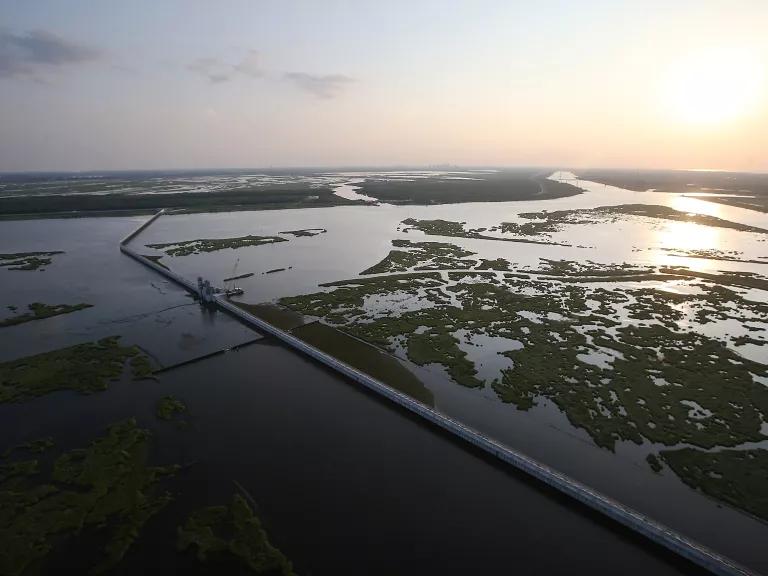
The $1.1 billion Lake Borgne surge barrier in New Orleans was built by the Army Corps of Engineers along with other reinforcements to defend the city against future hurricanes.
Moving a city right takes time
A planned relocation of a city the size of New Orleans has never been done. And as of now, officials in neither the city, state, nor federal government have given any indication they’re tackling this sensitive but very pressing issue. Alarmingly, there are also no current plans to further bolster the city’s defenses against the rising Gulf.
In fact, just last year, Louisiana Governor Jeff Landry terminated the Mid-Barataria Sediment Diversion project, an effort to replenish coastal land along the Mississippi Delta to help buffer the region from stronger and more frequent hurricanes. According to the Nature Sustainability study, up to 75 percent of the remaining wetlands in coastal Louisiana could turn into open sea by 2070. The Mid-Barataria researchers say the project could have helped buy the city some time, something that a relocation plan at this scale would very much need.
In many ways, New Orleans has been here before. In the wake of Hurricane Katrina in 2005, about a quarter of the city’s residents never returned; being forced to find new jobs, new homes, and new schools for their children on the fly and with limited support. The storm exposed deep-rooted inequalities in the city, not just through whose neighborhoods flooded and who had the means to evacuate but also with who was able to return and rebuild.
The stark outcomes of Katrina often fell along racial lines, and two decades on, systemic racism persists in the city, baked into its blueprint by segregation, redlining, and underinvestment in Black neighborhoods. People of color and low-income communities still bear the brunt of the challenges of living in a sinking city. For instance, skyrocketing home insurance prices make it hard to stay, but leaving can also be unaffordable.
A successful relocation plan, one that lays a foundation for justice in the new location, would have to account for these imbalances and empower communities to build their own futures.
“If we don't plan this out ahead of time, there's going to be a lot of families that are going to be undone because their property essentially has no value to pass on,” says Khalil Shahyd, NRDC’s senior strategy for environmental equity, green finance, and economic development. Shahyd, who grew up in New Orleans, thinks estate planning may be one “way to help people understand what's happening, and why it needs to be done now.”
But it will be no easy task. The psychological toll of living in the shadow of the next big storm, and taking things day by day, makes it hard for most people to feel the urgency of a threat that could still be a couple decades away.
And then there are the strong cultural ties to the land itself. “In New Orleans, we have a saying: ‘I get it out the mud,’” Shahyd says. “The source of culture—our ways of being, our humanity—comes from the very soil beneath us. We belong to it; it does not belong to us.”
Thomas has seen similar themes in her research. “Attachment to place is the top reason why people don't want to consider moving, even if climate impacts escalate, and it becomes harder and harder to live there,” she says. “Finding a different location where they can recultivate that community and that place attachment is really important.”
Of course, no culture is static—it evolves along with the people living it. New Orleans’s rich history and ways of life, from the jazz and gumbo to the social aid and pleasure clubs that have helped neighbors support each other for generations, have in many ways been shaped by the waters of the delta. Should those waters now send them to safety elsewhere, that culture will follow, with a chance to be improvised upon by future generations.
“Change is sometimes thrust upon us…but I think we still yet have a moment where we can choose change,” Shahyd says. “If we can choose change, we can craft it in a way that is inclusive, that is just, that enables everyone to have dignity through that process.”
This NRDC.org story is available for online republication by news media outlets or nonprofits under these conditions: The writer(s) must be credited with a byline; you must note prominently that the story was originally published by NRDC.org and link to the original; the story cannot be edited (beyond simple things such as grammar); you can’t resell the story in any form or grant republishing rights to other outlets; you can’t republish our material wholesale or automatically—you need to select stories individually; you can’t republish the photos or graphics on our site without specific permission; you should drop us a note to let us know when you’ve used one of our stories.
Defender of Housing Justice
How EPA Rollbacks Will Cost Us—in Dollars and Lives
How Hot Is Too Hot?