
Trump Administration’s DOE Is Forcing Coal Plants to Stay Open. Michigan Is the First Target.
People in Michigan and across the Midwest will be stuck paying the cost of a nonexistent “emergency” with their health and their electric bills.

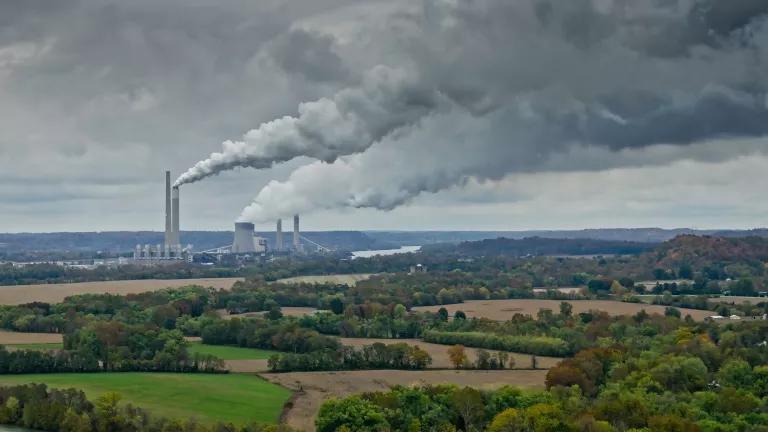
Consumer Energy's coal-fired J.H. Campbell Generating Complex in Ottawa County, Michigan
The Trump administration has vowed to revive the long declining U.S. coal-fired power industry, which has become economically uncompetitive relative to proliferating cheaper, cleaner energy sources. On May 23, the U.S. Department of Energy (DOE) followed through on that vow by issuing what it termed an “emergency” order that forces Michigan’s J.H. Campbell Complex plant to continue operating through the summer, despite being set to retire on June 1.
The result? Higher electricity bills for consumers and dirtier air that our families must breathe.
Learn More


The Campbell coal plant, which began operating on the shores of Lake Michigan in 1962, is woefully out of date, costs more to operate than other electricity generation options, and is one of the worst polluters in Michigan. That’s why Consumers Energy, the Michigan utility that operates Campbell, agreed to a settlement with NRDC and other stakeholders in 2022 to shut down the plant by June 1, 2025, and replace it with newer, cheaper electric generation. It then took all the steps needed to secure that energy and shut down Campbell in an orderly fashion—all with the approval of state utility regulators and grid operators, which agreed that the plant was no longer needed on the electrical grid for adequate energy supply and reliability.
Now the DOE’s unexpected order has thrown a costly and dangerous monkey wrench into this carefully planned process. The agency invoked a rarely used section of the Federal Power Act—Section 202(c)—to assert that there is a potential reliability “emergency” but offered only specious evidence for this proposition. This unprecedented decision will force Midwest customers to pay to operate an aging, inefficient plant, driving up costs at a time when families and businesses are already struggling with high energy prices. Using federal emergency powers where no emergency exists sets a dangerous and expensive national precedent.
As Michigan Public Service Commission Chair Dan Scripps stated just days after the order, “We currently produce more energy in Michigan than needed. The unnecessary recent order from the U.S. Department of Energy will increase the cost of power for homes and businesses across the Midwest.”
The Campbell order will harm Michigan ratepayers and public health
The DOE’s decision to force the Campbell coal plant to remain online will not address a real problem. Instead, it will impose real costs on customers and communities in Michigan and throughout the Midwest.
To comply with the DOE’s order, Consumers Energy must now:
- Pay premium prices to purchase coal on short notice.
- Perform unplanned repairs and maintenance on a plant that was preparing for closure.
- Find and pay for adequate staffing to run the plant, after many employees already moved to other facilities or retired.
These unbudgeted costs will be passed along to Midwest electric customers. While the costs of the Campbell Section 202(c) order won’t be clear until Consumers Energy files with the Federal Energy Regulatory Commission, S&P Global Market Intelligence estimates of the fixed operation and maintenance costs for the plant suggest that keeping it online just for the 90-day order could cost more than $7 million, even without accounting for the extra expenses associated with last-minute coal procurement and emergency maintenance repairs. If the plant is not dispatched economically—i.e., if it’s kept running when it is more expensive than cheaper sources on the grid—the costs could be much higher. These costs come as families and businesses are already struggling with high energy prices.
Scripps has warned that the DOE order will increase costs and erase much of the savings that customers were expecting from Campbell’s retirement. There is no sound reason to ask Michigan or other Midwest ratepayers to subsidize an inefficient and polluting coal plant that the state has already moved beyond.
Campbell is also one of the most polluting coal plants in the Midwest. It emits millions of tons of carbon dioxide annually, along with thousands of tons of sulfur dioxide and nitrogen oxides. These pollutants contribute to climate change and cause severe public health impacts, including asthma attacks and other respiratory illnesses. The communities surrounding Campbell will bear the brunt of this pollution, a burden they were promised would end with the plant’s retirement.
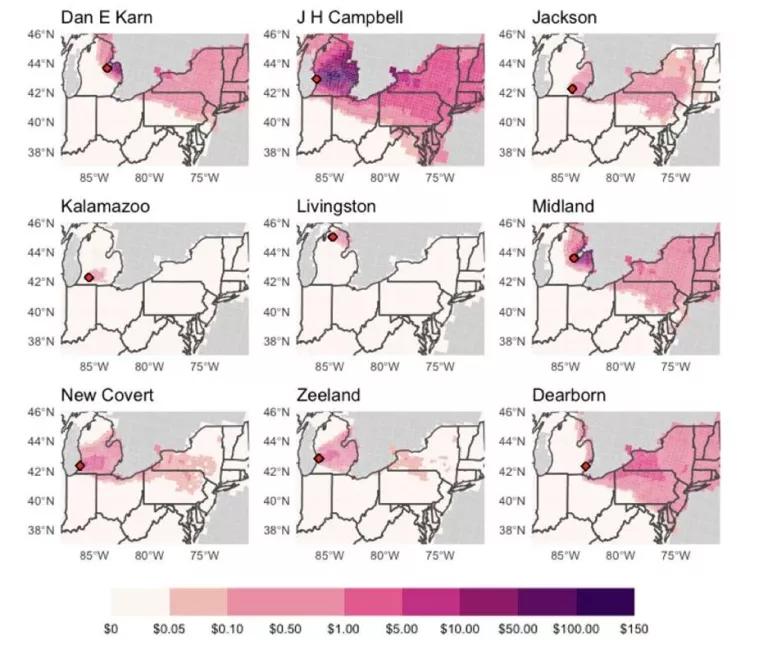
Public health damages from pollution from Consumers Energy coal plants, including the J.H. Campbell Complex plant. This analysis, prepared by Dr. Kelsey Bilsback, expert witness for the Clean Energy Organizations coalition, shows per capita health impacts in dollars per 100 people, with plant locations marked in red. The coalition partners—The Environmental Law & Policy Center, Ecology Center, Union of Concerned Scientists, and Vote Solar—submitted health testimony that informed this proceeding (view testimony, PDF page 122, testimony page 18).
Environmental Law & Policy Center
Michigan’s clean energy planning was robust and responsible
The notion that Michigan faces a reliability emergency this summer is simply false. The state, its utilities, and its regulators have spent years preparing for the Campbell plant’s retirement through a deliberate, transparent, and collaborative process.
Consumers Energy’s 2021 Integrated Resource Plan resulted in a landmark 2022 settlement, which NRDC and a broad coalition of Michigan stakeholders helped negotiate. The settlement committed Consumers to retire all of its coal plants by 2025, with Campbell as the largest and last. The settlement was specifically designed to maintain grid reliability while accelerating Michigan’s shift to clean energy.
As part of the agreement:
- Consumers Energy purchased a 1,200 megawatt (MW) natural gas plant.
- Consumers Energy preserved its plan to add thousands of megawatts of new solar capacity through competitive solicitations.
- Consumers Energy committed to new battery storage and clean energy through an all-source solicitation.
These combined investments ensure that Michigan has sufficient, reliable, and affordable electricity without Campbell.
Challenging DOE overreach: Flimsy justifications and smarter national solutions
The DOE’s order requires Consumers Energy and the Midcontinent Independent System Operator (MISO) to continue operating the Campbell plant through the summer, based on assertions that the state of Michigan lacks sufficient generation and that the MISO region faces shortages of electricity during that time. Section 202(c) of the Federal Power Act permits the department to order electricity generation if an emergency exists “by reason of a shortage of electric energy or of facilities for the generation or transmission of electric energy.”
However, no credible evidence supports the claim that an energy emergency exists in Michigan or the broader MISO region.
MISO’s latest Summer Readiness Assessment indicates that the region has nearly 2,400 MW of capacity above its required reserve margin, a cushion designed to ensure reliability even under extreme conditions. The DOE’s order takes out of context comments from MISO that encourage the development of new generating capacity to falsely suggest an imminent state of shortfall.
Even more troubling, the order is not an isolated case. Just a week after the Campbell order, the DOE issued another Section 202(c) order at Constellation’s Eddystone power plant that burns oil and gas outside of Philadelphia. That order similarly lacked evidence of a genuine emergency. These two orders are an ominous beginning of a broader Trump administration effort to prop up fossil fuel plants under an executive order issued April 8. The DOE’s quick orders—based on flimsy evidence—portend a wave of unjustified, costly emergency orders this summer.
Federal energy policy should not be manufacturing emergencies to prop up outdated fossil fuel infrastructure. The DOE has many better tools to support a reliable grid and an abundant energy supply, such as supporting the development of new transmission projects to improve regional power sharing and to interconnect new generators and energy storage resources faster. The federal government should also work to address supply chain issues that delay clean energy deployments, expand demand flexibility to reduce peak demand and enhance grid stability, and encourage large new loads, such as data centers, to build their own clean generation and avoid stressing local grids.
These are the solutions that serve the public interest—not artificially prolonging the life of aging coal plants at great public cost.
Michigan must stay the course and push back
Michigan must stand firm and continue pursuing a clean, affordable, and reliable grid that protects both ratepayers and public health. Our energy future should not be dictated by political decisions from Washington, D.C., that ignore the state’s careful planning and progress.
State officials must remain focused on achieving least-cost reliability through renewables, battery storage, and transmission upgrades. These investments not only lower costs for families and businesses, but they also reduce the pollution that disproportionately impacts low-income communities and communities of color.
Michigan leaders must also be prepared to fight back against the DOE’s order:
- State agencies, the attorney general’s office, and legislative leaders should continue to oppose this federal intrusion, which threatens the health of Michiganders and will raise their electricity costs.
- Michigan must make clear that decisions about its energy future belong to Michigan—not to Washington.
- The state should vigorously defend its clean energy progress and prevent Michigan ratepayers from being forced to subsidize an unnecessary and costly coal plant this summer.
Conclusion: A moment for Michigan leadership
This is a pivotal moment for Michigan to stand strong. The state has demonstrated leadership in planning a clean, reliable energy future. It must not allow federal political interference to derail this progress.
The Campbell order is a bad solution to a nonexistent problem. It imposes real financial and public health harms on Michigan residents. The order undermines state authority over electricity generation resources and sets a dangerous precedent for manufactured emergencies that disregard careful planning by states and utilities for an affordable energy transition. The DOE should reverse this misguided order and refocus its efforts on real solutions that enhance reliability and affordability for all Americans.
Related Blogs
The EPA Cooks the Books in Trying to Cook the Planet

Political Control of Research Funding Threatens Sound Science
