
Break Up with Your Gas Utility
The hundreds of millions of dollars that gas utilities plan to spend to replace gas pipelines could instead go toward helping customers transition to clean energy—all while cutting bills.

Workers replacing old gas pipes in Detroit

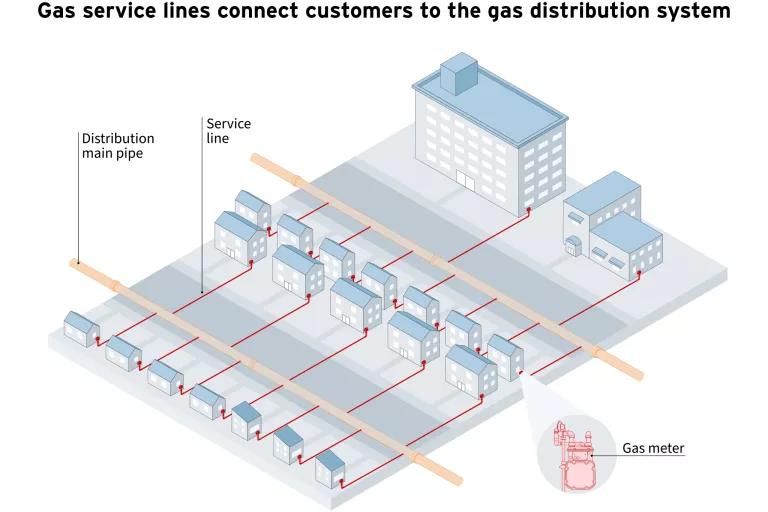
Gas bills across the United States are soaring, gas use is declining, and states are endeavoring to transition off of fossil fuels by at least 2050 to address climate change. Yet, every year, gas utilities spend billions of their customers’ dollars replacing the pipelines—called “service lines”—that connect individual homes and businesses to the gas system.
That money could instead go toward helping customers who want to transition to clean, efficient electric appliances while saving all gas customers millions of dollars. The way this would work is simple: Each time a service line comes up for replacement, the gas utility would offer the impacted household an incentive to electrify, which would be sized to cost less than replacing the pipeline.
Decision-makers in New York have already approved a program like this, and utility regulators in California and Colorado are now considering similar proposals. California’s Home Energy Choice Act (Assembly Bill 2313) would establish this type of program statewide. More than ever, households deserve a choice in whether to stay reliant on the gas system or transition to cleaner, healthier appliances.
Why your gas bill is going up
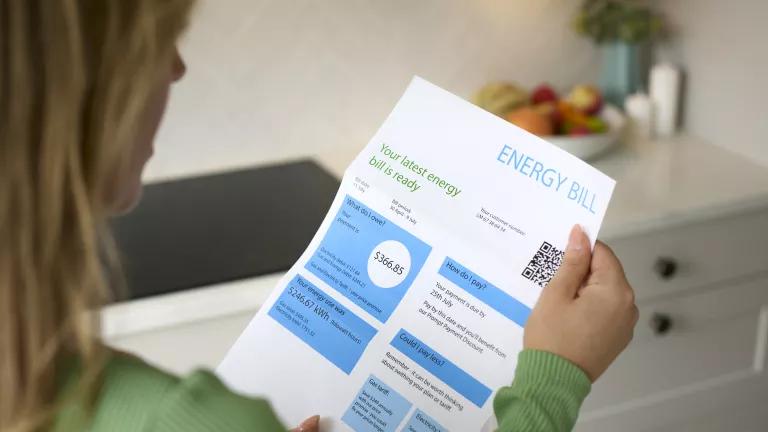
Gas utility bills are on the rise, even though household gas use is falling. Over the past year alone, gas bills increased nearly 11 percent nationwide, and approved and requested gas rate hikes would add another $19 billion to bills by 2028. Most of these cost increases are driven by investments in gas infrastructure, like pipelines, with each pipe replacement locking customers into decades more of costs and climate pollution.
Today, about two-thirds of household gas bills cover infrastructure costs rather than the cost of gas itself. Gas infrastructure costs have nearly doubled since 2011, with U.S. gas utilities spending more than $49 billion on pipelines and other construction in 2023 alone. Gas utilities do not profit from selling gas, but they earn a profit of about 9 percent per year on every dollar of infrastructure costs on their books. In essence, these investments function like a very expensive loan to customers: A $1 million pipeline investment, for example, can cost customers more than $3.8 million, once you factor in the profit collected from customers over the pipeline’s five- to six-decade lifetime.
Service line replacements comprise a significant portion of infrastructure spending. Every year, utilities replace hundreds of thousands of gas service lines at a cost of about $7,000 to more than $32,000 per home. Next year, service line replacements across PG&E’s territory alone would commit its gas customers to more than $600 million in pipeline costs (in 2025 dollars), according to NRDC’s Non-Pipeline Alternatives Cost Analysis Tool. These costs would be collected through about 2080, despite California’s goal of net zero emissions by 2045. Yet, today, when a household’s gas pipeline comes up for replacement, the utility does not give them a choice to switch off of gas—it simply replaces the pipeline and charges all gas customers for this cost.
Ending the toxic relationship
Gas customers deserve better. They should not be automatically locked into costly, polluting pipeline replacements, especially as states increasingly transition to cleaner, healthier electric technologies to clean the air and cut climate emissions. State regulators, who are tasked with keeping bills affordable, can act by requiring gas utilities to give households the option to switch to electric appliances rather than have their pipeline replaced by default.
Here’s how it would work: Every time a gas service line comes up for replacement, the utility would reach out to the customer and offer them an incentive to switch to clean electric appliances instead. The incentive would be sized to reduce lifetime costs compared to the pipe replacement that would otherwise take place, thus saving all gas customers money in the process. A major source of these savings is the avoided pipeline maintenance costs and utility profits.
For example, Sierra Club and NRDC’s proposed program for PG&E would save its customers about $20 million (2025 dollars), while offering households an incentive of $17,500 to electrify instead of having their service line replaced. Our proposal in Colorado would save Xcel Energy customers $3.5 million (2025 dollars). These savings are especially important as states transition away from gas, since any long-lived pipeline investments made today are likely to be shouldered by a dwindling number of gas customers in the future.
The future is electric
Customers who choose to electrify rather than having their pipeline replaced will benefit from access to highly efficient, electric heat pumps, which provide both heating and cooling. Transitioning to electric appliances also improves home health by eliminating the in-home air pollution caused by burning gas indoors, and home electrification cuts climate pollution for everyone. Service line alternative programs can also lay the groundwork for projects that avoid pipeline replacements at a neighborhood scale, which, as we’ve discussed before, can unlock billions of dollars in savings.
New York has already begun implementing an Energy Exchange Program that redirects gas pipeline costs to lower-cost electrification incentives. Decision-makers in California and Colorado are considering similar policies and should take decisive action to adopt NRDC and partners’ regulatory proposals in PG&E’s general rate case and Colorado’s gas infrastructure plan. The California legislature should also pass the Home Energy Choice Act (AB 2313)—introduced by Assemblymember Marc Berman and cosponsored by NRDC and Earthjustice—which would establish this cost-saving, climate-forward program across all of the state’s investor-owned gas utilities.
Data from seven states show that gas bills have gone up 8 percent per year over the past five years, far outpacing inflation. This is driving people into utility debt. In Illinois for example, households are more than $61 million behind on their gas bills. Meanwhile, U.S. utility CEO pay is up, increasing by $2.7 billion between 2017 and 2021. In most parts of the country, customers do not have a choice over which monopoly utility provides their gas service. But households should at least have a choice in whether to stay dependent on a polluting, costly pipeline system or transition to cleaner, more affordable alternatives.
Related Blogs
California Is Done Paying for Pipelines That Residents Don’t Want

Demolition Derby Deregulation That’s Too Much, Even for Industry
