
Decarbonization: Why We Must Electrify Everything Even Before the Grid Is Fully Green
To decarbonize and fight climate change, electrification and clean energy development must happen together—and fast.
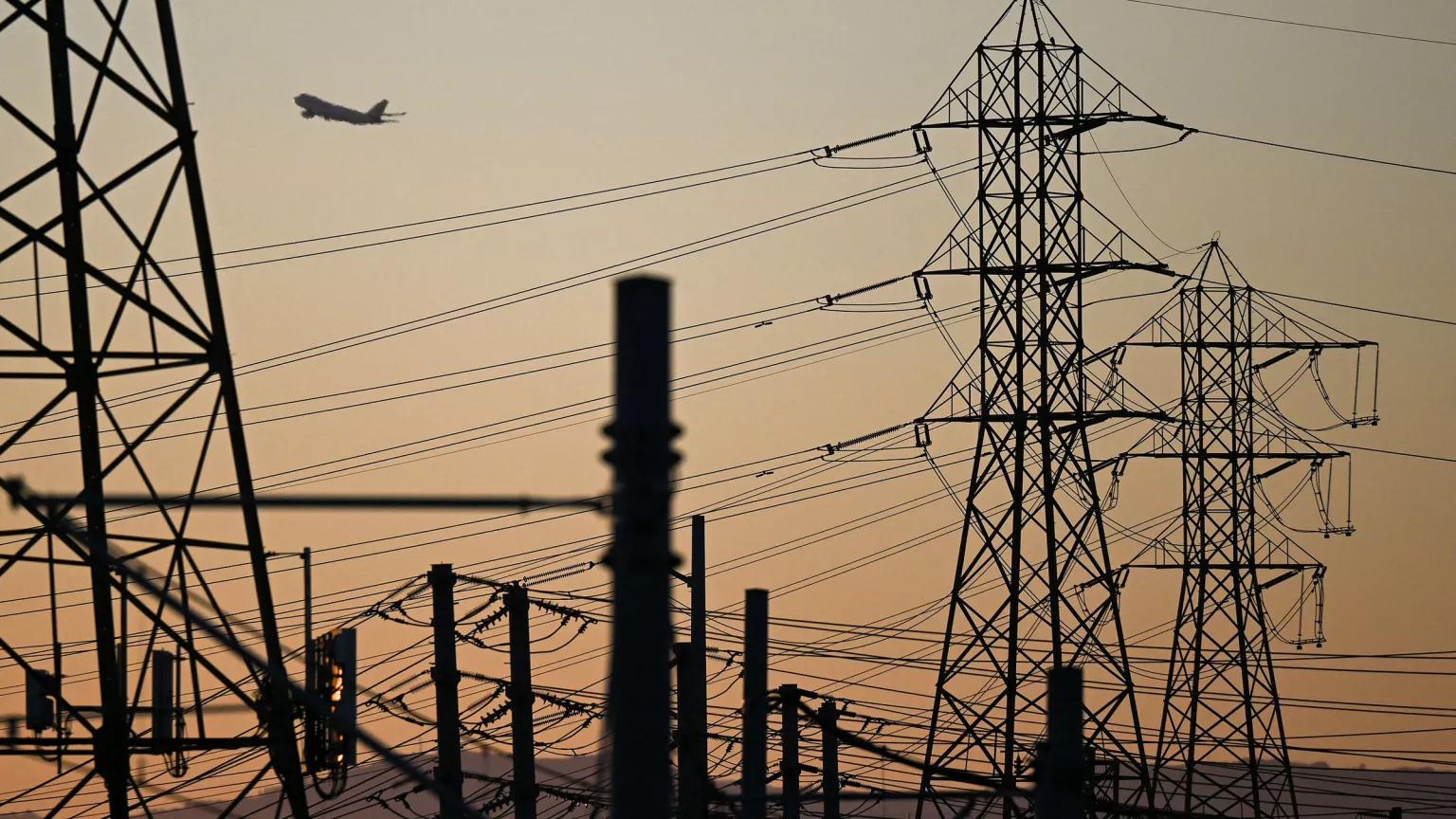
In August 2022, California announced a statewide electricity Flex Alert, urging conservation to avoid blackouts and grid outages.
Patrick T. Fallon/AFP via Getty Images

You’ve probably heard by now that “the future is electric”: out with the gas furnaces and water heaters, in with energy-efficient electric vehicles (EVs) and induction stoves. And that transformation away from fossil fuels and toward a greener tomorrow can’t come soon enough. To put a point on it, we need to decarbonize everything from our homes to the power grid in order to hit net-zero emissions by 2050. So far, this is one of the best ways to help keep global warming to no more than 1.5 degrees Celsius and rein in the worst of climate change.
But what does making this shift really entail?
First, a couple of definitions. Decarbonization refers to the process of reducing or eliminating carbon emissions from a given technology or sector, with the focus being on the biggest polluters, like transportation, buildings, and power. It’s a massive undertaking—though one that’s on its way, despite recent setbacks in federal energy policy seeking to keep the country hooked on oil, gas, and coal. Electrification, meanwhile, requires ditching technologies that run on these dirty fossil fuels and swapping them out for alternatives that run efficiently on electricity. It also means generating all that electricity from clean power sources.
That might have you asking if we should be getting more of our power from renewable energy sources before we start looking to plug everything in? The short answer is that we need to move full steam ahead with both, simultaneously. Let’s look at why.
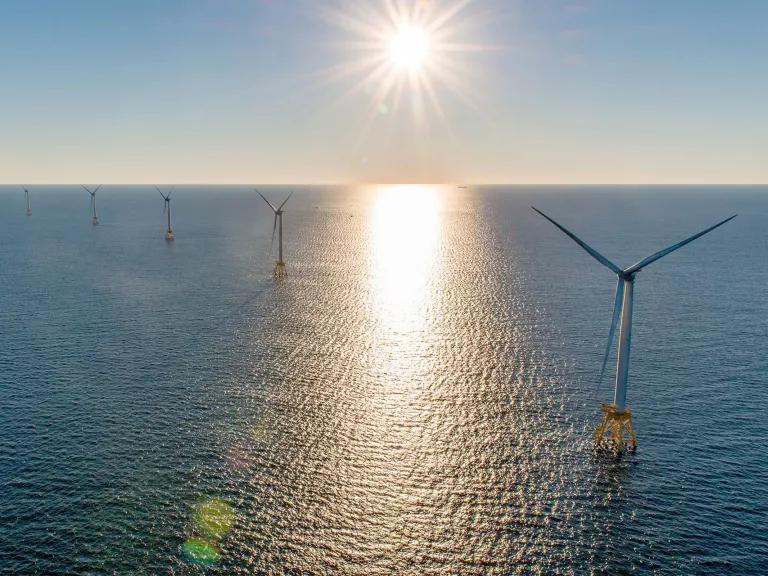
Constructed in 2015, Block Island Wind Farm served as the first offshore wind farm in the United States.
Courtesy of Deepwater Wind
Why does electrification need to happen alongside clean energy growth?
There’s an understandable, though ultimately unfounded, concern when it comes to decarbonization. It goes like this: If we electrify too quickly without ramping up the production of clean energy first, we run the risk of unintentionally increasing emissions. That’s because the increased demand for electricity could actually require burning more fossil fuels in the short term.
But this view ignores the projected pace of clean energy growth. In the first four months of 2026, renewables generated 30 percent of the entire nation’s electricity, and these clean power sources have seen 10 consistent years of growth through 2025, according to the U.S. Energy Information Administration. The growth also spans across all 50 states. Even with the Trump administration pulling back from renewable development, the economic draw of clean energy is hard to resist, including in rural America. So though a fully decarbonized grid seems like a far-off goal, it is actually not generations away.
Waiting until we hit 100 percent clean energy to move forward on electrification also ignores just how long full electrification may take across a variety of sectors. A new car or home appliance can last for more than a decade. Hurdles also remain in making efficient electric technologies easily available and affordable across the entire country, which will require investment and serious policy shifts. “These are slow-moving systems,” says Alejandra Mejia Cunningham, director of NRDC’s clean buildings advocacy. “We simply don’t have time to do just one thing at a time.”
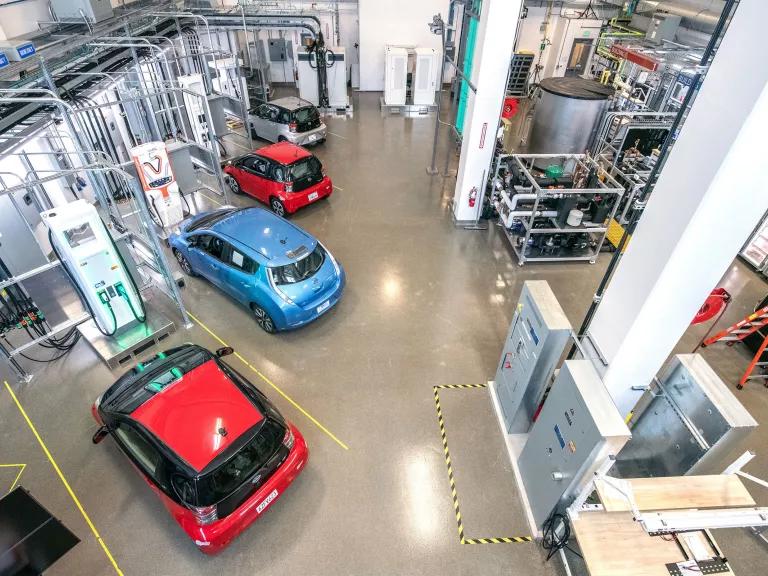
Electric vehicles in the Optical Characterization and Thermal Systems Laboratory at the National Renewable Energy Laboratory’s Energy Systems Integration Facility in Colorado. The lab’s EV grid integration research helps determine how EVs can be added to the grid, potentially combining building and EV charging.
Dennis Schroeder/NREL, 62132
Should you buy an electric vehicle if your electricity still comes from fossil fuels?
On average, replacing your gas-powered car with an EV in the United States will slash carbon pollution by about two-thirds when calculated over the car’s life span—even when accounting for the grid’s current makeup and the emissions associated with the vehicle and battery production. And as the amount of renewables on the grid continues to increase (coupled with the fact that EVs are more efficient in the first place), EVs on the road actually become cleaner over time. So driving one off the lot today is already the better choice.
Plus, you’re helping to build momentum for the transformation of the market, which will reduce prices for people beyond the early adopters. “There is a magnifying effect when you vote with your dollars and switch to an EV,” says Kathy Harris, NRDC’s clean vehicles and fuels advocate. “Policymakers and manufacturers alike will see this is where America wants to go.” Even with the early termination of the federal EV tax credit, drivers are still finding ways to swap out gas-powered cars by pivoting to more affordable used EVs.
That continued consumer interest will, in turn, also help speed up the deployment of much-needed EV charging infrastructure and bring charging stations to underserved regions. And it builds on previous investments into EVs made by the historic Bipartisan Infrastructure Law.
What about electrifying your home appliances?
All homes and buildings should run on 100 percent clean power by 2050, which means ditching all fossil fuel appliances by then too. From that end goal, we can work backward. Appliances like gas-powered water heaters last at least a decade. Some building heating systems can last as long as 30 or even 50 years. “We need every new appliance to be both efficient and electric by the early 2030s because we don’t want to be ripping out perfectly useful appliances closer to 2050 in order to electrify,” Mejia Cunningham says. “We need to take advantage of the natural replacement cycle today.”
The good news is that electric heat pumps installed now (the highest-priority replacement because heating and cooling are far and away the biggest energy sucks for homes) will reduce heating-related climate emissions in every region of the country when assessed over the lifetime of the appliance. In some regions, the reduction could be as much as 72 percent. That figure only takes into account clean energy policies already committed to by law—not just what advocates are hoping for. When you also factor in the growth trajectory of renewable energy, we’re looking at nearly guaranteed emissions savings for home electrification projects you take on today.
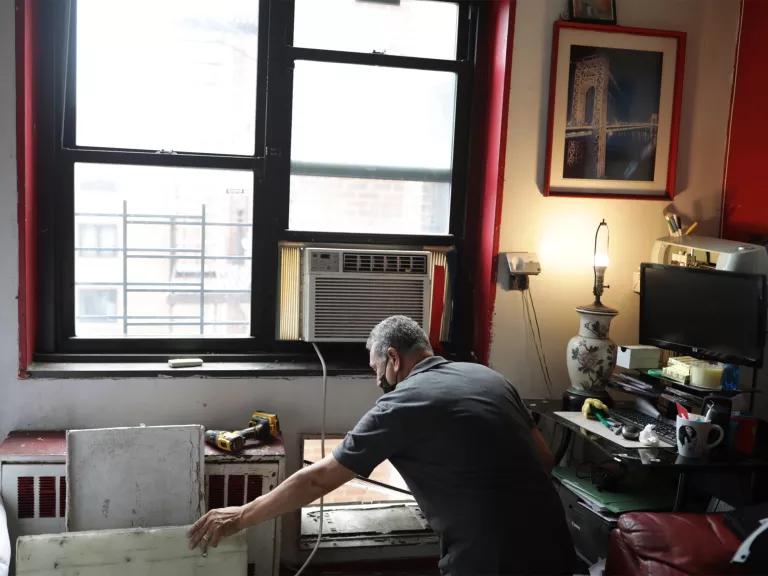
An Association for Energy Affordability crew member works on a weatherization project at an apartment in New York City.
Natalie Keyssar for NRDC
Could electrification worsen pollution in environmental justice communities?
Low-income communities and communities of color are more likely to live near fossil fuel facilities and bear the brunt of their health-harming air pollution. As the country decarbonizes and we come to rely more on our wall plugs and less on gas stations and heating oil, we have to ensure we don’t make that worse.
This is why equity has to be baked into our approach at every step of the way, Mejia Cunningham explains. Focusing on energy efficiency in tandem is a big piece of the equity puzzle, so that we’re reducing overall energy consumption and not increasing air pollution from power plants while we electrify. It also means finding ways to address “load flexibility”—that is, making sure we’re not all heating our homes and water at five in the evening when the sun is going down, which could spike energy use at particularly dirty “peaker” power plants that are often placed in environmental justice neighborhoods.
Upfront investments into clean energy and electrification should also be directed to low-income communities and communities of color so that they are not left bearing the cost of fossil fuel infrastructure at the end of its life. And the most impacted communities need seats at the table as state and local policy decisions are made about new electrification standards and their implementation.
Done right, decarbonization of our building, transportation, and power sectors promises to bring big benefits to environmental justice communities, from lower energy costs to reduced indoor and environmental air pollution exposure, thanks to burning fewer fossil fuels.
How can we all actively speed up decarbonization?
The brunt of the work must be done at the policy level—and it’s a lot of work. Wide-scale decarbonization means everything from overhauling local building codes to ensuring the grid can reliably and efficiently meet higher electricity demands. It also means investing in job training so that we have technicians ready to install and maintain new clean energy technologies. Basically, we must continue to advocate for these kinds of decarbonization initiatives at all levels of government.
But individual consumers hold a lot of power when it comes to decarbonization too. According to analysis from the electrification nonprofit Rewiring America, decisions made by individual households are collectively responsible for about 42 percent of all U.S. energy-related emissions—like our choice of which car to drive or appliance to install. Now, that doesn’t mean homeowners should just replace perfectly good heaters or that drivers should ditch working gas-powered cars, especially if they can’t afford to upgrade today, Mejia Cunningham explains. Instead, do some prep work so that your next big purchase can be one that’s good for the climate and your wallet.
Look into which EV models might work for your commute. For your home, consider an energy audit to help you prioritize electrification and efficiency upgrades. And save money where you can through state and local tax credits and rebates for climate-friendly purchases like solar panels and heat pumps. Finally, it’s worth remembering the power of your voice. The more you spread the word about your climate-friendly choices, the more you might inspire others to follow your lead.
This story was originally published December 1, 2022, and was updated with new information and links on July 6, 2026.
This NRDC.org story is available for online republication by news media outlets or nonprofits under these conditions: The writer(s) must be credited with a byline; you must note prominently that the story was originally published by NRDC.org and link to the original; the story cannot be edited (beyond simple things such as grammar); you can’t resell the story in any form or grant republishing rights to other outlets; you can’t republish our material wholesale or automatically—you need to select stories individually; you can’t republish the photos or graphics on our site without specific permission; you should drop us a note to let us know when you’ve used one of our stories.
How to Ditch the Biggest Fossil Fuel Offenders in Your Life
What Are the Solutions to Climate Change?
A Consumer Guide to the Inflation Reduction Act