
Antiquities Act & National Monuments Defense
Case Status
Last Update


San Gabriel Mountains National Monument, California
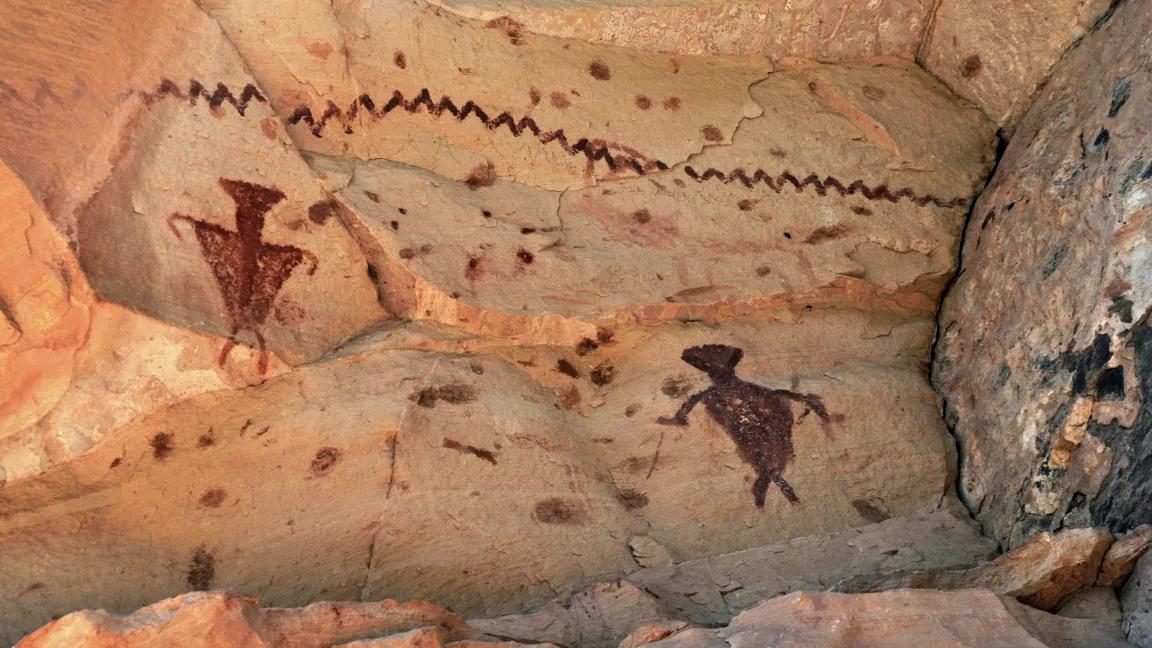
Painted rock art in Kanab Creek Wilderness in Baaj Nwaavjo I’tah Kukveni – Ancestral Footprints of the Grand Canyon National Monument in Arizona


The A.G. Gaston Motel, a key historic site within the Birmingham Civil Rights National Monument in Birmingham, Alabama

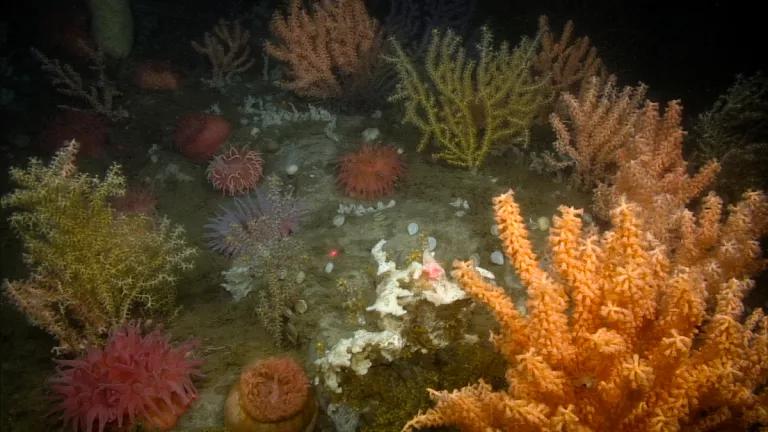
A bamboo coral bush in the Northeast Canyons and Seamounts Marine National Monument
The natural, scientific, and cultural heritage of the United States is written on its lands. For more than a century, presidents of both political parties have exercised the power given to them by Congress through the Antiquities Act of 1906 to protect special places in the public domain as national monuments.
In recent years, however, national monuments have faced threats on multiple fronts, risking the loss of irreplaceable resources that are often centuries—or even millennia—in the making.
What is the Antiquities Act?
The Antiquities Act of 1906 is a statute that presidents have used to protect iconic places, from the Statue of Liberty in New York to Muir Woods in California.
At the turn of the 20th century—as Indigenous cultural sites were looted and desecrated and keystone American species, from the bison to the passenger pigeon, were driven to extinction or near extinction—Congress became increasingly concerned about losing irreplaceable parts of America’s cultural, historical, and natural history.
At that time, the default rules for federal lands promoted resource extraction (such as mining) and even the lands’ conversion to private property. Legislators began to recognize the costs of this default regime.1 Congress could protect federal lands one by one by statute, as it had when it established Yellowstone National Park in the late 1800s. But that legislative process could be slow, with irreversible destruction occurring in the meantime.
Congress’s solution was to authorize the president, in certain circumstances, to act in its place. As codified at 54 U.S.C. § 320301, the Antiquities Act gives the president the power to:
- “[D]eclare by public proclamation historic landmarks, historic and prehistoric structures, and other objects of historic or scientific interest that are situated on land owned or controlled by the Federal Government” as national monuments, and
- “[R]eserve,” as part of the national monuments, land that is the “smallest area compatible with the proper care and management of the objects to be protected.”
Why are national monuments important?
1. National monuments help Americans better understand the world around them by promoting research and discovery.
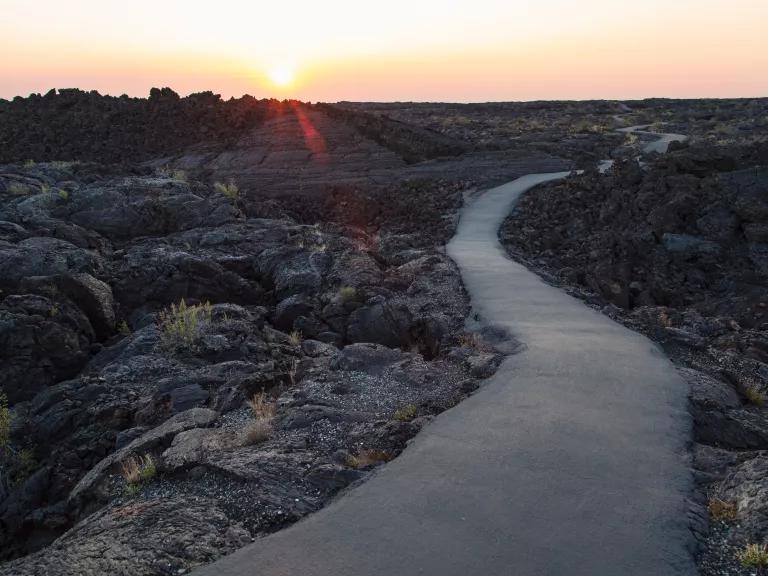
For decades, researchers have utilized national monuments as living laboratories and outdoor museums. Dinosaur National Monument allows visitors to view 1,500 dinosaur bones in place. At Grand Staircase–Escalante, scientists have discovered 15 new species of dinosaurs and 49 new species of bees. In Northeast Canyons and Seamounts (Northeast Canyons), scientists have found newly discovered species of slow-growing, deep-sea corals and the remains of wooly mammoths that lived 12,000 years ago. The remote, arid environment of Bears Ears preserves well over a thousand years of human history, including the villages, rock art, and road systems of multiple Indigenous cultures. Apollo astronauts even trained for their missions to the moon in Craters of the Moon.
2. The rich tapestry of national monuments tells this land’s story from its earliest inhabitants to the present
Some, like the many national monuments designated by President Theodore Roosevelt (who signed the Antiquities Act into law), protect natural resources like the primeval redwood forests of Muir Woods. Others, such as Bears Ears and Avi Kwa Ame, preserve Indigenous cultural heritage and give Tribes a say in stewarding the lands through Tribal management commissions.
National monuments to significant places in U.S. history commemorate the continuing enterprise of forming a more perfect union. Monuments such as Birmingham Civil Rights and Aleutian Islands World War II are sites of pivotal historical events and honor the courageous people who lived the country’s highest ideals. Others—such as Minidoka, the Springfield 1908 Race Riot, and Carlisle Federal Indian Boarding School—are tangible reminders of when those ideals faltered. Visiting any one of these unique places encourages people to turn their attention outward to the world around them and be a part of something bigger than themselves.
3. National monuments protect irreplaceable resources
A national monument proclamation immediately withdraws the protected land (subject to valid existing rights) from the operation of extractive laws, including hard-rock mining and oil, gas, and coal leasing laws, which could otherwise allow destructive commercial development. Although agencies must conduct environmental reviews before permitting destructive activity, these protections are insufficient on lands dense with historic or scientific resources. Moreover, a national monument proclamation establishes the “care and management of the objects to be protected” as the paramount goal for federal land-management decisions. With this protective mandate, national monuments have “preserved for all time” some of America’s national treasures, including historical and cultural sites, fragile living resources, and geological formations that were millennia in the making.

Devils Tower National Monument, Wyoming
Did Congress envision the president using the Antiquities Act to protect natural resources?
Yes.
Indeed, the first national monument proclaimed was a geological landform—Devils Tower in Wyoming. President Roosevelt signed the Antiquities Act into law and declared national monuments to protect a wide range of natural resources, including the primeval redwood forests in Muir Woods, the geological history of the Grand Canyon, and the habitat of the declining Roosevelt elk in the precursor to what is now Olympic National Park.2
The sponsor of the Antiquities Act, Representative John F. Lacey, stated in a speech that he introduced the Antiquities Act for the preservation of cultural sites and “places of scenic and scientific interest” and expressed approval that President Roosevelt had declared as national monuments places that protected natural resources, including the Petrified Forest and Mount Olympus.


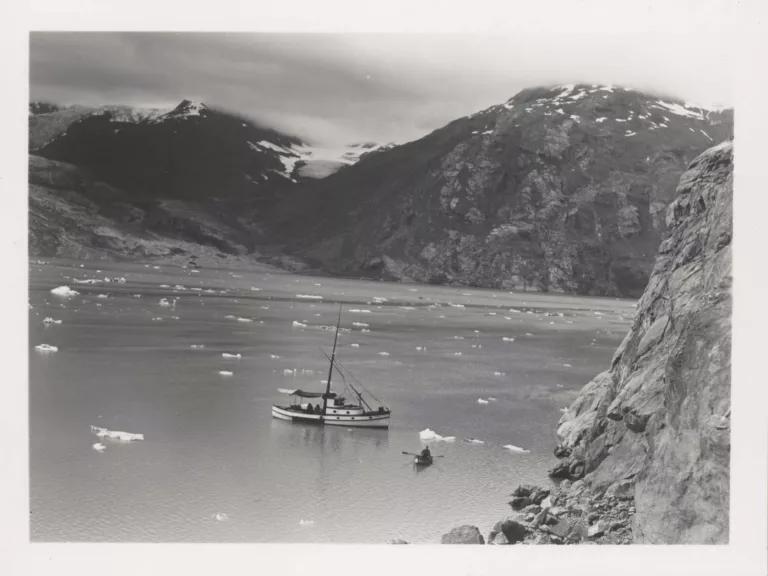
Clockwise from top left: An NPS employee at Brooks River Station at Katmai National Monument; President Theodore Roosevelt (center) at the Grand Canyon; Glacier Bay National Monument in 1940
Are large national monuments a new phenomenon?
No.
President Roosevelt’s national monument designations encompassed more than 1.5 million acres of land, including the 800,000-acre Grand Canyon National Monument (the precursor to today’s Grand Canyon National Park). Million-acre national monuments shortly followed, including Katmai National Monument (the precursor to Katmai National Park) by President Woodrow Wilson in 1918 and Glacier Bay National Monument (the precursor to Glacier Bay National Park) by President Calvin Coolidge in 1925.3
The Antiquities Act’s “smallest area” requirement has always been context-dependent. A few hundred acres of land may be sufficient to protect a national monument that is a single building. But from the statute’s earliest days, presidents have used the Antiquities Act to protect large landforms (like the Grand Canyon) or large collections of resources (such as the elk in Mount Olympus); in such instances, a large reservation of land is appropriate. Congress recognized that certain objects could be of interest on their own, but their geographic location, concentration, and relationship to one another and to the surrounding landscape could convey additional historically or scientifically meaningful information.4 Protecting the objects in situ can help us preserve their meaning and understand them in a richer, fully textured way.

A Hawaiian green sea turtle (honu) at Pearl and Hermes Atoll in Papahānaumokuākea Marine National Monument, Hawaiʻi
Is the protection of marine areas as national monuments new?
No.
Presidents have used the Antiquities Act to protect ocean areas since the 1920s, including Fort Jefferson off the coast of Florida in 1935, Glacier Bay off the coast of Alaska in 1939, Channel Islands off the coast of California in 1949, and Buck Island Reef off the coast of the Virgin Islands in 1962.5
The U.S. Supreme Court has stated that there is “no serious question” about the president’s authority to use the Antiquities Act in the ocean.6 Even Congress has demonstrated its approval of protecting ocean areas as national monuments.7 The Antiquities Act applies to all land “owned or controlled by the federal government.” Underlying all bodies of water is submerged land. So long as this land is owned or controlled by the United States (i.e., not belonging to a state or claimed by another entity), it and the overlying waters may be part of a national monument.
The earliest uses of the Antiquities Act in marine areas were close to shore. That is unsurprising: Our awareness of and ability to protect objects of historic or scientific interest in the ocean have grown over time. The Antiquities Act’s plain text has allowed its application to new areas over time as the U.S. map has changed. For example, a few decades after the United States acquired the U.S. Virgin Islands from Denmark,8 President John F. Kennedy designated Buck Island Reef National Monument to protect the coral reefs off the coast of St. Croix.9 It was not until 1983 that President Ronald Reagan laid claim to the United States’ exclusive economic zone (EEZ), the belt of ocean extending up to 200 nautical miles off the coast.10
Roughly 15 years later, the U.S. Department of Justice’s Office of Legal Counsel rendered a decision confirming that presidents could create national monuments there.11 Only after these steps did President George W. Bush create the first marine national monument in the EEZ—what is now known as Papahānaumokuākea Marine National Monument.12
National monuments have bipartisan support
President Roosevelt, a Republican, signed the Antiquities Act into law and declared objects of historic or scientific interest—from the habitat of Olympic elk to the Grand Canyon—as national monuments. Republican presidents like William Taft, Coolidge, and Herbert Hoover (a trained geologist) followed his example and declared national monuments such as Colorado, Craters of the Moon, and Arches (now also a national park).
Time and again, Congress has demonstrated its approval of national monument designations protecting a range of resources. When Congress overhauled and modernized federal public land law in 1976, it left the president’s Antiquities Act authority intact.13 Congress has also incorporated national monuments into important land management systems whose goals are to “protect” cultural, natural and historic objects for “future generations.”14
And Congress has even enhanced protections for specific national monuments. Since 1996, Congress has appropriated $70 million and added 200,000 acres of land to the Grand Staircase–Escalante National Monument.15 Congress’s approval is unsurprising because support for national monuments among the public is high. Recent polling shows that the majority of Utahns (whose state government is suing to dismantle Grand Staircase–Escalante and Bears Ears national monuments), regardless of political party, support maintaining national monuments’ current boundaries and the president’s authority to designate new ones.
National monuments have long-standing legal support
The Supreme Court, on multiple occasions, has affirmed the president’s authority to protect a variety of natural resources as national monuments—often at the urging of Republican administrations.
These cases include:
In 1920, the Court rejected a prospector’s argument that President Roosevelt lacked authority to declare the Grand Canyon a national monument after the government invalidated his mining claim. The Court explained that the Grand Canyon was an object of scientific interest and “affords an unexampled field for geologic study.”16
In 1976, the Court unanimously stated that a “pool…and its rare inhabitants,” the endemic desert pupfish, were “objects of historic or scientific interest” and protected by the Death Valley National Monument (now Death Valley National Park).17 At the urging of the Solicitor General’s Office under President Gerald Ford, the Court upheld an injunction (sought by President Richard Nixon’s administration) to prevent nearby landowners from taking actions that would drain the pool.
Even as recently as 2005, the Court affirmed its understanding that studying geological processes, habitats, and animals could be valid bases for a national monument. When the state of Alaska attempted to claim the submerged lands of Glacier Bay National Park, the Solicitor General’s Office under President George W. Bush successfully defended the federal government’s rights by arguing that the lands were already set aside for the protection of wildlife as a national monument at the time that Alaska became a state.18 The Court explained that reservation of the submerged lands was necessary to “safeguard the flora and fauna that thrive in Glacier Bay’s complex and interdependent ecosystem.”19
The Court further observed that an “essential purpose of monuments created pursuant to the Antiquities Act…is ‘to conserve…the natural and historic objects” and “to provide for the enjoyment of the same in such manner and by such means as will leave them unimpaired for the enjoyment of future generations.”20

What threats are national monuments now facing?
National monuments are under threat on multiple fronts. Over the course of his second term, President Donald Trump dismantled all five marine national monuments by lifting their commercial bans:
-
Pacific Islands Heritage Marine National Monument (formerly known as Pacific Remote Islands Marine National Monument) in April 2025
-
Northeast Canyons and Seamounts Marine National Monument in February 2026
-
Marians Trench, Rose Atoll, and Papahānaumokuākea Marine National Monuments in June 2026
President Trump also signed two presidential proclamations on July 13, 2026, shrinking Bears Ears and Grand Staircase-Escalante National Monuments in Utah by just over 2.9 million acres. This is the second time the President Trump has issued proclamations attacking these two monuments, but the cuts are even more drastic this time.
Moreover, national monument opponents are looking to the courts to advance their agenda. Multiple such cases are currently pending: two challenging President Biden’s restoration of Bears Ears and Grand Staircase; one challenging President Biden’s restoration of Northeast Canyons; and one challenging President Biden’s creation of Chuckwalla National Monument. These cases all argue that most types of natural resources are not “objects of historic or scientific interest” that can be protected as national monuments and that the land reserved does not meet the “smallest area” requirement. The challenge to Northeast Canyons also argues that marine national monuments are categorically improper.
If successful, these lawsuits could not only invalidate the national monuments challenged but also limit future presidents’ ability to protect natural resources within national monuments. NRDC—alongside Indigenous Tribes, state governments, and other environmental organizations—has been involved in these lawsuits to protect both the special places at issue and national monuments more generally.
Finally, there is a small threat that Congress could limit presidents’ authority to create new national monuments or change the boundaries of existing ones. Contrary to national monument opponents’ characterizations, the president’s Antiquities Act authority is not boundless; Congress can and has played an active role in land management. This role includes not only occasionally intervening when it disagrees with a president’s decisions21 but also enhancing protections for national monuments when appropriate.

Have there always been so many legal challenges involving national monuments?
No.
As explained above, presidents of both parties, Congress, and the Supreme Court have expressed their approval of national monuments for more than a century. Despite this long-standing, bipartisan, multibranch consensus, national monument opponents have launched an aggressive legal campaign against the Antiquities Act in recent years. Their legal arguments are not novel, and they are flatly at odds with the settled law described above.
Stare decisis—the principle that courts should follow their prior decisions—usually prevents the proliferation of lawsuits seeking to overturn settled law when the Court’s composition changes. The Supreme Court in recent years, however, has overruled several notable precedents, making litigants who want to challenge well-established precedent more hopeful that the Court may do the same in their cases.
In addition to being more willing to revisit its prior decisions, a Supreme Court majority has embraced the “major questions doctrine,” and several justices have expressed receptiveness to the nondelegation doctrine, which now feature prominently in litigants’ challenges to national monuments.22 Moreover, in 2021, Chief Justice John Roberts issued a non-precedential statement saying that, while he agreed with the Court’s decision not to hear a case where all other courts upheld a national monument designation, he had questions about the “scope of the objects that can be designated under the [Antiquities] Act, and how to measure the area necessary for their proper care and management.”23
Since Chief Justice Roberts’s statement—which observed that the Court “may be presented with other and better opportunities to consider this issue”24—lawsuits challenging national monument designations have proliferated.

The Statue of Liberty National Monument in New York Harbor
Is there anything I can do to help support national monuments?
Yes.
The current debate around national monuments means that decision-makers are interested in hearing from their constituents about whether and how national monuments improve their lives. There are tools available to make your voice heard.
You can contact elected officials to let them know you support national monuments. For members of Congress, you can tell them that you oppose bills that would limit the president’s Antiquities Act authority or that would dismantle existing national monuments.
Although city, county, and state officials do not control decision-making over national monuments, federal officials are often interested in their views about national monuments in their jurisdictions. If you live near a national monument, you can let your local officials know you oppose any efforts to dismantle it. You can also consider writing a letter to the editor for your local newspaper explaining how its dismantling would harm you and your community.
What is NRDC doing to protect national monuments?
NRDC has been working alongside Tribal nations, local partners, and other environmental groups to defend national monuments. During the first Trump administration, NRDC challenged all three of President Trump’s actions to dismantle national monuments: Bears Ears, Grand Staircase–Escalante, and Northeast Canyons. NRDC also successfully intervened in and defended a challenge to Northeast Canyons before President Trump attempted to dismantle it.
Under the second Trump administration, NRDC has gone to court again to fight back against the Trump administration’s latest attempt to remove protections from Northeast Canyons, Grand Staircase-Escalante, and Bears Ears.
Fighting for our national monuments in court

Conservation Law Foundation v. Trump (2026 Northeast Canyons defense)

Green v. Trump
Massachusetts Lobstermen’s Association v. Raimondo

Fehily v. Biden (Northeast Canyons and Seamounts Marine National Monument)
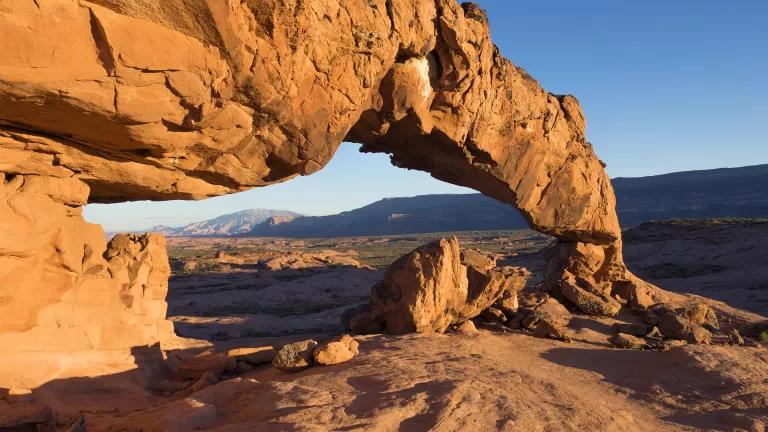
The Wilderness Society et al. v. Trump et al. (Grand Staircase-Escalante National Monument)
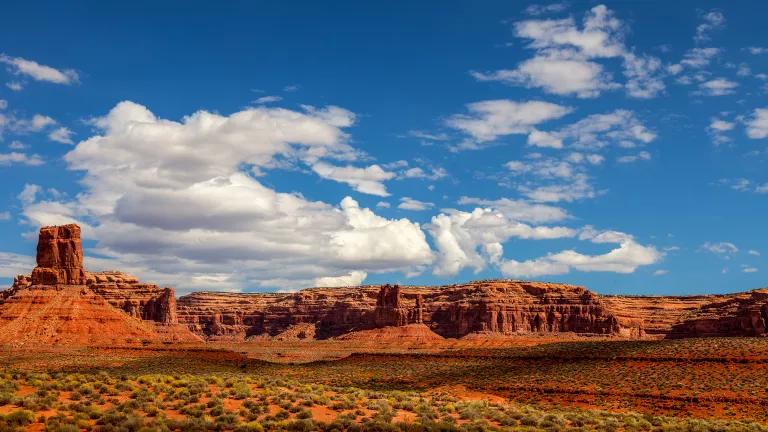
NRDC et al. v. Trump et al. (Bears Ears National Monument)
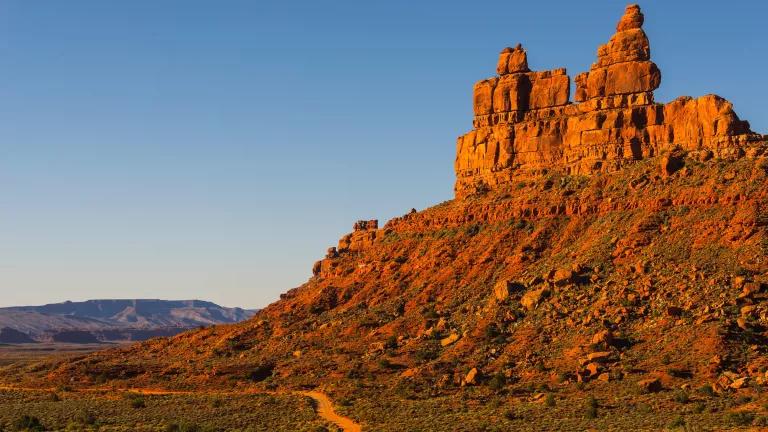
Garfield County et al. v. Biden et al. and Dalton et al. v. Biden et al. (Bears Ears and Grand Staircase–Escalante National Monuments)

Conservation Law Foundation v. Biden (Northeast Canyons and Seamounts)
When President Biden restored protections for all three national monuments, monument opponents filed lawsuits challenging his actions. NRDC successfully intervened in defense. The plaintiffs challenging Northeast Canyons voluntarily dismissed their complaint, but another set of plaintiffs has brought a new challenge. NRDC successfully intervened, and that case is pending. The challenges to Bears Ears and Grand Staircase are still pending. You can check our Court Battles page for updates on these lawsuits.
1 Iowa Congressman John F. Lacey, who sponsored the bill that became the Antiquities Act, lamented that “[t]he immensity of man’s power to slay imposes great responsibilities” and “[w]e are threatened with the probable extinction of many varieties of birds and beasts.” John F. Lacey, “Forestry—The Tree is the Mother of the Fountain,” delivered to the House of Representatives on June 9, 1902, reprinted in MAJOR JOHN F. LACERY MEMORIAL VOLUME 105-06 (1915).
2 Proclamation No. 793, 35 Stat. 2174, 2175 (1908); Proclamation No. 794, 35 Stat. 2175, 2175 (1908); Proclamation No. 869, 35 Stat. 2247, 2247 (1909).
3 All national monument acreage data comes from https://www.nps.gov/subjects/archeology/national-monument-facts-and-fig… except for the Grand Canyon National Monument’s original size. That information can be found in 1 Reports of the Department of the Interior for the Fiscal Year Ended June 30, 1909, at 43 (1910), https://babel.hathitrust.org/cgi/pt?id=hvd.32044090132077.
4 See H.R. Rep. No. 59-2224, at 3 (1906) (observing that archaeological resources are “of comparatively little value when scattered about in museums or private collections”).
5 Proclamation No. 2112, 49 Stat. 3430, 3430-31 (1935) (establishing Fort Jefferson National Monument off Florida’s coast); Proclamation No. 2330, 53 Stat. 2534, 2534-35 (1939) (expanding Glacier Bay National Monument to include submerged lands up to three nautical miles from Alaska’s coast); Proclamation No. 2825, 63 Stat. 1258, 1258 (1949) (expanding Channel Islands National Monument off California’s coast to include area within one nautical mile of islands’ shorelines); Proclamation No. 3443, 76 Stat. 1441, 1441-43 (1962) (establishing Buck Island Reef National Monument to protect coral reefs).
6 United States v. California, 436 U.S. 32, 36 (1978); see also Alaska v. United States, 545 U.S. 75, 103 (2005) (“It is clear. . . that the Antiquities Act empowers the President to reserve submerged lands.”).
7 See, e.g., Pub. L. No. 90-606, § 1, 82 Stat. 1188, 1188-89 (1968) (authorizing Biscayne National Monument off Florida’s coast); Pub. L. No. 93-477, § 301(1), 88 Stat. 1445, 1446 (1974) (expanding Biscayne National Monument); Pub. L. No. 96-287, § 201, 94 Stat. 599, 600-01 (1980) (fine-tuning boundaries of Fort Jefferson National Monument).
8 Convention between the United States and Denmark for Cession of the Danish West Indies, Aug. 4, 1976, U.S.-Den., 39 Stat. 1706.
9 Proclamation No. 3443, 76 Stat. 1441, 1441-43 (1962).
10 Proclamation No. 5030, 48 Fed. Reg. 10,605 (Mar. 10, 1983).
11 Administration of Coral Reef Resources in the Northwest Hawaiian Islands, 24 Op. O.L.C. 183, 183 (2000), https://www.justice.gov/file/146256-0/dl?inline=.
12 Proclamation No. 8031, 71 Fed. Reg. 36,443 (June 15, 2006).
13 H.R. Rep. No. 94-1163, at 29 (1976), as reprinted in 1976 U.S.C.C.A.N. 6175, 6203.
14 See 54 U.S.C. § 100101(a) (purpose of National Park System, which includes all national monuments managed by the National Park Service); 16 U.S.C. § 7202(a) (purpose of the National Landscape Conservation System, which includes all national monuments managed by the Bureau of Land Management).
15 Agreement to Exchange Utah School Trust Lands Between the State of Utah and the United States of America, as ratified by Pub. L. No. 105-335, §§ 3, 7, 112 Stat. 3139,3139-41; Automobile National Heritage Area Act, Pub. L. No. 105-355, § 110, 112 Stat. 3247, 3252-53 (1998); Department of the Interior and Related Agencies Appropriations Act, 2000, Pub. L. No. 106-113, app. C, tit. VI, § 601, 113 Stat. 1501, 1501A-215.
16 Cameron v. United States, 252 U.S. 450, 455-56 (1920).
17 Cappaert v. United States, 426 U.S. 128, 135, 141-42 (1976).
18 See Oral Argument at 43:10-:49, Alaska v. United States, 545 U.S. 75 (2005) (No. 128-Orig.), https://apps.oyez.org/player/#/rehnquist10/oral_argument_audio/21764.
19 Alaska, 545 U.S. at 102.
20 Id. at 103 (quoting what is now 54 U.S.C. § 100101(a)).
21 Congress has addressed concerns big and small from prohibiting the president from designating new national monuments in particular states, see 54 U.S.C. § 320301(d) (reserving for Congress the authority to establish or expand national monuments in Wyoming), to tweaking the boundaries of a national monument a by a few acres, see, e.g., Omnibus Public Land Management Act, Pub. L. No. 111-11, § 2604, 123 Stat. 991, 1119-20 (2009) (removing roughly 25 acres from Grand Staircase–Escalante to exclude a ranch).
22 Under the “major questions doctrine,” the Supreme Court requires “clear congressional authorization” for an executive branch action it views as asserting power of great “economic and political significance” and “representing a transformative expansion in…regulatory authority.” West Virginia v. EPA, 597 U.S. 697, 721, 723, 724 (2022). The Supreme Court has not struck a statute down under the nondelegation doctrine since 1935. See Gundy v. United States, 588 U.S. 128, 146 (2019). If revived, the nondelegation doctrine would allow courts to invalidate a law that they view as delegating too much legislative power and providing insufficient guidance to the executive branch. See id. at 157-59 (2019) (Gorsuch, J., dissenting).
23 Massachusetts Lobstermen’s Ass’n v. Raimondo, 141 S. Ct. 979, 981 (2021) (Roberts, C.J., statement respecting the denial of certiorari).
24 Id.

Stop our wildlands & waters from being auctioned off to corporate polluters!
The Trump administration announced a plan that would allow companies to drill and mine with little oversight—with practically no say from the public. Plus, the Interior Department is looking to slash protections for several of our national monuments. Tell Interior Secretary Burgum to stop giving away our public lands and waters to corporate polluters!
RELATED CONTENT
NRDC Assessment of BAAJA, the 2026 Permitting and Transmission Bill

California’s 2026 Legislative Priorities: End-of-Session Wrap-Up
