U.S. Workers and Families Will Pay the Price for Trump’s Climate Denial
As country leaders gather for COP30, the world must keep climate progress moving and invest in the health, safety, and prosperity of people across the planet.

Media Contact
President Trump called climate change “the biggest con job ever” in a September address to the General Assembly of the United Nations in New York. Now, world leaders are regrouping in Brazil for annual global talks (COP 30) to discuss the next phase of international cooperation to confront the climate crisis.
In the face of unprecedented headwinds in the White House, it will be important for leaders outside of Washington, D.C., to keep moving forward. It’s not only critical to protect people worldwide from its growing impacts, but it is also the economic opportunity of a generation.
The good news is that the United States is bigger than Washington, and the world is bigger than the United States. The world is shifting to clean energy. It’s not a matter of “if" but "when," and which countries will lead the way and reap the economic reward.
The bad news is, under President Trump’s leadership, it likely won’t be the United States, despite the fact that the solutions to the crisis stand to deliver on his promises of lowering costs and boosting the U.S. economy. Just think: How will U.S. automakers compete in 10 years if most of the world is driving electric vehicles—and they aren’t building them?
Learn More

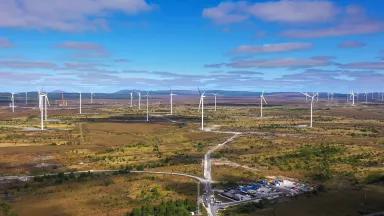

Fortunately, if you look at what’s happening across the United States and around the world, you see clean energy more often than not outcompeting dirty energy, full stop.
For the first time, renewable energy generated more power than coal in the first half of this year, led by new installations in India and China. In the United States, wind, solar, and advanced battery storage made up more than 90 percent of new electricity capacity over the past two years.
That’s in no small part because—in addition to being critical to addressing this crisis and protecting people’s health and safety—clean energy just makes good economic sense.
Wind, solar, and storage are the cheapest and quickest ways to meet our growing energy demand. They lower household energy costs and create jobs. Fossil fuels, meanwhile, are more expensive and take longer to come online.
During the past few years, America has been embracing clean energy and was beginning to reap the economic rewards.
But under President Trump, that progress hangs in limbo.
Perhaps in no other time in history have leaders in Washington been more determined to pull our nation backward in the fight against the climate crisis—tearing down lucrative clean energy industries to prop up dirty energy at every turn.
While that benefits an elite set of fossil fuel billionaires, it sidelines American workers and will raise energy costs for families across the country. In fact, a Princeton University study projects that Trump’s energy tax could cause the average U.S. household to spend an additional $430 a year on its energy bills by 2035.
It doesn’t have to be that way—and other countries can keep the world on course for a better future.
When world leaders regroup, they must be bold in both actions and words, on four important dimensions of this year’s climate talks.
First, countries are setting their national targets for cutting climate pollution through 2035. Last month, more than 50 announced updated plans, including most of the world’s biggest polluters. These targets are stronger in quality and scope than we’ve seen in the past, and they must be the floor, not the ceiling. Leaders must also turn these promises into clear action at home.
Second, countries should recognize that climate and nature are two sides of the same coin and must be tackled together. That means preserving land and forests that store and sequester carbon pollution. That also means providing finance so that countries recognize that trees are more valuable standing than being cut.
Third, leaders of all levels must do everything they can to better protect people and communities from the climate impacts that are already here. That includes better measuring of climate adaptation action, as well as expanding financing for those who are most in harm’s way but are least responsible for the climate crisis.
And finally, money matters. There is a credible, if narrow, path to achieving the finance goal set at last year’s COP of $1.3 trillion of investment in developing countries by 2035, even with the United States missing in action. But it will require wealthier countries, international financial institutions, and investors to step up—and importantly, putting the right mechanisms in place to get it in the hands of the people who need it. This is not charity; it’s a strategic investment that addresses the root causes of many of the crises we see daily, from the cost of living and supply chain disruptions to natural disasters, forced migration, and conflict.
By tackling this agenda, the world can keep climate progress moving—even without the United States—and invest in the future health, safety, and prosperity of people all over the world.
President Trump may slow the clean energy train down, but it is moving forward with or without him. All who see the clear and undeniable benefits are welcome aboard.
Related Content

Venezuela’s Oil Resources Are Vast (and Should Stay Underground)