Inclusive Economic Development and Justice: High-Quality Careers for All
To help advance just climate solutions, this page offers resources to support advocacy for safer working conditions and access to high-quality, family-sustaining careers.



Getty Images
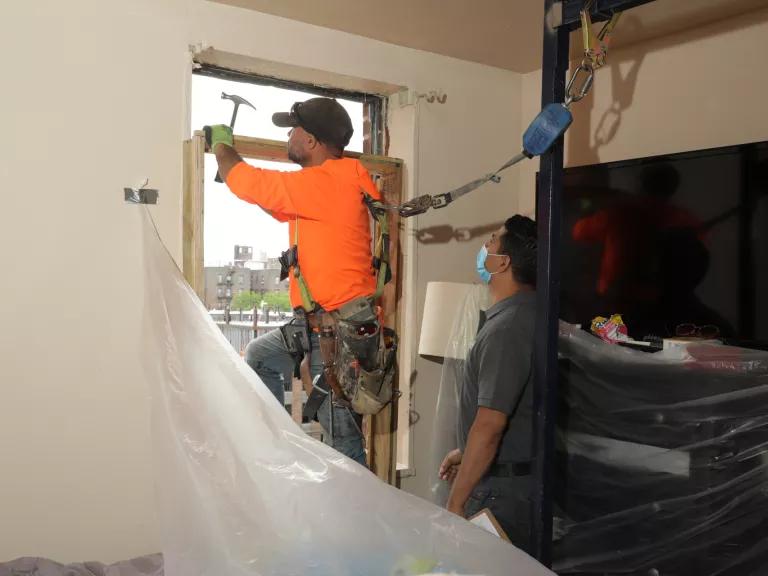
; 3) Natalie Keyssar for NRDCRacial justice, economic equity, public health, and climate action are inextricably linked. Considering the recent political assaults on climate progress and racial equity, using climate action as a lever for inclusive economic development is key to building a healthy, prosperous future for all. Since a strong workforce underpins a healthy, sustainable, and just world, NRDC is committed to advancing environmental policies that protect communities and create high-quality jobs—ones offering fair, family-sustaining wages, health benefits, paid sick and vacation leave, and career paths. These jobs must also be accessible to all—especially under-represented and disinvested communities—while providing a safe and healthy workplace that is free from discrimination, retaliation, heat illnesses, chemical or toxic exposures, and other hazards.
NRDC uses research, litigation, and policies to help advance a world where all people can thrive. For example, we advance stronger worker protections and enforcement of workplace safety laws to support the health and well-being of workers. We advocate for communities near polluting industries by litigating when companies break the law. We push for policies that advance high-quality jobs that not only provide equitable career opportunities and a safe workplace for everyone but also support communities wanting to transition to cleaner energy choices. We also ensure data is readily available and publicly accessible.
Effectively advancing economic inclusion, justice, and transition policies means partnering with affected workers, uplifting communities who are on the frontlines of these overlapping issues, and strengthening relationships with local and state governments that want to shift away from fossil-based economies to more sustainable energy. For example, NRDC is an active member of the BlueGreen Alliance, an organization that fosters cooperation between the nation’s largest environmental groups and labor unions to solve our shared workforce, equity, and climate challenges.
NRDC is also a signatory of the Platform for a Just Climate and an active member of the ongoing coalition that ensures communities most harmed by pollution and climate change are empowered to shape national climate policy. Supporting communities to create solutions for their needs and in alignment with equity principles is necessary to prevent displacement as well as ensure investments and benefits reach communities that have been underinvested in for decades.
Furthermore, building the workforce entails developing an accessible job pipeline for prospective workers who have dealt with systemic barriers to reach such employment. This can be achieved, for example, through two complementary approaches. First, high-quality apprenticeship programs—along with pre-apprenticeships where appropriate—provide learners with structured pathways to gain skills and employment. Second, “wraparound services” such as childcare support, transportation vouchers, mentoring, and soft skills development help remove barriers and ensure learners and prospective workers have the resources they need to succeed.
Environmental progress and racial justice are inseparable. Efforts to modernize buildings, rebuild infrastructure, build climate resilience, and remediate toxic sites must reflect the perspectives and experiences of affected communities. Embedding anti-racist principles into policy design is vital to developing solutions that create a more just and inclusive future while combatting climate change, protecting biodiversity, ensuring public health, and improving affordability.
Downloads
RESOURCES
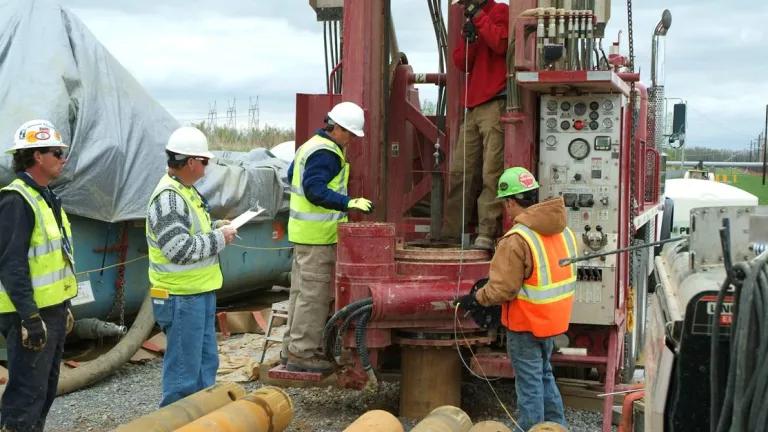
Moving from Uncertainty to Opportunity for Oil and Gas Workers
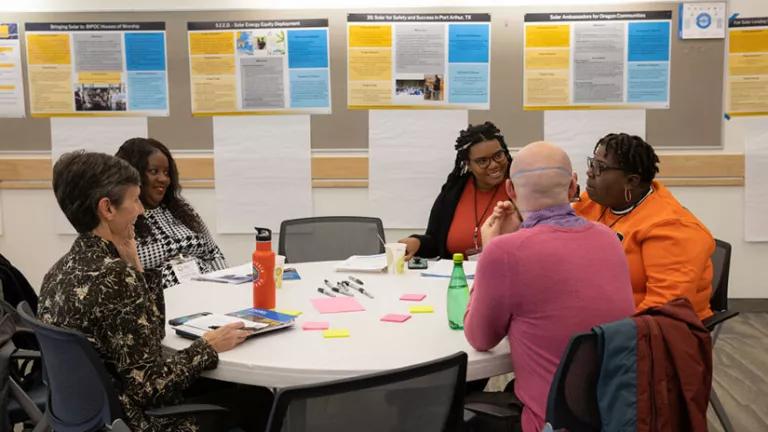
Communities First: Equity and Justice in the Just Transition

What the Newest Energy Jobs Report Says About the Clean Energy Economy
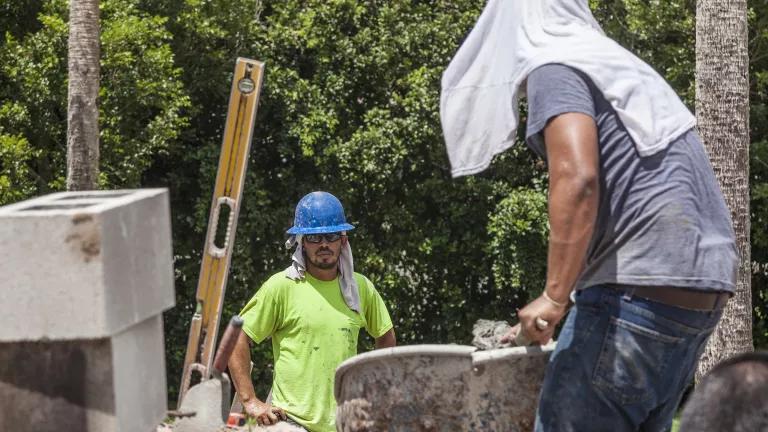
Occupational Heat Safety Standards in the United States

What Do Public Transit, Highway Maintenance, and Urban Density Have in Common? Union Jobs.
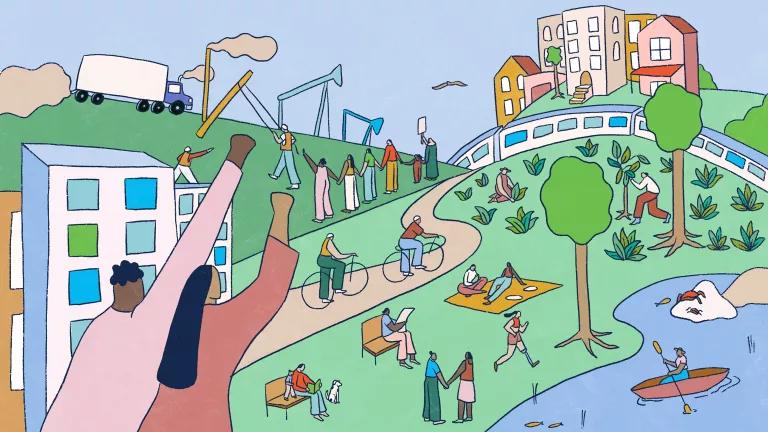
Environment, Equity & Justice Center

Not Just Talk: Next-Level Community Engagement in Renewable Energy
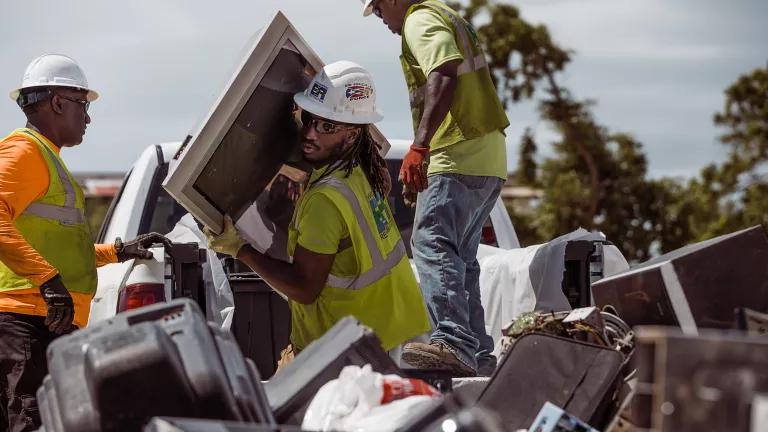
Doing the Dirty Work: Resilience Workers Deserve Better
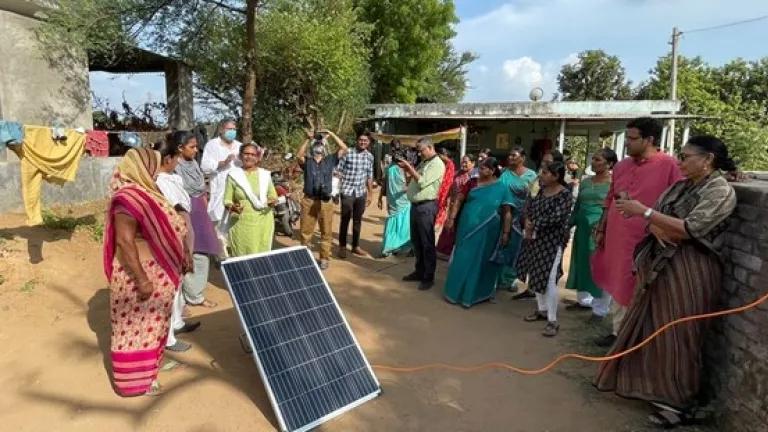
Jobs and Skilling: Training for the Clean Energy Transition