
Should Harmful Pesticides Come with Warning Labels?
As lawsuits over Roundup bloom and activists across the political spectrum push for safer foods, the issue of chemical company liability heads to the Supreme Court and beyond.
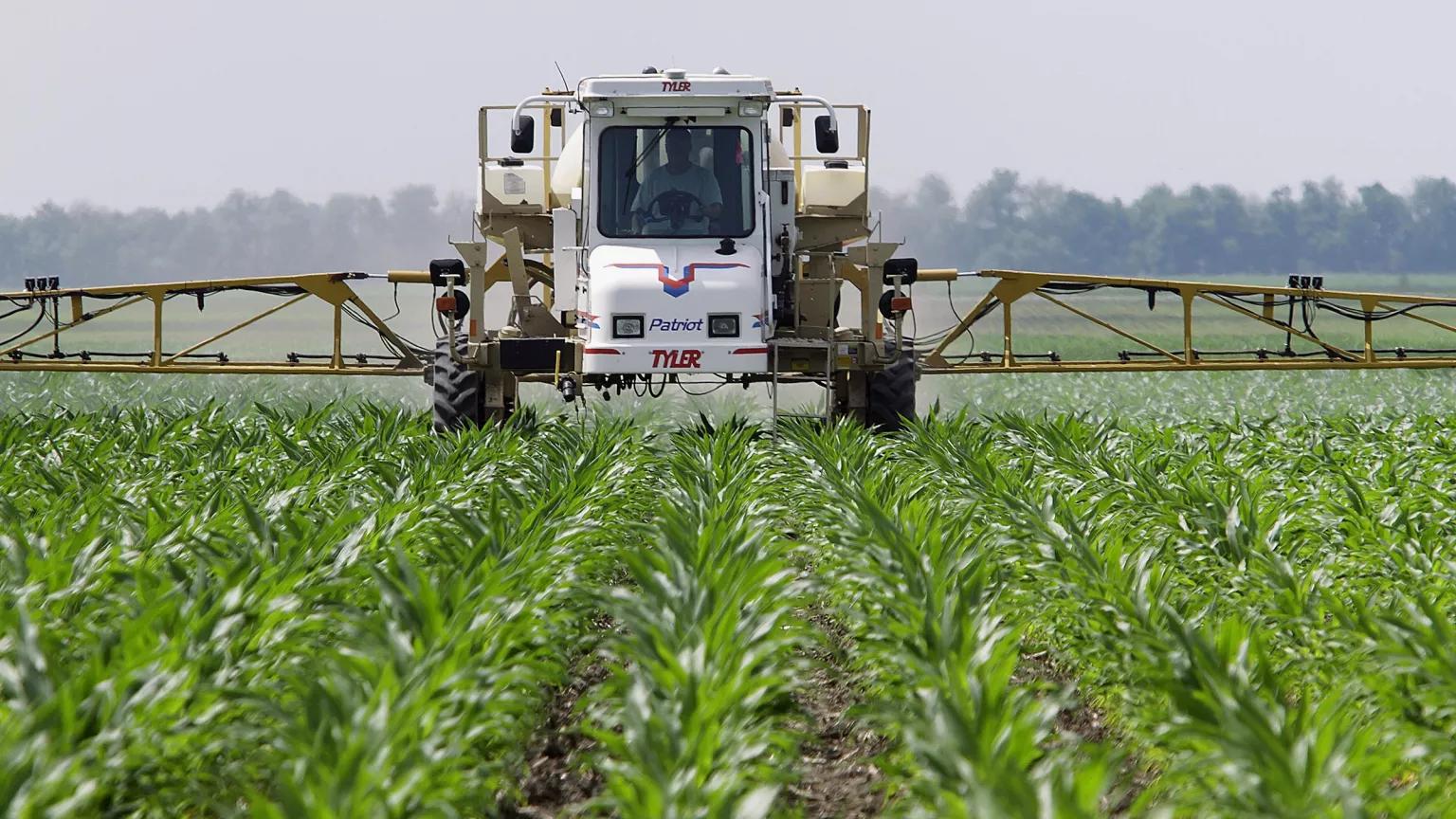
A cornfield being sprayed with glyphosate pesticide in Auburn, Illinois, June 1, 2010

Back in 2015, the cancer arm of the World Health Organization (WHO) came to a bombshell conclusion about the very popular pesticide glyphosate, a weedkiller sprayed in mass quantities across U.S. farmland. After a thorough scientific review, WHO classified glyphosate as a probable human carcinogen (just shy of the highest category of “known”), linked to blood cancers known as non-Hodgkin lymphoma.
In the decade since, thousands of people who were exposed to the chemical, which is found in Bayer’s Roundup, have sued the company after developing cancer. Though Bayer decided to no longer sell Roundup in stores for residential use, other household brands market products with glyphosate. Meanwhile, agricultural workers and commercial landscapers continue to apply the herbicide to millions of acres of the country’s farmlands, parks, golf courses, gardens, and playgrounds every year—harming people, pollinators, and entire ecosystems in the process.
“Glyphosate is basically the poster child for pesticide harms,” says NRDC staff attorney Lucas Rhoads. And yet, nowhere on the label will you find any warning from the manufacturer about these health risks.
This lack of transparency is now at the heart of a heated regulatory battle over whether chemical companies are culpable. Manufacturers are scrambling to stop a deluge of lawsuits and to block states from requiring companies to warn consumers of potential harm. In particular, corporations point to the lack of labeling requirements by the U.S. Environmental Protection Agency (EPA) as proof that they’re off the hook.
“These state ‘failure-to-warn’ claims are the primary way that consumers and workers have been able to hold big pesticide companies accountable,” Rhoads says.
Learn more

Big sums of money are on the line. In the decade since the WHO finding, Bayer, which acquired Monsanto in 2018, has paid more than $10 billion to people harmed by glyphosate exposure, with some individual claims netting billions in damages. The agrichemical giant also recently agreed to pay $7.25 billion to settle tens of thousands of active, Roundup-related lawsuits against it, as well as to cover future claims.
So, in a crusade to shirk responsibility and claim that their products are safe, Bayer and other corporate allies are taking up the issue in Congress, across state legislatures, and with the U.S. Supreme Court. In a recent executive order, the Trump administration threw its weight behind Bayer, mandating even more U.S. production of glyphosate.
“Bayer is trying to undermine the ability of folks to seek justice,” says Geoff Horsfield, legislative director with the nonprofit Environmental Working Group. “They’re trying to protect their bottom line while sowing as much doubt and disinformation as they possibly can.”
Fortunately, health advocates on both sides of the aisle are fighting for stronger pesticide protections and the public’s right to protect their health in spite of corporate interests.
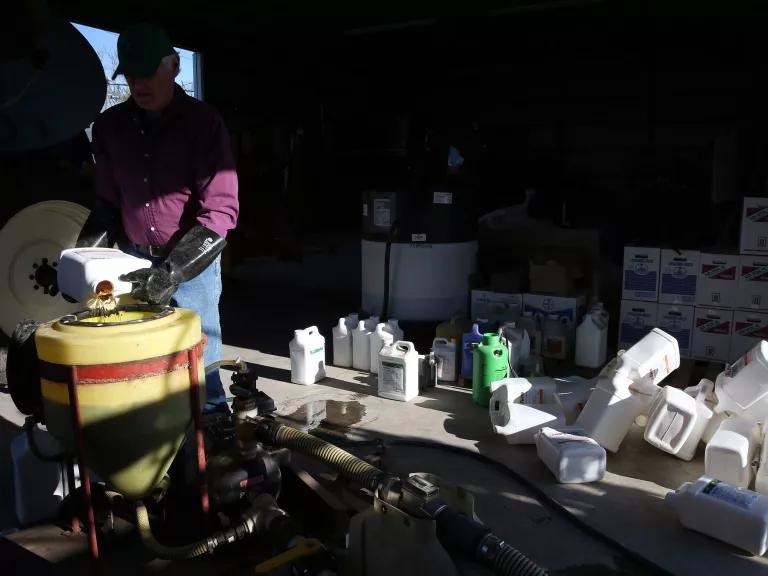
A farmer mixing a pesticide cocktail that includes glyphosate, to be sprayed on the soybean and corn fields at a farm in Hastings, Iowa
Who’s in charge of pesticide warnings?
For the 800-plus pesticide chemicals currently registered for use in the United States, the EPA evaluates environmental and health risks, oversees how they are used, and sets labeling requirements.
Because the EPA does not currently require manufacturers of glyphosate-containing products to alert customers to cancer risk on their packaging, companies claim that the federal labeling rules (or lack thereof) override any state requirements. However, federal pesticide rules under the Federal Insecticide, Fungicide, and Rodenticide Act have historically acted as a baseline—a regulatory floor, not a ceiling.
For decades, courts have affirmed the rights of states to build upon EPA requirements and to pass additional protective measures as they see fit. For example, California’s Proposition 65 requires products that contain certain designated chemicals to come with a warning label. Dozens of other states have also implemented rules around, say, which chemical pesticides can be sprayed near schools, as well as how close and when.
“As long as addendums are not directly conflicting with the EPA, states can protect their citizens and set unique pesticide applications that best fit their needs and local environments,” Horsfield says.
Consumers and workers who’ve been harmed can therefore pursue compensation at the state level through product liability and negligence claims.
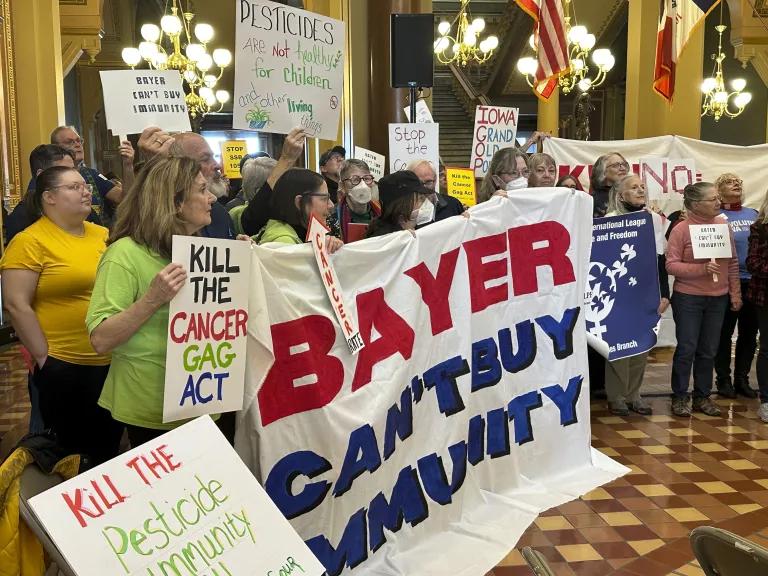
Protesters rallying against an Iowa Senate bill, proposed by Bayer, that would shield pesticide companies from cancer-related lawsuits, February 2025
From chlorpyrifos to glyphosate, states can’t wait on the EPA for pesticide safety
These state-level protections, and other avenues for legal redress, are particularly important given that the federal government notoriously drags its feet on pesticide regulations. “It’s extraordinarily difficult to get the EPA to take action, even when there’s really good information suggesting a pesticide is causing harm,” Rhoads says.
Take chlorpyrifos—a nerve agent developed during World War II but widely used as an insecticide since the 1960s. Despite dozens of scientific studies raising health concerns, it took 30 years of advocacy and legal battles brought by Earthjustice with NRDC and partners, including farmworkers and environmental health groups, to get the EPA to ban it in 2021. That ban, however, has yet to go into effect, due in part to the agency’s further stalling.
“There's a lot of work to be done on the EPA’s implementation of pesticide standards to make sure they account for health risks more fully and get these bad products off the market quickly,” says Katie Hobbs, NRDC’s director of federal affairs.
Not wishing to wait any longer, California, Hawaii, Maryland, New York, Oregon, and Maine went ahead and banned chlorpyrifos on food grown and sold in their states.
A similarly protracted battle is also playing out with glyphosate. Since first approving the chemical in 1974, the EPA has reassessed glyphosate’s safety multiple times. Most recently in 2020, the agency came to the specious conclusion that the chemical was “not likely to be carcinogenic to humans.”
“The EPA has basically bent over backward to avoid acknowledging its risks,” Rhoads says.
In fact, in response to a lawsuit filed by NRDC and other advocacy groups, a federal appeals court rejected the EPA’s assessment of glyphosate and is requiring a new evaluation of the chemical; one that follows the agency’s own risk-assessment guidelines.
Additionally, the scientific journal that published a 2000 study that had concluded glyphosate is safe—the same one that both Bayer and the EPA regularly referred to when defending the chemical—formally retracted its publication of the research earlier this year, pointing to unethical meddling by then manufacturer Monsanto. In a statement, the journal cited “serious ethical concerns regarding the independence and accountability of the authors of this article and the academic integrity of the carcinogenicity studies presented.”
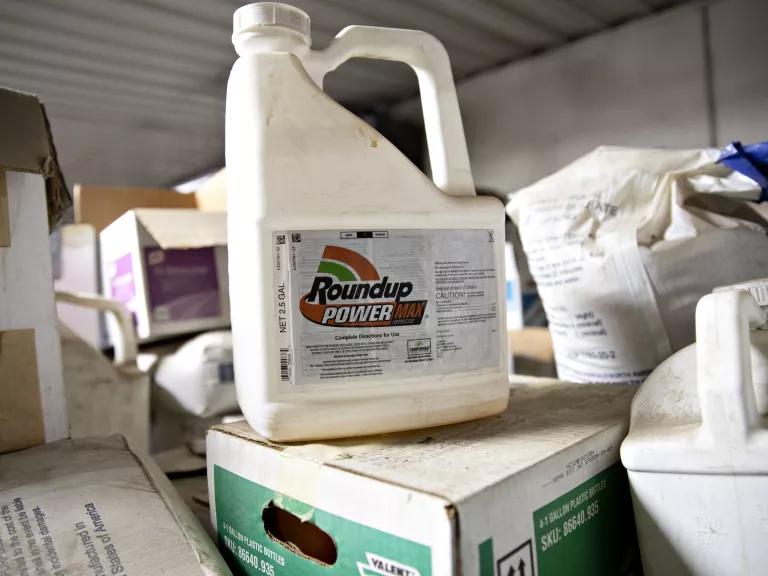
A 2.5-gallon bottle of Roundup POWERMax, which contains 51.2 percent glyphosate
SCOTUS, POTUS, and Congress weigh in
In recent years, federal courts have split on the issue of pesticide warnings. In 2021 and 2024, the Ninth and Eleventh circuit courts sided with plaintiffs who’d been awarded compensation under their states’ laws after developing cancer following prolonged exposure to Roundup. Both judges agreed that these suits were not in conflict with the Federal Insecticide, Fungicide, and Rodenticide Act, but in a separate case in 2024, the Third Circuit came to the opposite conclusion.
Now, the U.S. Supreme Court will weigh in on the matter through the case Monsanto v. Durnell. John L. Durnell is a gardener from St. Louis, who developed non-Hodgkin lymphoma after years spent spraying Roundup. Durnell sued Monsanto in 2019, and a lower court awarded him $1.25 million for damages. Bayer appealed, and now the nation’s highest court has agreed to hear the case in its current term. The ruling could come as early as this spring, with an outcome potentially clarifying who has final say over what gets put on a pesticide label.
Meanwhile, some members of Congress, along with their industry allies, are looking to pass legislation that would outright ban state failure-to-warn laws. A provision doing just that appears in the House’s version of the upcoming Farm Bill, which is a large legislative package that determines U.S. food, agricultural, and conservation policy for the next five years. Although environmental and health activists, including a segment of the Make America Healthy Again (MAHA) movement, successfully pushed to remove a similar provision from a government spending bill earlier this year, Hobbs says advocates remain “pessimistic” about the direction of the draft Farm Bill.
As a result of Bayer’s wide-reaching lobbying efforts, such bans are reaching state legislatures too. Both North Dakota and Georgia passed laws that shield chemical companies from financial liability for harming people with their pesticides. “People need to raise their voices to Congress and in the states where they’re trying to pass these state-vulnerability shields,” Horsfield says.
Amid this legislative landscape, President Trump’s executive order not only compels the domestic manufacturing of glyphosate, but it also shields the companies complying with the order from liability. The order invokes the Defense Production Act, historically reserved for national emergencies, and deems glyphosate “critical to national defense” in regard to readying the U.S. food supply.
“The EO is factually unmoored from reality,” says George Kimbrell, the legal director for the Center for Food Safety in a statement. “The Trump administration has demonstrated no threat to the continued availability of glyphosate, and in any case, there are literally hundreds of other herbicides available to farmers and others.”
New voices in the fight for pesticide protections
Still, lawmakers and advocates continue to speak up. In January, more than 130 U.S. representatives sent a letter to congressional leadership, opposing any provisions that would nullify the right of states to take protective measures against pesticides. In some cases, advocates for stronger pesticide protections are shaking up the political playing field on the issue.
Just days after Trump’s executive order, Republican Congressman Thomas Massie from Kentucky introduced the “No Immunity for Glyphosate Act,” which would prohibit the use of federal funds to enforce the order. Some vocal MAHA supporters, such as the group Moms Across America, quickly dubbed the order an “egregious offense” and “betrayal” by U.S. Health Secretary Robert F. Kennedy Jr., who had publicly supported a glyphosate ban in the past.
Earlier this year, Republican Congresswoman Anna Paulina Luna from Florida posted on X that she also disagreed with legislative provisions meant to stem the tide of lawsuits: “Why on earth would we want to shield the companies? This is not benefiting the American people at all.”
Given that millions of Americans—including anyone who grows food, tends to land, lives downwind from treated crops, or regularly eats pesticide-laden foods—are at risk, the number of potential opponents could be formidable. As Horsfield says, “If folks are within miles of a place where pesticides are sprayed, then this is an issue that should be important to them.”
This NRDC.org story is available for online republication by news media outlets or nonprofits under these conditions: The writer(s) must be credited with a byline; you must note prominently that the story was originally published by NRDC.org and link to the original; the story cannot be edited (beyond simple things such as grammar); you can’t resell the story in any form or grant republishing rights to other outlets; you can’t republish our material wholesale or automatically—you need to select stories individually; you can’t republish the photos or graphics on our site without specific permission; you should drop us a note to let us know when you’ve used one of our stories.
Mercury’s Journey from Coal-Burning Power Plants to Your Plate
As the EPA Downsizes, Our Health Could Suffer
How EPA Rollbacks Will Cost Us—in Dollars and Lives