When States Act, Markets Follow: The Ripple Effects of PFAS and Chemical Safety Policies
Five case studies show how state policies, championed by NRDC and partners, are reducing exposure to PFAS and other harmful chemicals far beyond state borders.

Children's growth and development can be impacted by even low levels of exposure to PFAS, which can be found in everything from toys to food packaging to water.


Alec Levin, NRDC summer intern, and Edward Apraku, a Schneider fellow, contributed to this blog.
Even as the federal government is in the process of wholesale dismantling environmental and public health protections, states’ actions are protecting their residents and people well beyond their borders—even nationally.
When NRDC works on state policy, our hope is always to bring positive impacts beyond the state(s) we are working in. Here, we analyze the impacts of five examples of state action to protect against exposures to harmful chemicals in consumer products—drawn from NRDC's work—that shows state policy is indeed having benefits beyond state borders.
The chemicals addressed by the state laws described below are of widespread concern because they are associated with myriad health impacts, from cancer to reproductive and developmental harm to numerous others. In addition, many of them are extremely persistent in the environment—they last for a very, very long time and accumulate in the environment. This is why PFAS chemicals, for example, are called “forever chemicals.”
In each of these cases, states have regulated PFAS (or other harmful chemicals) as a class as opposed to previous approaches that focused on specific chemicals in a class. This has meant a move away from the entire class of problematic chemicals versus previous shifts from one problematic chemical to close chemical cousins that re-created many of the original chemical’s problems. (Because data on use and production of chemicals in the United States is extremely limited, we have relied on data from the European Union to contextualize progress. See appendix for a description of data and methods used.)
Phaseout of PFAS in textiles/apparel
In 2022, California passed a NRDC cosponsored law (AB 1817, Ting) phasing out PFAS in textiles broadly, including apparel, footwear, backpacks, household textiles, and much more. Almost in parallel, New York passed a law (S1322, Hoylman-Sigal/A994, Fahy) phasing out PFAS in apparel—but not other textiles—that included essentially similar language. Both laws went into effect in January 2025. Since then, other states have followed to replicate the two laws, and countries such as France and Denmark have adopted similar policies.
NRDC testing found a dramatic drop in the amount of PFAS in textile products after these laws in California and New York went into effect last year. For example, major outdoor brands reduced the level of PFAS in their raincoats by between 97 to 99.99 percent since the new rules went into effect. In absolute terms, PFAS levels initially between 760 and 83,000 parts per million (ppm) total organic fluorine (an indicator of PFAS presence) dropped to 1.6 to 27 ppm in raincoats.
And this was true even for products covered by California law but not New York law that were being sold in New York, including footwear, baby playmats, and outdoor cushions. Brands often choose to adopt improvements across their products rather than making changes for one market alone. (We have seen this elsewhere, for example, in flame retardant chemicals.) Indeed, certification bodies point to a significant shift in the market in response to the actions of states.
While it’s not possible to put an exact number to the reduction in PFAS in the United States or internationally that follows from the legislation in California and New York, it is likely significant, as textiles are a major use of PFAS. The European Union (EU) estimates that one-quarter (almost 70,000 metric tonnes/year out of approximately 284,000 tonnes/year) of PFAS volume in the region in 2020 could be attributed to the textiles category (see appendix). The size of the EU economy is smaller than the United States’, but EU data is useful as an indicator of the proportion of PFAS use in various sectors, including textiles. This suggests that up to a quarter or more than 97,500 tonnes of the United States’s use of PFAS may be connected to textiles (based on EU volumes extrapolated to the size of the U.S. economy).
Given that the combined economies of California and New York would constitute the world’s third-largest economy after the United States and China (see appendix), and that the laws have been successful and are leading to changes in practice beyond their borders, it’s safe to say that the changes in these states are leading to significant reductions in a product category that accounts for a very large share of PFAS use.
Phaseout of PFAS in firefighting foam
Another large category of PFAS use has historically been firefighting foam used to combat fires from flammable liquids. EU estimates place this use in the top five PFAS annual uses in Europe at about 6 percent of estimated annual use, as noted in the chart above. And this particular use is linked to significant pollution of water since sprayed foam often seeps into water sources from training facilities and other sites of use.
Many U.S. states have now acted to phase out sales and training uses of PFAS-containing firefighting foam. In 2019, California legislation cosponsored by NRDC with firefighters and others (SB 1044, Allen) built on the work of the pioneering states to act on this issue and went further, setting deadlines for a phaseout not just of sales but also of the use of PFAS-containing firefighting foam. Phaseouts of municipal and most industrial settings in California went into effect in 2022 and 2024, respectively. For refineries and terminals, the law initially set a deadline of 2028, with the potential for extension until 2032, if non-PFAS foams are not shown to be commercially viable. However, that transition has been demonstrated to be feasible well ahead of schedule, and even this category of uses will now be phased out by 2028, with no extension.
Following California, other states have also adopted deadlines for phasing out use. The passage of the various state laws, combined with a federal law to phase out military uses of PFAS foams, Federal Aviation Administration action to allow the use of PFAS-free foams at airports, and EU action to phase out firefighting foam, is resulting in a shift away from PFAS-based foams.
Market reports on the size of the PFAS-free firefighting market indicate that it is a growing segment of the U.S. market and internationally, and that it is projected to grow faster than the overall market for firefighting foam, though estimates of the growth of PFAS-free foam vary from 6.6 percent (from 2025 to 2031) to 11.6 percent (from 2026 to 2034). According to one of the reports, North America is estimated to have the largest share of the PFAS-free foam market. This report indicates that the various phase outs and regulation of PFAS foams are a major driver of the United States’s share of the market.
Phaseout of PFAS in paper-based food packaging
Food contact materials and packaging are another significant use of PFAS, estimated to be more than 4 percent of the total PFAS volume used in the EU on an annual basis. Within this category, significant progress has been made on paper-based food packaging, which constitutes approximately a quarter of the PFAS use in the category or a little over 1 percent of the annual volume of PFAS use overall in the EU.
A dozen states have acted to phase out PFAS in paper-based food packaging, including California (AB 1200, Ting) and New York (S8817, Hoylman-Sigal/A4739, Fahy), states where NRDC played an important role. State action on this category precipitated significant change. By 2024, when 10 of those state laws were already in effect—U.S. use of PFAS for paper-based food packaging was effectively over. Recognizing this, the U.S. Food and Drug Administration (FDA) announced in early 2024 that PFAS “are no longer being sold by manufacturers for food contact use.” In January 2025, the FDA additionally issued a notice that 35 food contact notifications associated with “substances containing PFAS in paper and paperboard food packaging are no longer effective,” as the manufacturers or suppliers ceased production, supply, or use of the food contact substances.
(Several states have also passed laws to address PFAS in a broader swath of food contact materials and packaging, including PFAS in cookware and in non-paper packaging; however, more work is needed to achieve broad transition away from PFAS in these products. Household cookware and non-paper packaging constitute approximately 0.8 percent and 0.4 percent, respectively, of total annual PFAS volumes used in the EU.)
Phaseout of toxic flame retardant chemicals in furniture, mattresses, and children’s products
This example goes back a little further. For decades, a little-known California fire-safety regulation drove the use of toxic flame retardant chemicals in couches and other upholstered furniture across the United States and beyond. Driven by a cynical tobacco and chemical industry scheme, the regulation resulted in pounds of these chemicals in our couches with little fire-protection benefit.
In the mid-to-late 2000s, various analyses began to show that the fire-safety standard was not providing much fire protection but was exposing people to harmful chemicals. There was also significant evidence that alternative approaches and materials could obviate the need for the chemicals while providing equivalent or better fire safety.
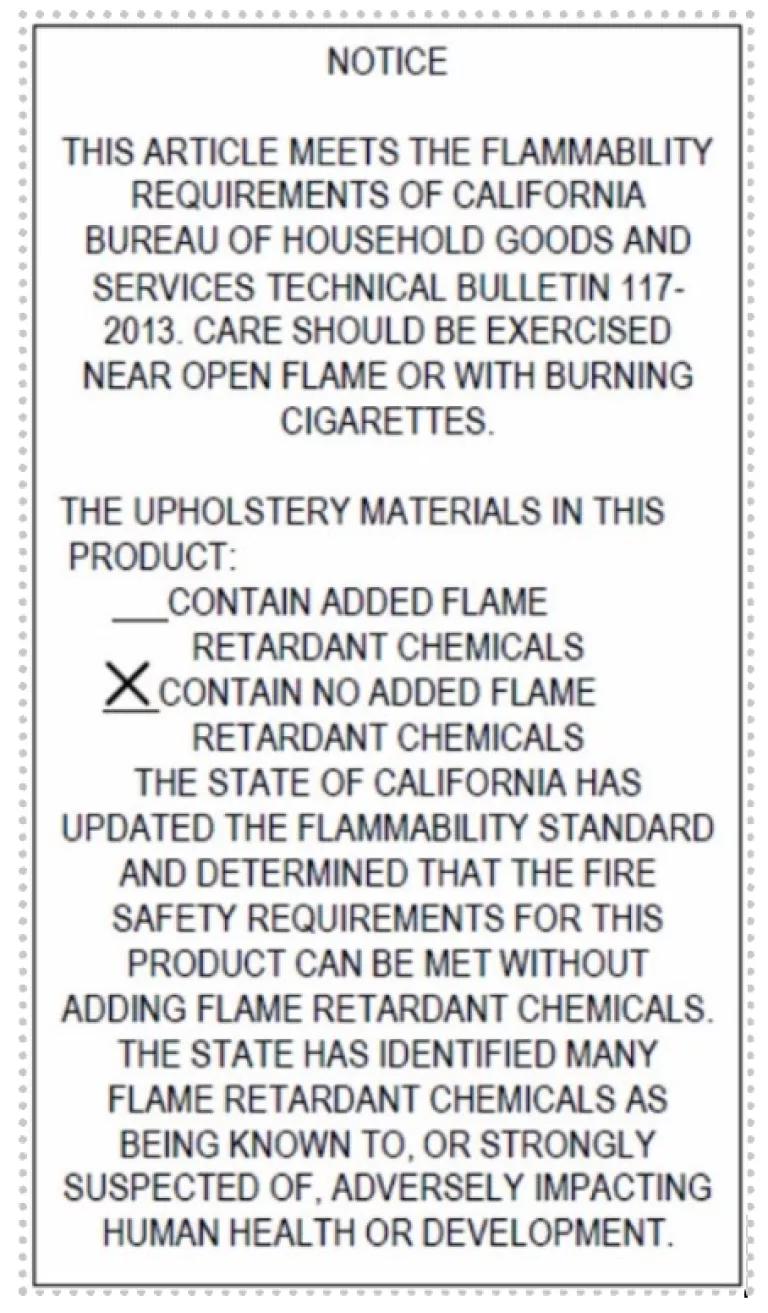
California eventually changed its regulation to remove provisions that effectively required the use of toxic flame retardant chemicals. The updated standard allowed proactive companies to transition away from the chemicals, but laggards remained. A subsequent 2014 law (SB 1019, Leno), cosponsored by NRDC with firefighters and other partners, required labels on upholstered furniture disclosing the use of flame retardant chemicals. Subsequent analysis showed that that some manufacturers continued to use flame retardant chemicals even though the majority of products had switched away. This led to another California law (AB 2998, Bloom) in 2018 to force the laggards to catch up to the rest of the industry. The law, cosponsored by NRDC with firefighters and others, banned the use of flame retardant chemicals in upholstered furniture starting in 2020, as well as in mattresses and many children’s products. And these laws were replicated elsewhere, including in New York (S7737, Kaminsky/A8723, Englebright) and Maryland.
Today, flame retardant chemicals are no longer found in these products. Couches from across the country carry labels indicating that they do not contain added flame retardant chemicals.
A 2024 study showed that flame retardant chemicals have been virtually eliminated from these product categories following the California phaseouts.
Disclosure of ingredients used in cleaning products, including mandatory disclosure for chemicals of concern
The final example comes from a slightly different context—disclosure versus a phaseout. In 2017, California enacted a first-in-the nation law—the Cleaning Product Right to Know Act (SB 258, Lara)—requiring the disclosure of ingredients in cleaning products. Breast Cancer Prevention Partners led the way, and NRDC cosponsored the bill, along with other organizations; some industry actors showed true leadership in reaching an agreement.
The law requires disclosure of ingredients both on label and online. Critically, while the law recognizes some trade secret protections when absolutely necessary, it requires that chemicals of concern identified by California are always disclosed (regardless of trade secret claims) and that links to the authoritative lists that identify them as chemicals of concern are provided. Importantly, national brands are implementing the disclosures both online and on label, and that information is available to consumers across the country and beyond.
As NRDC has previously noted, the simple fact of having to disclose what’s in a product or being released to the environment can have profound and powerful impacts:
- Consumers can make more informed decisions and choose products that are better for their health and their families’.
- By choosing better products, consumers can create incentives for better products and an even playing field for companies that are trying to do the right thing.
- Because consumers often choose to avoid chemicals associated with adverse health impacts, companies often reformulate their products to avoid those chemicals. The result is safer products with fewer dangerous chemicals for consumers nationwide.
- Innovators that are leading the way on the use of safer chemicals have a better opportunity to compete. Others in the industry are pushed to improve because consumers are better able to compare products, making products containing chemicals of concern, or those lacking ingredient information, less attractive.
- Having information about the components of products allows regulators to take targeted action on problem chemicals when necessary. (A recent example of this was when California’s Department of Toxic Substances Control moved to phase out cleaning products containing hydrofluoric acid because similar products are on the market that do not use hydrofluoric acid.)
The Cleaning Product Right to Know Act followed in the long and grand tradition of state action on chemicals of concern and right-to-know laws such as the grandparent of consumer disclosure laws, California’s Proposition 65, which turns 40 this year, and whose widespread benefits were outlined in a recent study.
Appendix
Total estimated annual volume of PFAS use in the EU—more specifically, the slightly broader European Economic Area, which was analyzed by the EU—for 2020 is approximately 283,555 metric tonnes. This is calculated as outlined below.
Data on PFAS use in the EU relies primarily on the European Chemicals Agency’s Committee for Risk Assessment Opinion on an Annex XV dossier proposing restrictions on per- and polyfluoroalkyl substances (PFAS). We totaled the midpoint estimated PFAS volumes associated with all the product categories/uses for 2020 (see opinion, table 4). To this we added the volumes estimated for firefighting foam (18,000 metric tonnes per year), which was part of separate rulemaking process (see the regulation here, paragraph 6). This yielded a total of just over 283,555 metric tonnes per year. The table below summarizes the use data collected and the total volume estimate.
Category specific calculations
Portion of food contact materials and packaging category attributed to paper-based food packaging:
Of the 12,006 tonnes of PFAS used in this broader category, paper and board food packaging is estimated to account for 2,900 tonnes, or approximately 24 percent (see ECHA’s Committee for Risk Assessment (RAC) Evaluation of sector-/use-specific aspects of the opinion on an Annex XV dossier proposing restrictions on per- and polyfluoroalkyl substances [PFAS]: Food contact materials and packaging, table 6).
This is also a little over 1 percent of the total PFAS volume of 283,555 tonnes in the EU, outlined above.
Note: In totaling the paper and board food packaging PFAS volumes, the manufacturing stage midpoint figures were used for paper and board packaging (grease-proof paper in flexible packaging) and paper and board packaging (other). In table 2 of the ECHA document for food contact materials and packaging, figures are also provided for service life and waste stages of the product categories’ life cycle. However, these latter figures are presented as a means of calculating emission figures, which are also provided and are subsets or duplicates of the manufacturing figures.
U.S. PFAS volumes in 2019 were estimated at 308,000 metric tonnes by the U.S. Environmental Protection Agency, though this is likely a significant underestimate due to limitations in U.S. reporting, including the limited number of PFAS covered and many facilities being excluded from reporting (679 million pounds of PFAS from 2019 data, converted to metric tonnes).
Total volumes of PFAS production for EU annual use can be adjusted for the relative size of the U.S. economy to provide another estimate of total PFAS volume in the country. To extrapolate EU figures to the United States, we scaled the estimated total annual volume of PFAS use in the EU for the difference in size between the EU and U.S. economies in 2020. Based on the 2020 figures in the linked IMF chart, the U.S. economy is 1.38 times greater than the EU economy; therefore, we multiplied the total EU PFAS volumes by 1.38 (1.38 x 283,555 tonnes). The extrapolated estimate for total PFAS volume is approximately 391,306 tonnes. One caveat to note is that the U.S. estimates include exports and EU numbers exclude exports. However, given the likely underestimate of the U.S. figures, these numbers may be a better indicator of U.S. PFAS volume excluding exports.
In 2025, California’s GDP was $4.3 trillion and New York’s $2.5 trillion, comprising 14 percent and 8 percent of the national GDP ($30.7 trillion), respectively. The total of California and New York’s GDPs is $6.8 trillion, which is larger than the third-largest national economy.
This NRDC.org blog is available for online republication by news media outlets or nonprofits under these conditions: The writer(s) must be credited with a byline; you must note prominently that the blog was originally published by NRDC.org and link to the original; the blog cannot be edited (beyond simple things such as grammar); you can’t resell the blog in any form or grant republishing rights to other outlets; you can’t republish our material wholesale or automatically—you need to select blogs individually; you can’t republish the photos or graphics on our site without specific permission; you should drop us a note to let us know when you’ve used one of our blogs.
Related Blogs

The Immense Societal Burdens of PFAS “Forever Chemicals”

NYS to Cut PFOA/PFOS "Forever Chemicals" from Drinking Water