Single-Use Plastics 101
Plastic is choking the environment, endangering our health, and driving climate change. We can do something about it.
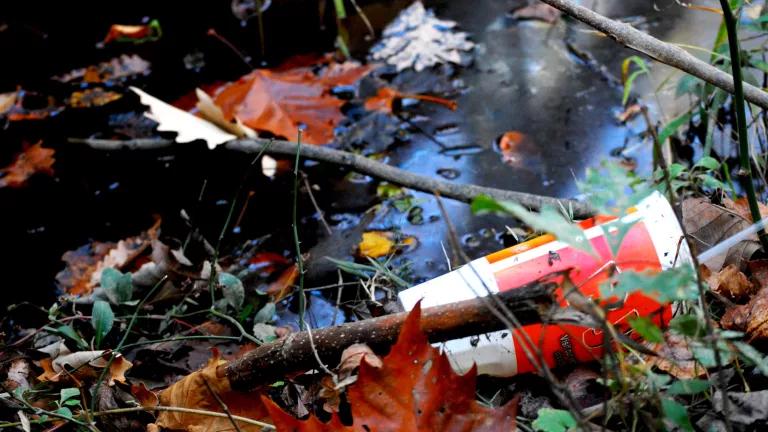

A straw with our iced coffee, a plastic bag to carry our takeout, a wrapper on a candy bar: Taken individually, each seems harmless. These modern conveniences hardly register in our minds, but they come with a steep environmental price. Our plastics addiction has evolved into a plastics crisis, with a wide range of impacts on our planet and our bodies.
What are single-use plastics?
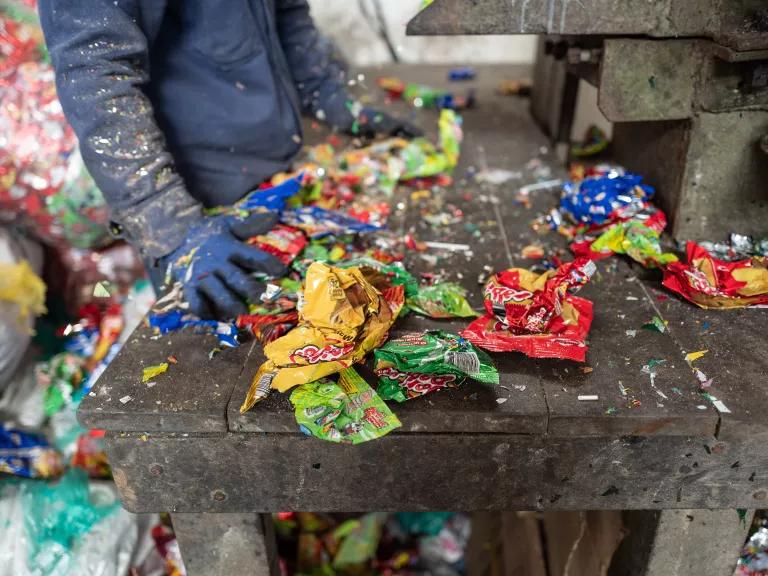
Single-use plastics are goods that are made primarily from fossil fuel–based chemicals (petrochemicals) and are meant to be disposed of right after use—often, in mere minutes. Single-use plastics are most commonly used for packaging and serviceware, such as bags, bottles, wrappers, and straws.
Though plastic—a chain of synthetic polymers—was invented in the mid-19th century, it wasn’t until the 1970s that its popularity skyrocketed. Manufacturers began replacing traditionally paper or glass staples with lighter, more durable, and affordable plastic alternatives, such as plastic jugs replacing milk jars.
Since the 1950s, the world has produced more than nine billion metric tons of plastics, more than half of which was brought to market after 2000. And we can expect these materials to stick around for thousands of years.
Certain uses for plastic are not only reasonable but important, such as surgical gloves. But these cases make up a small fraction of single-use plastic. More than half of non-fiber plastic, which excludes synthetic fabrics like polyester and nylon, comes from plastic packaging alone, much of which is for single-use items.
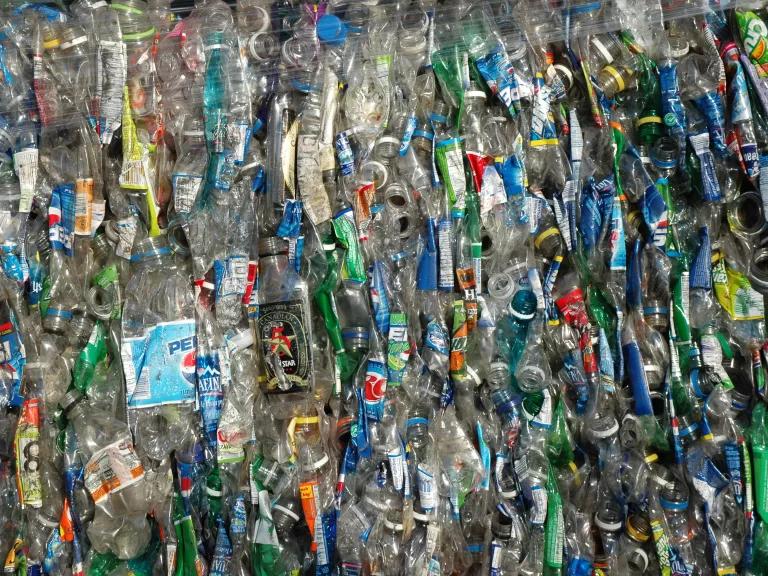
Why is single-use plastic bad?
Single-use plastics are a glaring example of the problems with throwaway culture. Instead of investing in quality goods that will last, we often prioritize convenience over durability and consideration of long-term impacts. Companies bank on this desire for convenience, selling products wrapped in flashy packaging, which could easily be avoided, or designing cheap goods that only fuel more consumerism.
Our reliance on these plastics means we are accumulating waste at a staggering rate. According to the OECD (Organisation for Economic Co-operation and Development), the world doubled its plastic production between 2000 and 2019. By 2040, the growth in use and production is expected to rise by 70 percent, compared to 2020.
Plastic litter
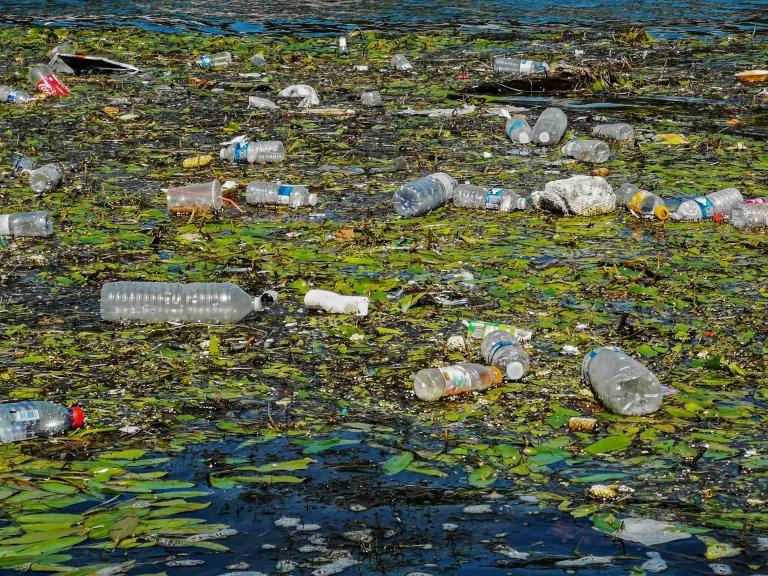
The most common types of plastic waste found in the environment are cigarette butts, followed by plastic film (including bags), food packaging, and plastic bottles. Although plastic pollution accumulates most visibly on our streets, aquatic ecosystems are also suffering. Plastic litter tossed on the ground is easily washed away by rain, or it travels via storm drains into rivers and streams. It’s estimated that eight million metric tons of plastic make their way into the ocean every year.
Meanwhile, microplastics—a category that encompasses everything from glitter to threads of synthetic clothing to broken down bits of all sorts of other items in our waste stream—can be found everywhere. And we’re just starting to understand their widespread impact. Microplastics also enter our environment through the manufacturing process; for example, the tiny “nurdles” that get melted down and formed into other plastic products can be spilled during transportation or other handling activities.
Reducing plastic use is the most effective means of avoiding this waste.
Limited recycling
While we can't recycle our way out of the plastics crisis, recycling helps reduce the footprint of the plastic we use. Polyethylene terephthalate, one of the most commonly recycled plastics and the material that makes up most water and soda bottles, can be turned into a range of products, from new beverage bottles to automotive parts.
But the OECD found that a whopping 91 percent of plastic isn’t recycled at all. The vast majority ends up in landfills, incinerators, or the environment. Single-use plastics in particular—especially small items like straws, bags, and cutlery—aren’t easy to recycle because they fall into the crevices of recycling machinery. Many recycling centers won’t even accept them.
Worse, the plastic industry has continued to greenwash a toxic method for end-of-life plastic management under the misleading term “chemical recycling.” This process often involves incineration, turning plastic waste into fuel. In the process, it emits toxic chemicals and greenhouse gases, creates hazardous waste, and pollutes communities and waterways. And the industry is looking to expand these operations, mainly to assuage public concerns about all the single-use plastics it continues to create.
NRDC’s director of plastics and petrochemical advocacy Renée Sharp talks about the long-lasting impacts of plastic in our bodies and our communities, as well as the culprit behind all of it.
Microplastic pollution
Microscopic plastic fragments, no more than 5 millimeters long, are hard to detect—and are just about everywhere. (The same goes for the plastic particles that measure less than a micrometer, known as nanoplastics.)
Regardless of their size, these microplastics wreak ecological havoc, as they quite easily end up in the water or on farmland or get eaten by wildlife. They’ve even made their way up to the secluded Pyrenees mountain range and down to the bottom of the Mariana Trench. The United Nations Environment Programme (UNEP) has estimated that there are between 15 trillion and 51 trillion microplastic particles in our oceans.
For wildlife, microplastics can be particularly dangerous; when eaten, they can easily accumulate inside an animal’s body and cause serious health issues, like fatal intestinal blockages. The impacts can have ripple effects throughout the wider ecosystem. Scientists have also found that microplastics harm plants and soil—changing the soil structure, the flow of water and nutrients through the soil, and the array of bacteria, insects, and other organisms that live in soil.
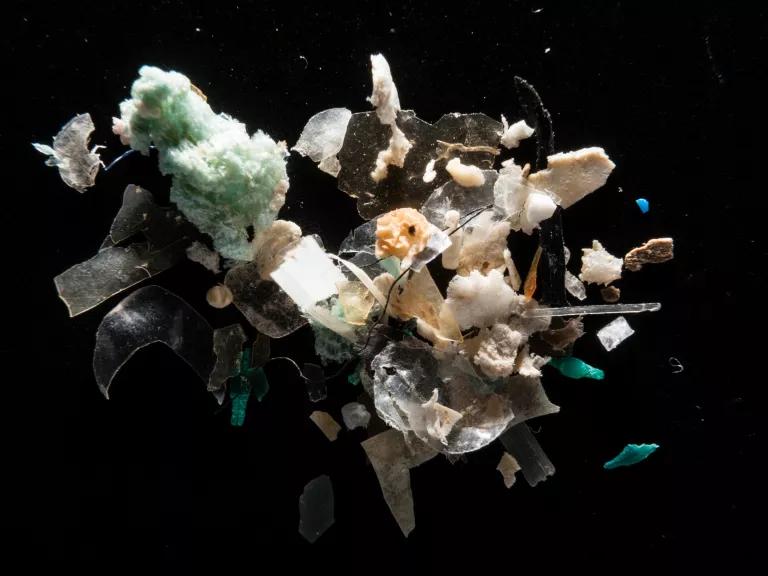
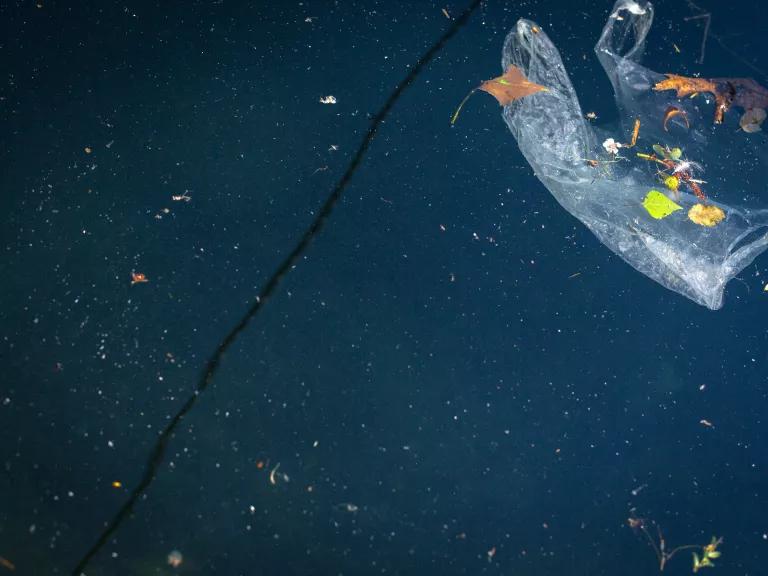
A laboratory photograph of microplastics found in the Corsica River in the Chesapeake Bay watershed of Maryland
Health harms from microplastics
Microplastics have been found throughout the human body, from our brains and hearts to testes and placentas. When we ingest them, as well as the chemicals that are added to plastics during processing, we face myriad health risks. Many of the chemicals in plastics are known endocrine disruptors, and research has suggested that human exposure to them could lead to hormonal imbalances, reproductive problems like infertility, and even cancer. The phthalate DEHP, as just one example from dozens, is often added to plastic goods like shower curtains and garden hoses to make them more flexible—but it was also found to be a probable human carcinogen by the U.S. Environmental Protection Agency.
We’re also just beginning to understand how microplastics are contaminating our food supply. One study that examined 16 types of commonly consumed proteins—including beef, shrimp, and tofu—found microplastics present in 90 percent of samples, with higher rates in more processed foods. Plastic food containers as well as baby food pouches can release large amounts of microplastics, which is exacerbated by microwave-heating. Plastic bottles used for carbonated beverages also contain significant amounts of microplastics.
Martin Grimm/Picture-alliance via Associated Press
Single-use plastics and pollution
The sheer amount of plastic (and plastic waste) we produce has inundated communities with pollution of all kinds. In Louisiana, the petrochemical industry manufacturing plastics has expanded its operations throughout a region that has become known as “Cancer Alley,” due to the toxic air pollution that its residents routinely breathe in. Meanwhile, at the opposite end of the global materials cycle, plastic waste pollution is particularly severe in Southeast Asia. This problem is compounded by the fact that the United States and other high-income countries often send their plastic waste to these countries for processing.
When plastic waste is incinerated, which can sometimes be the case, its toxic fumes quickly become a health hazard for nearby residents, leading to everything from skin rashes to cancer. The ash and other toxins released during combustion may travel long distances, spreading these impacts even farther.
Marine animals also bear the burden of this influx of garbage into their habitats, and millions die each year because of plastic entanglement and other impacts. Beached whales have been found with stomachs full of plastic trash—as have dead seabirds, turtles, and many other creatures. In fact, at least 1,565 wildlife species have been found to have accidentally ingested plastic.
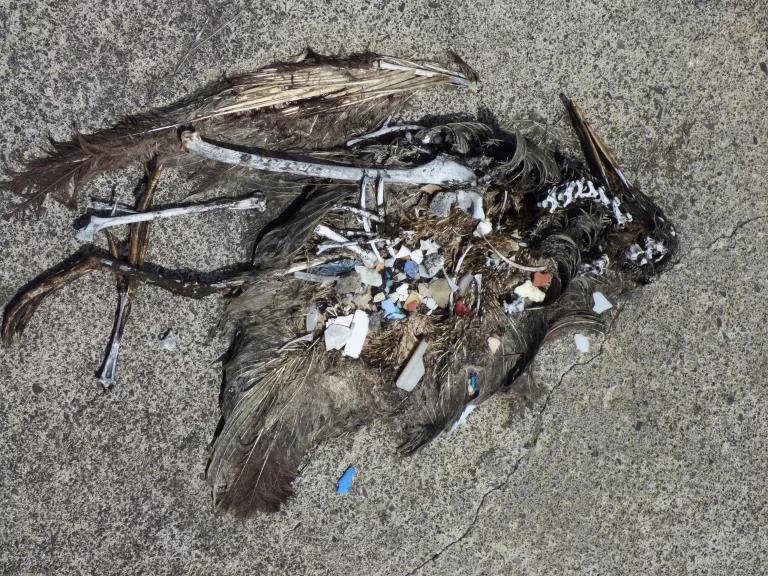
An albatross found dead with a belly full of plastic on Midway Atoll
Single-use plastics and climate change
Because nearly all plastics (99 percent) are made from fossil fuels, our addiction to plastic also impacts the climate. In fact, the plastics industry (which includes many companies that have invested in or are operating in oil and gas) is currently responsible for four times more greenhouse gas emissions than the airline industry. And by 2050, plastics are projected to account for 21 to 31 percent of the global carbon budget necessary to avoid the worst impacts of climate change.
Plastic production emits greenhouse gases at every point in its life cycle, from the initial process of drilling for the oil and gas that make up its building blocks to the incineration that often occurs at the end of a plastic product’s life. In the United States, many of the industry’s polluting facilities—whether they make plastic or burn it—are built in low-income communities and communities of color, which often have the fewest resources to block them.
Natasha Chub-Afanasyeva via Flickr, CC BY 4.0
What is the global plastics treaty?
In 2022, 175 nations gathered at the United Nations Environment Assembly to solve the global crisis of plastic pollution. There, the nations agreed to draft a legally binding treaty that would identify actions to reduce the production of plastics, particularly its most toxic forms. However, in December 2024, negotiations for the plastics treaty collapsed after some oil-producing nations, led by Saudi Arabia and Russia, blocked progress toward a meaningful agreement. In August 2025, leaders will convene again through the UNEP to discuss new opportunities to stem the endless stream of plastics into our lives.
With or without this global action, NRDC’s health experts will continue urging decision-makers at federal, state, and local levels to reduce the production and use of plastic, phase out the most toxic and problematic plastic products, eliminate chemicals of concern, block the expansion of “chemical recycling,” and mandate that manufacturers disclose the chemicals in their plastic products.
Should we ban single-use plastics?
In response to the strain that plastic puts on communities, many have implemented single-use plastic bans—most often on plastic bags, straws, stirrers, and take-out clamshells. Dozens of U.S. cities and many institutions (from schools to theme parks) now outlaw plastic straws. Plastic bag bans—ideally accompanied by a fee on paper bags—are also increasingly common in states and cities.
More recently, advocates have been pushing for restrictions on products containing intentionally added microplastics. For example, in California, lawmakers have introduced a bill to ban key uses of plastic microbeads in all cosmetics and cleaning products. The ban would build on a 2015 state law banning some uses of microbeads in rinse-off personal care products. On top of stemming pollution, the new legislation could propel the market toward healthier alternative ingredients, such as coconut shell fragments, sand, and salt, which many manufacturers already use.
In this way, such bans can have cultural effects. Companies are forced to innovate, rethinking their designs and sourcing sustainable materials. And the bans can help shift consumer mindsets, as people recognize that this waste is both unsustainable—and needless.
Juan Cristobal Cobo/Bloomberg via Getty Images
Major corporations and single-use plastics
Large producers of single-use plastics can make a big environmental impact. As part of the Break Free from Plastic movement, volunteers conduct annual audits of plastic pollution along coastlines. In 2023, an impressive 8,804 volunteers sifted through hundreds of thousands of individual plastic pieces across 41 countries to identify the pollution’s sources. In 2023, they discovered that Coca-Cola, Nestlé, and Unilever products were found most often.
Coca-Cola on its own produces three million metric tons of plastic packaging each year, equivalent to a terrifying 200,000 plastic bottles per minute. Unfortunately, that number continues to rise, as it does across many global brands.
In response to calls for change and shifting consumer habits, some companies are taking the initiative and piloting reuse and refill systems or experimenting with designs that reduce waste. But it’s clear that much more needs to be done.
Policies and government frameworks, like the global plastics treaty that’s in the works, can spur action from private industry. Bottle bill laws, for example—which generally require retailers to add a fee on individual bottles that customers can partially recoup when they recycle—are a way to increase corporate responsibility for waste while providing a monetary incentive to consumers to recycle. Even better are incentives that support a zero-waste economy.
Fiona Goodall/Getty Images
Avoiding single-use plastics
Individual choices—and the collective shifts they bring about—add up quickly. Making just one simple change, like resolving to avoid bottled water whenever possible, can spare the environment of hundreds of plastic bottles each year. Here are a few more tips for cutting down on single-use plastics.
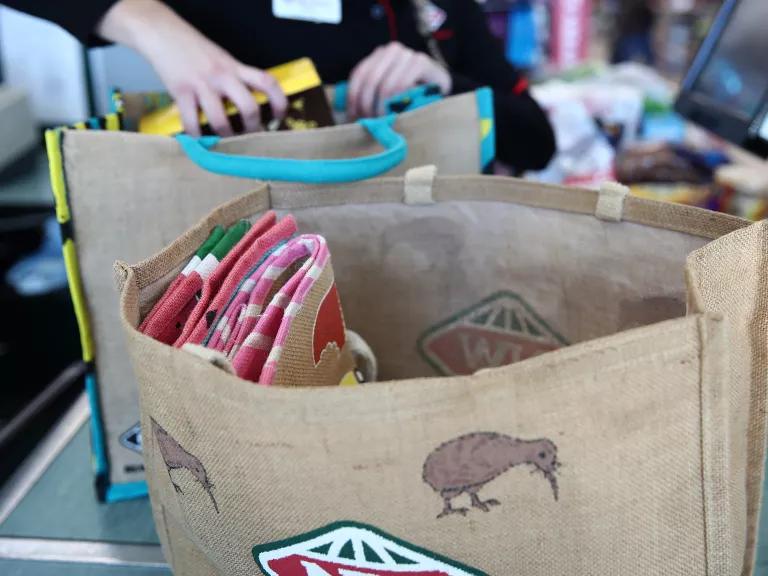
- Always pack a reusable bag when shopping. (And yes—reusable totes are better than plastic.)
- Cook more often—and store leftovers in your freezer—to reduce your use of plastic-heavy take-out containers.
- Compost your food waste, which has many benefits, including shrinking your personal waste stream.
- Avoid individually packaged goods, like snack packs. Zero-waste shops, which are becoming more popular, even encourage you to bring in and fill your own containers.
- Buy a metal or glass reusable straw. Pack it alongside reusable cutlery for sustainable eating on the go.
- Speak out in support of local plastic bans, whether by calling your local government representative, submitting an op-ed to your city’s newspaper, or simply starting conversations with neighbors.
- Let companies that make your favorite products know that you care about the packaging. Post on social media, call, or send letters to these companies to ask them to switch to reusable or refillable, recyclable, compostable, renewable, or recycled-content packaging.
- Read our consumer guide for more ways to reduce your family’s exposure to microplastics.
This story was originally published on January 9, 2020, and was updated with new information and links on June 24, 2025.
This NRDC.org story is available for online republication by news media outlets or nonprofits under these conditions: The writer(s) must be credited with a byline; you must note prominently that the story was originally published by NRDC.org and link to the original; the story cannot be edited (beyond simple things such as grammar); you can’t resell the story in any form or grant republishing rights to other outlets; you can’t republish our material wholesale or automatically—you need to select stories individually; you can’t republish the photos or graphics on our site without specific permission; you should drop us a note to let us know when you’ve used one of our stories.
Most people's brains contain a plastic spoon's worth of microplastics.
Meanwhile, the plastic industry is on track to triple plastic production over the next 40 years. Tell the FDA to protect us from microplastics!

Tell the FDA to protect us from microplastics
A recent study found that most people's brains contain a plastic spoon's worth of microplastics. Meanwhile, the plastic industry is on track to triple plastic production over the next 40 years. Tell the FDA to protect us from microplastics!
10 Ways to Reduce Plastic Pollution
We Are Here to Make a Difference: Our Litigators Are at the Ready
How to Become a Community Scientist