
FEMA—and the Nation’s Disaster Safety Net—Gets Cut Adrift
As the Trump administration targets the Federal Emergency Management Agency for “reforms,” states and communities lose the support they depend on to make it through climate-influenced disasters.

Wildfire victims seek disaster relief services at one of two FEMA disaster recovery centers in Pasadena, January 2025
Allen J. Schaben/Los Angeles Times via Getty Images
America’s disaster safety net is unraveling. The Trump administration has made major cuts to the Federal Emergency Management Agency (FEMA), which is one of the leading climate resilience agencies and is critically important for preparing for, responding to, and recovering from disasters like hurricanes, floods, wildfires, and other man-made and climate-influenced disasters.
The president and U.S. Department of Homeland Security Secretary Kristi Noem repeatedly talk about getting rid of FEMA entirely. And the acting administrator, Cameron Hamilton, has taken an axe to FEMA’s staff, programs, and basic functions—before being fired after saying, “I do not believe it is in the best interests of the American people to eliminate the Federal Emergency Management Agency.”
In comments filed today, NRDC laid out what true reforms could look like at FEMA if the administration was serious about improving the agency’s mission. And we detailed the full scope of what has been lost at FEMA and the many ways this administration has set back the nation’s climate resilience and disaster management efforts. Since taking office, it’s slashed staff, frozen funding to local communities for risk reduction projects, and refused to enforce legally adopted standards that ensure more resilient recovery efforts.
Learn More


Many people, particularly those who have been caught on the frontlines of hurricanes, wildfires, tornadoes, floods, and other disasters, fear the stakes of these decisions. In addition to NRDC’s comments, 4,661 public comments had been posted as of the afternoon of May 12, with 98 percent expressing support for FEMA and urging the administration not to eliminate or diminish it. Hundreds of commenters shared personal stories of how FEMA made a difference for their families and communities, and many provided tangible recommendations rooted in both personal and professional experience.
The comment period is open until midnight on Thursday, May 15. Please weigh in with your thoughts on the importance of climate resilience efforts, disaster preparedness, and FEMA.
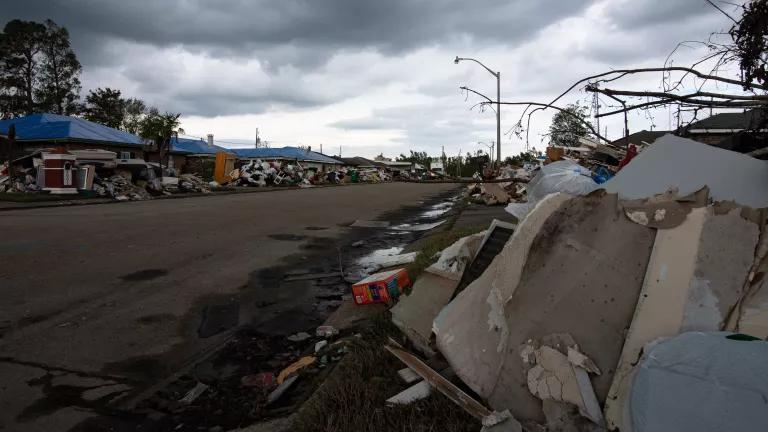
"Our first direct engagement with FEMA was right after Hurricane Katrina. Though our house still stood, the first floor had to be gutted. For weeks, we moved from place to place in search of power, clean water, and safe shelter. Like many others, we lived in a FEMA trailer in the front yard for months, slowly rebuilding our lives in the shadow of uncertainty.
"That experience taught me firsthand how critical FEMA is in turning despair into recovery—and how its presence, coordination, and resources can mean the difference between displacement and survival. The agency’s support was not just logistical; it was symbolic. It represented the federal government’s promise that no community would be left behind."
Comment submitted May 4, 2025 (read the full comment)
NRDC has produced a summary of the public comments, which offer a stark glimpse into what’s at stake with the latest actions at FEMA. Here’s a look at some of the most consequential ones.
FEMA staff & expertise eliminated
Since taking office, the administration has overseen the loss of more than 2,000 full-time employees (out of a full-time workforce of approximately 6,100 staffers) and an unknown number of the greater disaster workforce cadre. The latter is largely comprised of about 12,000 part-time, temporary, or contractual employees who receive specialized training to do everything from assessing tornado damage to coordinating wildfire responses.
Enforcement of building standards abandoned
The administration halted compliance with regulations implementing the Federal Flood Risk Management Standard (FFRMS). These regulations were finalized last year to ensure that public buildings and infrastructure damaged in a flood were rebuilt to more protective standards in the storm’s aftermath. And they were sorely needed to avoid just the kind of waste that the current administration professes to care about: According to FEMA data, it spent more than $60 billion between 2015 and 2024 to rebuild flooded public buildings and infrastructure.
President Trump also revoked an executive order that required all federally funded projects to comply with the same standard. Both moves are sure to keep our nation in the dangerous and costly cycle of flood-rebuild-repeat.
Funding canceled or delayed for billions of dollars' worth of risk reduction projects
The Department of Government Efficiency, or DOGE, and the administration are being sued by 23 states and Washington, D.C., over the administration’s slow-walking of payments for previously approved projects. States and communities are now waiting to be reimbursed for hundreds of millions of dollars in already promised funds. NRDC found that it had reneged on $3.6 billion in grants that were previously made to state and local governments through FEMA’s Building Resilient Infrastructure and Communities (BRIC) grants.
The move shocked former FEMA officials like David Maurstad, who served four presidents from both parties and oversaw BRIC, flood insurance, and other risk reduction programs at the agency. “Suspending a proven and effective program that enhances resilience to natural hazards, mitigates disaster-related suffering, and reduces the financial burden on taxpayers is a profoundly shortsighted and ill-considered decision,” he said, “particularly in light of the increasing frequency and severity of extreme weather events that threaten most of our communities.”
Diminishing the capacity of local, state, and federal emergency managers and first responders
The administration claims that it wants to increase states’ level of responsibility for disasters and emergency management, but its actions are instead actively diminishing the capacity of emergency managers and first responders across the country.
- FEMA abruptly canceled all in-person classes at the Emergency Management Institute and National Fire Academy, shuttering the nation’s only advanced-level fire academy and preventing thousands of first responders from accessing training.
- States also report difficulties getting paid by FEMA for grants that support emergency management staff positions and various preparedness activities, such as evacuation planning, maintaining emergency alert systems, and training first responders.
- As of March 27, 2025, FEMA froze funding to the American Bar Association’s Disaster Legal Services program, which had supported federal and local efforts to aid disaster survivors since the early 1970s.
The administration cut funding to AmeriCorps’ National Civilian Community Corps, effectively eliminating the “FEMA Corps” service program for young people. This not only weakens the disaster workforce but also cuts off an important career development pipeline for emergency management and resilience professionals going on to serve in state and local agencies.
Disaster declarations & disaster assistance undermined
The administration is implementing a wide range of changes to reduce federal disaster expenditures and deny states disaster aid. In practice, these measures will keep residents of states hit by a tornado, flood, hurricane, wildfire, winter storm, or other disaster from getting the help they need. State and local governments had no advance notice of these changes, nor the opportunity to develop or pass budgets, create staffing plans, acquire and store emergency supplies, or otherwise fill in the gaps left by the administration’s actions.
Disaster aid could be politicized
In February, with Californians reeling from Los Angeles’s horrific wildfires, Trump’s special envoy Richard Grenell proposed a tit for tat: If the Golden State wanted to receive future disaster assistance, it would need to abolish the California Coastal Commission, one of the state’s regulatory bodies that has tussled frequently with developers over the years. Grennell went on to describe the commission as part of the “crazy woke left.”
The remark came a few weeks after House Speaker Mike Johnson suggested that California would have to update its voter identification laws as a quid pro quo for future disaster aid.
A glimpse into our future, without FEMA
Hurricane season officially begins in just a few weeks. Wildfires have been breaking out in western states and other parts of the country, with peak wildfire season still months away. In the Midwest, tornadoes, severe weather, and flooding have come with the onset of spring. Many more disasters, driven by our rapidly warming climate, are just around the corner.
Last week, the president issued a proclamation recognizing Hurricane Preparedness Week. In it, he said he was “giving State and local authorities a more significant role in resilience, preparedness, and rapid-response efforts.”
What he didn’t say is that he was dumping disaster response in their laps and withdrawing federal disaster aid and assistance. There will certainly be gaps that no governor, mayor, or community leader should have to shoulder—or reasonably could.
And people deserve better. As the commenter who shared their experience sheltering in a FEMA trailer after Hurricane Katrina wrote, “The next storm is not a matter of if, but when. FEMA’s role in ensuring that recovery is swift, inclusive, and resilient cannot be overstated. My story is just one of thousands, but it is a reminder that behind every policy, there are families, neighborhoods, and futures at stake."
Related Blogs
The Law Requires States to Plan for Climate Impacts

Political Control of Research Funding Threatens Sound Science
