Coalition of the Willing Calls for Rapid Energy Transition Amid Energy Crisis
The Colombia conference highlights the critical need to phase down fossil fuels and ramp up renewables.


The first world summit on the Transition Away from Fossil Fuels (TAFF) elevated the need for a rapid end to gas, oil, and coal dependence around the world—and at just the right time. As millions of people around the world are impacted by the disruption of fossil fuel supply chains due to the war in the Middle East, at no time in recent memory has the need to transition away from fossil fuels seemed more urgent. Due to the damaged infrastructure and choked shipping routes, for instance, gas prices in Europe have jumped 15 percent since February 2026; in Southeast Asia, by approximately 37 percent; and in the United States, by 50 percent.
TAFF brought together 57 countries, hundreds of scientists, and thousands of civil society leaders in Santa Marta, Colombia. While not designed to produce a binding international agreement, TAFF established a process that will continue to foster global partnerships and ongoing dialogue that must undergird a robust multilateral process to combat climate change.
The 2026 oil and gas crisis, driven by geopolitical conflicts, has accelerated the global shift away from fossil fuels by highlighting the economic and security risks of dependency. And the strong consensus demonstrated at TAFF makes clear that momentum toward a fossil fuel phaseout is growing. To make this a reality, governments and financiers around the world must immediately stop the expansion of fossil fuel extraction and infrastructure build-out, rapidly expand renewable infrastructure and integration, finance a just transition, and strengthen the coalition of the willing.
And the coming months will see no shortage of opportunities to move this agenda forward. TAFF, for instance, announced the creation of a work stream through which participating nations can develop country road maps to transition away from fossil fuels. The announced framework also creates a science advisory panel that can perform bespoke research projects to aid this process. These road maps can also complement the Nationally Determined Contributions climate action plans that require countries to adopt increasingly ambitious targets to combat and adapt to climate change. The next United Nations climate conference in Turkey in November and the second TAFF conference next year will provide continuing opportunities to leverage bold commitments on the world stage.
To move forward, country road maps must:
-
Immediately stop the expansion of fossil fuel extraction and transport infrastructure.
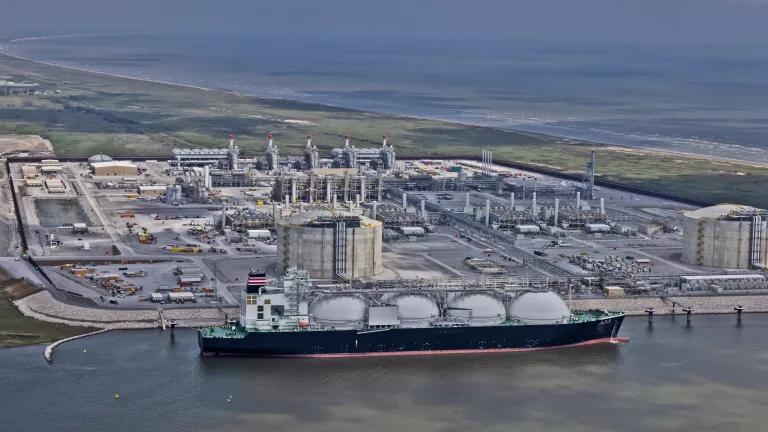
The continued expansion of fossil fuel infrastructure—gas pipelines, terminals, drilling sites, and more—is wholly incompatible with a just transition. Such infrastructure will lock in fossil fuel supply chains for decades to come, just as the volatility of global fossil fuel markets places the fragility of this infrastructure and the risks of further dependence on gas, oil, and coal in sharp relief. World policymakers who authorize them—and the banks, private equity, and other financiers that fund fossil fuel infrastructure—should immediately step away from these projects. For instance, financiers should stay back from proposed gas export terminals on the west coast of North America, which would ship more gas across the Pacific Ocean to markets in Asia.
-
Rapidly expand renewables infrastructure and integration.
Instead of deepening economic reliance on fossil exports and imports, policymakers and financiers should deepen their investments and build-out of renewables and storage. Renewables infrastructure is often cheaper and faster to construct than its more unstable and dirty fossil fuel counterparts. According to the International Renewable Energy Agency, for instance, 91 percent of new renewable projects in 2024 reported lower costs than fossil fuel alternatives. And because solar and wind projects can be assembled after modular manufacture off-site, face lower regulatory barriers, and attract faster investment, they are often quicker to construct. As a result, a growing number of countries have begun to embrace the energy transition. Driven by high energy costs and low policy barriers in Pakistan, for example, approximately 25 percent of households in the country were using solar energy in some form by early 2026. And in response to the surging prices of imported oil this year, the Philippines is accelerating development of renewable projects, expanding its green energy investment fund, and expanding its capacity to store renewable energy for the grid.
-
Finance this rapid phaseout.
While all countries need to do more to combat climate change, the countries that will be most impacted and that are largely the least responsible for climate pollution will need support from richer countries to do so. According to the International Court of Justice, these investments are required not only by international climate treaties but also by international law. Recognizing this obligation, COP24 countries agreed to mobilize $300 billion per year and work together to channel $1.3 trillion per year toward a just energy transition in developing countries. These commitments will not only help achieve worldwide goals to phase out fossil fuels; they will also help create green jobs and increase economic resilience.
-
Strengthen the coalition of the willing.
TAFF demonstrated surging momentum among civil society, researchers, and a growing number of countries to see an end to worldwide dependence on fossil fuels. For a successful transition to renewables, this coalition must grow to more countries, more sectors of the economy, and more elements of civil society. Special emphasis must be placed on including communities that will be most impacted by climate change.
The war in the Middle East has clearly shown us that the world’s dependency on fossil fuels leads to catastrophic impacts on agriculture, air quality, and economies. And the disruption of oil and gas supply chains adds fuel to the fire. With the conclusion of the first TAFF conference, policy and financial decision-makers should seize this agenda and finally ensure the transformation from a clean, secure energy vision to a clean, secure energy reality.
Related Blogs

Accounting for AI: Environmental Transparency for a Responsible Digital Future

The Global AI Buildout Needs Energy Transition Guardrails