
The Cost of the United States’ Dependence on Oil
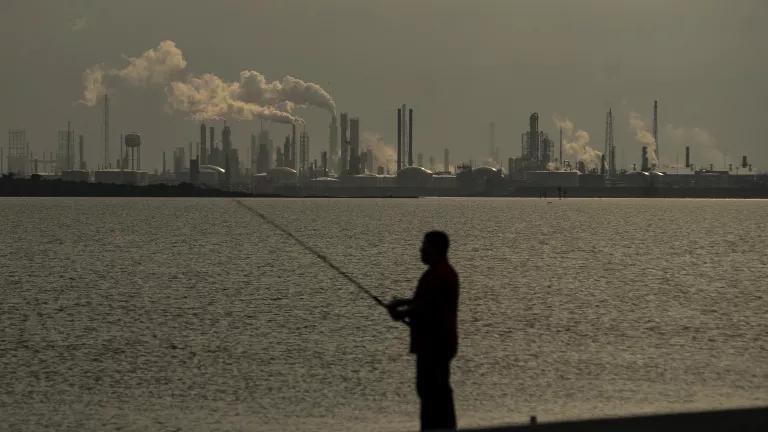
The country's entire economy is more vulnerable to oil price and supply shocks. In a global market, that means there’s one solution: Reduce dependence on oil.

Media Contact
As the Trump administration’s war on Iran grinds into its third month, three themes bear noting for reporting on this issue:
- First, four wars in 35 years have made clear that oil remains the country’s strategic Achilles’ heel.
- Second, the United States can’t drill its way to energy security. It must reduce its over-reliance on oil.
- And, finally, instead of reducing energy risk, the Trump administration is undermining energy independence, with policies meant to lock in decades’ more exposure to oil shocks and thwart domestic production of gasoline-saving cars and trucks, as well as electric vehicles and the clean wind and solar energy needed to power them.
That’s exactly the wrong direction, as this week’s news makes clear.
Here’s the background on the administration’s attack on U.S. energy independence and why it’s so harmful to the national interest.
Oil remains the country’s strategic Achilles’ heel
More than two months into the third U.S. conflict in the Persian Gulf in 35 years—Desert Storm, Iraqi Freedom, and now, Epic Fury—and taking place only four years after Russia invaded Ukraine and five decades after the first Arab oil embargo, a persistent over-reliance on oil continues to hold American families and businesses hostage to global price shocks beyond U.S. control.
Since the start of the Iran war, rising oil prices have cost American drivers and consumers more than $39 billion. Those costs have come mostly through:
- Higher pump prices
- The rising cost of the diesel fuel that powers the large trucks carrying more than 70 percent of the goods we buy
- The fuels that power machinery on the farms growing our food
These costs are mounting by the day. Meanwhile, U.S. relations abroad are strained, if not frayed, as the rising cost of oil disrupts global shipping and air travel, upends supply chains, and drives up inflation in ways that slow global growth and could push some countries to the brink of recession.
Twenty years after former President George W. Bush, a Texas oilman, lamented that “America is addicted to oil,” the nation’s dependence on the fuel remains the country’s greatest vulnerability.
The United States can’t drill its way to energy security
If the United States could drill its way to energy security, it would have done so by now. At 13.6 million barrels a day, U.S. crude oil production, long the world’s highest, broke a record in 2025—and is on track for more gains this year. and is on track for more gains this year. That hasn’t stopped oil at more than $100 a barrel from driving up gasoline prices to $4.50 per gallon, which is 50 percent more than the $2.98 average price when President Trump launched the war on February 28.
That’s because oil is a global commodity. There’s little difference between a barrel produced in Angola and a barrel produced in Texas. Oil companies, in fact, constantly interchange domestic and foreign crude oil: Every day, the U.S. oil industry imports 7.9 million barrels and exports 10.7 million barrels, on average.
Accordingly, oil is priced on the global market. That means oil price and supply shocks anywhere in the world directly impact U.S. consumers everywhere in the country.
Producing more oil at home doesn’t change that. Rising oil prices, in fact, hurt U.S. consumers and businesses more directly than many others, because the United States is so dependent on oil. With 4 percent of the world’s population, the United States uses 22 percent of the world’s oil. The U.S. economy is the world’s largest, but it’s also more oil-intensive than most major economies.
Dividing the nation’s economic output by its oil consumption tells the story. The United States produces about $3,900 worth of goods and services for every barrel of oil it consumes, based on 2024 figures. That’s well below the average of our G7 partners. As a bloc, our six peers in the group average $5,235 worth of output for that same barrel of oil, or 34 percent more efficiently than the United States. The group’s top performer, the United Kingdom, is nearly twice as efficient.
The bottom line: The United States relies on more oil per dollar of GDP compared to our wealthy peers. That makes the entire U.S. economy more vulnerable to price and supply shocks. In a global market, that means there’s one solution: Reduce dependence on oil, full stop.
Fuel-efficient and hybrid vehicles help to cut oil consumption. And electric vehicles free their owners entirely from the roller-coaster ride that comes with global oil shocks. Drivers of the 7.3 million electric vehicles on our nation’s roads are charging their vehicles, in most parts of the country, with power that equates to gasoline at between $1 and $1.50 per gallon.
Little of the country’s electricity (less than 1 percent) comes from oil. Far more—a record 17 percent—comes from some of the cheapest energy on the planet: wind and solar power. The more of that the better, and the country is making real progress.
More than 90 percent of the nation’s new electricity capacity planned for this year will come from wind, solar, and battery storage, continuing a trend going back several years. The reason: Wind and solar power are cheaper (see page 8) than the alternatives, and battery storage makes it possible to draw on wind and solar power when those sources aren’t generating power.
The Trump administration, however, is trying to slow the clean energy progress that the country urgently needs. It worked with the Republican-led Congress to repeal federal incentives in the 2022 Inflation Reduction Act. Those supports had reduced the cost of making and buying electric vehicles, advanced batteries, wind and solar gear, and the like.
In response, during Trump’s first year in office, investors canceled or curbed more than $30 billion worth of factories that would have made electric vehicles, advanced batteries, and other building blocks of a clean energy future, scuttling a planned 38,000 manufacturing jobs.
Similarly, electric vehicle sales were flat in the United States last year and fell sharply in the first quarter of this year, though the rise in gasoline prices has shoppers eyeing these cars once more, especially with bargains among used electric vehicles.
Elsewhere in the world, countries are responding to the “greatest threat to global energy security in history” not by deepening their dependence on oil but by speeding the shift away from it and toward cleaner ways to power the future, using renewable, domestically produced energy. Clean energy drew a record $2.3 trillion in global investment last year, a number that analysts expect to be eclipsed this year as countries increasingly turn away from oil.
It’s important that U.S. workers and businesses share in the global clean energy transition. Success abroad begins with success at home, as some of this nation’s overseas rivals have learned.
Rather than reducing oil dependency, the Trump administration is undermining American energy independence
The administration has stressed taxpayer giveaways to the oil industry, which Trump solicited to help bankroll his 2024 campaign, while taking steps, some illegal, to try to stifle the clean car industry and thwart the advance of wind and solar power. Here are a few examples, among dozens:
The Trump administration’s efforts to repeal federal clean car standards, if successful, would drive up gasoline consumption by 2.3 million barrels per day—roughly 40 percent—by 2050 and increase pump prices by about 80 cents a gallon, compared to the path the country would track with the standards in place, according to the nonpartisan U.S. Energy Information Administration report from last month.
In March, the administration filed a lawsuit to block California’s own clean vehicles standards, striking yet another blow against efficient vehicles. It’s the latest litigation in a months-long effort by Trump and the GOP-led Congress to prevent California, Colorado, Massachusetts, Vermont, Washington, and several other states from protecting their residents against motor vehicle pollution and saving drivers real money at the pump.
You read that right. After federal courts shot down Trump’s efforts to unilaterally ban offshore wind development, the administration agreed in March and April to pay corporate investors $1.8 billion of taxpayer money to cancel plans to build wind turbines off the coasts of California, New Jersey, New York, and North Carolina.
The money reflects what the developers had paid the federal government to lease federal waters to be used for offshore wind turbines.
The planned projects would have produced enough clean electricity to power 3.5 million homes and businesses. Instead, the companies agreed to divert that planned investment to oil and natural gas operations. Some of those are projects to export U.S. gas. That doesn’t secure domestic supply; it just drives up prices for U.S. consumers.
At a time when power-hungry data centers are driving up demand for electricity and working families are struggling to keep up with rising power bills, the administration is mugging taxpayers for nearly $2 billion to shut down urgently needed clean power and further subsidize fossil fuels.
Why? As Trump told a group of oil and gas executives at the White House last January, “My goal is to not let any windmill be built. They’re losers.”
In recent weeks, the Trump administration has blocked the buildout of more than 150 wind farms on private property. Together, the stalled projects could produce enough electricity to power some 8.5 million homes and small businesses.
Wind turbines require permitting from the Federal Aviation Administration (FAA). Before signing off, the FAA seeks review from the U.S. Department of Defense, to ensure that new turbines don’t interfere with military radar or aircraft.
For years, such reviews have been routine—and routinely approved, sometimes after developers agreed to modifications to accommodate military concerns. In recent weeks, though, approvals have come to a halt, the American Clean Power Association has complained in a letter to the Pentagon. In reply, an official said the proposals would be reviewed “efficiently” while stressing the “complexity” of such reviews and the need for “significant intra-agency coordination.” In other words: See Trump quote above.
In March, the administration gave oil and gas drillers a free pass to violate with impunity long-standing laws that protect at-risk sea turtles, whales, and other imperiled marine life in the Gulf of Mexico. The administration exempted Gulf marine life from critical protections in the Endangered Species Act—which requires national security consideration in its implementation—on the preposterous notion that holding oil companies to account for obeying the law might somehow put U.S. energy supplies at risk while the country wages war against Iran.
In launching that war two months ago, the administration caused the worst energy shock in history, shutting off access to 20 percent of the world’s crude oil. Now it claims energy supplies are at risk unless we stop protecting critically endangered marine life.
If that’s not enough of a stretch, there’s this: The industry is producing 1.9 million barrels a day of oil from the Gulf of Mexico, exceeding earlier projections. Output is on track to rise to 2 million barrels per day, on average, this year. That would be an all-time high and would make up about 15 percent of U.S. crude oil production.
In October, the administration issued a pair of rulings that would expose more than 1 billion acres of coastal waters to the catastrophic dangers and ongoing harm of oil drilling, potentially putting in harm’s way previously protected waters off the coasts of Alaska, California, and western Florida.
Already, the oil and gas industry has access to 320 million acres of federal waters, nearly enough to cover the state of Texas. Of that, the industry holds leases, mostly in the Gulf of Mexico, that cover 10.6 million acres—80 percent of which it has yet to drill.
It makes no sense to expose ever more federal ocean waters, marine life, and coastal communities to the catastrophic risks and ongoing harms of these inherently dangerous industrial operations at sea.
In the massive budget reconciliation bill it passed last year, the Republican-led Congress cut by 25 percent the rate that companies pay for oil produced on federal lands, which accounts for 13 percent of domestic crude.
The new rate—12.5 percent of what the companies say the oil is worth—is as little as half what the industry pays for oil drilled from state-owned and private lands, which together account for the vast majority of U.S. crude production. Cutting that royalty rate will cost taxpayers big money: $1 billion over the coming decade, one independent analysis projects.
It’s not only coming from the U.S. Treasury. Oil-producing states receive a share of the federal receipts from oil drilled on public lands. New Mexico, for example, uses those proceeds to help families pay for childcare. Now those states are looking at shortages.
It’s important to know that selling public resources to oil companies on the cheap won’t reduce pump prices by one penny. Those prices reflect the global price of oil, not the cost of production. And, since the global price of oil has spiked in the wake of Trump’s war with Iran, industry profits are through the roof, with earnings at some companies rising 40 percent or more in just the first quarter. Cutting the royalty rate increases those profits, benefiting the oil and gas billionaires who helped fund Trump’s campaign.
The administration has pledged to allow oil and gas drilling across the entirety of the 1.6-million-acre Coastal Plain in the Arctic National Wildlife Refuge, a landscape that is essential to Indigenous Peoples. If fully realized, drilling and its associated operations will bring ruin to the natural realm of caribou and other irreplaceable wildlife.
For good measure, the administration is also proposing to lift critical wildlife protections. If successful, that would allow oil operations to harass, harm, and even kill the region’s polar bears and walruses if these species are judged to adversely impact drilling operations.
The oil and gas industry already holds leases to 21.4 million acres of public lands. That’s enough to cover the state of South Carolina. Public lands are a public trust. It’s time to reduce, not expand, the public lands being used to extract the fuels of the past.
NRDC (Natural Resources Defense Council) is an international nonprofit environmental organization with more than 3 million members and online activists. Established in 1970, NRDC uses science, policy, law, and people power to confront the climate crisis, protect public health, and safeguard nature. NRDC has offices in New York City; Washington, D.C.; Los Angeles; San Francisco; Chicago; Beijing; and New Delhi (an office of NRDC India Private Limited).
Related Content

They Are Trying to Silence Us
The Trump Administration’s Pro-Cancer Agenda
