
The Trump Administration Wants to Sell Off Our Ocean Under New Offshore Oil and Gas Leasing Plan
The administration's proposal offers 34 new lease sales for oil and gas drilling offshore California, Alaska, and in the Gulf of Mexico.


Media Contact
With complete disregard for the well-being of coastal communities, the future of our planet, and the habitats of incredible wildlife, the Trump administration has recklessly put forth a proposal to expand offshore oil and gas drilling that would offer 34 new lease sales between 2026 and 2031 offshore California, Alaska, and in the Gulf of Mexico. The proposal would open up untouched waters of Alaska to drilling, attempt to resurrect the offshore oil and gas industry in California, and offer up waters off the coast of Florida that haven’t been put up for leasing in decades—in addition to adding even more leasing in the Gulf of Mexico. This plan would damage these places, and the people who rely on them, for generations.
Even before the draft offshore oil and gas leasing program was released, more than 100 lawmakers demanded that President Trump and Secretary of the Interior Doug Burgum immediately cease any plans to open new offshore oil and gas leases in U.S. federal waters off the Atlantic and Pacific coasts, in the Arctic Ocean and northern Bering Sea off of Alaska, and in the Eastern Gulf. In fact, public outcry to the news leak may have led to the removal of the Atlantic Ocean from the program.
The draft proposed program has been met with bipartisan opposition. The entire Florida congressional delegation sent a letter to the administration opposing drilling off their coast. In California, not only did 26 members of its delegation also write a letter opposing any drilling off of their state’s coast, but a bipartisan measure was also introduced that opposes the proposed offshore drilling program.
Learn More
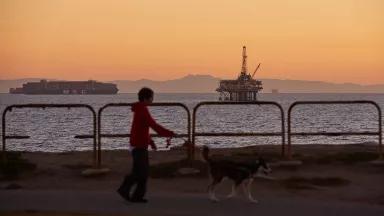
The Trump administration’s proposal is especially egregious because there is no need for a new offshore oil and gas leasing program right now. The current program, developed under the Biden administration, goes through 2029. Not only that but Congress also mandated that an unprecedented 36 offshore oil and gas lease sales be held over the next 15 years in the Republican tax bill from earlier this summer. Between the current offshore oil and gas leasing program and the congressionally mandated sales, there is no need for any additional offshore and oil gas lease sales. If this administration were serious about government efficiency, then it might recognize that spending taxpayer money on an unnecessary new program is a terrible use of both time and resources.
Instead of embracing a clean energy future, this administration is doubling down on oil and gas, locking us into decades of future greenhouse gas emissions. It is setting its agenda for offshore oil and gas development by moving forward on the country’s next offshore oil and gas leasing program under the Outer Continental Shelf Lands Act (OCSLA). This reckless proposed program is not moving forward in a vacuum. As the Trump administration’s recent actions in Venezuela made clear, the administration is working for the perceived best interests of oil and gas CEOs, not for those of the American people and our planet’s future.
Below is an overview of this process, where we are, and what we stand to lose.
What is the offshore oil and gas leasing program process?
The United States conducts offshore oil and gas leasing through the U.S. Department of the Interior’s Bureau of Ocean Energy Management (BOEM). Under the OCSLA, the Interior Secretary is required to periodically propose a five-year schedule of oil and gas lease sales, which the secretary “determines will best meet national energy needs for the five-year period following its approval.” BOEM is tasked with identifying the ocean areas to be leased, as well as scheduling lease sales for the following five years. BOEM must also consider the effects of leasing on the environment and communities.
The current offshore oil and gas leasing program, finalized under the Biden administration, includes a record-low number of sales, with three offshore oil and gas lease sales scheduled between 2025 and 2029. But the current administration has proposed to dramatically expand offshore oil and gas leasing, consistent with the president’s Unleashing American Energy executive order and pro–fossil fuel policies. During the first Trump administration, the Interior Department released a draft five-year program scheduling 47 lease sales in just five years, including 12 sales in the Gulf of Mexico. The new offshore oil and gas leasing program proposes to dramatically increase leasing in the Gulf, California, and Alaska.
Where are we in the process?
Back in April 2025, the administration collected comments for 45 days on potential leasing in all federal waters. Members of the public, advocacy groups, and many others weighed in with opposition to an expansion of leasing across our ocean.
Then in November, BOEM moved forward by publishing a draft schedule of lease sales. It proposed 21 lease sales in Alaska, 7 in the Gulf of Mexico, and 6 in the Pacific off of California. The administration also created a new planning area in what used to be the eastern gulf off of Florida, in addition to the high Arctic area, which was created earlier this year.
The public had a 60-day comment period to weigh in on the administration’s proposal, which closed in January 2026. NRDC, along with partner organizations, drafted comments in response (index linked here) in addition to joining more than 140 organizations in a shorter comment letter. NRDC members and activists submitted over 29,000 comments, and the environmental community reported submitting more than 300,000 comments opposing new oil and gas leasing. Within one business day of closing the comment period, BOEM already posted a call for information for potential lease sales in southern and central California.
After this comment period, BOEM will publish a proposed program, followed by a proposed final program, each of which will include an updated draft of the five-year schedule of lease sales. Both proposals will offer opportunities for the public to weigh in. Usually, there are two ways to give BOEM input: by submitting an official comment online to the Federal Register or by attending and speaking at listening sessions/public hearings. Thus far, the administration has not held any public hearings.
After it’s finalized, the new offshore oil and gas leasing program will likely replace part of the existing Biden program, which was intended to run through 2029.
Coastal governors play a key role
The governors of coastal states play a critical role in the offshore oil and gas leasing program process. OCSLA recognizes that offshore exploration and drilling in federal waters significantly affects adjacent coastal states, and the law requires BOEM to consider relevant state laws and policies. In addition to considering state policies, BOEM must also invite the governors of affected coastal states to provide suggestions for the offshore leasing program. This means that after BOEM proposes its leasing schedule, OCSLA requires the agency to give governors the opportunity to request changes to the program, which BOEM must respond to in writing. Even more, OCSLA also gives local governments the opportunity to weigh in on the offshore leasing program.
Coastal governors from the Pacific to the Atlantic, Republicans and Democrats alike, have historically opposed offshore drilling in their states. They understand that the potential cost to their states is too high: Impacts to coastal economies, communities, and wildlife are too valuable to put at risk of oil spills and other offshore drilling impacts. Especially now, governors must speak out before their coasts are sacrificed to Big Oil profits.
This is part of public lands takeover
This oil and gas giveaway is another example of the Trump administration’s attacks on our public lands and waters. The American people have repeatedly rejected the administration’s proposals to sell our public lands and will likely do so again. These giveaways are an attack on our economy, wildlife, and the public spaces we treasure. Our public lands, waters, and coasts belong to all of us and are not to be sold off just to pad a CEO’s pockets. In addition, as we’ve seen with onshore public lands sales, there isn’t the demand for new fossil fuel leases, despite the Trump administration’s claims—in fact, there is a global oil surplus.
Increased oil spill risk and impacts to fishermen
The next five-year plan proposes to open up huge areas of our ocean to dangerous and dirty offshore drilling, not to mention the climate implications of continued fossil fuel extraction. The stakes couldn’t be higher: Offshore drilling threatens the health of our ocean, our climate, and our coastal communities. Catastrophic oil spills—like the 2010 disaster on the Deepwater Horizon oil rig, the 1989 Exxon Valdez spill in Alaska, and the more recent 2021 and 2024 Huntington Beach spills in California—cause ecological, economic, and public health damages that can last for decades.
Dramatic in the short term, oil spills spell long-term devastation. But these disasters are only one way in which offshore drilling wreaks havoc. The oil and gas industry’s routine business practices imperil marine wildlife with deafening seismic airgun blasts, destroy habitats, emit toxic by-products and high levels of greenhouse gases, and lead to tens of thousands of smaller, less visible spills in U.S. waters annually.
Fishermen in particular are hit hard whenever there is an oil spill risk. This story from Michael Roberts of Louisiana is just one example of how devastating an oil spill can be to fishermen. And it’s not just the short-term impact—exposure to oil can kill fish larvae and impair the reproductive capacity of adult fish. After Deepwater Horizon, the Gulf of Mexico commercial fishing industry lost around $247 million and thousands of jobs.
This offshore drilling plan comes at a time when this administration has been cutting federal funding and capacity, which has implications for federal response to oil spills, especially in new regions where the infrastructure is not yet in place. We should not be expanding offshore drilling in areas where cleanup could be impossible.
The outcomes of this five-year program could mean the difference between a healthy ocean or one marred by oil spills, and a livable climate or increased disasters.
A false energy emergency
Under the false premise of a “national energy emergency,” this administration has been fast-tracking dirty energy projects while actively undermining clean energy. The United States is the world’s leading producer of oil and gas—and a leading exporter too. We ship out more oil than Saudi Arabia, Russia, Ecuador, Venezuela, and any other petro-state on the map. The U.S. fossil fuel industry has no dearth of resources for future growth: It retains access to 11 million acres of public waters previously leased to them—three-quarters of which remain unused.
Less than a year in, this administration has unleashed a myopic campaign to send us back to an energy system that is less secure, more expensive, and much, much dirtier. Instead of bringing about energy dominance, Trump has stifled the cheapest and fastest-growing new energy sources, endangering our ability to meet the surging demand for electricity from data centers and the hoped-for manufacturing renaissance.
The contrast between the administration’s proposed plan to dramatically expand offshore drilling and its crusade to destroy the offshore wind industry could not be more stark. The administration has halted offshore wind projects, including attempting to stop Revolution Wind, which is more than 80 percent complete and would power 350,000 homes in the Northeast by next year.
Instead of delivering affordable, reliable clean energy, this administration is forcing families to pay higher prices for fossil fuels—threatening clean energy jobs, raising utility bills, and deepening the climate crisis. We should be investing in offshore wind, not giving away new areas of our ocean to oil and gas.
Marine mammals at risk
Offshore oil and gas activities already pose well-documented and major threats to endangered whales like Cook Inlet beluga whales and Rice’s whales, the only large whale to reside in the Gulf of Mexico year-round. Seismic surveys for oil and gas exploration cause chronic stress and potential habitat abandonment and disrupt the whales’ ability to communicate, feed, and reproduce. Catastrophic oil spills pose an existential threat to whales. For example, the BP Deepwater Horizon disaster is estimated, by the government, to have killed 17 percent of the entire Rice’s whale population, in addition to causing reproductive loss and adverse health impacts in surviving whales. The draft program proposes five new sales in Cook Inlet and seven new sales in the Gulf, heightening impacts for already stressed Rice’s whales and Cook Inlet beluga whales.
Expanding fossil fuel exploration and drilling in areas like the Pacific and Arctic oceans will place even more marine mammal species in peril. Authorizing seismic surveys and drilling in the Pacific could inflict immense harm on iconic species of great whales—including blues, humpbacks, and fins—as well as the famous West Coast gray whales, which are already in a state of precipitous decline. The Arctic hosts numerous marine mammals that are uniquely adapted to its icy waters, including bowhead whales, polar bears, and seals. Arctic species are already struggling to cope with extreme ice loss due to global warming and are generally unaccustomed to human activities, meaning they are especially vulnerable to noise, vessel interactions, and oil spills.
But sacrificing wildlife to Big Oil is deeply unpopular. When companies proposed to blast the critically endangered North Atlantic right whales’ offshore habitat with months of seismic surveys, hundreds of towns, from New Jersey to Florida, passed resolutions demanding that the government stop them.
From day one, the Trump administration has amplified misinformation about offshore wind energy under the guise of concern for whales. If the administration were genuinely concerned about whale protection, the offshore leasing program provides a real opportunity to show it— a program with no new lease sales would be the best-case scenario. Yet the administration hasn’t done even the bare minimum of protecting known whale ranges from leasing and seismic exploration: For example, the program proposes to sell leases in the habitats of the Rice’s whale, North Atlantic right whale, and gray whale.
What we can do
The fossil fuel industry is already raking in record production and profits, and new offshore leasing makes no sense for the American public. Once the administration finalizes its leasing program, it is not easily changed. The public’s voice is critical during the five-year program process, and it is essential to collectively say loudly and clearly that we do not want more offshore oil and gas drilling.
This backgrounder was first published November 20, 2025, and has since been updated with new information and links.
The DOI is proposing to expand oil and gas drilling across ONE BILLION+ acres of U.S. waters.
This will threaten marine life, generate toxic air pollution, and put coastal communities and economies at risk of oil spills. Submit your comment saying no!

Say no to the Trump administration’s plan to open up our waters to oil and gas drilling!
The Interior Department is proposing to expand oil and gas drilling across more than ONE BILLION acres of U.S. waters. This will threaten endangered whales, generate toxic air pollution, and put coastal communities and economies at risk of oil spills and other drilling impacts. Submit your public comment now opposing this proposal.
Related Content
NRDC v. Burgum (God Squad Cases)

16 Years after Deepwater Horizon, We’re Charging in the Wrong Direction
