Managing Offshore Wind in the Face of Uncertainty
This report lays out key adaptive management principles and recommendations for regulators.


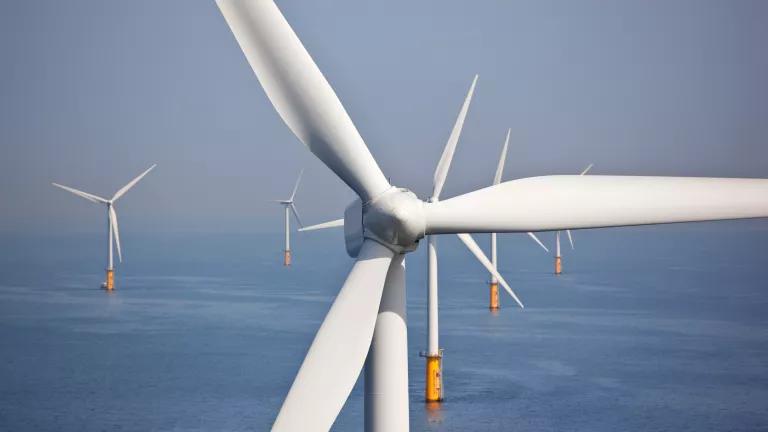
Despite current headwinds from the Trump administration, offshore wind energy is essential for transitioning away from harmful fossil fuels to a clean energy economy. Offshore wind could provide more than three times the electricity required to power the United States, giving the country an opportunity to fight climate change, reduce local and regional air and water pollution, and grow a new industry that supports thousands of high-quality careers.
LEARN MORE

While the need for clean energy is urgent, we can and must ensure that all offshore wind in the United States, including floating offshore wind systems, are developed responsibly and in a manner that avoids, minimizes, mitigates, and monitors for adverse impacts to biodiversity and coastal and marine ecosystems. “Adaptive management” is crucial for meeting the dual goals of facilitating a rapid transition to renewable energy while minimizing impacts to the ocean in the face of uncertainty—and continuing to do so over time.
This report explores how adaptive management can be implemented in offshore wind development, provides examples of its use in other energy sectors today, and offers clear recommendations for agencies and policymakers.
READ THE FULL REPORT
Related Resources
First-ever Regional Offshore Wind and Wildlife Science Plan Released

Untangling the Way Forward for Responsible Offshore Wind Energy