Power for the People
Georgia can overcome roadblocks to unlock the power of community solar.


Georgia currently ranks seventh in the country in solar capacity. However, the state has earned this status mostly through large-scale utility projects, which often fail to deliver direct benefits to many residents. Community solar programs, which empower utility bill payers to invest directly in clean energy generation and receive credits to lower their monthly energy bills, remain very limited in Georgia. These programs would be especially beneficial for the state’s renters as well as homeowners who cannot afford the up-front costs of solar panel installation or whose homes are not suitable for it.
Learn More: Energy in Georgia

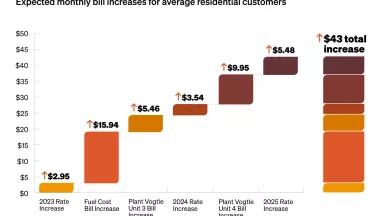
However, the state faces two main hurdles in implementing community solar: First, Georgia’s current energy landscape is shaped and dominated by Georgia Power, whose policies are antagonistic toward residential and community solar. Second, at the legislative level, Georgia lacks something called “virtual net metering”—a key element of many successful community solar programs and those serving multi-unit dwellings—as well as meaningful incentives to support community solar development.
These are not insurmountable roadblocks. Overcoming these challenges will require coordinated action across all levels of government, including forward-looking state legislation and robust federal funding. Such efforts to open up the state to community solar could result in a more resilient electrical grid, lower monthly bills for consumers, and new, high-quality jobs for Georgians.
READ THE FULL ISSUE BRIEF
Related Resources
Rate Increases and Blackouts: Duke Energy’s Strategy for 2023

NRDC at Climate Week NYC 2026: Meeting the Moment