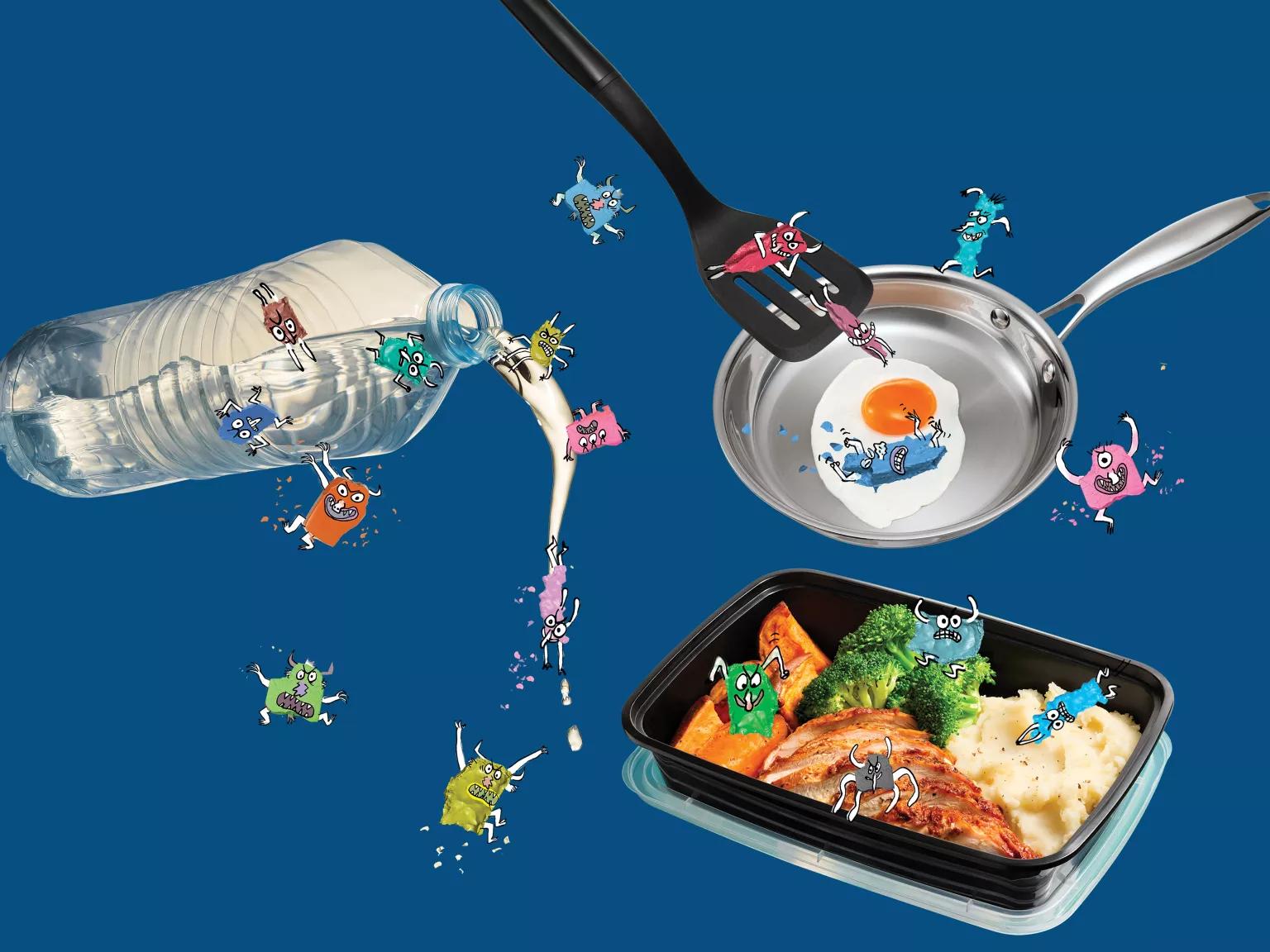
Microplastics Are Micromonsters
Follow NRDC’s science-based steps to protect your family from microplastics.
Even though they are too small to see, these micromonsters may increase the risk of big health problems. Microplastics are impossible to avoid entirely, but you can reduce the amount you unknowingly ingest. Check out these tips, and follow the ones that feel doable for you. Every smart swap helps!
Science-backed steps for avoiding microplastic exposure
How many of these are you already doing?
Everyday microplastic exposure comes from the food and drink you consume, the air you breathe, and your skin’s contact with plastic. These simple changes can help reduce your exposure over time.

Heating plastic can increase the release of microplastics into food and drinks.
- Transfer takeout to glass or ceramic before reheating.
- Pack lunches in glass containers that can go directly into the microwave.
- Warm baby food in glass or ceramic.
- Use ceramic or stainless steel mugs for hot beverages.

Simple swaps in the kitchen can reduce the amount of plastic that touches and enters your food.
- Don’t store food in plastic.
- Store food in glass containers.
- Choose wooden or stainless steel cooking utensils.
- Replace plastic cutting boards.
- Replace plastic mixing bowls with glass or stainless steel.
- Replace plastic blender jars with glass.
- Choose coffee makers that minimize hot water contact with plastic.
- Choose loose-leaf tea or paper tea bags, not plastic.

Using plastic-free cookware is an opportunity to reduce plastic’s contact with your food.
- Replace nonstick cookware, especially if it’s scratched, chipped, or peeling.
- Choose stainless steel, cast iron, or ceramic cookware when replacing pans.
- Replace nonstick bakeware, especially if it’s scratched, chipped, or peeling.
- Choose stainless steel roasting pans and baking sheets.
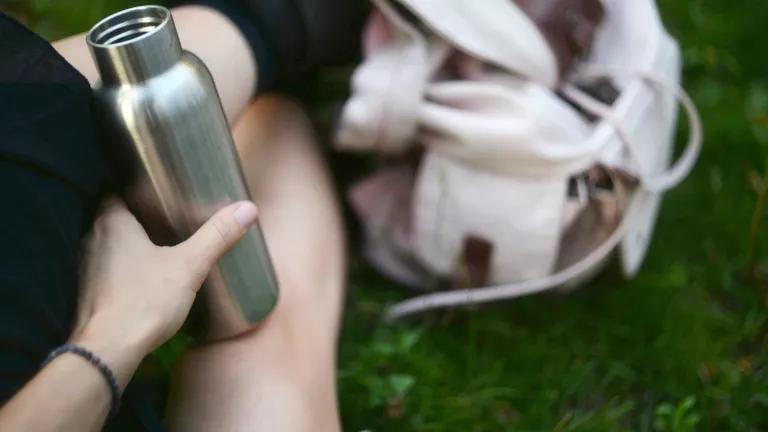
Choosing reusable bottles can help reduce exposure from single-use plastics.
- Choose tap water over bottled water when possible.
- Carry a reusable stainless steel or glass bottle.
- Use stainless steel travel mugs for hot drinks.
- Pack children’s drinks in reusable metal bottles.
- Store beverages in glass pitchers.
- Choose beverages packaged in glass when practical.

Small changes to children’s everyday products can help reduce plastic exposure during human development.
- Choose shatter-resistant glass baby bottles.
- Heat milk, formula, and baby food in glass.
- Avoid plastic bottles, cups, and dishes.
- Choose wooden toys and avoid plastic ones when practical.
- Choose cotton underwear, pajamas, towels, and bedding.

Synthetic fabrics can shed tiny plastic fibers during everyday use, wear, and washing.
- Choose clothing made from natural fibers such as cotton, linen, or wool instead of synthetic fabrics.
- Choose home textiles—such as bedding, towels, and rugs—made from natural fibers when possible.
- Be sure to check tags carefully, as synthetic fibers can sometimes be blended with natural fibers.

Choose low- or no-plastic options to protect sensitive areas of the body.
- Choose 100 percent cotton tampons and pads.
- Choose menstrual products without plastic applicators.
- Consider reusable silicone menstrual cups or discs.
- Consider reusable cotton cloth pads.
- Choose cotton underwear.

Both plastic and paper cups, as well as plastic straws, expose you to microplastics.
- Carry a reusable stainless steel or glass travel mug.
- Bring your own cup to coffee shops that accept them.
- Beware of disposable paper cups since they usually have plastic linings.
- Ditch the plastic straw entir

Some body care products, from makeup to shower gels, contain intentionally added plastic ingredients.
- Look for products labeled as being free of intentionally added plastic ingredients.
- Choose lip balms and lipsticks without intentionally added plastic ingredients.
- Choose cosmetics without glitter, which is made from plastic.
- Avoid products with ingredients that can indicate the presence of microplastics, including poly
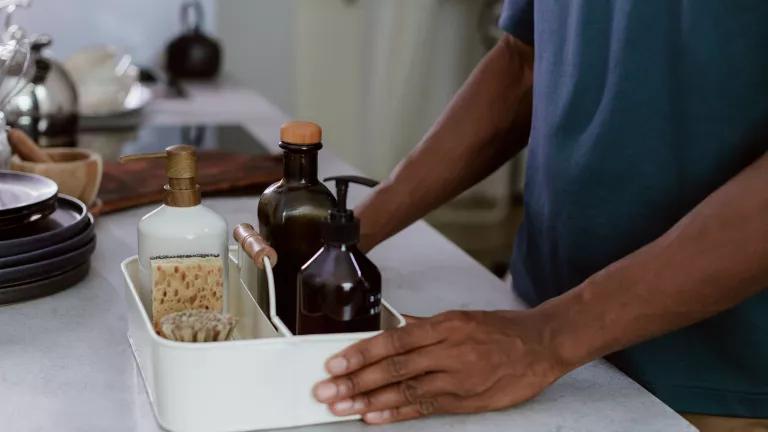
Household cleaners may contain intentionally added plastics, and some cleaning supplies can shed microplastics.
- Check labels for plastic microbeads added to cleaning products.
- Most sponges are made from nylon or polyester, which break down into microplastics, but nonplastic alternatives are available.
- Skip dishwasher pods that are wrapped in plastic.
- Avoid products with ingredients that can indicate the presence of microplastics, including
NRDC is an independent, science-based organization with decades of experience translating emerging environmental health research into practical protections for families. Our scientists and health experts track evolving evidence on risks like lead, PFAS, air pollution—and now, microplastics—and translate that science into clear, everyday guidance people can use now.
This guidance reflects the best available evidence and will evolve as the science advances.
WHAT MAKES MICROPLASTICS SO SCARY?
Tiny particles of plastic sneaking into our bodies is both bizarre and concerning.
Scientists have linked microplastics present in arterial plaque with an increased risk of heart attack, stroke, and death. Early science also suggests microplastic exposure is associated with increased risks of liver disease and cancer, inflammatory bowel disease, chronic rhinosinusitis, and pregnancy complications.
As researchers continue to discover more about the magnitude of the health risks connected to microplastic exposure, it behooves us to make some simple lifestyle changes that may reduce our personal risk.
CHECK OUR OUR ADS
Microplastics: Glass or Metal Water Bottle? radio spot


Learn More

Microplastics: Resources, Experts & More

Microplastics Are a Growing Threat

Microplastic Is Inside Your Body

Double Trouble

New Review Highlights Human Health Risks from Microplastic Exposure

$1 Trillion: The Social Cost of Plastic in the United States