Extinction Is Forever, Intentional or Not
The Trump administration’s latest attack on the Endangered Species Act puts imperiled wildlife—from polar bears to toads to bumblebees—at great risk.

If you spear the last few members of an endangered fish population, you will have sent the species into extinction. But what if you took a bulldozer and filled in the fishes’ pond? The species is still extinct, right? The resulting biodiversity loss is still permanent, no? Of course it is.
In both cases, you could say, in the plainest of terms, that the species was harmed—irreparably so.
And yet, according to the Trump administration’s new interpretation of the word “harm” within the Endangered Species Act (ESA), destroying the habitat of an endangered animal or plant is now permissible.
“Let me be clear—it’s bad. It is really bad,” says Rebecca Riley, a managing director for NRDC’s Nature program. “What they are trying to do is limit the protections of the law as much as they feasibly can.”
Taking the teeth out of the Endangered Species Act
For the past half century, the ESA has been a remarkably successful environmental law. Of the 1,700 species or so listed since the law’s passing in 1973, only 32 have gone extinct. That impressive track record is due in part to the habitat protections the law confers on the species that make the list.
“And that makes sense, because let’s say you cut down a tree that a species lives in, or you destroy the milkweed that a monarch butterfly lays its eggs on—doing so will harm those species,” says Riley.
When it comes to endangered species, it is illegal “to harass, harm, pursue, hunt, shoot, wound, kill, trap, capture, or collect, or to attempt to engage in any such conduct,” the law states. “Harm,” as previously defined by the government, includes habitat modification. So, by rescinding the definition of harm and then reinterpreting the term, the Trump administration dramatically narrows how the ESA can protect vulnerable species, with potentially devastating consequences for some of the plant and animal life you know and love.
An intentional loophole
The administration has also expanded its reimagination of what it means to “take” a protected species even farther. No longer does the law generally protect against “incidental take”; violations now only apply to acts that intentionally and directly kill, harm, or harvest a species.
Under the new interpretation of the law, for instance, going out and, say, shooting a black-footed ferret would still be illegal because you would be killing an endangered species on purpose. But somehow, a developer building on black-footed ferret habitat or an oil pipeline poisoning a colony of prairie dogs (a major staple of the ferret’s diet) would be legally OK.
“BP didn’t intend to kill all those protected fish, birds, and marine mammals when its Deepwater Horizon rig exploded,” says Riley. “It just happened as a consequence of their irresponsibility.”
While intentional killings do happen, the vast majority of endangered species are pushed to the brink due to indirect causes such as resource extraction, development, and pollution. A 2019 study looked into this and found that direct killing threatened just 17 percent of the species added to the ESA between 1975 and 2017. Meanwhile, indirect factors such as habitat loss and degradation imperiled 81 percent.
Nobody, for instance, is running around smashing rusty-patched bumblebees with a hammer (at least, I hope not). But if private corporations are free to plow over its native grassland habitat in the Midwest and Great Lakes and cover it with pesticides, the end result would be the same.

The impact on the Arctic
“I mean, this is all pretty basic. It’s habitat. Preserving habitat is how you preserve species,” says Bobby McEnaney, senior land strategist at NRDC. “Without habitat, you do not have wildlife up in the Arctic.”
One of McEnaney’s main focuses includes the Western Arctic and the Arctic National Wildlife Refuge. These stretches of northern Alaska are home to not only polar bears but also caribou, Arctic foxes, and millions upon millions of birds migrating to and from the top of the world from all seven continents. This is, in fact, one of the richest areas of biodiversity on earth.
But for the past century, the region has also been in the sights of companies seeking to drill and mine on lands that endangered Arctic species need. So it’s unsurprising that such extractive industries have been lobbying for, and stand to profit from, a loss of accountability for committing harm under the ESA.
Polar bears, which the ESA classifies as threatened, require vast tracts of wilderness to hunt, mate, and eventually den up and give birth to cubs. Likewise, many of Alaska’s caribou herds have been trending downward in population, and endangered herds roam just over the border in Canada.
“If you decide that you’re going to allow all means of development on those habitats, particularly the denning habitat of polar bears or the grasslands of the Arctic for caribou, you’ve essentially decided that these species will not be able to thrive in the future,” says McEnaney.
And it’s not just Arctic wildlife at risk. As the Trump administration opens more and more public lands and waters to the fossil fuel industry, and even data center development, imperiled species all over the country could suddenly find themselves with nowhere to hide, mate, hunt, graze, or just be. This includes the sage grouses of the western prairies and Rice’s whales and sea turtles in the Gulf of Mexico.
“One of the great things about the Endangered Species Act is it gave species a voice,” says McEnaney. “A polar bear is not going to file a petition or tell you what it needs. But the ESA acted as a watchtower to say, ‘Hey, this is what a species needs to survive.’”
A voice for the wild
The long-standing protections for endangered species have never been more in danger. But there’s also strong public opposition to these pro-extinction policies. When the Trump administration proposed a different rule earlier this month that would give oil and gas companies a free pass to unintentionally harm or kill polar bears and Pacific walruses under the Marine Mammal Protection Act (MMPA), it generated more than 85,000 public comments—the great majority panning the idea.
“What the administration is doing is broadly unpopular,” says McEnaney. “In general, I think the public really cares about what makes America unique, and one of the things that does that is the incredible natural biodiversity that we have, from manatees in Florida to polar bears in Alaska.”
In recent months, 20 states and Washington, D.C., have filed several lawsuits challenging the efforts to weaken the ESA. “The Trump administration is trying to undermine the law, the will of Congress, and the will of the people who overwhelmingly support protections for endangered species,” said Nick Brown, attorney general for Washington State, at a press conference. “Instead of stewardship, this administration’s approach to our land, to our water, is one of exploitation.”
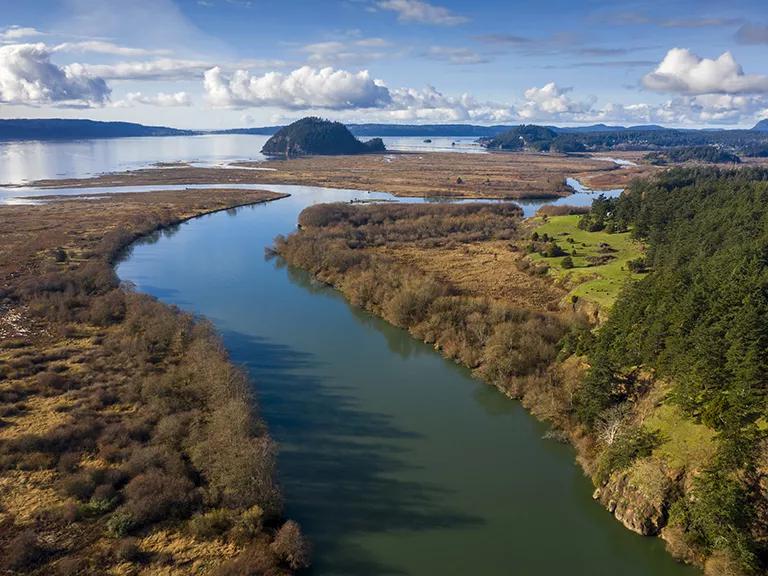

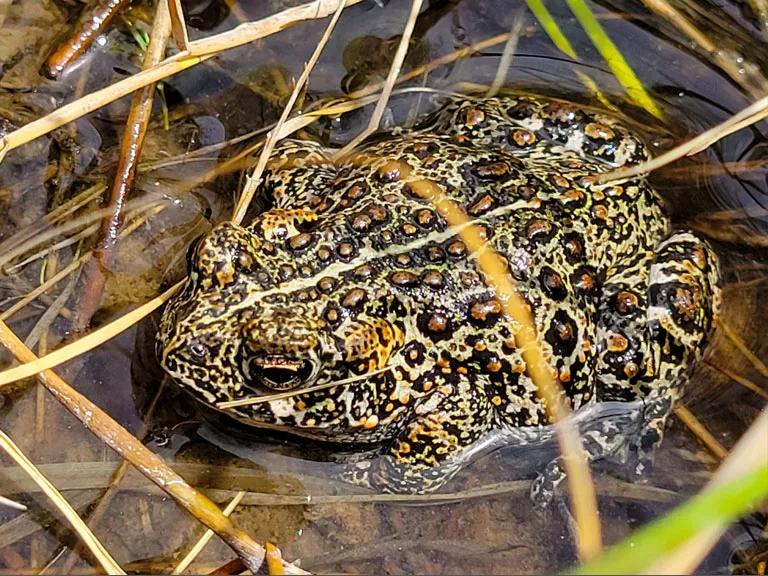
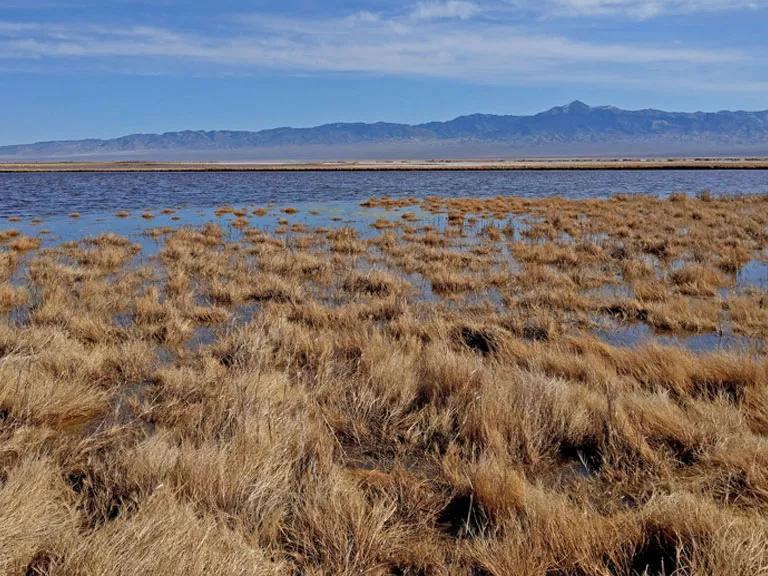
Clockwise from top left: The Skagit River, a treaty-protected traditional fishing ground for Coast Salish Tribes; the annual blessing of the Swinomish Tribe fishing fleet; Nevada's Dixie Valley, where the entire population of the Dixie Valley toad (bottom left) lives in a thermal spring-fed wetland
Edmund Lowe/Getty Images
; 2)Ruth Fremson/The New York Times/Redux
; 3)Chad Mellison/USFWS
; 4)Chad Mellison/USFWS
The states’ lawsuits came on top of those filed by a number of Indigenous Nations. In their case, the Swinomish and Squaxin Island Tribes of Washington argue that their people’s cultural and economic well-being are inextricably linked to the health of the Pacific salmon population and other resources that are threatened by the new interpretations. Meanwhile, the lawsuit of the Fallon Paiute-Shoshone Tribe, located in Nevada, enumerates how the new interpretation of the ESA endangers the Dixie Valley toad. Their filing describes the toad as “an important ancestor” that has survived for hundreds of thousands of years, thanks to a small but unique habitat that mixes cold, shallow groundwater with hot geothermal springs.
McEnaney is hopeful that these legal filings will force the federal government to recalibrate. “We’ve seen people take action, and when they stand up for the things that matter to them, we’ve also sometimes seen the administration back down,” says McEnaney. He adds that, even though the U.S. Department of the Interior discounted tens of thousands of comments concerning the MMPA, “I don’t think that’s going to be the last chapter of this conversation. Never underestimate how much power you have in making sure your voice gets heard.”
This NRDC.org story is available for online republication by news media outlets or nonprofits under these conditions: The writer(s) must be credited with a byline; you must note prominently that the story was originally published by NRDC.org and link to the original; the story cannot be edited (beyond simple things such as grammar); you can’t resell the story in any form or grant republishing rights to other outlets; you can’t republish our material wholesale or automatically—you need to select stories individually; you can’t republish the photos or graphics on our site without specific permission; you should drop us a note to let us know when you’ve used one of our stories.
If the God Squad is successful, federally listed species will be driven further to extinction.
Tell your members of Congress to stop allowing fossil fuel companies to harm wildlife just to advance the Trump administration's drill, baby, drill agenda.

Protect endangered wildlife from the outrageous God Squad exemption!
The Trump administration’s God Squad unanimously voted to sacrifice endangered marine species—manatees, sea turtles, and whales—that are getting in the way of its plans for expanding oil and gas drilling in the Gulf of Mexico. NRDC sued, but we also need your help to keep up a massive public outcry to so that endangered species aren't pushed to extinction.
Our Public Lands Are on the Chopping Block Again
The Endangered Species Act Under Attack
The Trump Administration Wants to Take Away Protections for Endangered Species Look-Alikes