
A Small Town in Mississippi Battles the International Biomass Industry
When the Drax wood pellet plant came to Gloster, reports of lung disease soon followed.
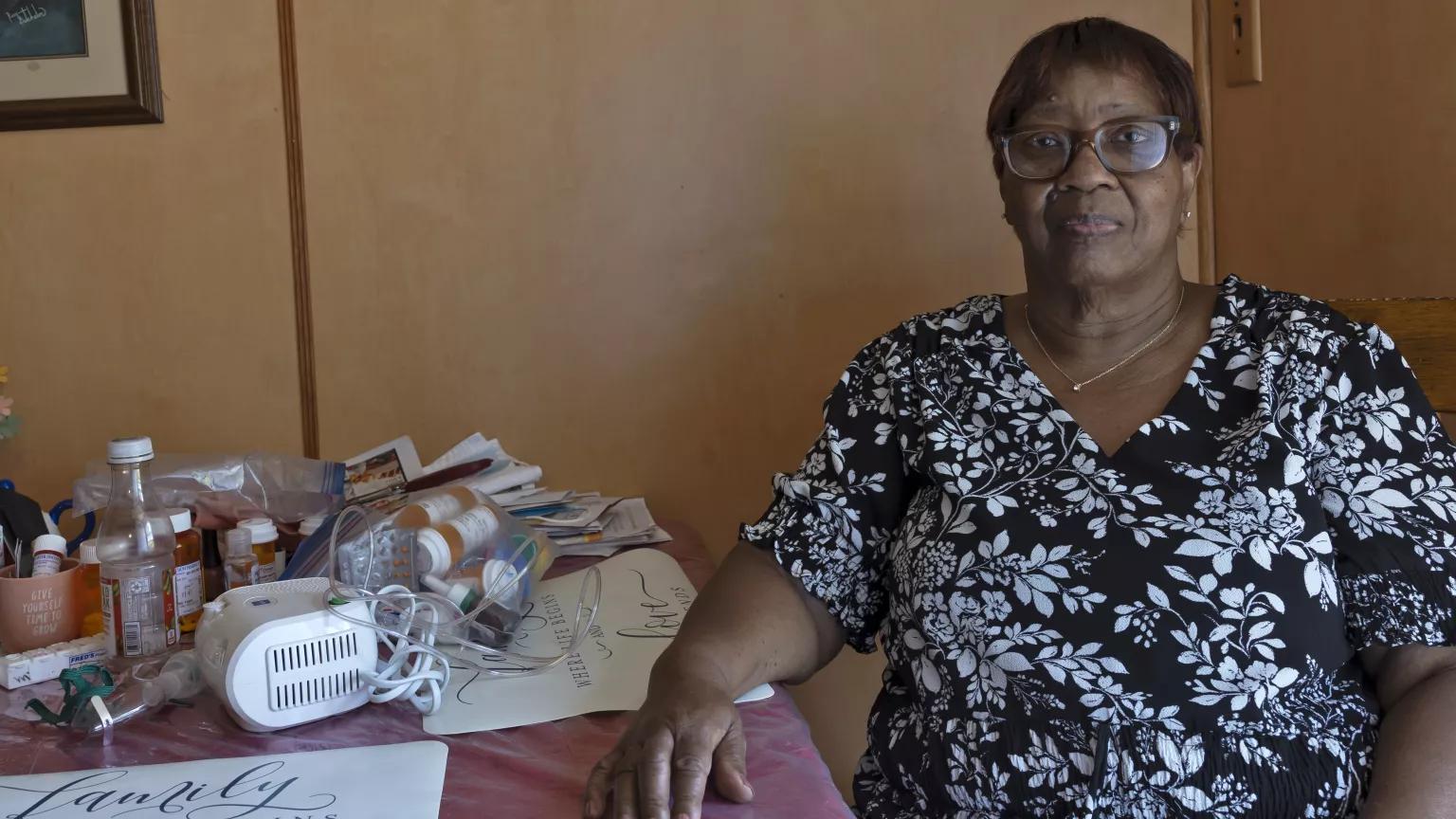
Jane Martin with the nebulizer and medications she uses at her home in Gloster, Mississippi, on September 20, 2025
Jane Martin had just gotten out of the hospital in early 2021 when she read the news about a wood pellet plant in Gloster, her small, rural hometown of about 900 people in southwestern Mississippi. Turns out, the Amite BioEnergy plant had violated the Clean Air Act every year since its opening in 2016, receiving $2.5 million in fines from the Mississippi Department of Environmental Quality (MDEQ).
Over the previous two years, breathing problems had hospitalized Martin repeatedly. She remembers her doctor struggling to explain her condition, since the 77-year-old had never smoked cigarettes nor lived with secondhand smoke. But the pellet plant revelation offered a new clue. “This could be the reason I’m sick,” she told her daughter, Dr. Krystal Martin, an educator.
Soon, the younger Martin began researching the kind of air pollution her mother had been exposed to. She also heard from other Gloster residents who were in the same boat, looking for answers concerning lung disease that seemed to emerge out of nowhere.
“Something is not right,” Dr. Martin remembers thinking. “The community is too small to have a large number of people suffering from similar health issues…there has to be a connection.”
All of the pollutants she learned about—volatile organic compounds (VOCs), carbon dioxide, sulfur dioxide, nitrogen oxides, particulate matter—can damage the respiratory system. VOCs, for example, easily evaporate into the air and are precursors to ground-level ozone, which “aggressively” attacks lung tissue.
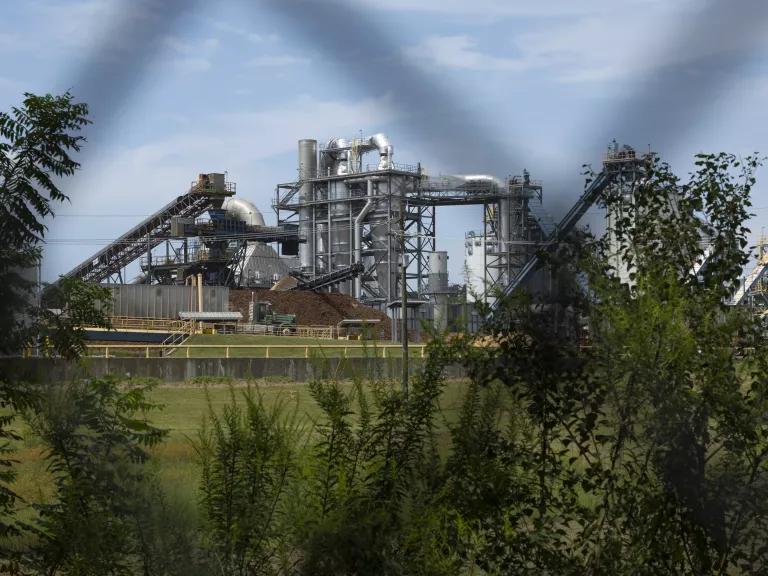
The Amite BioEnergy plant in Gloster, as seen through the boundary fence it shares with Blackmon Hole, a neighboring mobile home park
Soon, the Martins became aware that their local plant’s air quality breach was not an isolated incident. The plant’s owner, Drax, an energy company headquartered in the United Kingdom (U.K.), operates a total of seven wood pellet plants in Alabama, Louisiana, and Mississippi. Collectively, the Drax plants have racked up tens of thousands of environmental violations since 2014.
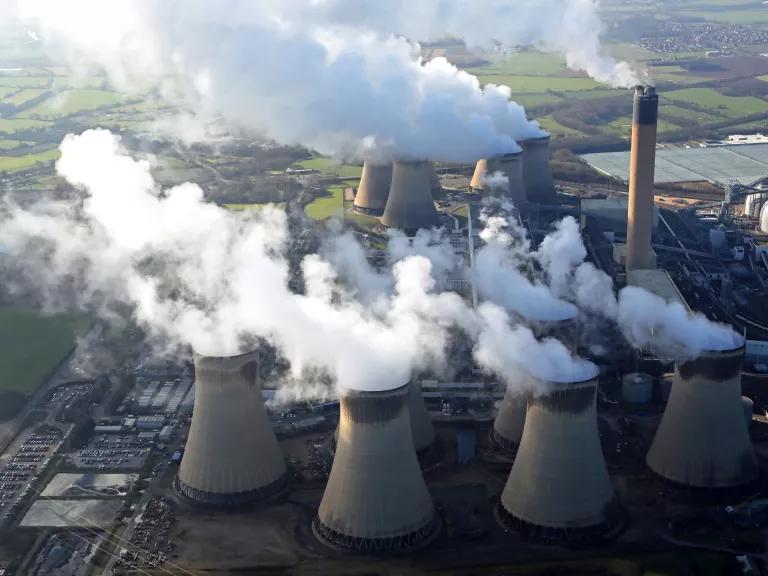
The plants produce millions of tonnes of small wood pellets to ship overseas, including to England, where the Drax Power Station in North Yorkshire burns them to generate electricity. Bewilderingly, Drax has received billions of dollars in U.K. government subsidies for producing such biomass, which proponents market as “renewable energy,” despite the company being the largest single carbon emitter in the United Kingdom for 11 years running.
“If you want to know what environmental racism looks like, look at Gloster, Mississippi.”
Dr. Krystal Martin
On this side of the Atlantic, the company was also getting tens of millions of dollars in tax breaks from states for setting up shop in regions with struggling local economies. These perks came even as the facilities degraded the air quality and health of those very same areas, often compounding environmental injustices. In fact, pellet plants in the South are more than 50 percent more likely to be located in low-income communities of color than in more affluent areas.
Gloster takes a stand against environmental racism
While Drax claims on its website to be “committed to being a good neighbor in the communities where we operate,” Gloster residents tell a very different story. The dust emanating from the Amite BioEnergy plant infiltrates nearby windows and vents and settles into thick layers on cars and household surfaces. Sometimes, there’s enough dust swirling in the air to set off Ring doorbell cameras. Noise coming from the plant keeps people up at night, and a pervasive pine odor wafts throughout the town. Symptoms like scratchy throats, nosebleeds, and headaches are commonplace but more worrisome are the instances of adult-onset asthma, chronic obstructive pulmonary disease (COPD), and lung cancer.
“If you want to know what environmental racism looks like, look at Gloster, Mississippi,” Dr. Martin says of the predominantly Black community with a median household income of $23,603. This is less than half the median income for the whole of Mississippi, which already has the lowest in the nation.

Dr. Krystal Martin in Greater Greener Gloster’s office on Main Street
Dr. Martin has left her career in higher education and moved back home to advocate for her community full-time. In 2023, she cofounded the nonprofit Greater Greener Gloster, which has since partnered with organizations including Dogwood Alliance, Earthjustice, NRDC, and Southern Environmental Law Center (SELC).
In its mission to educate local residents about the biomass industry and advocate for stricter clean air standards, the group travels to Mississippi’s State Capitol in Jackson every year. Dr. Martin has even flown to London to attend Drax’s annual shareholders’ meeting. But progress has been painfully slow and riddled with setbacks.
In 2024, MDEQ fined Drax $225,000 for exceeding its Gloster plant’s limit on hazardous air pollutants (HAPs) by more than 50 percent. Yet the following year MDEQ granted Drax a permit that completely lacks a HAP emissions limit and only regulates the rate at which the plant releases the pollutants.
Now, with even more pollution on the way, Gloster residents are undertaking a new community air quality monitoring project in conjunction with University of Colorado Boulder researcher Grace Berg. The month-long study, which launched in October 2026, involves monitoring the air outside of volunteers’ homes and collecting air samples to test for hazardous VOCs, as well as documenting health symptoms and unusual odors and noises. Such data could help the community shed more light on the environmental harm they’re experiencing and validate what Berg describes as “a powerful mix of grief and determination.” She also hopes the work could lead to a data collection framework that would be useful to other towns dealing with pellet plant pollution.
The study is no small feat in rural Gloster, which lies far from the research institutions and the kinds of resources that urban centers take for granted. “The levers for change feel distant,” Berg says. “It takes tremendous time, patience, and grit to achieve what Greater Greener Gloster has.”
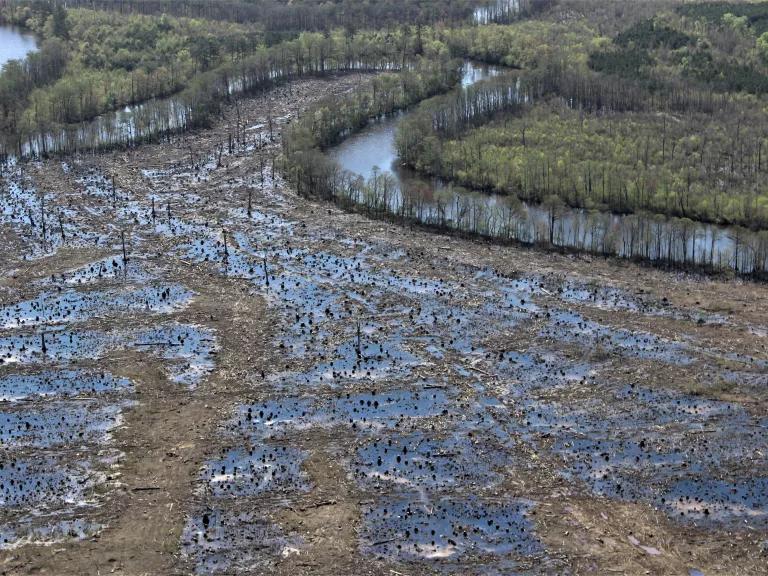
A clearcut section left after industrial logging by Enviva–a primary supplier of wood pellets to Drax–in bottomland hardwood forest along the Nottoway River in Virginia
Woody biomass: the “renewable energy” that isn’t
Both the United Kingdom and the European Union classify biomass like wood pellets as a carbon-neutral form of energy, something that NRDC forest advocate Renee Albrecht calls a “crazy loophole.” As the flawed thinking goes, forests cut for fuel have the potential to grow back—unlike, say, coal or oil—and are thus renewable.
But this explanation ignores the scientific realities: While forests may regrow, it takes decades for them to do so. Meanwhile, much of the carbon that the razed forest had stored is released into the atmosphere. Logging operations also harm wildlife habitat and crucial ecosystem services like flood mitigation—the quality of which does not always return, especially if a monoculture plantation replaces a once diverse ecosystem.
And while Drax claims to primarily use sawmill residues and low-grade wood to make its pellets, environmental watchdogs (such as NRDC, Dogwood Alliance, and SELC) have exposed the truth. They report that the woody biomass industry, including sources used by Drax, harvests mature trees from forests in the North Atlantic Coastal Plain biodiversity hot spot and from old-growth forests in British Columbia.
And let’s not forget the enormous amount of emissions generated by shipping pellets across the ocean. (Drax gets approximately 60 percent of its fibers from the United States and a further 30 percent from Canada.) Then, once the pellets arrive at their destination, biomass-powered plants actually must burn more material by weight than coal-fired plants to generate the same amount of electricity. According to the energy think tank Ember, Drax Power Station emitted a record 14.1 million tonnes of carbon dioxide in 2025. That’s roughly the same amount of carbon pollution as driving 3.3 million gas-powered passenger cars for a year.
It gets worse. “Government subsidies for burning wood create a double climate problem,” reads a 2021 open letter about bioenergy that was signed by hundreds of climate scientists. This is because this fake solution takes the place of, and diverts funding away from, real clean energy sources. “Companies are shifting fossil energy use to wood, which increases warming, as a substitute for shifting to solar and wind, which would truly decrease warming,” it states.
“It’s bad for people. It’s bad for nature. It’s bad for the climate,” says Elly Pepper, NRDC’s director of forest policy. “The fact that countries are using this false renewable to meet their climate goals—that’s what keeps me up at night.”
Biomass as energy independence? Not so fast.
That shift to burning wood to stave off climate change has led to a boom in the biomass industry; one that takes advantage of the abundant forests and shipping ports of the American Southeast. As of July 2026, 74 biomass manufacturing facilities were operating in the United States, with more than 80 percent of their production capacity concentrated in the South.
But don’t be fooled into thinking this is homegrown energy. Nearly all of those wood pellets are exported to Europe and Asia, and “it’s being done on the backs of U.S. communities,” says Matt Williams, a senior forest protection advocate for NRDC.
There are reasons for hope, however. Years of advocacy and increased scrutiny of the biomass industry are starting to move the needle. Last year, the U.K. government announced it would halve Drax’s subsidies over the next five years, which could indicate the start of a woody biomass phaseout. And stateside, efforts are stalling to expand the industry to the West Coast in order to more easily reach Asian markets.
In December 2025, Drax paused construction on a proposed pellet plant in Longview, Washington; six months later, Golden State Natural Resources canceled plans for two industrial-scale pellet plants in California, citing a weakening market while facing fierce opposition from groups such as NRDC and its partners, including frontline community groups like Little Manila Rising. Public backlash (including a lawsuit) has also paused Pacific Northwest Renewable Energy’s proposed pellet facility on the Washington coast. If built, the plant would sit right next to the Grays Harbor National Wildlife Refuge, a migration stop that’s critical to hundreds of bird species.
Despite these setbacks for the industry, many of its operations persist. Pollution from the Gloster plant continues to grow, along with the number of people who tell stories of dust, respiratory difficulties, and lives cut short. Gloster resident Curtis Harris, a former high school English teacher turned community activist, died from lung disease earlier this year at the age of 61. In a video recorded during his illness, Harris breathes with the assistance of an oxygen tank and speaks directly to the company he held responsible for his condition. “This wasn’t me before Drax came—being cooped up in the house, on oxygen. Just look at me,” he says. “Put yourself in my shoes. Drax, walk a mile in my shoes.”
This NRDC.org story is available for online republication by news media outlets or nonprofits under these conditions: The writer(s) must be credited with a byline; you must note prominently that the story was originally published by NRDC.org and link to the original; the story cannot be edited (beyond simple things such as grammar); you can’t resell the story in any form or grant republishing rights to other outlets; you can’t republish our material wholesale or automatically—you need to select stories individually; you can’t republish the photos or graphics on our site without specific permission; you should drop us a note to let us know when you’ve used one of our stories.
A Weakened USDA Will Hurt Small Farmers (and Everyone Else)
No, Burning Wood Fuels Is Not Climate-Friendly
With His “Climate Day” Orders, Biden Moves to Protect the Country—Its People, Lands and Waters, and Science