Data, Reports & Resources

NRDC is a leader and trusted source in environmental policy and research. 

From reports to issue briefs, we ensure accountability through peer review led by our Science Office, which provides data and scientific analysis that help shape and guide NRDC’s policies and positions. We also offer a range of other resources, such as 101 guides and consumer-focused scorecards to increase access to knowledge about how everyone can be a catalyst for change. 

Featured Data, Reports & Resources

Viewing 1 - 20 of 60

Perforaciones en alta mar 101

GuideAlaska, West, Louisiana, Georgia, North CarolinaShelia Hu
Una mirada a cómo funcionan las perforaciones en busca de petróleo y gas en los océanos, y por qué es hora de que pasen a la historia.

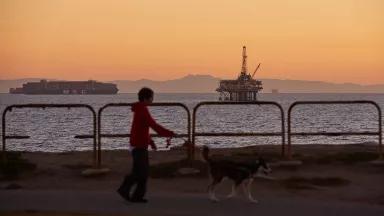
Offshore Drilling 101

GuideAlaska, West, Louisiana, Georgia, North CarolinaShelia Hu
A look into how drilling for oil and gas in the oceans works—and why it’s time to make it history.

Scientists Sign-on Letter for Blake Plateau (PDF)

Letters
This is a science sign-on letter by independent academic scientists urging the Biden administration to consider robust long-term protections for the Blake Plateau off the southeastern coast of the United States.

Mobilizing Electric Vehicles (EV) in Rural India (PDF)

Issue Brief
Transport infrastructure is the backbone of economic development and social well-being in India. In rural areas, enhancing mobility holds significant potential to uplift communities dependent on agriculture, farming, and small businesses as their primary source of livelihoods. Empirical data reveals...

The Story of India's First Statewide Cool Roof Policy Fact Sheet (PDF)

Fact Sheet
This fact sheet provides an overview on the Indian state of Telangana's groundbreaking cool roof policy that was launched in 2023. This government policy helps people cope with indoor extreme heat risks, lower household energy burdens from air conditioning, and...

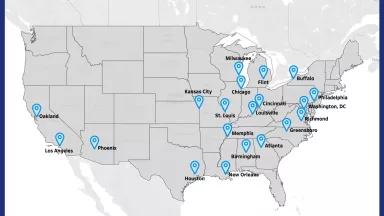
Energy-Burdened Communities Tool

MapLos Angeles, Phoenix, Houston, New Orleans, Birmingham, Atlanta, Memphis, Cincinnati, Louisville, St. Louis, Kansas City (Kansas), Chicago, Milwaukee, Flint, Buffalo, Philadelphia, Washington, D.C., Richmond (Virginia), Greensboro

Energy burden has disproportionately impacted low-income communities of color for decades. NRDC is actively working to bring justice to these communities through this mapping tool.

Waiting Game: How the Interconnection Queue Threatens Renewable Development in PJM

ReportUnited States, Delaware, Illinois, Indiana, Kentucky, Maryland, New Jersey, North Carolina, Ohio, Pennsylvania, Tennessee, Virginia, West Virginia, Washington, D.C.Dana Ammann
New NRDC analysis has found that even under recent reforms, the country’s largest grid operator is unlikely to approve new renewable projects quickly enough to meet even mandatory minimum state standards.

India's Expanding Clean Energy Workforce: 2022 Update (PDF)

Report
This report provides an updated analysis on the number of direct jobs in India created from the solar and wind energy sectors in the financial year 2022 (FY22), building on earlier analyses by the Council on Energy, Environment and Water...

State-Based Food Waste Policy Gap Analysis and Inventory Reports

ReportMaryland, New Jersey, Pennsylvania, Washington, D.C., Florida, Georgia, North Carolina, Tennessee, Illinois, Michigan, Ohio, Wisconsin, ColoradoDarby Hoover, Yvette Cabrera
Food waste costs the US $408 billion each year. Producing food that we do not consume swallows up roughly 18 percent of America’s cropland and 14 percent of our fresh water, and generates about 270 million metric tons CO2 equivalent…

NRDC Experts and Events at COP27

OverviewInternational, Canada, India, United StatesManish Bapna, Amanda Maxwell, Brendan Guy, Carolina Herrera, Joe Thwaites, Shruti Shukla, Sameer Kwatra, Anthony Swift, Khalil Shahyd, Lisa Speer, Jennifer Skene, Nan Zeng, Jake Schmidt, Doug Sims, Marissa Ramirez, Prima Madan
Analysis and events focusing on the concrete steps we need to cut global emissions in half in this decisive decade, and to adapt to the mounting climate change impacts we can no longer avoid.