
Climate change is making disasters more frequent, costly, and destructive. "Once-in-a-generation" floods now arrive every few years, storms intensify faster, extreme heat is affecting more workers and communities, and insurance markets are straining under mounting losses.
At the same time, many of the systems that Americans rely on to prepare for, survive, and recover from disasters are being weakened. The Trump administration pushed out thousands of experienced staff from FEMA. NOAA and the National Weather Service face significant staffing reductions and proposed budget cuts. The administration has walked away from the nation's first-ever National Heat Strategy. And funding to help communities build and prepare before disasters hit has been slashed, with projects prematurely canceled.
When the federal government retreats, the costs and responsibilities do not disappear—they shift downward onto states and local governments, onto homeowners facing rising insurance premiums, onto workers laboring in dangerous heat, and onto communities left waiting longer for assistance, if it comes at all.
This memo outlines the major disaster-related storylines we’re monitoring this disaster season, along with experts, data, and reporting resources.
FEMA and the federal disaster safety net
The Trump administration has systematically hobbled and hollowed out FEMA, putting Americans’ lives at risk.
The roughly 2,400 people who left FEMA in 2025 weren't excess; the agency was already about 35 percent below its target staffing before the cuts began. Dozens of senior officials have departed the agency, taking decades of experience and institutional knowledge with them—losses that will have lasting, hard-to-quantify effects on FEMA’s ability to execute its core mission. The Cadre of On-Call Response/Recovery Employees (CORE) is the agency's largest operational component that deploys staff to disaster zones for months to sometimes years at a time and was the hardest hit. CORE staff carry institutional knowledge and local relationships that can't be reposted and refilled in a season.
The administration isn't trying to rebuild it. Its own FEMA Review Council recommends cutting the budget further and shifting costs and responsibility to states—the same downward shift, now aimed at the agency that coordinates the national response—while leaked DHS planning floats cutting the disaster workforce by 41 percent and surge staffing by 85 percent. The direction of travel is a permanently smaller FEMA.
What to watch
- Can states realistically absorb the responsibilities historically handled by the federal government?
- Are disaster survivors in your area experiencing longer waits for assistance?
- Which local mitigation projects lost federal funding?
Extreme heat and worker safety
Heat is the deadliest weather hazard in the United States, and there is still no enforceable federal standard requiring employers to provide water, shade, rest, or training.
- Every year, tens of thousands of U.S. workers are sickened or injured by extreme heat, and between 1992 and 2019, more than 900 workers died from heat on the job.
- OSHA proposed the first-ever federal heat-safety standard and held public hearings in 2025; its fate is a live high-stakes story heading into summer.
- The cost lands on employers too: OSHA estimates a single average case of heat exhaustion can cost more than $79,000.
What to watch
- Which states are moving enforceable workplace heat standards (NRDC's state tracker shows which do)
- The current status of OSHA's proposed federal heat rule, and how local employers and worker advocates are responding.
- OSHA's next steps following its 2025 public hearings, as another high-heat summer approaches
The rising costs of home insurance
Rising disaster losses reach households through the insurance market, and that market is buckling.
- Premiums for a typical homeowner rose about 24 percent from 2021 to 2024, far outpacing inflation.
- The number of uninsured homes more than doubled from 2019 to 2023; an estimated 7–13 percent of U.S. homes now have no coverage.
- Enrollment in state insurers of last resort (FAIR plans) jumped about 61 percent from 2020 to 2024, from 1.5 million to 2.7 million policies; a warning sign of markets under strain.
NRDC's research argues states can keep homes insurable by addressing a fundamental cause—escalating climate risk—through resilience investments, stronger building codes, retrofits, and modernized state insurance programs rather than only reacting to the next premium spike.
What to watch
- How should states respond as insurance becomes less available and less affordable?
- How quickly are homeowner premiums rising in local markets?
- Is enrollment in state FAIR plans increasing?
- Which local communities are becoming hardest to insure, and what happens to home values and recovery when coverage disappears?
- Are state legislative sessions weighing insurance reforms, programs that reduce risk to homes, and FAIR-plan solvency if a major disaster hits?
Preparing for disasters before they hit
It is far cheaper, and safer, to prepare for a disaster than to recover from one—and the math is lopsided. Federal analysis finds that every $1 spent on mitigation saves about $13 in avoided future losses, and building to modern codes saves roughly $11 per $1 invested. Yet the federal government is moving in the opposite direction and deprioritizing hazard mitigation, especially in communities that are most in need of assistance. The administration even attempted to cancel and freeze funding for BRIC, FEMA's main pre-disaster mitigation program.
The counterweight to the cuts is that preparation works, and states and communities can still act. These NRDC research threads show what effective preparation looks like in practice:
- Rebuilding Safer: State and local governments can build disaster resilience through strong policy, good governance, and long-term investment, even as federal support is pulled back.
- Planned Relocation Policies and Practices: Lessons from Bangladesh, Fiji, and Peru demonstrate how to move people out of harm's way, with community ownership as the decisive factor.
- In the Hot Seat: State and local governments must protect their people from extreme heat.
What to watch
- Whether communities hit by disasters in 2026 rebuild to stronger standards or repeat the same losses in the same places
- The fallout from BRIC's delays and reprioritization and which local mitigation projects get stalled
- Whether states and cities step up their own resilience investments as federal support recedes
- Which communities begin weighing relocation as repeated losses mount, and whether residents lead those decisions
- Whether states require insurers to reward risk-reducing investments at premium prices
NRDC experts available for interviews
FEMA, federal disaster response, and flood standards

Disaster resilience, recovery, and adaptation


Extreme heat and worker safety


Planned relocation/managed retreat
The numbers at a glance
- $27 billion weather and climate disasters struck the United States in 2024; up from an average of about three a year in the 1980s.
- More than 2,400 FEMA employees departed in 2025 from a workforce already roughly 35 percent below target.
- About 600 National Weather Service positions were cut in 2025; the fiscal year 2026 budget proposes cutting NOAA by roughly 27 percent.
- More than 900 U.S. workers died from heat on the job between 1992 and 2019; there is still no federal standard requiring employers to provide water, shade, or rest.
- Home insurance premiums rose roughly 24 percent between 2021 and 2024; enrollment in state insurers of last resort jumped 61 percent in four years.
- Every $1 invested in disaster mitigation saves roughly $13 in future losses.
Quick-reference resource list
FEMA and federal response

Death by a Thousand Cuts: FEMA Under the Second Trump Administration
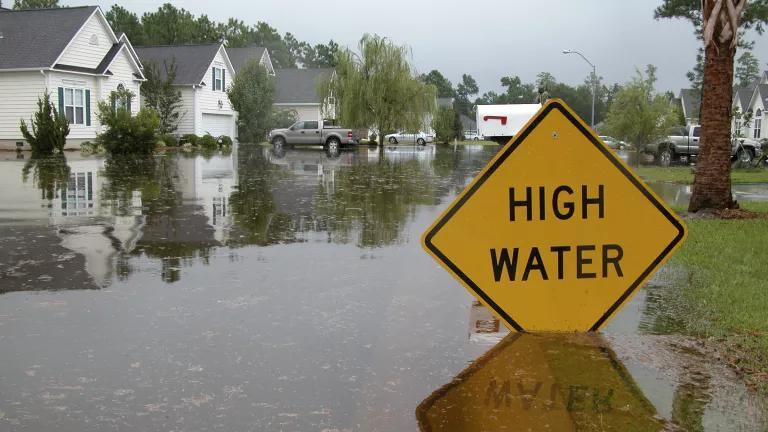
It’s Time to Fix Our Water-Logged National Flood Insurance Program

The BRIC Program Is Essential in Our New Climate Reality
Localized flood risk (state- and county-level data)

Flooded Again: Flood Data Visualization Tool

Losing Ground: Flood Data Visualization Tool
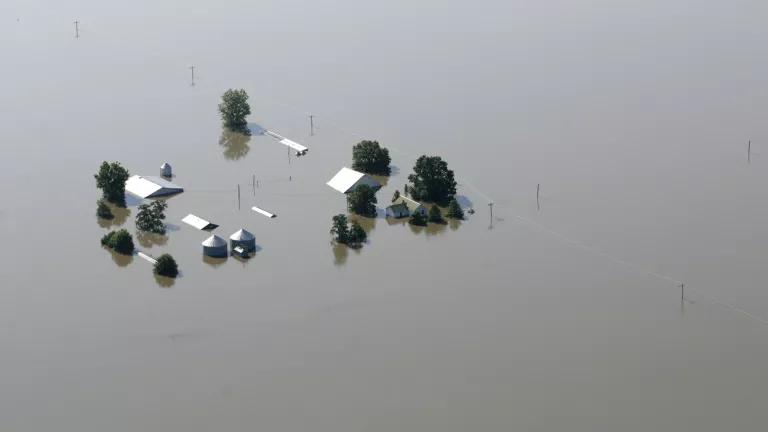
How States Stack Up on Flood Disclosure
Extreme heat (state-level data)
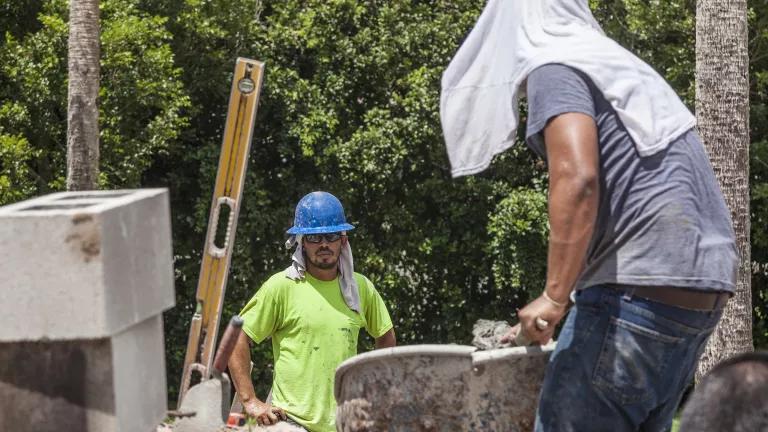
Occupational Heat Safety Standards in the United States

Preventing Heat Deaths on the Job with State Standards

In the Hot Seat: State and Local Governments Must Protect Their People from Extreme Heat
Insurance and insurability

An Uninsurable Country

Insurance for a FAIR Future
Relocation

Planned Relocation Policies and Practices
Adaptation/rebuilding
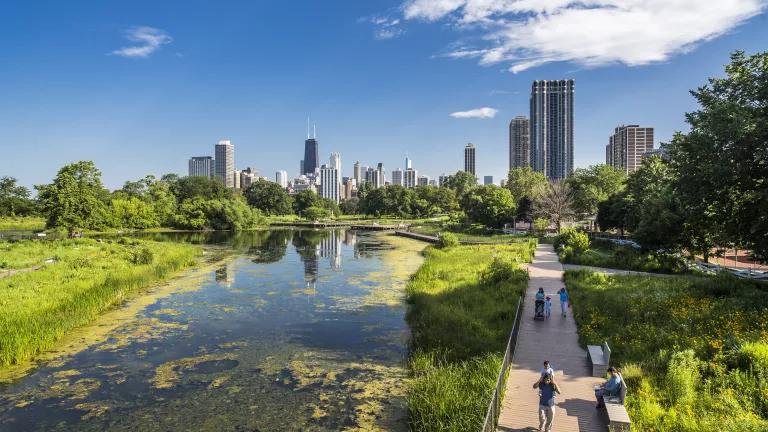
Rebuilding Safer
Related Content

The Insurance Affordability Crisis: Risks, Resilience, and Solutions
SCOTUS to Grapple with Climate’s Costs