
The Pulse on California’s Legislative Session
The state's environmental and climate advocates, as well our allies in the legislature, are working to advance environmental goals, protect public health, and bolster community resilience to our changing climate.

Media Contact
California’s legislative session is underway in Sacramento, with bills now being heard in committees in the capitol. The state legislature is considering several environmental priorities, many of which are being led by NRDC and our partners.
California’s environmental and climate advocates, as well as our allies in the legislature, are working overtime to advance the state’s environmental goals, protect public health and the environment, and bolster community resilience to our changing climate. NRDC is working closely with new and seasoned lawmakers to ensure these urgent issues are addressed.
Electricity affordability
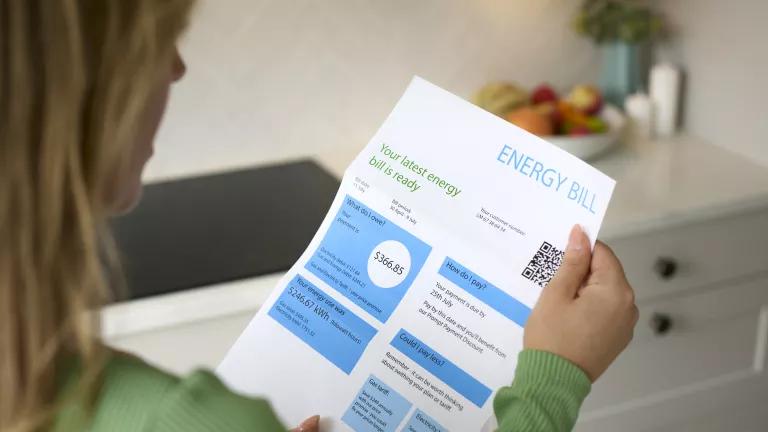
Affordability is a central theme for state leaders, as electricity prices across California have risen sharply since 2018. Effective solutions are needed to promote affordable, equitable, and reliable electrification across the state. A newly released report from NRDC details why PG&E’s rates have increased and provides guidance for policymakers to reduce electricity costs for California customers and to ensure a more equitable rate design moving forward.
Learn More

Transportation
California is a leader in reducing transportation emissions and promoting clean vehicles, with more electric, plug-in hybrid, and hydrogen-powered vehicles sold here than any other state. California is also building out its infrastructure for clean vehicles. Governor Gavin Newsom recently announced that the state has 48 percent more electric vehicle chargers than gas nozzles.
Together with community partners, NRDC is working with state leaders to defend California’s clean vehicles policies and bring about cleaner air and a more stable climate through strong transportation policies. We are also working to increase state investments in mobility choices such as public transit and improved safety for pedestrians and cyclists.
Priority issues for the 2025 session
NRDC is sponsoring and supporting several pieces of environmental legislation. Key bills are detailed below:
AB 638 (Celeste Rodriguez) requires the State Water Resources Control Board to establish guidance for the collection, treatment, and use of stormwater for irrigation. This guidance would help conserve California’s finite potable water by using captured stormwater to meet irrigation demand for public areas such as parks, median strips, and public golf courses while ensuring public health protections. AB 638 can provide clarity for local governments that are interested in harnessing urban runoff as a means to offset potable water demand.
SB 222 (Scott Wiener) provides a pathway to financial relief for individuals suffering damages from climate disasters and extreme weather events, as well as insurance companies impacted by climate disasters and the consequential threats to insurance viability.
The bill allows individuals to sue large fossil fuel companies for damages caused by climate change and permits insurance companies to sue large fossil fuel companies and recover money that the insurer had paid to a person under an insurance claim following a climate disaster. SB 222 establishes grounds for those affected to hold oil and gas companies legally accountable for harms that have resulted in tens of billions of dollars in damages across the state from recent fires alone.
AB 1243 (Dawn Addis) and SB 684 (Caroline Menjivar) are identical bills that establish the Polluters Pay Climate Superfund to hold fossil fuel companies accountable for climate change–related damages associated with the greenhouse gases emitted by their products over time.
The cost of these damages is consistently increasing—while California wildfires in 2018 incurred an estimated $148.5 billion in direct and indirect damages, analysts at the UCLA Anderson School of Management have estimated that the 2025 L.A. wildfires alone caused up to $131 billion in property and capital losses.
AB 1243 and SB 684 make fossil fuel companies financially accountable for the harmful economic, public health, and environmental effects of their products. The state would then assess fees proportional to a polluter’s past emissions. The Polluters Pay Climate Superfund would provide resources to improve resiliency of California communities.
SB 540 (Josh Becker & Henry Stern) authorizes the Pathways Proposal to make electricity more affordable and reliable for California consumers. The bill enables the state's investor-owned utilities and the California Independent System Operator (CAISO) to participate in regional energy markets governed by an independent organization if certain conditions are met, including protections for the public interest and state policy autonomy.
With better access to shared resources across the West, grid operators will be better equipped to address peak demand periods, reduce the likelihood of blackouts, and support a resilient grid in the face of growing challenges such as extreme weather events and climate-driven disruptions.
SB 682 (Ben Allen) is a comprehensive, science-based approach to phasing out unnecessary uses of per- and polyfluoroalkyl substances (PFAS), commonly known as "forever chemicals," in consumer products.
State testing has found PFAS in water systems serving up to 25 million Californians, with contamination more prevalent in communities identified by the state as being disproportionately burdened by, and vulnerable to, multiple sources of pollution.
The bill would only permit use of these chemicals when no viable alternatives are available and when the use of PFAS is deemed "essential." PFAS—which are connected to a variety of health effects, including cancer and reproductive harm—are known to leach into and build up within our environment and bodies. PFAS are very expensive to clean up and no safe disposal option has been developed. It is also important to note that prevention of additional PFAS pollution will save the state money from remediation and cleanup of PFAS pollution in California.
SB 601 (Ben Allen) backstops protections for streams and wetlands afforded by the federal Clean Water Act prior to the 2023 U.S. Supreme Court case Sackett v. EPA, which stripped many of these federal protections.
The bill would establish a state-level process to determine which waterways need standards and requirements to protect these fragile ecosystems against pollution discharge from business and construction operations.
Streams and wetlands play vital roles in climate resilience by providing communities with clean water, creating natural buffers during extreme weather events, safeguarding critical biodiversity, and naturally sequestering carbon to curb emissions impacts. Other states have taken similar action. Colorado recently passed a similar bill. Maryland enacted a bill to strengthen citizens’ rights to stop harm to state-protected waters. Illinois and Delaware have introduced similar bills that are moving through the legislature, and New Mexico’s bill passed and is on the governor's desk.
AB 823 (Tasha Boerner) bans the use of plastic microbeads in cleaning products, leave-on cosmetics, and paints and coatings to curb the use of toxic microplastics that pollute the environment and pose substantial health risks to both humans and wildlife.
These intentionally added plastic particles degrade into microplastics, causing widespread environmental contamination that can be found nearly everywhere on earth, including in oceans, rivers, and soil—endangering ecosystems and public health. Some such health risks include various chronic diseases and forms of cancer. While California banned plastic microbeads from rinse-off personal care products in 2015, AB 823 addresses products that continue to be persistent sources of toxic microplastic pollution. Alternatives, such as coconut shell fragments, sand, and salt are already in use on the market.
In addition to backing these priorities in 2025, NRDC is opposing AB 306 (Nick Schultz & Robert Rivas), a bill that would block most updates to California building code until 2031. Though introduced under the guise of Los Angeles wildfire recovery, the restrictions on new code would apply statewide and ultimately hobble important clean energy and energy efficiency initiatives. These initiatives are critical in the effort to mitigate and adapt to climate change and are necessary for California to meet its climate goals.
We’ve also joined partners in expressing concerns about SB 607 (Scott Wiener), because it would reverse the longstanding presumption in favor of in-depth environmental impact report (EIR) review and weakens the California Environmental Quality Act (CEQA) across the board.
While SB 607 makes a narrow exception for warehouses and oil and gas infrastructure, it weakens CEQA for all other projects: freeways, airports, railyards, shipping terminals, office buildings, shopping malls, sports complexes, dams, sewage plants, mining, incinerators, power plants, prisons, and massive mixed-use developments on farmland, sensitive habitat, or in high wildfire danger zones. By reducing the requirements of CEQA and EIRs, this bill would compromise the public's ability to thoroughly review projects throughout the state, while also removing essential safeguards for environmental resources and public health.
SB 730 (Melissa Hurtado), regarding product safety for consumer products, is highly problematic and contradicts SB 682 (Ben Allen), which is supported by scientific evidence and complies with established laws and regulations currently in place for PFAS.
SB 730 appears to cover products such as artificial turf, cleaning products, cookware, dental floss, fabric treatments, upholstered furniture, carpets, and rugs. However, when exceptions and current regulations are taken into consideration, only one category (cleaning products) will be partially regulated. With unnecessary exemptions and poorly crafted policy, SB 730 will only continue to perpetuate the ongoing PFAS crisis. We hope that by working together with the authors and sponsors, we can find common ground on these issues.
A look to California’s future
California can continue leading the world in addressing climate change, protecting public health and our environment, and making investments in community health and resilience. But we must remain diligent and united. Now more than ever, it is imperative that the state's leaders take action to ensure thriving communities, healthy ecosystems, and a stable climate for generations to come.
Related Content

California’s 2026 Legislative Priorities: End-of-Session Wrap-Up

When States Act, Markets Follow: The Ripple Effects of PFAS and Chemical Safety Policies
California Can Grow Advanced Manufacturing Without Sacrificing Community Safety
California Is Done Paying for Pipelines That Residents Don’t Want
