
Trump’s Executive Orders Mean Real Damage to U.S. Economy, Communities, and Clean Energy Gains
Nobody voted for any of this—and it’s not what most of the country wants.

Media Contact
Two weeks in, the Trump administration has launched the worst White House assault in history on the environment and public health, an all-of-government assault with potentially devastating results for our communities, our economy, and our future.
If successful, it will also raise costs and limit choices for consumers and businesses. Far from putting America first, the administration is putting oil and gas profits first—and putting the rest of the country at risk. A few examples:
- Halting the development of wind energy means higher electricity bills and a less reliable power grid.
- Pulling the United States out of the Paris climate agreement leaves other countries to write the rules for the clean energy economy of the future.
- Making electric vehicles more costly to buy and build limits consumer choice and puts domestic workers and carmakers at a competitive disadvantage against their Chinese and European rivals.
- Locking in ever more LNG exports decades into the future will force consumers and businesses in this country to compete in the global marketplace for domestic gas, meaning higher prices for gas, more drilling, or both.
Nobody voted for this, but somebody else asked for it: the billionaire oil and gas donors Trump solicited to help bankroll his campaign. That’s what this is all about.
Hours after taking office, Trump falsely declared an energy emergency as a means to assert extraordinary presidential powers and to justify a wave of executive orders. Taken together, they constitute a grave and singular threat to public health, the economy, wild places, and our ability to confront the climate crisis.
These orders come against the backdrop of staggering disarray within an administration that arbitrarily froze trillions of dollars in federal spending last week, before rescinding the freeze the next day after a federal court blocked the freeze pending a review today. It’s still not clear whether or how these congressionally mandated grants and loans will move forward. The confusion is hurting people and doing real damage on the ground.
There is, of course, no energy emergency. The United States is producing more oil and natural gas than at any time in the history of this country—or in the history of any other country, for that matter. Homegrown wind and solar power is also at record levels—and helping the electricity grid survive the frigid cold.
Trump is trying to deceive the public to justify a full-on blitz to gut essential safeguards; claw back successful initiatives that are already driving investment and creating jobs; fast-track destructive projects; derail efforts to advance equity and justice; and hobble the government’s ability to serve the people of this country.
Trump lacks the authority to carry out this expansive and destructive agenda in its entirety on his own. Some of what Trump has ordered depends on the actions of Congress, private industry, local stakeholders, or all three. Some of these orders will be challenged in court.
If the administration’s actions prevail, though, even in some significant part, the result would be more pollution in the air we breathe, the water we drink, and the food we eat. More emergency room visits, lost days at work, and premature death. More hazard and harm for our communities. More habitat destroyed and wildlife gone. More unchecked climate disaster, with rising costs and mounting dangers across every corner of the country.
Nobody voted for that—and it’s not what most of the country wants.
Below is a sampling of the potential impact some of Trump’s major actions could have on the nation. To learn more, please contact Mark Drajem to be put in touch with an NRDC expert.
Sidelining U.S. climate leadership
In a Day 1 executive order, President Trump withdrew U.S. participation in the landmark 2015 Paris climate agreement, the framework for global cooperation on confronting the existential challenge of our time. The move is part of the “whole-of-government unwinding” of climate progress and clean energy gains explicitly called for in Project 2025 and further outlined in the wish list handed to Trump by the billionaire oil and gas donors who helped bankroll his campaign.
Trump’s action won’t stop the global shift away from the fossil fuels that are driving the climate crisis. It won’t stop investments—a record $2.1 trillion last year alone—in cleaner ways to power our future. It could well slow the pace of that shift, however, just when we need to speed it up.
Last year eclipsed 2023 as the hottest year in the 175-year global record, and we’re seeing the results in every community in the country.
This is an order to abandon ship, cut U.S. climate leadership adrift, and toss our children overboard into rising seas.
It’s created uncertainty that threatens global climate momentum. It sidelines American diplomacy at a critical moment, when the possibility of averting climate catastrophe hangs in the balance. It takes the United States out of the room where the rules are made to shape the global clean energy economy, drive innovation, and create more resilient societies. It leaves others to fill the void.
“Many leaders from around the world already noted that they will move on with the Paris Agreement. The U.S. administration’s climate dissonance comes at its own cost.”
—Yamide Dagnet, senior vice president, International, and Dr. Adelle Thomas, senior director, climate adaptation, Environmental Health
Learn More: The Paris Agreement

A Costly Dissonance: Putting America Last in Climate Resilience
Paris Climate Agreement: Everything You Need to Know

U.S. 2035 Climate Target Is Ambitious, Achievable & a Call to Action
Striking out at equity and justice
The Trump administration took especially harsh aim at some of our nation’s most vulnerable communities, canceling government efforts to help low-income communities, people of color, and others, both urban and rural, on the frontlines and fence-lines of environmental hazard and harm.
If successful, this effort would catapult our society back to an era of outright oppression. The result could be to sacrifice communities that lack the power or political access to stand up to projects that do more harm than good. It could keep vulnerable communities from accessing safe drinking water, clean energy, and essential supports and protections.
That’s environmental injustice. It should have no place in our country.
The Trump administration is attempting to reverse three decades of federal efforts to address environmental inequity and advance environmental justice, through Republican and Democratic administrations alike. If the administration prevails, low-income communities and people of color will pay a high and grievous price.
“We will continue to work with state and local officials whose eyes, minds, and hearts have been opened to the responsibility we all carry to confront our shared past, to grasp the realities of the here and now, and to join in the long struggle to achieve a United States that will one day live up to that original ideal of equality. No executive order can undo that.”
—Matthew Tejada, senior vice president, Environmental Health
Learn More: Environmental Justice

Trump Order Can’t Dismantle Environmental Justice Progress

Environmental Justice at Risk Under Project 2025
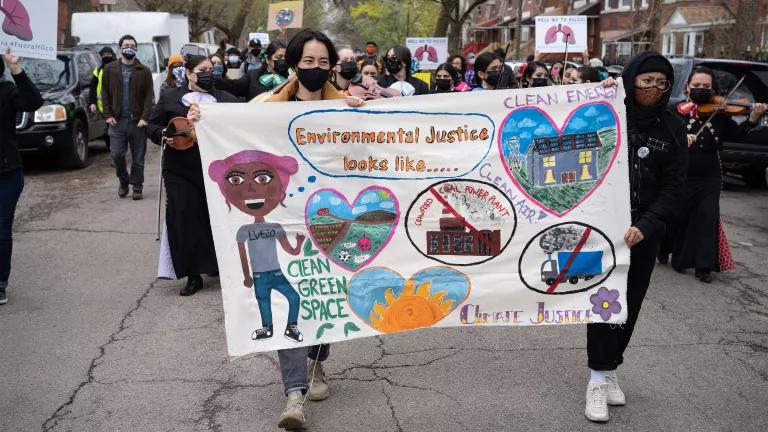
The Environmental Justice Movement
Halting new wind projects on federal lands and ocean waters
Hours after taking office, Trump launched a broadside attack on one of the cheapest sources of new electricity, an effort to halt the growth of clean wind power produced right here at home.
In a Day 1 executive order, Trump halted new leases for wind farms on federal ocean waters; hit pause on permits for new wind projects on land or at sea; threatened to revoke or attach conditions to existing leases; and ordered actions that could create new impediments to approval of future wind projects.
In his zeal to prop up dirty fuels at the expense of the nation’s future, Trump is taking actions that would drive up electricity bills and slow the growth of a proven energy source that’s making the power grid more reliable just when the power is needed most.
Clean energy is the future. Trump won’t stop the shift to wind power—or clean energy more broadly. He is, however, doing all he can to bog down momentum in the transition to cleaner ways to power our growth, create chaos in the market and sow investor uncertainty. That, in itself, can do real damage.
“The clean economy today is not the same clean economy from when Trump took office last time. The momentum is there, the technology is there, the desire is there. It’s a totally different landscape.”
—Daniel Sawmiller, director, labor policy, Climate & Energy
Learn More: Wind Power

Trump Spits into the Wind

Solar and Wind Thrive During Frigid Blast

Rural America Is Already on Board with Clean Energy
Limiting consumer choice in the cars we drive
Trump launched a four-front attack on electric vehicles (EVs), the companies that make them, and the consumers who choose to drive them.
In a Day 1 executive order, Trump said he would repeal or weaken federal clean car standards; consider eliminating tax credits that make electric vehicles more affordable for consumers and businesses to buy; halt federal funding for a nationwide network of electric charging stations; and strip out states’ authority to cut tailpipe pollution beyond what the federal government requires.
If successful, Trump’s reckless assault would make EVs more expensive to build, buy, and charge, hurting drivers and limiting their choices of which car to buy to meet their needs and save them money. It would mean our cars create more of the air pollution that aggravates asthma, heart disease, and other respiratory ailments. And it would increase the carbon pollution that’s driving the climate crisis, all to pad the fortunes of the billionaire oil and gas donors who Trump solicited to help bankroll his campaign.
This is what American oligarchy looks like: government in service of a privileged few, with the rest of the country paying the price.
“We want to be at the forefront and make sure that those economic opportunities are here in the United States. The question really is, does the United States get left behind, or are we a leader in this transition?”
—Kathy Harris, director, clean vehicles, Climate & Energy
Learn More: Electric Vehicles

Trump’s Plan to Claw Back EV Charging Funds: It’s Not That Simple

The Auto Industry's Can't-Do Spirit
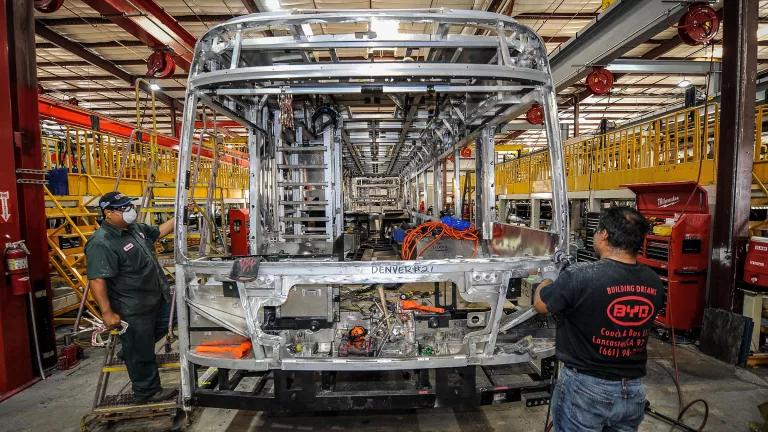
As Demand Grows for Electric Cars, So Does the Market for Green Jobs in the EV Industry
Exposing oceans to drilling hazard and harm
As part of a Day 1 executive order, Trump sought to expose more than 625 million acres of ocean waters to the hazard and harm of oil and gas drilling in the Atlantic, Pacific, eastern Gulf of Mexico, and off the coast of Alaska.
President Biden protected those waters by withdrawing them from consideration for offshore oil and gas leasing and reinstating similar protections put in place by President Obama. In revoking protections, Trump’s order puts the interests of Big Oil billionaires over the health of our oceans.
The issue is likely headed to court. While Trump asserts the authority to revoke Biden’s actions, a 2019 federal court ruling (from the last time he tried this) concluded he does not.
Trump’s order charts the wrong direction for our energy future. It’s time to reduce, not increase, the ocean waters, marine life and coastal communities exposed to the ongoing harm and catastrophic risks of offshore oil and gas operations.
“More offshore drilling is not worth the risks it poses to marine and coastal ecosystems, as well as the people who rely on those ecosystems. This rings especially true given the fact that any new leases would take nearly a decade to become an active production site.”
—Zanagee Artis, fossil fuels policy advocate, Nature
Learn More: Ocean Drilling
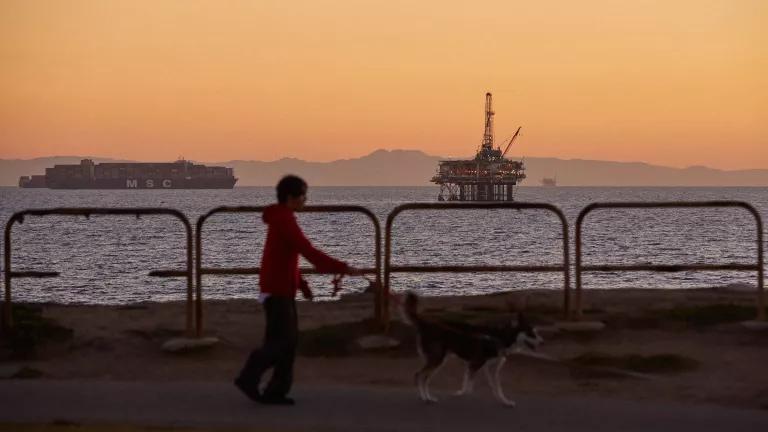
Offshore Drilling 101
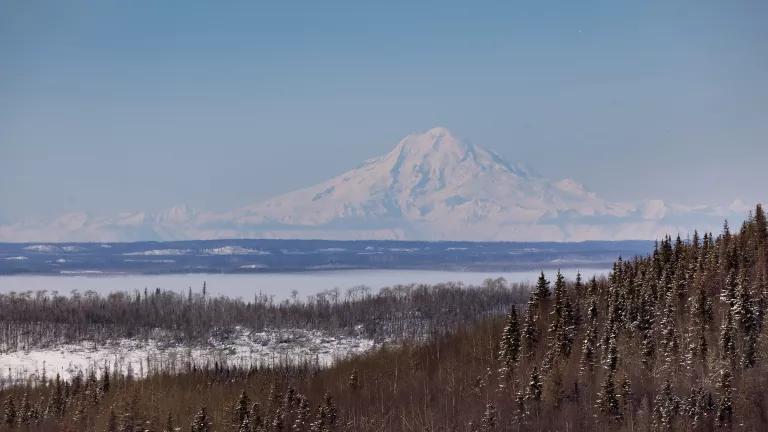
The Biden Administration Cancels Its Offshore Drilling Plan for Alaska’s Cook Inlet—Let’s Keep It Off the Books

Marine Life: The Casualties of Offshore Drilling
Turning Alaskan wilderness into a sacrifice zone
Trump issued a Day 1 executive order that singles out Alaska, dealing over much of the state as a sacrifice zone for oil, gas, mining, and timber companies to exploit for industry profit.
The order targets three treasured and irreplaceable landscapes: the Arctic National Wildlife Refuge, the National Petroleum Reserve in Alaska and the Tongass National Forest, the largest temperate rainforest in the world.
Yet a fourth, the Gates of the Arctic National Park and Preserve, is threatened by Trump’s order to allow a destructive copper mine in the backcountry wilderness, along with more than 200 miles of industrial service roads. The Biden administration halted the project last year: Trump’s order gives the destructive project new life.
Beyond that, Trump’s order would allow a vast new network of gas and oil pipelines and other infrastructure crisscrossing wildlife habitat and disrupting migratory routes of wildlife. And it sets millions of acres of federal lands and resources managed by Indigenous Peoples to be transferred to the state and to private actors.
“Trump's officials keep thinking that they can open up the refuge to more drilling. But we'll continue—as a community and as NRDC—to make sure that safeguards are in place."
—Bobby McEnaney, director, land conservation, Nature
Learn More: Alaska

Our Public Lands Are on the Chopping Block Again
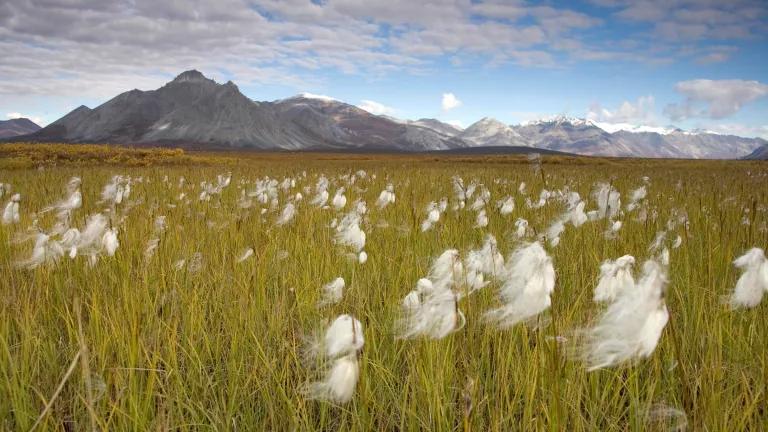
The Long, Long Battle for the Arctic National Wildlife Refuge
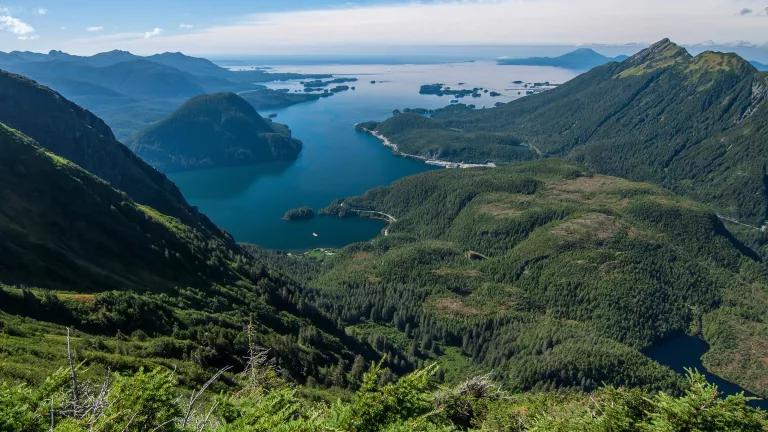
Alaska’s Tongass National Forest at Risk Once Again
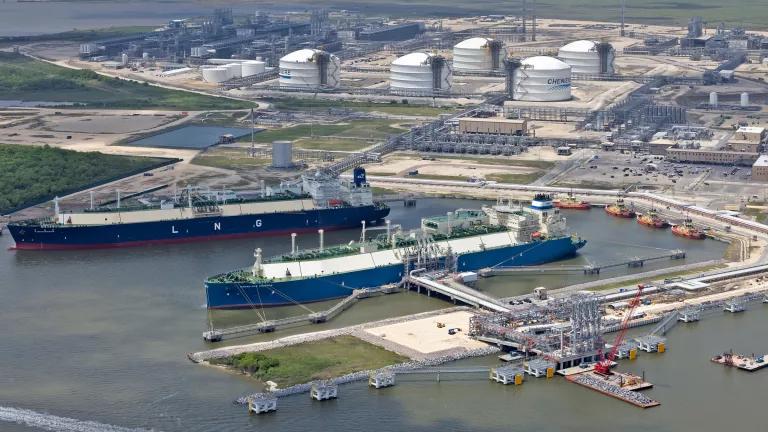
Locking in LNG exports far into the future
Trump signed a Day 1 executive order to end the pause that President Biden put on the review of new projects proposed to export liquefied natural gas (LNG) far into the future.
The order contains directives meant to fast-track federal review of such projects, just as Trump’s billionaire oil and gas donors requested, and to prioritize industry benefits above disastrous consequences for the climate and local communities.
The intent is to help lock in LNG exports for decades to come. That would threaten the communities where those plants would be sited, putting at risk the health of low-income families and people of color.
It would accelerate the climate crisis that’s taking a rising toll on families, communities and businesses across the country and around the world. And it would force U.S. consumers and businesses to compete with markets overseas for gas produced in this country.
“There is a natural opportunity here for the United States to redouble its efforts in being not the number one LNG exporter or oil exporter but to be the center of the world when it comes to developing solar panels, wind turbines, and battery technology.”
—Gillian Giannetti, senior attorney, Sustainable FERC Project, Climate & Energy
Learn More: LNG
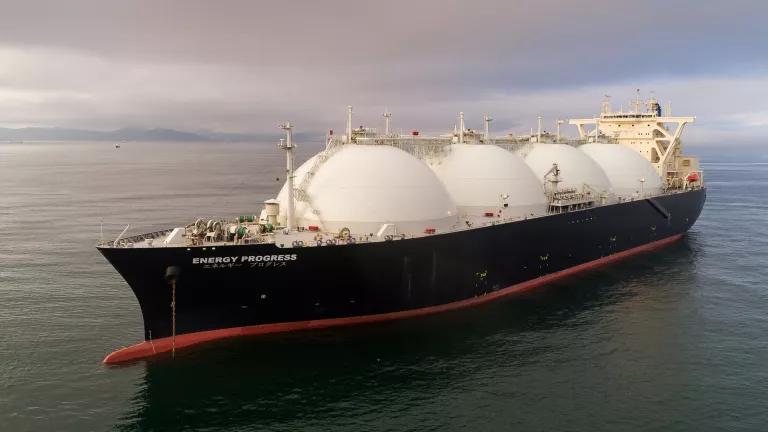
Liquefied Natural Gas 101
International Community Wants Biden to Act on LNG
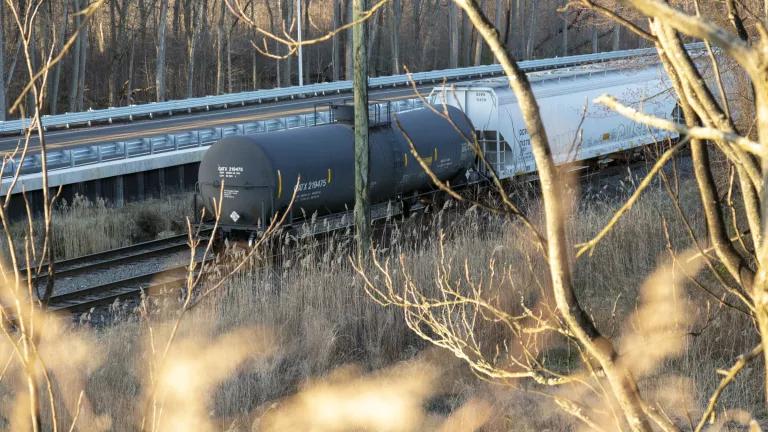
Gibbstown LNG Terminal: A Catastrophe Waiting to Happen
NRDC (Natural Resources Defense Council) is an international nonprofit environmental organization with more than 3 million members and online activists. Established in 1970, NRDC uses science, policy, law, and people power to confront the climate crisis, protect public health, and safeguard nature. NRDC has offices in New York City, Washington, D.C., Los Angeles, San Francisco, Chicago, Bozeman, MT, Beijing and Delhi (an office of NRDC India Pvt. Ltd). Visit us at www.nrdc.org and follow us on Twitter @NRDC.
Related Content

100 Days of Destruction
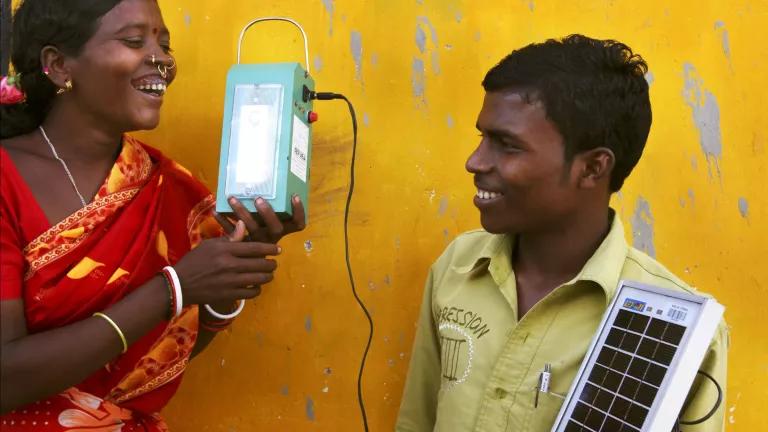
What Are the Solutions to Climate Change?
