From Crisis to Opportunity
NRDC’s new report shows how to build a just framework for planned relocation in the United States.


Coauthored with Dr. Idowu Ajibade, Emory University
Climate change is already driving large-scale displacement across the United States, with approximately 11 million people being forced from their homes by climate-related disasters in 2024 alone. As climate risks intensify, more communities will face difficult decisions about whether, when, and how to relocate. Planned relocation, also known as managed retreat or strategic resettlement, has emerged as a critical—albeit controversial and complex—adaptation strategy to reduce long-term risk, enhance adaptive capacity, and build resilience in communities.
Despite the growing need, the United States lacks a coordinated national framework for planned relocation. Instead, current approaches to planned relocation in the United States are fragmented, reactive, and inequitable. Existing programs, particularly voluntary property buyouts, are often slow, underfunded, and insufficient to meet the scale of climate displacement. They frequently fail to provide the support that communities need to rebuild their lives and can reinforce long-standing social and racial inequities.
Learn More

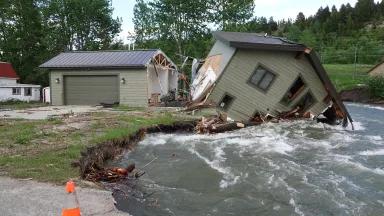

At the same time, planned relocation offers an opportunity to reduce long-term risk, strengthen resilience, and advance equity. Drawing on more than 300 global case studies and examples from communities across the United States—such as Newtok, Alaska, and Isle de Jean Charles, Louisiana—NRDC’s new report identifies what works, what doesn’t, and what must change.
Ultimately, the United States must shift from reactive disaster response to proactive, justice-centered planning. By learning from global best practices and addressing long-standing structural inequities, the United States can transform planned relocation from a last resort into a strategic, community-driven approach to managing climate risk.
The United States can learn from planned relocation across the globe
NRDC has made the case studies underpinning this report available in an interactive map. Together, they demonstrate that planned relocation is not theoretical—it is happening today, has happened for many decades, and will continue to happen. These cases span geographies, hazards, and the number of people affected, illustrating how communities have responded to flooding, erosion, storms, and other climate hazards. Taken together, they show both the scale and the complexity of planned relocation and the need for proactive, justice-centered policy.

How the United States can move forward
To meet the growing challenge of climate mobility, the United States must transition from reactive disaster recovery to proactive, justice-centered planning. This report outlines a framework for action, including:
- Embedding human rights and equity into relocation policy
- Ensuring community consent and leadership in decision-making
- Providing fair compensation and long-term support for communities
- Strengthening coordination across federal, state, Tribal, and local governments
- Expanding and streamlining funding mechanisms
- Investing in resilient housing, infrastructure, and livelihoods
Related Resources

The Insurance Affordability Crisis: Risks, Resilience, and Solutions
Occupational Heat Safety Standards in the United States