
How to Make Your Community More Resilient to Climate Disasters
You don’t need to wait for national legislation to protect yourself from extreme weather. Here’s how to start right now—where you live.
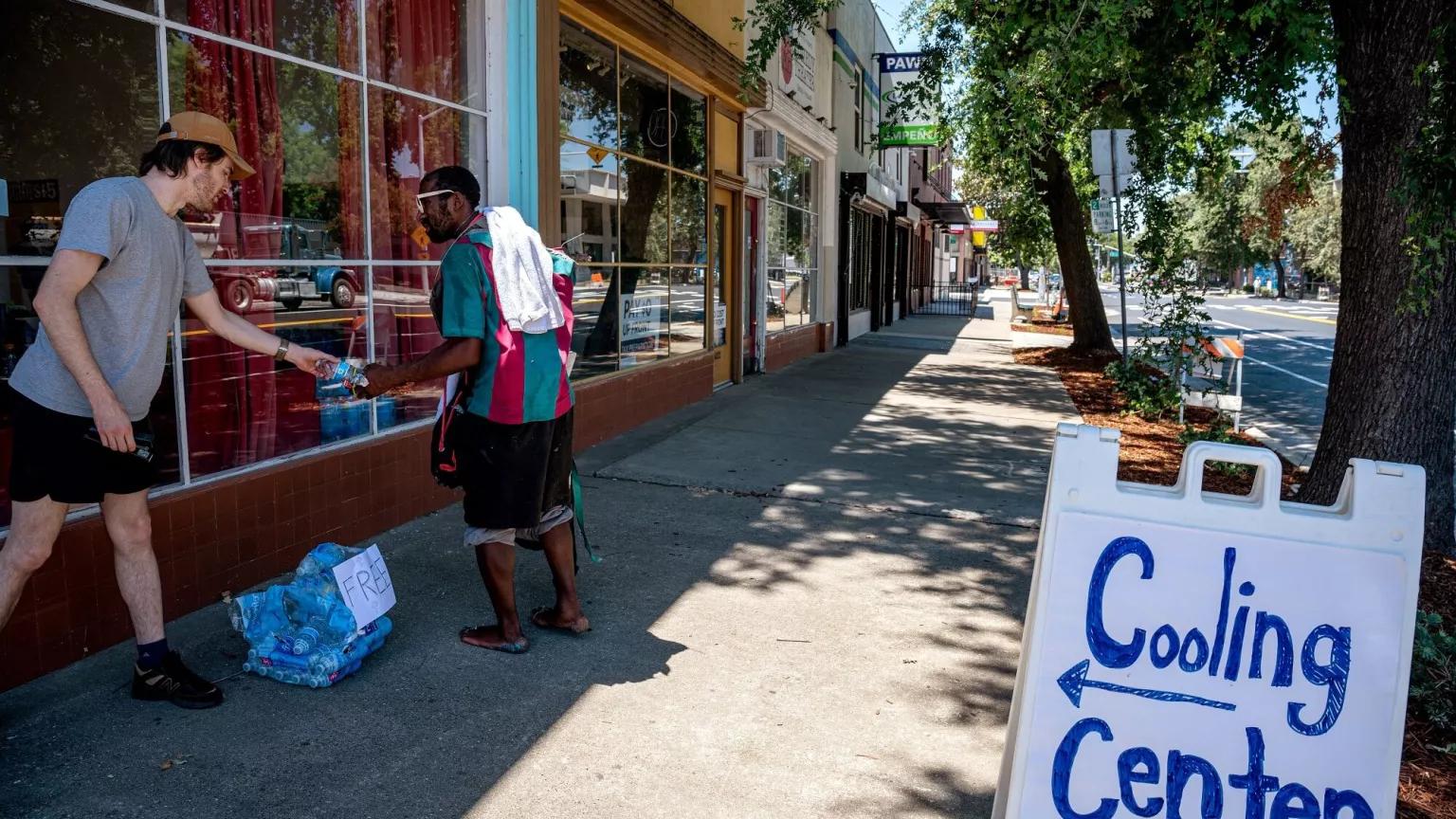
A cooling center in Sacramento, California, during the one of the state's heat waves in 2024
A whopping 27 separate disasters, each costing at least $1 billion in damages, struck the United States last year; that’s more than five times the rate at the start of this century. Yet America’s disaster safety net is unraveling, and safeguards—from home insurance policies to federal programs—aren’t keeping pace.
While national action to mitigate climate disasters is crucial, local communities don’t have to wait to begin protecting themselves now. Because when extreme conditions come on suddenly, what can matter most is what we’ve already built—whether in the form of shared spaces or how we show up for one another. A neighbor checks in during a blackout. A gardening club plants trees along a sun-scorched block. A local business opens its doors as a cooling shelter.
Resilience is not a single fix. It’s a system of shared care built by people who want to help our communities survive the known and unknown challenges of a warming world. From everyday action to long-term organizing, the following strategies can help you get started on sowing resilience right where you live.
Neighbors can be heroes
For five days in July 1995, a brutal heat wave baked Chicago and its suburbs, pushing the heat index as high as 126 degrees Fahrenheit. Concrete cracked. Steel train tracks warped. On paper, every neighborhood endured the same triple-digit heat, but only a handful of areas on the city’s West and South Sides bore the brunt of the staggering death toll of 739 lives lost.
A great portion of those deaths occurred in neighborhoods like North Lawndale and Englewood, where decades of redlining and public divestment had stripped away the kinds of community infrastructure that help cool temperatures and people down: tree cover, libraries, senior centers, public pools, park district facilities, even local businesses. Yet, in Auburn Gresham—a neighborhood with similar demographics and disinvestment, albeit less extreme—far fewer people died.
The difference: strong community ties. During a crisis, neighbors are often the first responders, and active block clubs, churches, and small businesses in Auburn Gresham created a social safety net. These connections helped people spring into action, check in on each other, and provide person-to-person services when formal systems failed.
Though genuine relationships take time to build, you can start bringing people together today.
Get started
- Create a neighborhood phone tree or group chat so neighbors can check up on one another easily during adverse events. Keep it simple: Two to three households can buddy up and exchange contact info. If you need to expand to other neighbors, use a shared online document to track contacts and needs.
- Post information on bulletin boards in local hot spots like grocery stores, libraries, churches, and laundromats about relevant emergency services and climate information (signs of heat stress, for example). You can also build an online version through Facebook or other social media platforms.
- Keep updates timely to prevent overwhelming people with information. A fall and spring flyer drop or email is enough.
Go deeper
- Form a mutual aid pod, which is a small local group that regularly checks in and shares resources, support, and emergency supplies. Check here for a directory of mutual aid groups and food access organizations across the country and for tips on starting one. Also, if you live in a well-resourced area, consider ways to partner with nearby communities that may need more support.
- Host a block party focused on disaster prep and community building. This is a great way to get people involved in your mutual aid pod. Invite local EMTs, firefighters, gardeners, and other community helpers to support and educate your group.
- Check in on residents with special needs before a storm to ensure they have supplies and a safety plan.
- Partner with anchor institutions like churches, libraries, and schools for climate resilience outreach, such as distributing flyers and hosting events and workshops.
Prepare together
- Map out local care centers like cooling centers and clean air shelters, depending on your community’s needs. For safety information on specific weather events, check out these resources on preparing for hurricanes, wildfires, floods, and heat waves.
- Build an emergency supply cache that includes essentials such as water, flashlights, N95 masks, a battery-powered radio, and a laminated sheet listing emergency contacts. You can start small by loading up a designated plastic tub.
- Pool donations for a neighborhood emergency fund with your local network and use it to either build a collective supply cache beforehand and/or support people during an emergency.
- Organize a bulk-buy program for weatherproofing materials like caulk, fans, and plastic sheeting.
- Encourage first aid training to strengthen your community’s emergency medical response. Consider hosting a training at a library, firehouse, or Red Cross chapter.

The First Christ Church Community Garden in Owensboro, Kentucky
Green spaces are sanctuaries
Green spaces aren’t just beautiful—thy’re critical climate infrastructure. Trees, gardens, and wetlands help cool down neighborhoods, absorb floodwater, clean the air, support biodiversity, and boost mental health.
Mature trees can lower surrounding air temperatures by 2 to 9 degrees Fahrenheit and the surface temperatures beneath their canopies by as much as 45 degrees. Through evaporation and transpiration (how plants release water vapor), wetlands and dense plantings also help cool the surrounding atmosphere.
Historically, not everyone has had equal opportunity to tap into these benefits. Looking at 37 cities across the United States, a 2021 study published in the journal Nature found that formerly redlined neighborhoods had nearly 21 percent less tree canopy than other urban areas. For residents in these places, the urban heat island effect is even worse. (Check your neighborhood’s tree equity score here.)
Nature-based solutions can be low-cost and highly effective, but they take time to establish and require ongoing maintenance. Still, whether you’re starting small with a garden or planting trees, the long-term payoff is worth it.
Start from the ground up
- Host a seed or tree sapling swap with neighbors or set up a seed library box at your local library or park.
- Advocate for preserving mature trees, which already offer shade and ambient cooling.
- Add compost bins to parks or shared gardens, and if you garden, invite neighbors to contribute food and yard waste to your compost. Using compost can help nurture the garden’s soil, increasing its water retention capacity, productivity, and resiliency.
- Request storm drain cleaning, check on frequently blocked drains that can cause water to collect, or organize small-scale cleanups of sewer grates in your neighborhood to reduce flooding.You can even adopt a storm drain through this program.
- Create a native plant demo garden or pollinator garden in a visible space like a front yard, library, or school. Add signs identifying the plants to educate and inspire other gardeners.
- Launch a neighborhood tree planting or shrub giveaway campaign, opting for fast-growing native fruit-bearing trees to earn quick wins. (To find bird-friendly native plants in your area, see this Audubon database.)
Larger-scale actions
- Install rain, native, or vertical gardens in medians, sidewalks, or parking strips (this may require city approval).
- Support defensible space projects that clear brush and flammable materials around homes in wildfire-prone zones, especially for older adults or people with disabilities.
- Restore wetlands, creeks, or riparian zones to reduce flooding, naturally filter pollutants from water, and cool surrounding air. Reach out to schools or clubs to enlist volunteers.
- Partner with landscapers to build bioswales, which are planted channels that filter stormwater and create cooler microclimates, in your neighborhood.
- Encourage homeowners’ associations to invest in solar panels, cool roofs, and/or native landscaping.
- Help renters advocate for upgrades like air-conditioning, weatherization, and native landscaping. Permeable pavement and green roofs can also help reduce runoff and urban heat.

A group of farmers touring a community solar project that features dual-use photovoltaic technologies on a farm in Georgia
Energy resilience
Whether it’s a heat wave, cold snap, or hurricane, extreme weather can overwhelm our aging electrical grid. In 2020 alone, U.S. households experienced more than 1.33 billion outage hours—about eight hours per household—with the longest blackouts due to major weather events.
For households that rely on powered medical devices, refrigerators for medications or baby formula, or air-conditioning during heat emergencies, a lengthy power outage can become life-threatening. Energy resilience solutions reduce dependence on the grid and help keep essential systems running during blackouts.
Here’s an overview of steps that communities can take to reduce energy vulnerability.
Power up
- Host a passive cooling demo to show neighbors how to keep homes cool without AC, using techniques like cross ventilation, reflective window coverings, and strategic shading.
- Run an emergency kit session to help neighbors assemble basic kits with water, flashlights, backup phone chargers, and battery-powered radios. You can also introduce them to portable power banks and solar-powered battery packs that can charge phones or small medical devices during outages.
- Install solar-powered lights in alleys, entryways, or shared walkways to improve nighttime safety without drawing power from the grid. You can find inexpensive setups at dollar stores that can last a few seasons.
- Organize a local energy audit drive to help neighbors identify energy-saving upgrades and reduce strain on the grid. Currently, you can still take advantage of the energy efficiency home improvement tax credit to save on energy audits.
- Create a neighborhood charging station network powered by solar panels or battery systems to ensure the ability to charge devices during outages.
Push for long-term solutions
- Form or join a solar co-op to negotiate better rates and installation support by pooling neighborhood interest and purchasing power. As of June 2024, at least 24 states and Washington, D.C., had passed legislation to facilitate community solar programs—which help boost electrical resilience during extreme weather events. (Some states, like California, permit “virtual net metering,” which lets utility customers get credits on their power bills for solar energy generated elsewhere.)
- Partner with a school, church, or library to create a resilience hub equipped with backup power, supplies, and charging stations that can serve the community during emergencies.
- Advocate for energy-smart building codes that require reflective roofs, cross ventilation, or other passive efficiency measures that reduce energy use.
- Push for investment in microgrids (small power grids that can work independently of the larger grid) and clean backup systems (nonpolluting energy sources) to ensure essential services can operate if the main power grid fails.
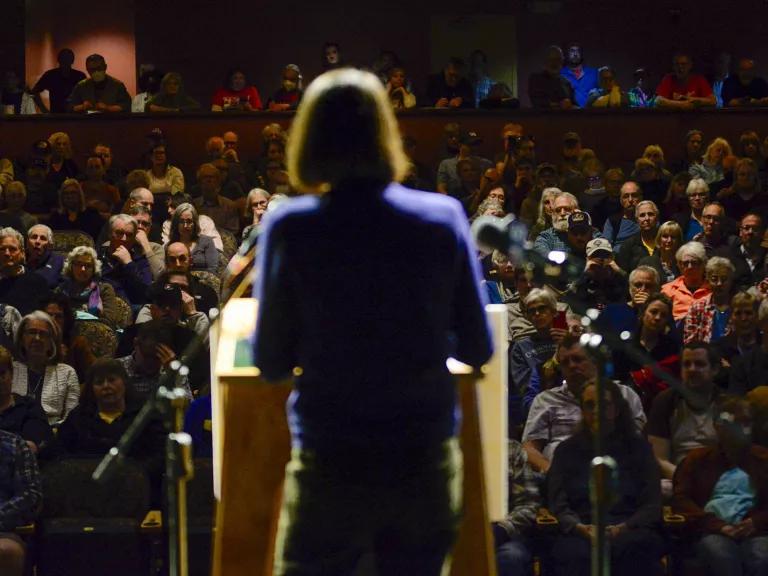
A town hall in Vermont to address questions from locals
Get local government involved
Communities don’t build true climate resilience with sandbags or solar panels alone—they shape it through zoning laws, building codes, public budgets, and political action. Local officials make key decisions about which neighborhoods get infrastructure upgrades, where housing gets built, and who has access to quality transit and green space. That’s why influencing local policy is one of the most powerful tools for advancing climate justice. The process can feel slow or opaque, but even small, strategic efforts can lead to lasting, systemic change.
Organize for equity
- Submit public comments on climate action plans, flood management strategies, or infrastructure projects to ensure community voices are heard. Stay abreast of town halls.
- Track and publicize local funding decisions on your social media to highlight which communities are receiving investments (and which aren’t).
- Support candidates who prioritize climate resilience and justice and encourage others to do the same.
- Partner with your school board to integrate climate education and community preparedness into classroom learning.
- Push for climate justice in your city’s master plan, especially in policies that shape flood risk management, affordable housing, zoning, and transit. These areas are often where inequities can compound and where oversight can be most valuable.
- Advocate for community benefits agreements when developers or public agencies propose major new projects. These agreements can secure local jobs, green spaces, transit access, and climate protections.
- Spread the word about upcoming town halls or community gatherings where environmental decision-makers are present, and where you and your neighbors can share concerns and propose solutions that reflect the community’s lived experience.
Embed climate resilience in policy
- Submit feedback on your community’s hazard mitigation plan, a required document for FEMA and state funding that outlines local risks and strategies for reducing harm from disasters.
- Encourage resilience-focused projects in your city or county’s land use plan by asking for cooling infrastructure, stormwater upgrades, tree canopy restoration, and other key investments.
- Advocate for up-to-date building codes to ensure your community benefits from the latest advancements in safety, resilience, and energy efficiency.
- Join your local planning, zoning, or sustainability board to shape long-term decisions about land use, transportation, and housing—especially where resilience and equity intersect.
This NRDC.org story is available for online republication by news media outlets or nonprofits under these conditions: The writer(s) must be credited with a byline; you must note prominently that the story was originally published by NRDC.org and link to the original; the story cannot be edited (beyond simple things such as grammar); you can’t resell the story in any form or grant republishing rights to other outlets; you can’t republish our material wholesale or automatically—you need to select stories individually; you can’t republish the photos or graphics on our site without specific permission; you should drop us a note to let us know when you’ve used one of our stories.
How EPA Rollbacks Will Cost Us—in Dollars and Lives
How Hot Is Too Hot?
How to Stay Safe From Wildfire Smoke