
How Hot Is Too Hot?
As extreme heat becomes more commonplace, so must climate adaptation measures.
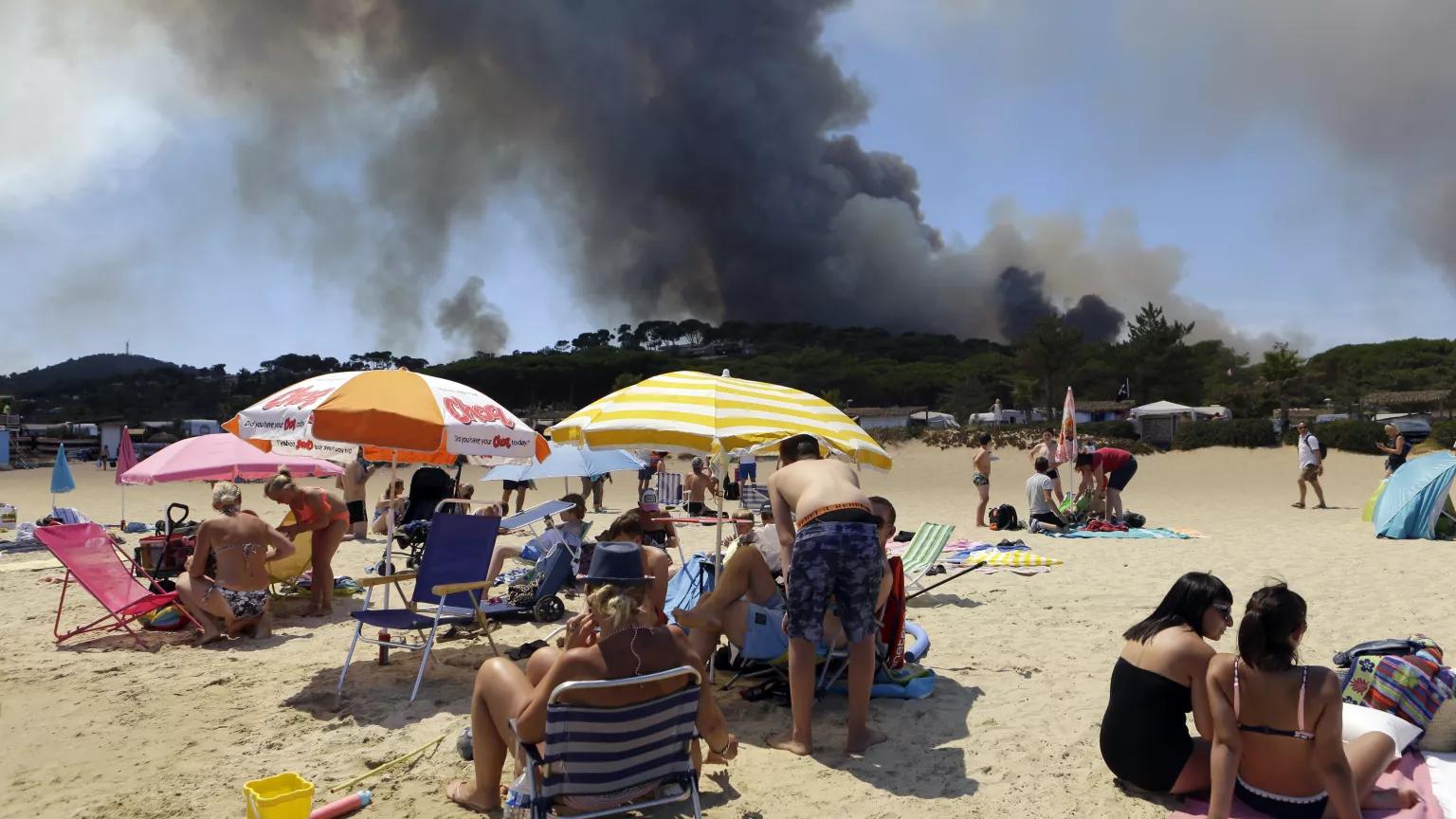
Beachgoers in Lavandou, French Riviera, as plumes of smoke rise in the air from burning wildfires in the forest of La Londe-les-Maures, France, July 2017
Heat records don’t last very long these days: 2023 was the warmest year on record until 2024 came along, then ’23 fell further in the ranks after 2025 claimed the number two spot. Now, scientists are forecasting that 2026 (and even 2027) will raise the bar higher still as ocean temperatures worldwide also continue to rise.
These individual rankings, however, don’t mean all that much. That’s because the overall trend has been quite clear for some time now: Average global temperatures are getting higher as climate change intensifies. What does matter, immensely, is how this heat feels to our bodies, how various communities are coping, the ecological ramifications, and the actions we must take across the globe to slow this climate escalation down.
So, how hot is too hot? Well, that can depend on your location, personal health, and social demographic, but it’s safe to say it’s now hot enough where we must rethink our relationship with heat and employ strategies to face it long-term. Because, as the latest report from the United Nations Environment Programme urgently reminds us, until we rein in our global greenhouse gas emissions, a warmer world is here to stay.
“Climate resilience is no longer optional,” says Dr. Adelle Thomas, NRDC’s senior director for climate adaptation and environmental health. “It’s no longer about preparing for some distant future. It is about shaping the future that is already arriving.”
When it’s too hot to live
Human bodies have their limits when it comes to adapting to heat. We sweat to cool off, but that only helps so much, especially when dehydration or high humidity comes into play. Heat stroke, which can quickly turn fatal, typically hits when the temperature of the body rises above 104 degrees Fahrenheit. Beyond age and chronic health problems, how somebody gets to this point depends on many factors.
Extreme weather and physical exertion are the obvious ones, but compounding their effects are numerous, more insidious conditions. These can include limited access to cooling, unsafe work environments, strained health-care facilities, treeless neighborhoods, unstable power grids, and ozone air pollution. In many ways, extreme heat seeps into the cracks of society itself.
“The sad truth is that heat-related illnesses and deaths aren’t just a sign of the climate crisis; they’re symptoms of the loneliness epidemic, economic inequality, racial patterns of segregation, disinvestment, and much more,” says NRDC senior advocate Juanita Constible, who will be leading a discussion on heat protections for workers at Climate Week in New York City this week.
Even though public health experts consider heat-related deaths to be seriously undercounted, heat still kills more people worldwide than any other type of extreme weather—hurricanes, floods, wildfires, blizzards—combined.
“The goal of resilience shouldn’t be to bounce back to a system that wasn’t working for many people in the first place. Instead, it should give us an opportunity to bounce forward. For me, that is where the hope lies.”
Dr. Adelle Thomas, senior director for climate adaptation and environmental health, NRDC
And it can strike just about anywhere. When a heat dome hovered over the Pacific Northwest and British Columbia, Canada, in the summer of 2021, thermometers topped 121 degrees Fahrenheit in some places, a far cry from the 60s-to-70s range that the region usually sees that time of year. Indeed, this was the highest recorded temperature ever in Canada. Hospitals quickly became overwhelmed. Altogether, more than 1,000 people died.
Most of the deaths happened in people’s homes, many of which did not have air-conditioning. Going without AC is not uncommon in this typically cool corner of North America. In fact, only 53 percent of households in Washington State at the time had an air conditioner.
But even places very accustomed to scorching conditions are experiencing disastrous gaps in their readiness to endure sudden temperature spikes. In 2023, Arizona experienced an equally startling heat event. In this case, 874 people died, and the great majority of victims perished outside. The steepest losses were experienced by unhoused people and those suffering from substance abuse, which can disrupt the body’s ability to thermoregulate.
A major distinction in this disaster was the sheer span of the month-long heat wave along with the utter lack of relief during that period: The mercury often lingered around 100 degrees, even at night. Such sustained temperatures are often perpetuated by surfaces that retain heat, such as roads, sidewalks, and buildings. These conditions make it difficult for the body to recover. Elevated nighttime temperatures also disrupt sleep, further taxing both physical and mental health. And for those who are also exposed to hot workplaces during the day, the double burden not only raises the risk for heat-related illness but also for serious accidents.
“Workplaces are the main and worst source of heat exposure for tens of millions of U.S. residents,” says Constible. And yet, 43 states—including Arizona—have zero protections in place for its workers, whether they’re toiling outdoors on farms and construction sites or indoors in warehouses and restaurant kitchens.
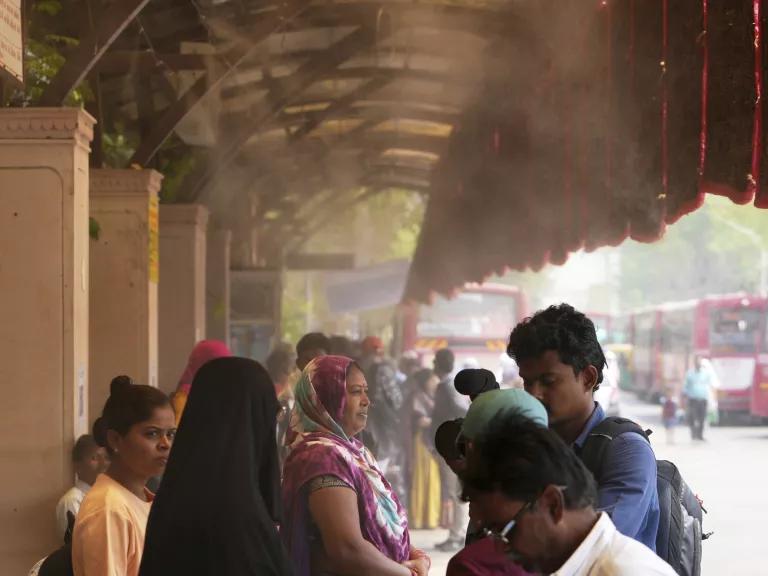
A cool bus stop in Ahmedabad, India, on April 2, 2025, when an early heat wave saw temperatures climb to 108 degrees Fahrenheit
Learning to adapt to extreme heat
“Heat doesn’t just claim lives; it rearranges how we live them,” states V. Kelly Turner, associate director of heat equity research at the UCLA Luskin Center for Innovation. In a recent TED Talk that touched on how more frequent, inordinately hot days can degrade quality of life, Turner emphasized that the new assignment is not just to survive but to thrive.
As the changing climate alters how we experience and make decisions throughout our day-to-day lives, society must adjust, baking heat resilience into the very framework of communities. This can mean anything from warning systems and public education campaigns to heat-tolerant street trees and even urban beautification projects like surface-cooling murals.
Many public health officials around the globe are rising to meet the challenge—particularly where the stakes are most grave. Take India, the world’s most populous country, for example, where it is projected that within the next 25 years, 90 percent of the land area could lie within an “extreme heat danger zone.”
This past summer, India began classifying heat waves as natural disasters, an important designation that helps cities and states access more funding for programs that could benefit hundreds of millions of its people who are facing extreme heat.
On the ground, major initiatives are already underway. For more than a decade now, NRDC has been working with partner organizations and officials at all levels of the Indian government to develop heat action plans in cities across 23 states. In addition to deploying in-the-moment responses to extreme heat with enhanced early warning systems, expanded medical training, and public cooling stations, the plans also help communities build up their climate resilience over the long term.
Such measures can come in the form of “passive cooling” technologies, which may also provide relief without adding strain to power grids or electric bills. Some examples include pavement paint that reflects sunlight, urban greening to provide shade, and cool roofs that can lessen indoor temperatures by as much as 9 degrees Fahrenheit and reduce the need for air-conditioning. And in a country where ceiling fans spin in 90 percent of homes, accounting for 40 percent of residential energy consumption, NRDC is collaborating with the appliance industry to grow the adoption of affordable and “super-efficient” ceiling fans.
As India’s highly tailored action plans demonstrate across different cities and cultures, there’s no one-size-fits-all approach to climate adaptation. Yet the most successful plans, NRDC’s Thomas emphasizes, must equitably account for everyone’s heat safety.
That’s a lesson that urban planners learned in Multnomah County, Oregon, during the week of the 2021 heat dome. Despite having a heat emergency plan in place, Multnomah lost more than 70 residents. The majority of deaths were people 60 years or older, living alone in multifamily homes within urban heat islands such as East Portland, an industrial area with very little tree canopy to provide shade.
In the years since, the state of Oregon and the city of Portland have installed thousands of air conditioners (including efficient heat pump options) in low- to moderate-income households through various rebate programs, sales tax initiatives, and emergency funds. The goal was to deliver many thousands more, but the Trump administration’s cuts to federal funding for any climate-related programs have left many people without this life-saving cooling equipment.
The summer after Arizona’s lengthy heat wave, the city of Phoenix began opening 24-hour respite centers, which provide safe places to cool down for anyone who needs it. These centers also offer additional resources for those without stable housing or who have substance abuse problems.
“The goal of resilience shouldn’t be to bounce back to a system that wasn’t working for many people in the first place,” says Thomas. “Instead, it should give us an opportunity to bounce forward. For me, that is where the hope lies.”
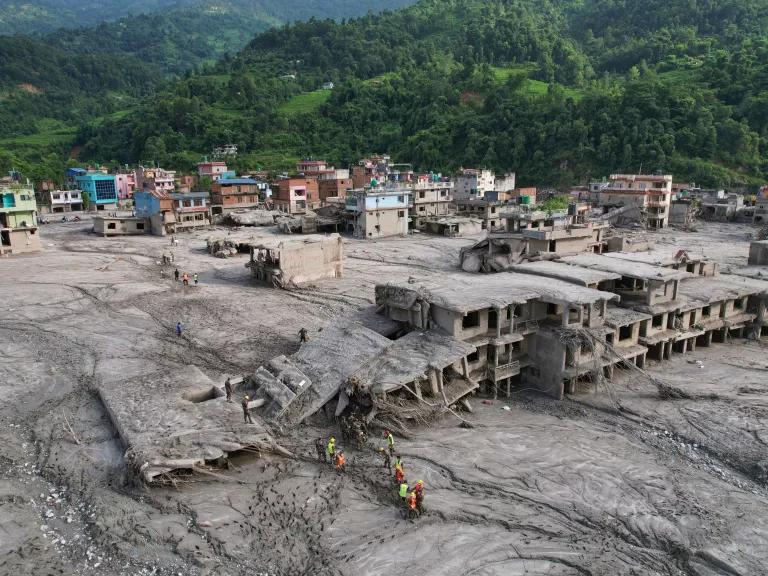
Rescue workers searching damaged structures following flash flooding along the Trishuli River in Nuwakot District, Nepal, August 2026
When it’s too hot for earth as we know it
Right now, global average temperature rise threatens to soon surpass the 1.5-degree-Celsius warming limit called for in the Paris climate accord. This is the threshold that leading climate scientists suggest would unleash some of climate change’s most catastrophic and long-term consequences. From this perspective, the question of what’s too hot looms large, almost impossible to fully grasp.
Yet we know that our warming world can destabilize ecosystems to a breaking point. And people, their homelands, and entire cultures could continue to succumb to rising seas, wildfires, famine, and thawing permafrost.
The utter devastation wrought by the glacier lake outburst floods in the Himalayas of Nepal and Tibet this summer was a terrifying reminder of the limitations of our abilities to forecast and prepare for every climate event. In some places, planned relocation efforts may become the only way to protect the local population.
Perhaps it’s too hot when the sole path forward was once unthinkable.
Because how hot must it get before Fiji fully slips into the sea? Or New Orleans? How warm does it need to be for Lake Mead to run completely dry or for the Great Barrier Reef to go all white? How hot before we see the final polar bear, or Pacific salmon, or bottle of maple syrup?
Hopefully, we never find out. Hopefully, the world takes the solutions we already have at our fingertips—like the ones being advocated for at Climate Week—to transition from fossil fuels and slow climate change’s creep into the extremes. Climate change progress is still possible. Until the pace picks up, though, the forecast is likely hotter than this time last year, and we need a plan to get through the thick of it, together.
This NRDC.org story is available for online republication by news media outlets or nonprofits under these conditions: The writer(s) must be credited with a byline; you must note prominently that the story was originally published by NRDC.org and link to the original; the story cannot be edited (beyond simple things such as grammar); you can’t resell the story in any form or grant republishing rights to other outlets; you can’t republish our material wholesale or automatically—you need to select stories individually; you can’t republish the photos or graphics on our site without specific permission; you should drop us a note to let us know when you’ve used one of our stories.
What Are the Solutions to Climate Change?
Yes, Climate Wins Are Still Happening! Let’s Keep It Up in 2026.
1.5 Degrees of Global Warming—Are We There Yet?