
How EPA Rollbacks Will Cost Us—in Dollars and Lives
Gutting the U.S. Environmental Protection Agency is just as damaging to our economy as it is to our climate and health.
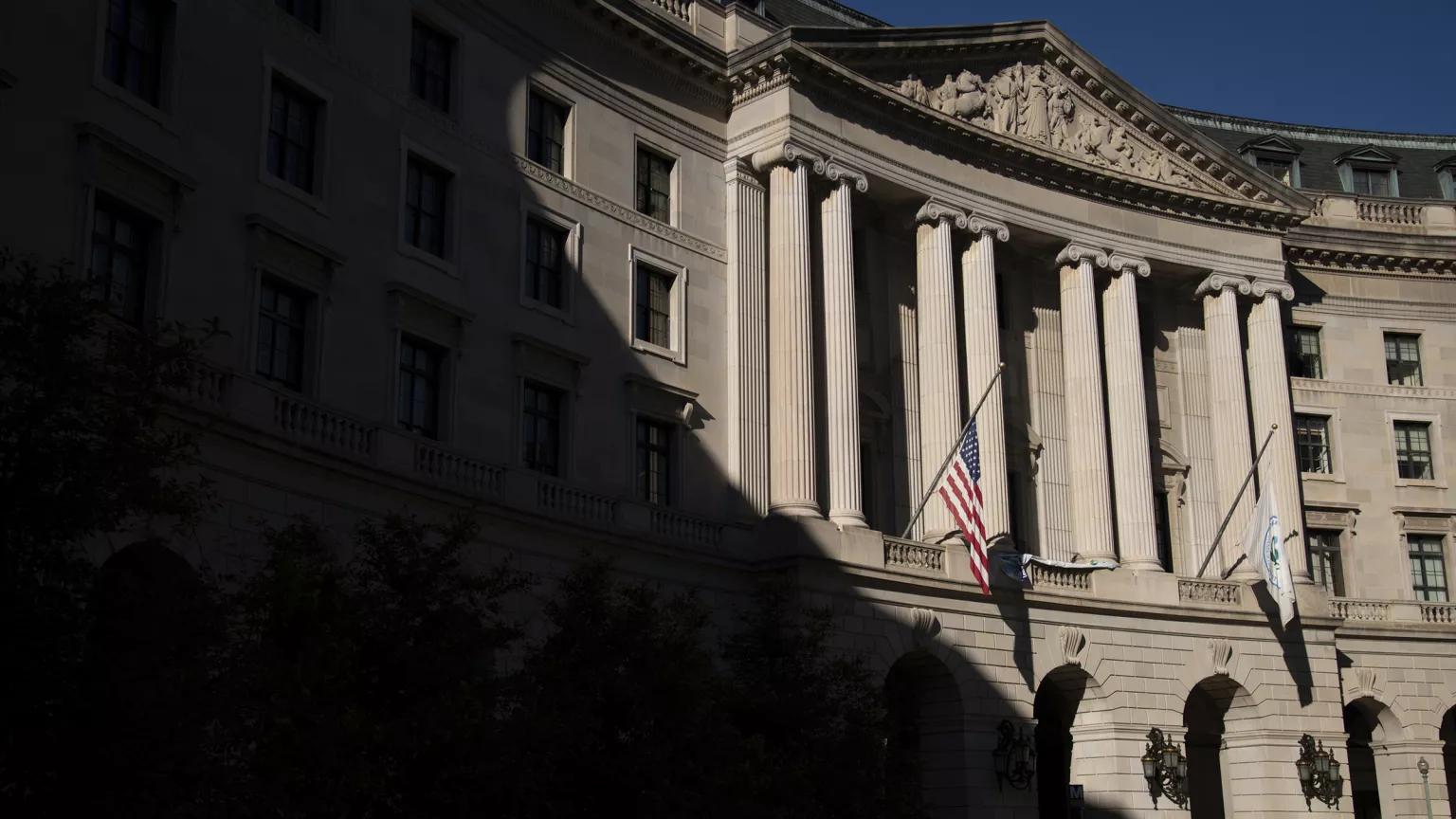
The EPA headquarters building in Washington, D.C.
Graeme Sloan/Sipa via Associated Press

The U.S. Environmental Protection Agency (EPA) continues to charge ahead with efforts to undo the country’s climate progress—and blatantly ignore the climate crisis that is happening all around us. This week, it officially repealed carbon pollution standards for most power plants, all while scientists and global officials increasingly raise alarm bells that the planet is on a trajectory to overshoot the 1.5-degree-Celsius warming limit called for in the Paris climate accord.
Within moments of the repeal’s announcement, NRDC filed a lawsuit challenging this latest attack on science and public health. The suit is in addition to one that NRDC has filed in response to the EPA’s repeal of its own 2009 endangerment finding that climate change poses a risk to human health and welfare. Through that earlier action, the agency claimed a free pass to simultaneously eliminate its rules to curb vehicle greenhouse gas emissions—another one of the chief contributors to global warming.
In yet another Trump administration move to give polluting industries a free pass, the latest action lifting required carbon pollution reductions from existing coal and new gas-fired power plants comes after the agency has already loosened emissions restrictions on the dirtiest ones. It follows a decision to delay the shift away from the climate super-pollutant chemicals known as HFCs—which NRDC is also challenging in court. And it comes not long after news that the EPA has stopped considering the economic benefits of reducing asthma, heart disease, and premature deaths in its rulemaking, opening the door for industry to further foul the air.
NRDC federal climate legal director Meredith Hankins explains why the endangerment finding is so critical to our fight against climate change and how the EPA’s repeal of it not only goes against overwhelming scientific evidence but also has no legal standing.
In effect, the Trump administration is turning the mission of the EPA upside down. It’s no longer “to protect human health and the environment.” Instead, EPA Administrator Lee Zeldin says his job is to “lower the cost of buying a car, heating a home, and running a business” (and also, apparently, to fulfill the wish list of fossil fuel executives). The enormous toll that industrial pollution takes on our health, our well-being, and our pocketbooks is notably left out of this equation.
“The evidence is crystal clear that in order to have a strong, vibrant economy, we need environmental protections that enable health and well-being for all people,” says Dr. Vijay Limaye, a former EPA scientist who now works at NRDC.
Learn More


Undoing decades of environmental progress will, in fact, cost consumers more, because clean energy and cleaner cars are cheaper than sticking with the fossil fuels status quo. And by taking a hatchet to the EPA’s climate-focused rules, the Trump administration is also returning us to outdated technologies, trampling on the economic momentum and job growth in electric vehicles (EVs) and other clean energy sectors like wind and solar.
Climate rules are also essential safeguards for our overall population, especially the people who encounter pollution in their air, water, and soil, day in and day out. And given the escalating costs of climate change and rising frequency of unnatural disasters that endanger our well-being, the consequences of rolling back greenhouse gas emissions standards carry a price tag that none of us—no industry, no politician, and certainly no ordinary family—can afford. Here’s a look at what’s at stake.

Duke Energy's coal- and gas-fired Belews Creek Steam Station in Stokes County, North Carolina
The high cost to our health
The first Trump administration’s EPA took frequent aim at rules around fossil fuel production, including those designed to clean up the nation’s power plants, a chief source of carbon, air, and water pollution. Now, in the name of “energy dominance,” the second Trump administration is repealing carbon emissions standards for existing coal and new gas power plants, with no plans to issue replacement standards—leaving the largest industrial source of carbon pollution free to keep spewing greenhouse gases into the atmosphere. It’s also proposed to stop collecting and publishing the annual greenhouse gas emissions from factories, refineries, and other facilities. Simultaneously, it has rolled back the updated Mercury and Air Toxics Standards (MATS), which curb toxic soot, hydrochloric acid, and mercury, a neurotoxin. (This is yet another health-endangering EPA action that NRDC is currently fighting in court.)
On top of this latest repeal, last spring, the EPA allowed nearly 70 coal-fired power plants to duck air pollution limits and release more mercury and other toxins, such as arsenic and benzene, from their smokestacks. NRDC and partners are currently suing the agency over these illegal exemptions too.
According to EPA analysis, the set of stricter carbon standards passed in 2024 would prevent an estimated 1,200 premature deaths and 360,000 asthma attacks in 2035 alone. And MATS has likewise vastly improved health outcomes for U.S. residents since taking effect in 2015, saving as many as 11,000 lives annually. Putting them on the chopping block reveals the current administration’s unwavering stance that saving polluters money on compliance costs outweighs the benefits of saving lives.
NRDC’s director of policy analysis, Amanda Levin, explains how coal plant pollution surged across the country last year, thanks to Trump’s presidential exemptions, and how that has subsequently created billions of dollars in public health costs for local communities.
The facts remain that these regulations were in step with advancements in pollution-control technology and took the costs to industry into account. They are not only feasible for businesses, but they also promise substantial economic benefits for the rest of us. For example, according to the EPA, every dollar spent on the MATS standards brings in up to $9 in health benefits. More broadly, the Clean Air Act, which the Trump administration has now targeted in so many ways, brought $2 trillion in benefits between 1990 and 2020—an estimate, Limaye adds, that’s likely conservative.
If someone needs an inhaler to deal with asthma made worse by air pollution, that's a cost, Limaye explains. Or if someone needs home health-care services because they develop a chronic heart or lung disease, that’s another cost.
Some of air pollution’s economic losses are less direct but no less impactful. Take the events set into motion when an asthmatic child stays home. Parents may have to either pay for childcare or take off from work, potentially losing wages as well as productivity for their employer. Along with missed school days, pollution exposure can also cause larger setbacks in child development that can trigger even more academic, social, and financial harms for years down the road. “These downstream effects are cumulative and are falling on folks who are on the margins economically,” Limaye says.
The damage they create will only rise with regulatory rollbacks. In NRDC’s recent report An Affordability Crisis of Trump’s Making, the authors, policy analysts Amanda Levin and Yuqi Zhu, detailed the potential toll more specifically. They forecasted up to 35,000 additional early deaths and 42,000 extra emergency room visits and hospital admissions, which could mean an increase in health-care spending by up to $1.7 billion per year. And this all comes at a time of already high health-care insurance premiums for American households, added Levin and Zhu.

Workers assembling an electric pickup truck at the Ford River Rouge's Electric Vehicle Center in Dearborn, Michigan
Ford Motor Company
Our clean transportation future at risk
At the core of the endangerment finding announcement last winter was the elimination of limits on tailpipe emissions—the largest source of greenhouse gas emissions in the United States. Less than two years prior, the Biden administration’s vehicle emissions standards were hailed as the most significant climate rules the country has ever seen. But the EPA is now justifying repealing all greenhouse gas vehicle standards by saying—incorrectly—that it never had the authority to issue the endangerment finding supporting those standards in the first place.
That seminal endangerment finding—based on overwhelming scientific studies on the causes and impacts of climate change and made after a thorough rulemaking process and consideration of thousands of public comments—underpins the agency’s legal duty to set climate pollution controls for cars and trucks, aircraft, power plants, and oil and gas operations.
The EPA cites steep costs of the vehicle rules, noting they will cost the economy approximately $1.3 trillion. But advocates say those numbers are an incomplete picture. “They’re uplifting only the costs and ignoring the benefits—which are more than double that over the long haul,” says Kathy Harris, director of NRDC’s clean vehicles program. Indeed, according to its own regulatory impact analysis issued in 2024, the Biden-era rules would provide $2.1 trillion in net benefits over 30 years. The calculation reflects a combination of fuel savings and public health and climate benefits.
The Trump administration EPA’s new argument also leaves out how strong standards reduce the cost of owning a car, which Zeldin professes to care deeply about. But evidence shows they’re indeed good news for drivers. The EPA previously found that the updated tailpipe emissions standards could save individual drivers up to $6,000 over the lives of their vehicles, thanks to reduced fuel and maintenance costs. Its own analysis shows that eliminating strong standards will increase the price of gasoline, as well as the (currently soaring) costs of fueling, repairing, and maintaining vehicles.
In addition to the impacts to everyday drivers and our climate, carmakers also come out on the losing end of this rollback scenario. For starters, by undoing these policies, the EPA is derailing the auto industry by creating massive amounts of regulatory uncertainty. More specifically, the Trump administration is stunting the country’s EV industry at exactly the moment it needs to grow if the United States is going to compete internationally with countries that see the climate writing on the wall.
“We want to be at the forefront and make sure that those economic opportunities are here in the United States,” Harris says. “The question really is, does the United States get left behind, or are we a leader in this transition?
Finalized in March 2024, the strengthened clean car standards applied to passenger cars and trucks rolling out between 2027 and 2032. But how automakers could meet the EPA’s lower emissions requirements is up to them—i.e., they can use any combination of approaches. For example, they could improve the performance of their internal combustion engine vehicles, adopt advanced transmission technologies, or use more lightweight materials. Alternatively, they could sell more hybrid and electric cars.
The potential for the country’s EV industry has been steadily growing. Since 2007, the United States has added nearly a quarter of a million domestic EV manufacturing jobs, according to data from the BlueGreen Alliance Foundation. And while China dominates the EV market globally, the United States was leading in terms of attracting the most EV investments. As of 2024, a planned $312 billion was going toward the manufacturing of the vehicles and their batteries. But consumers are no longer offered federal incentives to make the switch to EVs, with the repeal of the tax credits that were part of the Inflation Reduction Act. And without strong standards in place, industry has little incentive to innovate and produce cleaner vehicles.
Perhaps most urgently, though, the United States would be losing its chance to stem the worst impacts of the climate crisis. Without the rollback, the rules have the potential to curb carbon pollution by more than seven billion metric tons by 2055—more than the annual greenhouse gas emissions of the entire United States. They’d also reduce particulate matter, a huge contributor to lung and cardiovascular disease, from gas-powered cars and trucks by more than 95 percent.
The United Auto Workers union issued a statement in March 2024 emphasizing that its members “reject the fearmongering that says tackling the climate crisis must come at the cost of union jobs. Ambitious and achievable regulations can support both.”

Local residents surveying damage left in the wake of Hurricane Helene in Marshall, North Carolina, October 2024
Jeff Roberson/AP Photo
The staggering price of climate inaction
“We are driving a dagger through the heart of climate-change religion,” boasted Zeldin in a recent Wall Street Journal op-ed. While equating scientific consensus with religion is certainly false, Zeldin is sadly correct about the lethality of undoing the country’s climate policies.
Without these rules, the United States’ goal of curbing climate pollution in half by 2030 (already a stretch) will be completely out of reach. Vehicles, specifically, remain the largest source of U.S. carbon emissions. And as the world’s all-time biggest carbon emitter, the United States’ success in meeting its climate commitments through cleaning up our transportation sector and other major sources of greenhouse gases, scientists say, is essential in the global effort to limit total warming to 1.5 degrees Celsius and ensure a livable planet.
The tightened power plant standards alone were set to result in an 80 percent reduction in carbon emissions in 2035 compared to their peak three decades ago. The standards would achieve this while delivering $390 billion in climate and health benefits—20 times the cost to industry. And the EPA’s rules to limit methane leaks from oil and gas facilities would cut emissions of this particularly potent greenhouse gas by 1.2 million metric tons through 2035.
When coupled with climate adaptations to help us prepare communities and mitigate harms from global warming, climate regulations can pay for themselves many times over.
While it’s impossible to put a precise price tag on the climate rollbacks, experts have calculated the “social cost of carbon.” That toll includes things like damaged homes and infrastructure, crop failures, and human lives, all consequences of spewing more heat-trapping carbon into the air. Currently, this cost is estimated at $51 per metric ton of carbon emitted, though the former EPA administration proposed raising it nearly fourfold, to $190.
These estimates are far from abstract dollar amounts: Limaye’s research on the health costs of climate change has tallied billions of dollars in damages from recent disasters. And those costs fall disproportionately on our country’s most vulnerable communities.
Despite all of this scientific evidence, the EPA recently announced that it will no longer estimate the health-related economic costs of air pollution. Indeed, its final assessment of impacts from repealing the endangerment finding does not consider any human health harms or health-related economic costs.
Any place that’s experienced a climate-fueled storm, fire, or flood can speak to this financial toll. The recent catastrophic wildfires in Los Angeles alone cost more than $250 billion, perhaps the most expensive U.S. disaster to date. According to estimates by the National Oceanic and Atmospheric Association, another agency that has faced devastating Trumpian cuts, there were 24 extreme weather events in 2024, with losses surpassing $1 billion each.
Just one of those events, Hurricane Helene, created several 1,000-year flood events, triggered more than 2,000 landslides, damaged more than 6,000 miles of roads, destroyed about 126,000 homes, and killed more than 100 people. In its aftermath, North Carolina Governor Roy Cooper asked for $3.9 billion in state funding to help aid in recovery, but experts estimate the storm resulted in a whopping $53 billion worth of damages altogether.
“It's quite clear that we’re seeing an increasing number of these especially costly disasters, and things seem to be spinning out of control quickly,” Limaye says. “We're at this pivotal moment where we still have control over our destiny. But that window will eventually close.”
Few of us truly want to go back to a country that looked (and smelled) as it did before we had the EPA. That broad public support for environmental protection—strengthened by the opposition from NRDC and its allies to the first Trump administration’s rollbacks—has kept many of the agency’s most consequential rules intact. Now, the second Trump administration is slicing away at the laws that protect us all. “That's why it's so important that we don’t back down,” says Limaye. NRDC certainly doesn’t plan to.
This story was originally published on December 10, 2024, and was last updated on September 18, 2026, with new information and links.
This NRDC.org story is available for online republication by news media outlets or nonprofits under these conditions: The writer(s) must be credited with a byline; you must note prominently that the story was originally published by NRDC.org and link to the original; the story cannot be edited (beyond simple things such as grammar); you can’t resell the story in any form or grant republishing rights to other outlets; you can’t republish our material wholesale or automatically—you need to select stories individually; you can’t republish the photos or graphics on our site without specific permission; you should drop us a note to let us know when you’ve used one of our stories.
The EPA wants to stop protecting us from power plant pollution
Power plants are responsible for a quarter of U.S. carbon emissions. Not regulating them would result in severe consequences.
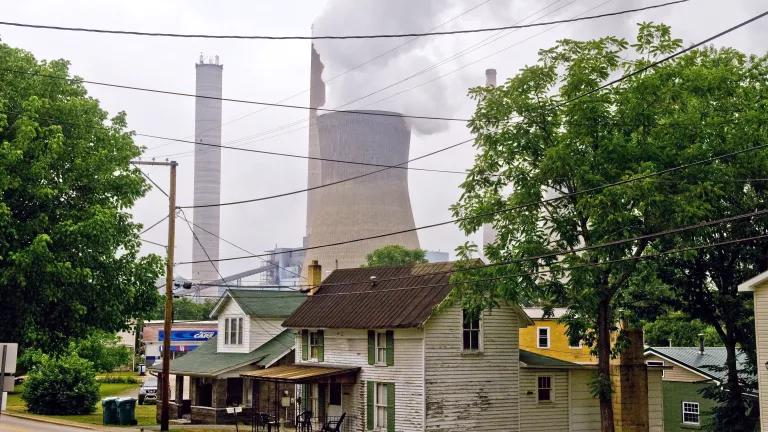
Tell the EPA to protect us from power plant pollution
Power plants are responsible for a quarter of U.S. carbon emissions. And yet, the Trump administration proposed to abandon its legal authority to regulate climate pollution from power plants, which would bring more unnatural disasters, dirtier air, and higher costs for families. Help us stop this illegal attempt to hand polluters a free pass while the rest of us pay the price.
What Are the Solutions to Climate Change?
Mercury’s Journey from Coal-Burning Power Plants to Your Plate
Why We Need the EPA