Data, Reports & Resources

NRDC is a leader and trusted source in environmental policy and research. 

From reports to issue briefs, we ensure accountability through peer review led by our Science Office, which provides data and scientific analysis that help shape and guide NRDC’s policies and positions. We also offer a range of other resources, such as 101 guides and consumer-focused scorecards to increase access to knowledge about how everyone can be a catalyst for change. 

Featured Data, Reports & Resources

Viewing 1 - 20 of 26

NRDC Urges MDA to Strengthen the Groundwater Protection Rule (PDF)

Comments
In a comment letter to Minnesota's Department of Agriculture, NRDC urged the agency to strengthen the existing Groundwater Protection Rule in order to adequately protect Minnesotans and the environment from nitrogen pollution arising from nitrogen fertilizer on croplands.

Perforaciones en alta mar 101

GuideAlaska, West, Louisiana, Georgia, North CarolinaShelia Hu
Una mirada a cómo funcionan las perforaciones en busca de petróleo y gas en los océanos, y por qué es hora de que pasen a la historia.

Offshore Drilling 101

GuideAlaska, West, Louisiana, Georgia, North CarolinaShelia Hu
A look into how drilling for oil and gas in the oceans works—and why it’s time to make it history.

Power for the People

Issue BriefGeorgiaPatrick King II

Georgia can overcome roadblocks to unlock the power of community solar.

Neonics: The Toxic Truth

Fact SheetUnited States, Minnesota, Michigan, California, ColoradoAllison Johnson, Daniel Raichel, Lucas Rhoads, Lena Freij

Pesticides kill bees, pollute water, and threaten our health.

Scientists Sign-on Letter for Blake Plateau (PDF)

Letters
This is a science sign-on letter by independent academic scientists urging the Biden administration to consider robust long-term protections for the Blake Plateau off the southeastern coast of the United States.

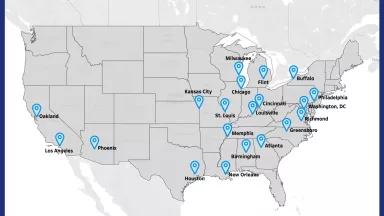
Energy-Burdened Communities Tool

MapLos Angeles, Phoenix, Houston, New Orleans, Birmingham, Atlanta, Memphis, Cincinnati, Louisville, St. Louis, Kansas City (Kansas), Chicago, Milwaukee, Flint, Buffalo, Philadelphia, Washington, D.C., Richmond (Virginia), Greensboro

Energy burden has disproportionately impacted low-income communities of color for decades. NRDC is actively working to bring justice to these communities through this mapping tool.

State-Based Food Waste Policy Gap Analysis and Inventory Reports

ReportMaryland, New Jersey, Pennsylvania, Washington, D.C., Florida, Georgia, North Carolina, Tennessee, Illinois, Michigan, Ohio, Wisconsin, ColoradoDarby Hoover, Yvette Cabrera
Food waste costs the US $408 billion each year. Producing food that we do not consume swallows up roughly 18 percent of America’s cropland and 14 percent of our fresh water, and generates about 270 million metric tons CO2 equivalent…

Food Matters Regional Initiative

OverviewAtlanta, Baltimore, Chicago, Cincinnati, Detroit, Jersey City, Madison, Memphis, Nashville, North Carolina, Orlando, Philadelphia, Pittsburgh, Washington, D.C.
Cities are addressing food waste in a holistic way—through prevention, rescue, and recycling.

Installing Turbo Fladry: An Informational Guide

Issue BriefWyoming, Wisconsin, Oregon, Montana, Minnesota, Idaho, CaliforniaDr. Jennifer Sherry
Reducing the risk of wolf predation on livestock is key to ensuring both people and wolves can thrive throughout wild and working lands. Turbo fladry is a relatively simple fencing tool designed to protect livestock from wolves, that, when used…

Acción para el clima y la energía limpia en Latinoamérica

Issue BriefMexico, Brazil, Peru, Costa Rica, ChileCarolina Herrera, Amanda Maxwell, Han Chen
NRDC está dando seguimiento al progreso de los compromisos contra el cambio climático y alentando acciones para reducir las emisiones de gases de efecto invernadero.

Climate and Clean Energy Action in Latin America

Issue BriefMexico, Brazil, Peru, Costa Rica, ChileCarolina Herrera, Amanda Maxwell, Han Chen
NRDC is tracking countries’ progress on their climate commitments and encouraging bold action to reduce greenhouse gas emissions.

The Paris Agreement on Climate Change

Issue BriefUnited States, International, Brazil, Canada, China, India, MexicoHan Chen
While the Paris Agreement does not “solve” climate change, it is a critical inflection point that brings us much closer to a safer climate trajectory and creates an ambitious path forward for decades to come.