Straight Answers on the Rising Costs of Trump’s Assault on Clean American Power
The administration's policies are driving up electricity bills, toxic air pollution, health costs, and climate-wrecking carbon emissions while undercutting American jobs, investment, and energy security.

Media Contact
Since taking office 18 months ago, President Trump has waged a relentless assault on clean American power, the American workers who produce it, and the American families and businesses that urgently need more of it.
In a new report released this week, we’ve tallied up the tab of these reckless attacks.
It’s the fullest available reckoning of the high and rising costs that the Trump administration’s energy policies are inflicting on the nation and its people.
Read the report
These policies are driving up electricity bills, toxic air pollution, health costs, and climate-wrecking carbon emissions while undercutting American jobs, investment, and energy security. One way or another, we’re all paying the price.
Amanda Levin, director of policy analysis at NRDC, and Yuqi Zhu, senior policy analyst at NRDC, set out to ask fundamental questions about the consequences of a White House energy agenda better suited to the 19th century than the 21st.
Our report, An Affordability Crisis of Trump's Making, provides straight answers to important questions, including these below.
Q. Why did you produce this report, and what are the kinds of administration policies you assessed?
A. From his false declaration of a so-called energy emergency the day he took office last year, President Trump has waged a relentless attack on the clean energy we need to power our future.
He’s tried to delay or ban new wind energy projects.
He mandated the continuing use of several dirty and costly coal-fired power plants that had long been slated for retirement. He imposed tariffs that drove up costs for generation and transmission gear. He led the effort in the Republican-controlled Congress to slash commonsense incentives for energy-efficient home appliances as well as solar power and other clean energy investments.
He’s squandered nearly $4 billion in taxpayer money to pay companies to cancel new offshore wind farms that would have generated enough renewable electricity to power more than nine million homes.
We analyzed the cumulative impact of these policies to show what, taken together, they mean for our future.
Q. What are the top-line takeaways from your report?
A. In a nutshell, Trump’s assault on clean American power is making our electricity more expensive, slowing the growth of new capacity, and undermining jobs, investment, and energy security while driving up dangerous air pollution and health costs.
All to lock the nation into decades’ more dependence on the fossil fuels that are driving the climate crisis and holding our families and businesses hostage to global shocks like the president’s war on Iran. It’s a self-defeating agenda, and we’re all—truly—paying the price.
Q. Can you unpack these costs a little bit?
A. Sure. Let’s start with utility bills.
All told, our analysis shows that the typical household will spend up to $230 more per year on their home energy bills by 2035 and up to $990 more cumulatively over the coming decade. That’s due to Trump administration policies alone, over and above the impacts of inflation and other factors.
Taken together, Trump’s policies, by themselves, could drive up electricity rates by as much as 25 percent in some parts of the country, relative to expected future rates before he took office.
Some of the largest hikes would hit families across the Great Plains, Upper Midwest, and Southeast. Among the states hit the hardest are Texas, Oklahoma, New York, and Florida.
Remember, Trump promised to cut electricity rates in half.
Since he took office, they’re up 16 percent on average, nationwide.
Q. And your analysis calls for another 25 percent on top of that?
A. Our analysis looks only at the impact of Trump’s policies, most of which impact future rates, above and beyond the impacts of several other factors.
For example, the boom in data centers is requiring huge amounts of electricity and large investments in new transmission lines and transformers to service these facilities.
For perspective, data centers in just the five largest host states—Virginia, Texas, Illinois, California, and Arizona—use enough electricity to power seven million homes or about 1 in every 20 households nationwide.
In addition, utility companies are investing heavily to strengthen and harden generating and transmission systems in the face of worsening wildfires, storms, floods, and other disasters being amped up by climate change.
The way to help counter rising rates is to invest in low-cost clean power. Trump is trying to stifle it.
Q. Is Trump succeeding?
A. The economics of clean energy are irrefutable. Trump hasn’t overturned that. The cheapest and fastest way to add new electricity capacity is through wind and solar power, enhanced by battery storage.
Those clean sources continue to grow, making up practically all—93 percent—of the new capacity planned for this year. And we see this in our analysis. Even with Trump’s policies in place, renewables are set to make up 46 to 52 percent of the U.S. electricity mix by 2035, up from 25 percent today. Trump’s energy agenda will slow the clean energy transition, but the market forces are too strong for him to fully overpower.
That’s what makes Trump’s attacks on clean energy so destructive. He’s trying to stifle the best option we have to meet rising demand with affordable energy produced right here at home. And he’s doing real harm by curbing the growth of clean domestic power when we need it most.
NRDC’s offshore wind strategist, Pasha Feinberg, talks about wind power in the United States and the importance of moving this industry forward despite a resistant administration.
Q. What does your analysis say about stifling clean domestic power?
A. The country could forfeit between 390 and 540 gigawatts (GW) of new electricity capacity over the coming decade; that’s as much as 40 percent of what had been expected over that time before Trump upended the industry.
Even at the low end of those projections, the power lost would have been enough to increase U.S. electricity capacity by a third, above the current 1,200 GW nationwide.
Q. What impact does that have on jobs and investment?
A. The lost power represents up to $700 billion in foregone investment that could have supported half a million direct jobs, compared to what was on track to be built before Trump took office.
Q. Won’t investments in new plants that burn fossil fuels make up the difference?
A. No. It’s been more than a decade since a new coal-fired power plant was built. Since then, the industry has shut down more than half of its existing coal-burning plants.
Only 7 percent of new electricity capacity is coming from generators fired by natural gas. That won’t soon change, due to volatile gas prices and years-long backlogs for equipment orders.
In our analysis, only another 9 GW of new gas capacity might be built under Trump’s policies. That’s only about 2 percent of the clean capacity lost due to this administration’s policies. Instead, the country is stuck keeping expensive, dirty, and aging coal, gas, and oil plants online to fill the gap.
Q. What about the aging coal-fired plants Trump has ordered to remain open?
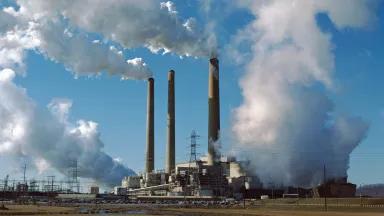
A. These are some of the dirtiest and costliest power plants in the country. And, by weakening clean air and climate protections, the administration has encouraged operators to keep other aging coal-fired plants online long past their scheduled retirement.
Running these outdated plants instead of phasing them out in favor of cleaner, lower-cost options could raise annual electricity spending nationwide by as much as $30 billion by 2035.
NRDC’s director of policy analysis, Amanda Levin, explains how coal plant pollution surged across the country last year, thanks to Trump’s presidential exemptions, and how that has subsequently created billions of dollars in public health costs for local communities.
Q. How does all of that impact air quality?
A. The Trump administration’s policies are dramatically increasing the amount of mercury, soot, and other harmful pollutants from coal-fired power plants. That, in turn, will increase public health costs by as much as $177 billion annually by 2035. That’s because this air pollution aggravates respiratory illnesses like asthma, heart disease, and other maladies that mean more emergency room visits, lost days at school and work, and premature death.
How does climate change impact public health? NRDC’s senior scientist Dr. Vijay Limaye explains how the climate crisis affects us all, whether you are worried about how much your utility bill will cost during a heat wave, experience displacement due to a flood, or live near an industrial facility that spews toxic air pollution.
Q. What about energy security?
A. Trump’s war on Iran has shown, once again, the price we pay at the pump, and across the broader economy, for our persistent over-reliance on oil. That holds our families, businesses, and workers hostage to global prices and supply shocks beyond our control.
We can’t drill our way to energy security. If we could, we would have done so by now. The United States is producing a record 13.7 million barrels of crude oil a day—more than this country, or any other, has ever produced. And here we are with our economy and our national security being buffeted by the global price of oil.
Diversifying our energy portfolio by increasing the amount of domestically produced clean power from the wind and sun is one way to strengthen our energy security. Trying to stymie that power doesn’t make sense.
Q. What’s the impact on climate pollution?
A. By 2035, the administration’s attacks on clean energy, efficiency, electric vehicles, and other technologies would increase net annual U.S. greenhouse gas emissions by at least 800 million tons—more than Canada emits in a year—above what would have been emitted otherwise.
That’s a direct attack on our ability to confront the wildfires, heat waves, drought, and other climate-related disasters that created a midsummer hellscape for some 180 million Americans.
The Trump administration is inflicting high and rising costs on the nation through its assault on clean American power. One way or another, we’re all paying the price.
Related Content

Trump’s Dirty Energy Double Whammy: Pay More for Fuel and Power—and Use More of It
Renewable Energy on Federal Lands Brings New State and County Revenues